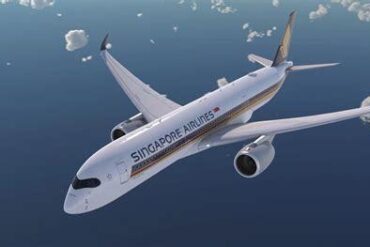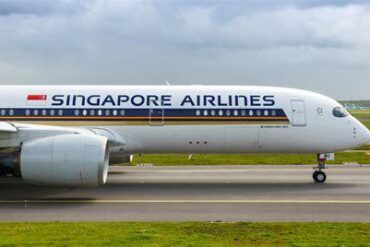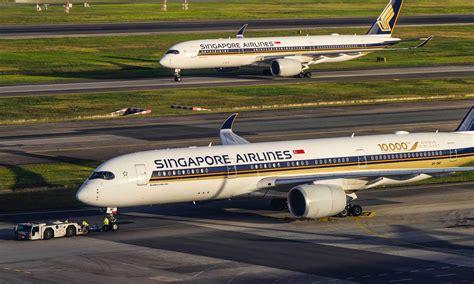
Singapore Airlines enters 2025 in a commanding position, operating the world’s largest Airbus A350 fleet, a milestone built through early adoption, disciplined fleet planning, and a strategic focus on efficiency for ultra-long-haul travel. Across the global aviation landscape—shaped by shifting demand, environmental pressure, and fierce competition—its A350-900 and A350-900ULR aircraft form the backbone of a long-haul network that spans nearly every continent, connecting the airline’s Changi hub to major business, cultural, and economic centers with the quiet confidence and precision the A350 family is known for.
The fleet stands at 65 A350-900s in active and parked status, a figure that reflects Singapore Airlines’ commitment to a fuel-efficient future. With the addition of seven A350F freighters later in the decade, the total will rise to 72 aircraft, temporarily cementing the airline’s place at the top of the leaderboard before other carriers’ massive future orders eventually surpass it. For now, though, no operator wields more A350 capability—and none has deployed the aircraft with the same blend of range, versatility, and premium travel philosophy.
A350-900: The Backbone of a Global Long-Haul Network
Singapore Airlines’ decision to anchor its intercontinental operations on the A350-900 rests on a blend of economic logic and mission-specific versatility. The airline operates 58 standard A350-900s, complemented by seven of the highly specialized A350-900ULR variants. Of the 65 jets, 62 are in continuous service, while three are temporarily parked for maintenance rotations.
The A350-900, with its composite structure, ultra-efficient Rolls-Royce Trent XWB engines, and optimized cabin environment, accounts for 42% of the airline’s mainline fleet. This concentration reveals how central the aircraft has become to Singapore Airlines’ identity. It replaced older, less efficient types, allowing the carrier to trim fuel burn, reduce emissions, and raise cabin comfort—while avoiding the capacity bloat that had accompanied some of its A380 routes.
It is precisely this updated balance—range, efficiency, and right-sized capacity—that has made the -900 indispensable. The airline flies these aircraft across the Pacific, into Europe, through the Middle East, and throughout Asia, bridging regions with some of the planet’s most demanding city pairs.
The Ultra Long Range Subfleet: A Unique Singapore Airlines Signature
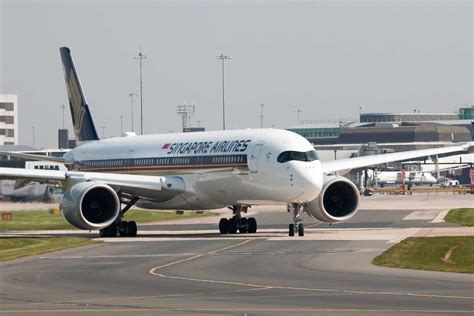
The A350-900ULR represents a rare achievement in modern aviation: a commercial aircraft purpose-built for a single airline. Working closely with Airbus, Singapore Airlines pushed for an ultra-long-range variant that could operate the world’s longest routes without compromising reliability. The resulting ULR is engineered with additional fuel capacity, aerodynamic refinements, and certification to fly up to 9,700 nautical miles—a distance long enough to reshape global connectivity.
The airline introduced the first A350-900ULR in 2018, deploying it on the marathon flights from Singapore to New York-JFK and Newark Liberty. These routes routinely stretch beyond 18 hours and 30 minutes of continuous flying. To support such extreme missions, the cabin was configured with 161 seats, entirely in Premium Economy and Business Class, eliminating traditional economy seating to manage weight and cater to travelers willing to pay for comfort on such extended journeys.
With six of the seven ULRs regularly operating and one rotated for maintenance, this subfleet not only remains the world’s longest-range commercial service but also strengthens Singapore Airlines’ positioning as the pioneer of ultra-long-haul travel.
Cabin Configurations Built for Market Precision
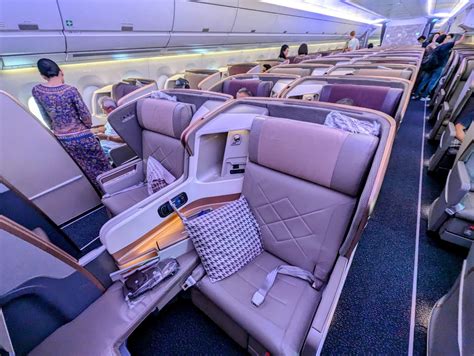
The standard A350-900s support two primary cabin layouts tailored to the regions they serve. One configuration seats 253 passengers with a balanced mix of 42 Business Class, 24 Premium Economy, and 187 Economy Class seats. The second, higher-density variant seats 303 passengers, optimized for markets where demand leans heavily toward leisure and trade travelers.
By contrast, the A350-900ULR’s 161-seat configuration offers a level of exclusivity rarely seen in commercial fleets. In Business Class, lie-flat seating caters to rest on westbound red-eye missions, while Premium Economy provides a comfortable and cost-effective cabin for professionals traveling across the Pacific or over the Arctic. Singapore Airlines has carved out a market of passengers who equate time savings with value and willingly choose direct flights over one-stop alternatives.
The average age of the fleet is just 6.6 years, making it one of the youngest and most modern A350 fleets in service. The oldest aircraft, registered 9V-SMA, stands at 9.8 years of operational life—still relatively young for a widebody jet—while the newest, 9V-SJI, is barely more than a year old.
Global Reach from a Single Hub
Singapore Airlines deploys its A350 fleet across a diverse route map that includes North America, Europe, Africa, Oceania, and Asia. In the United States, standard A350-900s reach Los Angeles and San Francisco, while the ULRs dominate services to New York. In Europe, the aircraft link Singapore with Amsterdam, Rome, Brussels, Milan, Istanbul, Manchester, and Copenhagen.
In Oceania, the A350s connect the hub with Sydney, Melbourne, Brisbane, Cairns, and destinations deeper into the Pacific such as Christchurch and Auckland. These routes, many exceeding 8 or 9 hours, illuminate the aircraft’s capability to operate efficiently across demanding operational profiles.
Each flight supports Singapore Airlines’ vision of reliable, premium global access anchored by a fleet that balances passenger experience and performance.
The Future A350F: A New Chapter in Cargo Leadership
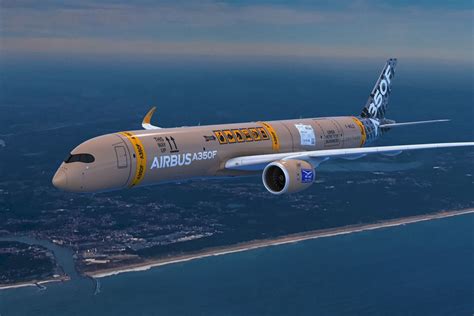
Singapore Airlines will become the launch customer for the Airbus A350F, further embedding the A350 family into its fleet strategy. The airline ordered seven A350F freighters, with options for five more. Initially scheduled for delivery in 2025, the global program delays have shifted the timeline to 2027, but the aircraft remain central to the airline’s cargo modernization strategy.
The A350F is designed to replace the carrier’s aging Boeing 747-400F fleet. Airbus estimates that the A350F offers 40% better fuel efficiency than the quad-engine 747-400F, bringing both sustainability benefits and meaningful operational cost reductions. This future cargo fleet will also complement the airline’s five existing Boeing 777Fs, extending Singapore Airlines’ global freight reach with capabilities matched to evolving logistics demand.
Beyond raw capability, the introduction of the A350F ensures maintenance and pilot-commonality advantages with the existing A350-900 family. Over time, these efficiencies support a seamless transition to a modernized, lighter, and more sustainable cargo operation.
Why Other Airlines Will Soon Surpass Singapore Airlines in A350 Count
Although Singapore Airlines leads today, it will not hold the title indefinitely. Other carriers have placed sizable orders that will eclipse the airline’s total of 72 A350s (including freighters). Turkish Airlines stands at the forefront with 110 A350s on order, including 90 A350-900s, 15 A350-1000s, and five A350Fs. Its fleet expansion reflects Istanbul’s strategic growth as a global crossroads.
Air France will also exceed Singapore Airlines, with a total order book of 92 A350s, while Qatar Airways has committed to 76 aircraft, a mix of A350-900s and the larger A350-1000. Emirates and Lufthansa both hold orders totaling 65 aircraft, matching Singapore Airlines’ current count but will surpass it when freighters are excluded.
In the United States, Delta Air Lines remains the only operator of the type, holding 55 aircraft across the -900 and -1000 variants, and United Airlines plans to join later with 45 A350-900s arriving toward the end of the decade.
These combined global orders highlight the A350’s evolving dominance and solidify its place in the market as the long-haul successor to older twin-aisle models.
The A350’s Enduring Global Appeal
Since its launch, the Airbus A350 has amassed 1,445 orders, making it the second most popular widebody aircraft currently in production, behind the Boeing 787 Dreamliner. Airlines praise its low operating costs, strong dispatch reliability, and advanced composite design. Its versatility stretches from dense regional long-haul missions to extreme ultra-long-range operations that only a handful of aircraft have ever achieved.
In many ways, the A350 reshaped the long-haul market by eliminating the need for four-engine aircraft such as the A380 and Boeing 747 on many routes. The aircraft’s design philosophy—efficiency without compromising comfort—aligns perfectly with the evolving expectations of modern travelers and the environmental commitments of global carriers.
Singapore Airlines, having been an early adopter and a consistent supporter of the type, played a defining role in shaping this aircraft’s global narrative. Its fleet continues to demonstrate how the A350 can elevate customer experience, reduce emissions, and expand route networks—all at once.
The next decade will see other airlines expand their A350 fleets dramatically, but the Singapore Airlines imprint will remain unmistakable. It pioneered ultra-long-haul commercial travel with the A350-900ULR and built a long-haul strategy around the aircraft that many airlines are only now beginning to emulate.
The Legacy and Future of Singapore Airlines’ A350 Leadership
As 2025 unfolds, Singapore Airlines holds a momentary but meaningful title: the world’s largest A350 operator. More than a raw number, the fleet represents a convergence of engineering partnership, operational discipline, and long-term strategic vision. These aircraft define the airline’s global presence today and will continue to shape its identity, even as competitors eclipse its totals with larger orders.
The story of Singapore Airlines and the A350 is ultimately a story of precision and aspiration—one airline using a next-generation airliner to redraw the map of non-stop travel. Whether flying business travelers between financial centers or connecting passengers from Southeast Asia to the far corners of Europe, North America, and Oceania, the A350 fleet stands as a testament to Singapore Airlines’ enduring pursuit of efficiency, capability, and excellence.