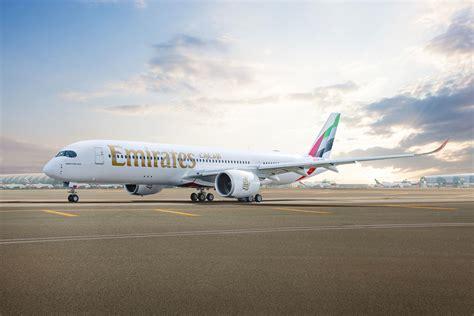
In 2025, Emirates has surged ahead as the global frontrunner in Airbus A350 deliveries, establishing its dominance not just in numbers but also in strategic foresight. With 13 brand-new A350-900s inducted into its growing widebody family, the Dubai-based aviation powerhouse commands a staggering 25% share of all A350 deliveries made by Airbus this year. This remarkable achievement not only cements Emirates’ place at the forefront of aviation innovation but also signals a broader transformation in how the airline approaches fleet modernization, long-haul operations, and fuel efficiency.
The Emirates A350 Strategy: Precision Meets Power
The A350s now joining the Emirates fleet are not just additions—they represent a calculated pivot in aircraft philosophy. Historically reliant on the superjumbo Airbus A380 and the ever-capable Boeing 777, Emirates has added the A350-900 as its third-ever aircraft type, and notably, the smallest among them. This deliberate shift allows the carrier to tap into “long, thin” routes that were previously impractical with the sheer size of its other widebodies.
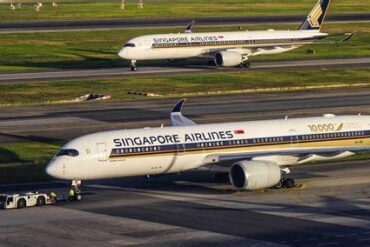
Despite not opting for the larger A350-1000, Emirates’ fleet transformation is meticulous and focused, with 73 A350-900s on order and 60 still awaiting delivery. By 2031, once these deliveries are completed, Emirates will eclipse current operators such as Singapore Airlines in sheer number of A350-900s.
A Response to Boeing’s Delays: The A350 Steps In
One of the pivotal drivers behind Emirates’ aggressive A350 acquisition strategy is the delayed Boeing 777X program. Originally scheduled for delivery in 2020, the 777X—slated to be the largest twinjet ever—has suffered multiple delays, now projected to enter service in 2027. As a result, Emirates required an immediate and reliable solution to meet demand and replace aging widebodies. The A350-900, with its proven reliability and cutting-edge technology, became the natural interim champion.
Design and Efficiency: The A350’s Market Advantage
The Airbus A350 stands apart as a clean-sheet aircraft design, created to compete with Boeing’s 787 Dreamliner. Where the A330neo struggled to keep pace, the A350 excelled, offering a fusion of aerodynamic efficiency, lightweight composites, and enhanced passenger comfort. For Emirates, these features translate into 25% lower fuel burn over legacy aircraft— a game-changer in long-haul economics.
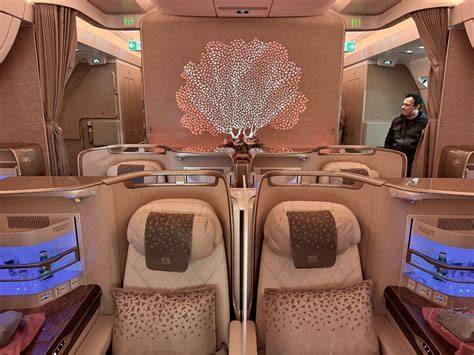
The A350 cabin redefines premium travel. High ceilings create an airy ambiance, and straight cabin walls provide superior shoulder room, distinguishing it from rival aircraft. Seat widths and legroom are maximized across all classes, further enriching the passenger experience. Additional comfort innovations include:
- Quietest twin-aisle cabin in operation (5–9 decibels quieter than competitors)
- LED mood lighting designed to reduce jet lag
- Cabin altitude of just 5,500 feet, significantly lower than industry standards, enhancing hydration and comfort
- Eight independent temperature control zones with humidity levels up to 25%
Competitive Landscape: How Emirates Outpaces Its Rivals
According to Airbus delivery data, Emirates leads the global A350-900 intake with 13 aircraft delivered in 2025. In stark contrast:
- Turkish Airlines received 6
- Air France took 5
- Delta Air Lines, 4
- Others, like Lufthansa and Japan Airlines, each received 1 or 2
This impressive delivery volume underscores Emirates’ commitment to becoming a leader not only in size but in fleet innovation. Though Turkish Airlines currently has more total A350 orders (110), Emirates is executing faster.
Why Emirates Didn’t Choose the A350-1000
The absence of the A350-1000 in the Emirates lineup might appear puzzling, especially given its larger size and range. However, engine performance under Gulf conditions was a key determinant. Emirates President Tim Clark cited concerns over the Rolls-Royce Trent XWB-97’s durability in hot, sandy environments. In contrast, the Trent XWB-84 engine on the A350-900 has proven robust, earning the airline’s praise.
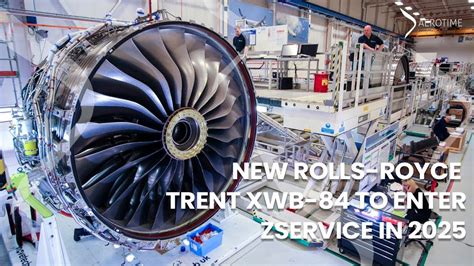
Clark publicly lauded the -900 as a “peach of an aircraft” during the Dubai Airshow 2025, reinforcing the airline’s confidence in its current choice. Moreover, the A350-1000, while bigger than the -900, does not sufficiently replace the capacity of superjumbos like the A380 or 747, further reducing its appeal to Emirates.
Emirates’ Dreamliner Addition: Complementary, Not Competitive
Emirates has not put all its eggs in the Airbus basket. The carrier has 30 Boeing 787 Dreamliners on order—15 each of the 787-8 and 787-10. These aircraft are expected to complement the A350, serving similar missions with high fuel efficiency, especially on long, thin routes and seasonal spikes.
Despite Boeing’s broader reputation challenges—stemming from the 737 MAX crisis and 777X delays—the 787 program remains its most stable. Emirates initially intended to order only the 787-10, but later revised the mix for more flexibility.
The Dreamliner’s tech specs reflect a balance of range and capacity:
- 787-8: 248 passengers, 7,305 nm range
- 787-10: 336 passengers, 6,330 nm range
Though the 787 lacks the “extra widebody” architecture of the A350, it shares several comfort innovations, including higher humidity, lower cabin altitude, and advanced LED lighting. Together, the A350 and 787 will allow Emirates to surgically target new destinations and better adapt to dynamic market conditions.
The Waiting Game: Emirates and the Boeing 777X
Despite its current focus on the A350, Emirates’ long-term strategy still hinges heavily on the Boeing 777X. With 270 units on order—the largest customer worldwide—Emirates views this next-gen twinjet as the heir to its A380 fleet. The 777X will be the largest and most capable twinjet in production once it finally enters service.
Key highlights of the 777X include:
- 395-seat capacity (2-class layout)
- Folding wingtips to enable larger wingspan without limiting airport compatibility
- GE9X engines, the most powerful turbofans ever built
- 7,285 nautical mile range
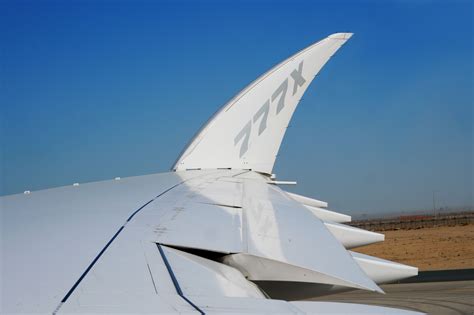
Although its debut has been marred by delays, Emirates’ continued support—evidenced by increasing its 777X order by 25% at the 2025 Dubai Airshow—demonstrates its unwavering belief in the aircraft’s potential. The airline sees the 777X as the only viable successor to the A380 in terms of size and prestige.
Conclusion: A350 Ascendancy Anchored in Strategy
In 2025, Emirates has not only outpaced its peers in A350 deliveries but also solidified its position as the world’s most forward-looking widebody operator. The airline’s bold integration of the A350-900 into its historically size-dominant fleet marks a strategic shift toward versatility, fuel efficiency, and future readiness.
While the long-awaited 777X remains on the horizon, and the 787 Dreamliners prepare to enter service, it is the A350-900 that currently flies at the vanguard of Emirates’ global ambitions. Each new delivery adds not just a jet to the fleet—but a new chapter in the modernization of long-haul aviation.