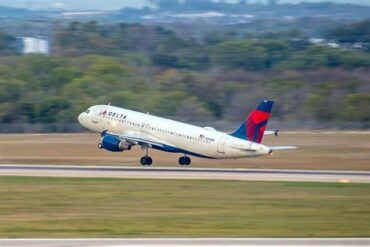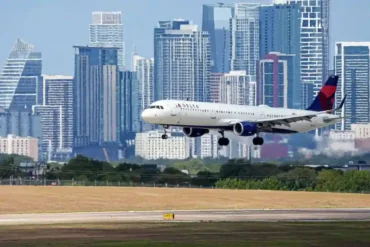
Delta Air Lines is accelerating its presence in Austin–Bergstrom International Airport (AUS), transforming the Texas capital into the airline’s fastest-growing focus city in 2026. While Delta’s global network continues to revolve around powerhouse hubs such as Atlanta, Detroit, Minneapolis, and Salt Lake City, Austin has quietly become one of the carrier’s most important strategic investments. Supported by significant capacity growth, nine newly launched routes, and increasing premium demand, the city is emerging as Delta’s secret weapon for strengthening its position across the United States.
Rather than relying solely on traditional hub-and-spoke operations, Delta is leveraging Austin’s booming economy, expanding technology sector, and rapidly growing population to create a highly connected focus city. The strategy gives travelers more nonstop options while allowing the airline to compete aggressively in one of America’s fastest-growing aviation markets.
Passenger demand continues to surge throughout Central Texas, and Delta has responded by increasing frequencies, deploying larger aircraft, and introducing new nonstop destinations that significantly expand its network reach.

Delta Adds Nine New Routes From Austin
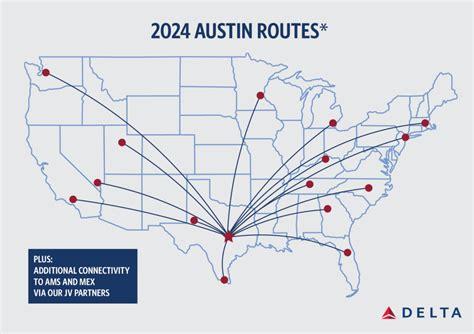
The airline’s largest network expansion from Austin includes nine new nonstop destinations spanning multiple regions of the United States. These additions strengthen both business and leisure connectivity while reducing the need for passengers to connect through larger hubs.
The newly added destinations include:
- Phoenix Sky Harbor International Airport (PHX)
- Norman Y. Mineta San Jose International Airport (SJC)
- Miami International Airport (MIA)
- Destin–Fort Walton Beach Airport (VPS)
- Bozeman Yellowstone International Airport (BZN)
- Denver International Airport (DEN)
- Glacier Park International Airport (FCA) in Kalispell
- John Glenn Columbus International Airport (CMH)
- Kansas City International Airport (MCI)
These additions expand Delta’s network from Austin to nearly 30 destinations, giving travelers considerably more nonstop choices while improving connectivity across the western United States, Florida, the Midwest, and major technology markets.
Delta executives describe the expansion as another step toward delivering greater convenience alongside the premium travel experience that differentiates the airline from many competitors.
Capacity Growth Makes Austin Delta’s Top Focus City
According to aviation analytics firm Cirium, Delta has scheduled 14% more seats from Austin compared with the previous year. That increase makes Austin the carrier’s fastest-growing focus city, surpassing Raleigh–Durham despite continued investment there.
The growth reflects much more than additional flights. Delta has carefully increased available seat capacity by deploying a balanced mix of regional aircraft and larger narrow-body jets capable of serving both high-frequency business routes and popular leisure destinations.
Austin’s thriving technology industry has become a major driver behind this expansion. Companies relocating operations to Central Texas have created stronger demand for premium business travel, while the city’s expanding population continues to generate year-round leisure traffic.
Austin Has Become Delta’s Second-Largest Market at AUS
Delta now ranks as the second-largest airline operating from Austin–Bergstrom International Airport, trailing only Southwest Airlines while maintaining clear advantages over its legacy competitors.
During the current operating schedule, Delta plans approximately 1,798 nonstop departures, providing more than 230,000 available seats throughout the month.
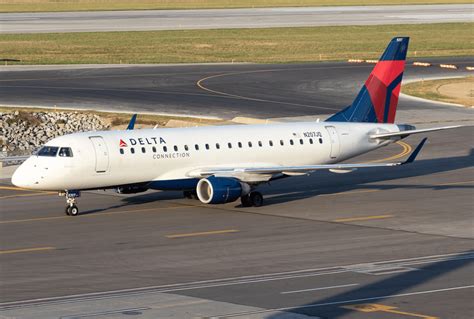
Operations include a combination of mainline aircraft and Delta Connection regional services operated by partner airlines. SkyWest Airlines performs the majority of regional flying, while Endeavor Air supplements selected routes using efficient regional jets.
The Embraer E175 has become the backbone of Delta’s Austin operation. Its right-sized capacity makes it ideal for growing markets that require frequent departures without the risk of oversupplying seats. Meanwhile, larger aircraft including the Airbus A321, Airbus A319, Airbus A220-300, Airbus A320, and Boeing 737-800 handle busier routes where passenger demand supports greater capacity.
Interestingly, although the Embraer E175 operates the highest number of flights, the Airbus A321 delivers more total seats thanks to its significantly larger passenger capacity.
A Long-Term Strategy Years in the Making
Delta’s expansion in Austin did not happen overnight. Historical scheduling data reveals a steady transformation over more than two decades.
In 2004, Delta scheduled fewer than 6,000 annual nonstop departures from Austin. The financial crisis caused operations to contract significantly, reaching a low point in 2009. Growth resumed throughout the following decade, culminating in a strong pre-pandemic network during 2019.
Like every major airline, Delta experienced a sharp decline during the global pandemic as travel demand collapsed. Annual departures dropped dramatically during 2020, but the recovery proved remarkably swift.
By 2021, Delta had already surpassed previous operating levels from Austin, demonstrating unusually strong confidence in the market’s long-term potential. Since then, expansion has accelerated every year, with scheduled departures climbing from fewer than 9,000 flights to more than 18,000 in 2025, before reaching another projected record of approximately 21,400 annual departures in 2026.
Why Austin Has Become Delta’s Secret Weapon
Austin represents far more than another focus city. It has evolved into a strategic growth platform that complements Delta’s traditional hub system while capturing demand from one of America’s fastest-expanding metropolitan areas.
Unlike heavily congested mega-hubs, Austin offers room for continued network development without many of the operational constraints found elsewhere. The city’s expanding corporate presence, strong inbound tourism, growing population, and increasing premium travel demand provide an attractive environment for sustained airline investment.
The addition of nine new nonstop routes demonstrates Delta’s confidence that Austin will continue serving as an increasingly important gateway connecting Texas with destinations across the United States. As capacity continues rising and new markets mature, the airline appears well positioned to strengthen its competitive position against Southwest, American, and United while further establishing Austin as one of the most valuable pieces of its domestic network strategy.