Speed remains one of the most defining attributes of a fighter jet, especially in the evolving landscape of aerial warfare. While modern designs prioritize stealth, agility, and multi-role versatility, there is still an undeniable allure—and strategic value—in sheer velocity. In this detailed exploration, we examine the top 10 fastest fighter jets in the world in 2025, delving into their specifications, operational histories, and the engineering feats that make them legendary.
The Enduring Power of Speed in Aerial Combat
Throughout military aviation history, speed has symbolized both technological dominance and tactical advantage. From the Cold War’s supersonic arms race to today’s multirole stealth platforms, reaching Mach 2 and beyond has often marked the pinnacle of engineering ambition. While the Soviet MiG-25 and MiG-31 top the charts with theoretical speeds of Mach 2.83, their operational status and mission profiles paint a nuanced picture of what “fastest” truly means today.
#10 – F-4 Phantom II: A Cold War Icon Still Flying
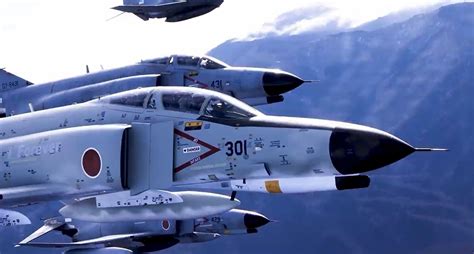
At number ten, the McDonnell Douglas F-4 Phantom II holds a storied legacy. Achieving Mach 2.23 (1,470 mph) at 40,000 feet, this twin-engine, two-seat fighter debuted in the 1960s and saw action across multiple conflicts. Originally designed without an internal gun—leading to controversial dogfighting limitations in Vietnam—the Phantom evolved with external gun pods and avionics upgrades. Today, a handful of F-4s continue service in Turkey, Greece, and Iran, primarily in reconnaissance or secondary combat roles. Its General Electric J79 engines, responsible for its blistering speed, remain a testament to Cold War propulsion design.
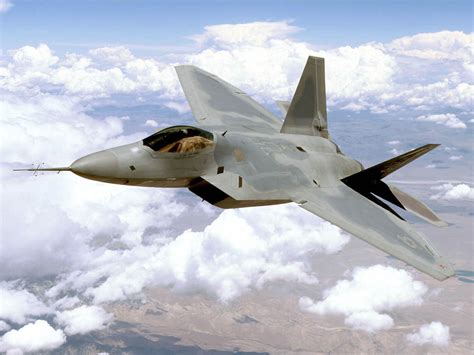
#9 – F-22 Raptor: The Stealth Speedster
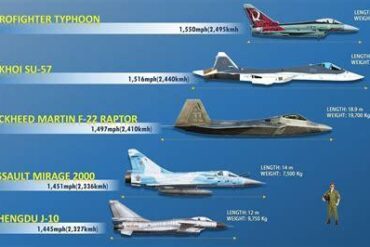
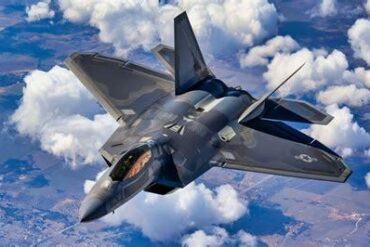
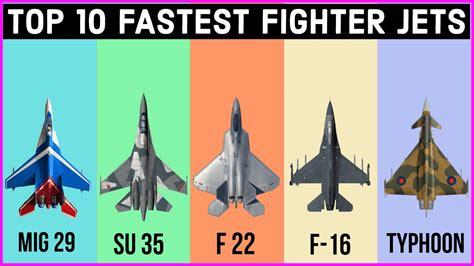
The Lockheed Martin F-22 Raptor redefined air superiority with its stealth, supercruise, and agility. Clocking Mach 2.25 (1,500 mph) at 40,000 feet, the Raptor adds a critical dimension: it can sustain speeds above Mach 1.8 without afterburners, a feat few jets can replicate. Despite its advanced capabilities, the F-22 is operated solely by the U.S. Air Force, with production capped at 187 units. Its combination of stealth and speed makes it unmatched in high-threat environments, though its velocity ceiling is often overshadowed by its radar-evading silhouette.
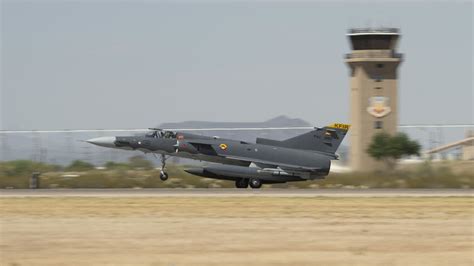
#8 – IAI Kfir: Israel’s Mirage Derivative
Built on the Mirage 5 airframe but powered by an American GE J79-J1E engine, the IAI Kfir reaches Mach 2.3 (1,520 mph) at 36,000 feet. Conceived as a stopgap during arms embargoes, Israel’s ingenuity produced a fighter that blended French aerodynamics with American propulsion. Though only 220 units were built, the Kfir remains active with operators like Colombia and ATAC (Airborne Tactical Advantage Company), fulfilling both combat and adversary training roles. Its high speed, though occasionally disputed in sustained conditions, underpins its role as an agile interceptor.
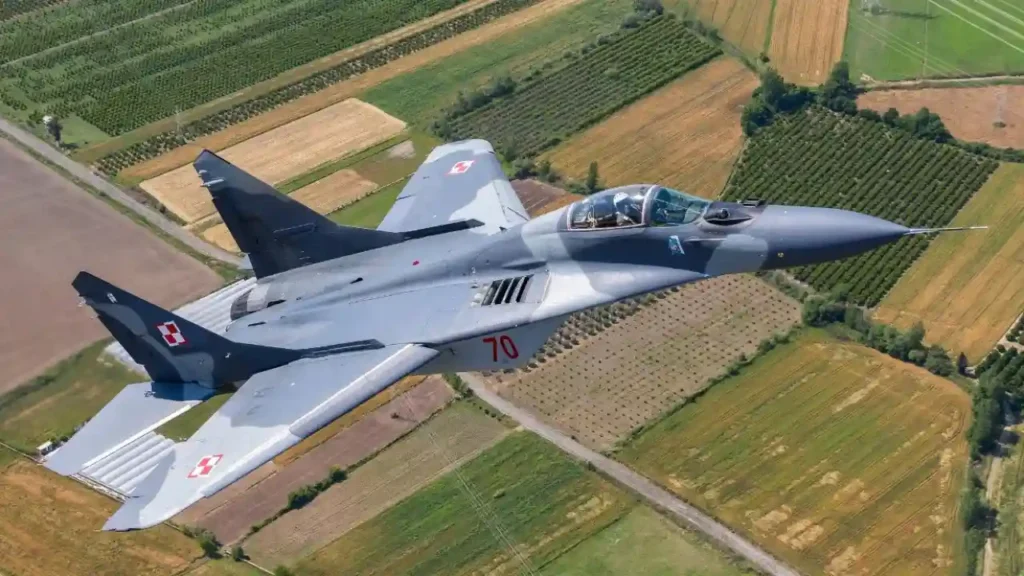
#7 – MiG-29 Fulcrum: Maneuverable and Fast
The MiG-29, known to NATO as the “Fulcrum,” exemplifies Soviet doctrine favoring nimble, forward-deployed fighters. Achieving Mach 2.3 (1,520 mph) at 36,000 feet, this lightweight jet pairs speed with exceptional maneuverability, particularly at high angles of attack. Despite its relatively short range and dated avionics in earlier variants, the MiG-29 remains operational across dozens of air forces, with roughly 788 active jets worldwide. Its speed ensures it can rapidly intercept intruders or reposition across contested airspace.
#6 – F-14 Tomcat: Swing-Wing Supersonic Legend
Made famous by pop culture and its naval dominance, the Grumman F-14 Tomcat was the first U.S. 4th-generation carrier-based fighter. With a top speed of Mach 2.3 (1,544 mph) at 40,000 feet, the Tomcat’s variable-geometry wings allowed for optimal performance across diverse speed regimes. Although retired by the U.S. Navy in 2006, Iran retains 41 operational F-14s, using indigenous upgrades to extend their lifespan. Pilots have reported clean configurations surpassing Mach 2.3 in test conditions, showcasing the platform’s aerodynamic brilliance.

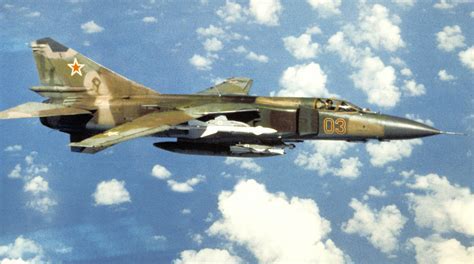
#5 – MiG-23 Flogger: Versatile Swing-Wing Interceptor
The MiG-23, or “Flogger,” represents the Soviet shift toward swing-wing versatility and beyond-visual-range interception. Reaching Mach 2.35 (1,553 mph) at 36,000 feet, it combined a powerful radar suite with flexible wing settings, optimizing both speed and low-speed handling. Over 5,000 units were produced, making it one of the most prolific variable-sweep fighters. Though fewer than 200 remain active—mostly in Syria, North Korea, and Angola—the MiG-23’s speed once enabled it to challenge Western strike aircraft at standoff ranges.
#4 – Su-27 Flanker: Soviet Air Superiority Champion
Introduced in the 1980s, the Sukhoi Su-27 was the Soviet answer to U.S. air superiority fighters. Capable of Mach 2.35 (1,600 mph) at 36,000 feet, the Su-27’s thrust-to-weight ratio and expansive wing area allowed exceptional performance at both high and low speeds. Beyond the baseline model, the Su-27 spawned a family of derivatives—including the Su-30, Su-34, and Su-35—now fielded across Russia, China, and India. Its speed at altitude remains a byproduct of its AL-31F turbofan engines, enabling rapid response over vast territories.
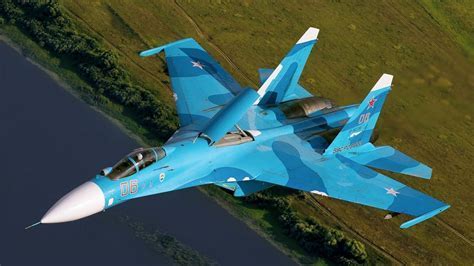
#3 – F-15 Eagle: The Reigning Operational Speed King
Few jets have maintained such an unblemished combat record as the McDonnell Douglas F-15 Eagle. Designed explicitly to counter the MiG-25 threat, the F-15 achieved Mach 2.5 (1,650 mph) at 40,000 feet, combining speed with devastating air-to-air lethality. Over 900 F-15s remain active, bolstered by upgrades like the F-15EX, which promises even greater performance potential. While the F-15’s theoretical speed approaches Mach 2.9 in clean configurations, operational constraints limit sustained speeds to protect airframe and engine integrity.

#2 – MiG-31 Foxhound: High-Speed Interceptor Evolution
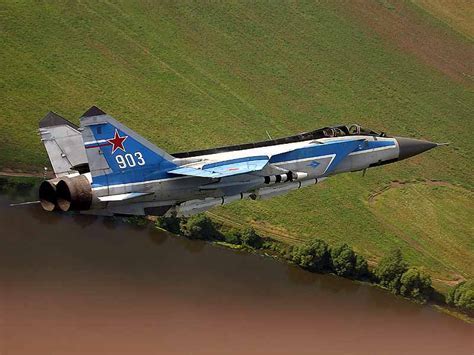
An evolution of the MiG-25, the MiG-31 Foxhound retains the blistering Mach 2.83 (1,900 mph) speed but enhances avionics, radar, and weapons integration. Operating primarily at 70,000 feet, it served as Russia’s high-altitude interceptor, capable of engaging bombers and cruise missiles at extreme ranges. Though Kazakhstan retired its fleet in 2024, Russia maintains approximately 128 operational units. Modern restrictions—such as cockpit canopy limitations—have reduced practical speeds to Mach 1.5 in regular sorties, preserving structural safety.
#1 – MiG-25 Foxbat: The Pinnacle of Speed
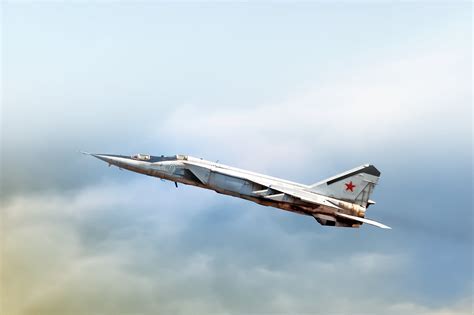
At the top stands the MiG-25 Foxbat, a Cold War marvel built for one purpose: outrunning and outclimbing American reconnaissance and bomber aircraft. With a staggering Mach 2.83 (1,900 mph) top speed at 70,000 feet, the MiG-25 relied on powerful Tumansky R-15 turbojets, albeit at the cost of short engine life when pushed to the limit. Between 1964 and 1984, 1,186 units were produced, though today only four airframes remain active in Syria and Libya. Its blistering speed record stands largely uncontested among airbreathing jets, though its high-speed flight envelope was limited to straight-line dashes rather than sustained combat agility.
Operational Realities of High-Speed Fighters
While the MiG-25 and MiG-31 hold the title for raw speed, their limited deployment and aging systems mean that the F-15 Eagle remains the world’s fastest actively deployed fighter in frontline service. Its blend of speed, payload, and combat adaptability continues to secure air superiority in multiple theaters.
Modern fighter jet design trends increasingly prioritize stealth, sensor fusion, and multirole flexibility over outright speed. Combat data shows few engagements exceeding Mach 1.2, with agility, detection avoidance, and networked warfare offering more decisive advantages. However, speed retains critical relevance in long-range interceptions and rapid response missions, particularly in expansive air defense zones.
Honorary Mentions and the Future of Fighter Speed
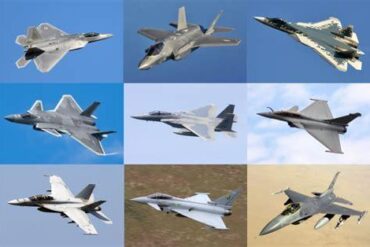
Several other high-speed fighters deserve acknowledgment, including the F-16 Fighting Falcon, MiG-21, Mirage 2000, Mirage F1, Saab JAS 39 Gripen, Eurofighter Typhoon, Chengdu J-20, and Su-57, all capable of speeds ranging from Mach 2 to Mach 2.2. Future sixth-generation concepts may revisit higher speed ceilings, though projections suggest Mach 2.2 to Mach 2.5 as the practical limit balancing stealth and thermal management.
In the relentless pursuit of air dominance, speed remains both an engineering challenge and an operational necessity. As adversaries evolve and airspaces expand, the fastest fighter jets of 2025 stand as icons of a bygone era of raw velocity—and enduring testaments to aerospace innovation.