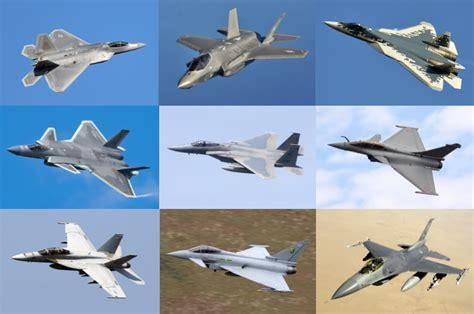
Modern fighter jets are at the pinnacle of aerospace engineering, embodying cutting-edge technology, extraordinary agility, and overwhelming firepower. In 2025, the race for air superiority continues as nations push the boundaries of stealth, speed, and multi-role combat capability. These aircraft dominate the skies not only through sheer performance but also through advanced integration of sensors, networked systems, and artificial intelligence. Below, we examine the top 10 best fighter jets in the world in 2025, exploring their unique features and why they lead the global pack.
1. Lockheed Martin F-35 Lightning II
The F-35 Lightning II remains the crown jewel of fifth-generation fighters in 2025. This multi-variant platform excels in both stealth and electronic warfare, cementing its dominance in air-to-air and air-to-ground missions.
The F-35A, F-35B, and F-35C variants provide flexibility for a range of missions from conventional land bases to aircraft carriers and vertical landing zones. Equipped with the Pratt & Whitney F135 engine, it is the most powerful fighter jet engine to date. The jet’s stealth profile, sensor fusion, and Helmet Mounted Display System (HMDS) give pilots a level of battlefield awareness unmatched by any current adversary.
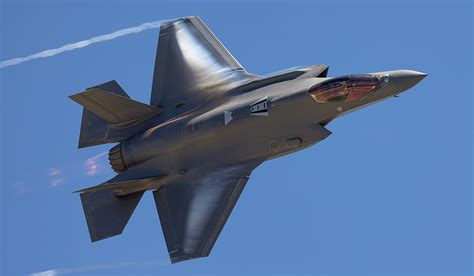
What sets the F-35 apart is not just its performance, but its interoperability. Operated by over a dozen nations, it enables seamless coalition operations across NATO and allied forces. As block upgrades continue to be deployed, particularly Block 4, the F-35 is evolving into a platform with even greater range, payload, and cyber-resilience.
2. Chengdu J-20 Mighty Dragon
China’s answer to the F-22 and F-35, the Chengdu J-20 Mighty Dragon, is now a fully operational platform within the People’s Liberation Army Air Force (PLAAF). Introduced in 2017, the aircraft has matured significantly and is now fielded in growing numbers.
While the J-20 lacks thrust vectoring, it compensates with its stealth-focused airframe, powerful radar systems, and long-range capability. A new engine, the WS-15, is reportedly in the final phases of testing and will greatly improve thrust-to-weight ratio and overall maneuverability.
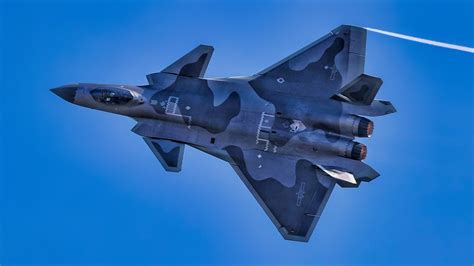
Additionally, the rumored two-seat variant aimed at drone swarm control could place the J-20 at the forefront of man-unmanned teaming (MUM-T) operations.
3. Lockheed Martin F-22 Raptor
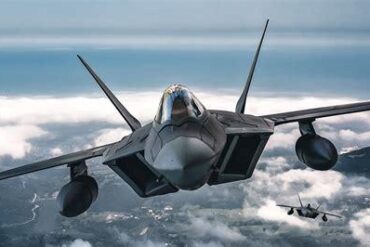
Still widely considered the apex predator in air-to-air combat, the F-22 Raptor blends raw power with unrivaled stealth. Its supercruise ability, thrust vectoring, and AN/APG-77 AESA radar ensure total dominance in the skies.
The U.S. Air Force has invested heavily in keeping the F-22 relevant, with sensor upgrades, increased data-link capabilities, and electronic warfare improvements forming part of continuous modernization efforts. Even though production ceased in 2012, the Raptor’s architecture remains futuristic.
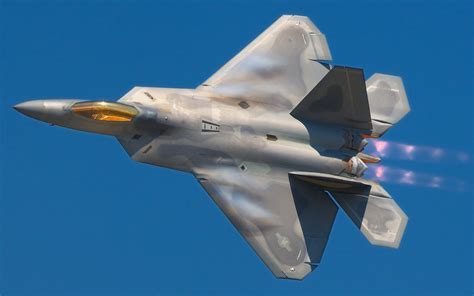
No other operational fighter has demonstrated such consistent air superiority kill ratios during exercises and simulations, particularly in beyond-visual-range combat scenarios.
4. KAI KF-21 Boramae
South Korea’s ambitious entry into the world of advanced fighter jets, the KF-21 Boramae, is nearing mass production. A collaboration between Korea Aerospace Industries (KAI) and Indonesia, the KF-21 represents a fusion of modern stealth design and multirole functionality.
With six prototypes already in advanced testing, the KF-21 features low-observable design, AESA radar, and advanced electronic warfare systems. The second block is expected to include internal weapons bays, bringing it even closer to full fifth-generation capability.
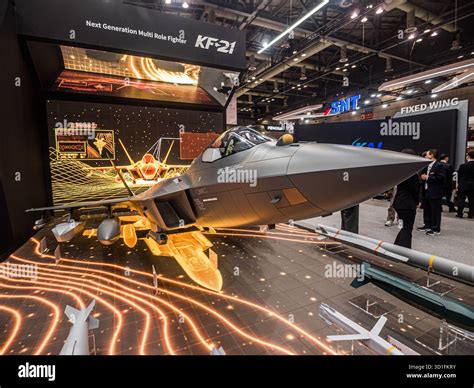
Its modular architecture is designed to be future-proof, enabling seamless upgrades and export customization, especially attractive to Southeast Asian and Middle Eastern allies.
5. Sukhoi Su-57 Felon
Russia’s first true fifth-generation fighter, the Su-57 Felon, combines stealth, agility, and long-range strike capabilities in one formidable platform. Despite a rocky development path, the Felon is now fully operational in limited numbers and undergoing further enhancements.
It features 3D thrust-vectoring nozzles, advanced infrared tracking, and L-band radar arrays to detect stealth aircraft. The impending integration of the second-stage Izdeliye 30 engine will finally provide the power and fuel efficiency initially promised.
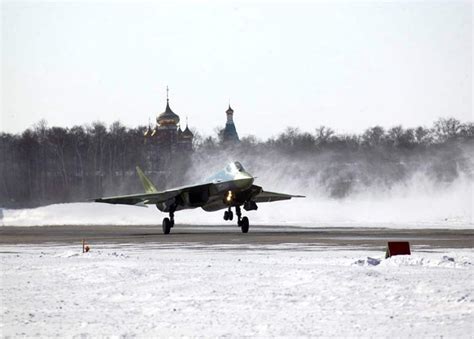
Furthermore, the Su-57 is central to Russia’s future drone wingman strategies, with ongoing tests involving the S-70 Okhotnik-B unmanned combat aerial vehicle.
6. Shenyang FC-31 Gyrfalcon
China’s second fifth-generation fighter, the FC-31 Gyrfalcon, remains shrouded in secrecy but appears destined to become the country’s next carrier-borne jet. Originally developed for export, recent developments indicate a strategic pivot toward naval operations.
New photos reveal substantial improvements in the FC-31’s fuselage, cockpit canopy, and engine design, suggesting a shift toward higher thrust and stealth optimization.
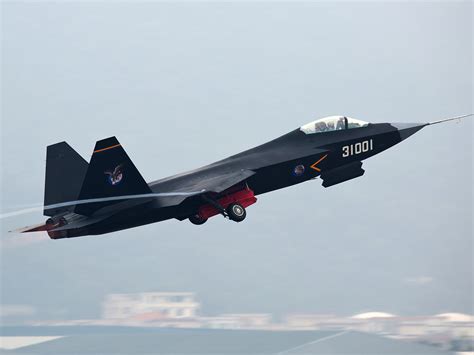
If deployed aboard China’s growing aircraft carrier fleet, the FC-31 could greatly enhance the People’s Liberation Army Navy’s (PLAN) power projection.
7. Boeing F-15EX Eagle II
The F-15EX Eagle II is a perfect demonstration of how legacy platforms can remain lethal through modern upgrades. Building on the combat-proven F-15 lineage, the EX model brings a completely digital backbone, fly-by-wire system, and Open Mission Systems architecture.
Its capability to carry an unmatched 22 air-to-air missiles, combined with an advanced radar suite and infrared search and track (IRST), allows it to dominate contested airspace even without stealth.
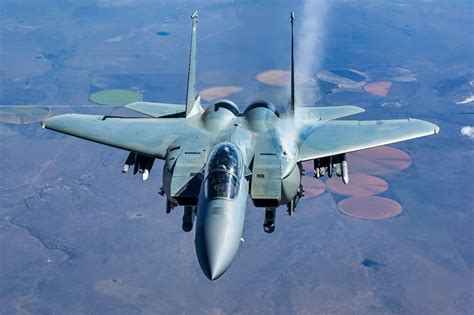
Given its extended range and payload, the F-15EX complements stealth fighters by providing air superiority and stand-off strike options.
8. Dassault Rafale F4
The French Dassault Rafale, now upgraded to the F4 standard, continues to impress with its blend of agility, endurance, and versatility. It’s one of the few fighters certified for nuclear strike, carrier operations, and multi-spectral reconnaissance.
The Rafale F4 features improvements in satellite communications, data links, and new weaponry like the MICA NG and ASMPA nuclear missile. Its robust Spectra electronic warfare suite remains one of the most respected among 4.5 generation aircraft.
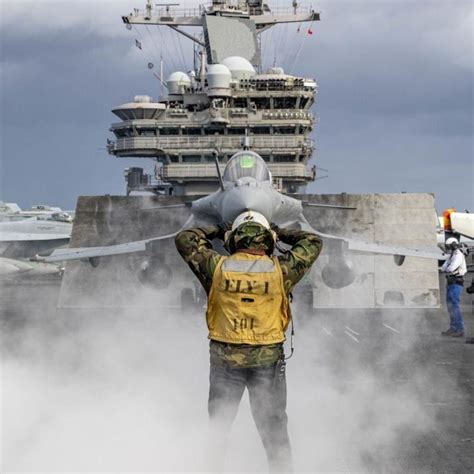
France, India, and the UAE have all placed significant orders, ensuring this platform’s relevance well into the 2030s.
9. Eurofighter Typhoon Tranche 4
With its latest Tranche 4 upgrade, the Eurofighter Typhoon secures its place as one of the most advanced 4th generation fighters. The new iteration includes enhanced avionics, E-Scan Mk1 radar, and future-proof mission systems.
Developed by a consortium of the UK, Germany, Italy, and Spain, the Typhoon is a true European success story. It delivers exceptional performance in both air dominance and deep strike roles.
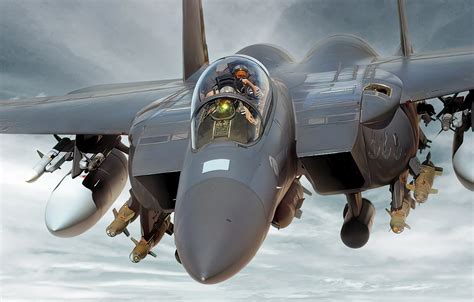
Future integration with FCAS sixth-generation technologies promises to keep the Typhoon cutting-edge.
10. Sukhoi Su-35S
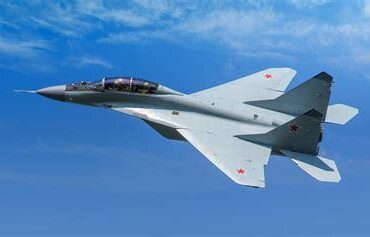
The Sukhoi Su-35S is the ultimate evolution of the Su-27 Flanker family. With thrust-vectoring AL-41F1S engines, 3D maneuverability, and upgraded avionics, the Su-35S remains one of the most formidable non-stealth fighters.
Its primary strength lies in close-quarters dogfighting, long-range radar, and the ability to deploy a diverse weapons loadout. Used heavily in Russian combat operations, the Su-35S has proven its capability in real-world scenarios.
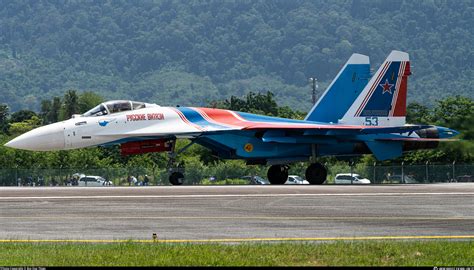
Though lacking stealth, it compensates with kinetic performance and advanced electronic warfare countermeasures.
Final Thoughts: The Future of Air Superiority
The 2025 global fighter jet landscape reflects a balance between legacy aircraft reinvented through innovation and true fifth-generation marvels. As sixth-generation programs like the U.S. NGAD, UK-led Tempest, and EU’s FCAS edge closer to deployment, the current top-tier jets continue to evolve with AI integration, multi-platform connectivity, and hypersonic weapons capability.
These ten jets represent the cutting edge of modern aerial warfare, showcasing what is possible when engineering precision, national defense strategy, and aerospace technology converge. With geopolitical tensions rising and the demand for technological edge intensifying, these aircraft will continue to shape the skies for years to come.