Owning any aircraft is already a rare luxury. But getting your hands on one of the fastest jets available? That’s next-level bragging rights. Since Chuck Yeager’s Bell X-1 broke the sound barrier on October 14, 1947, speed has become one of the most admired traits in aviation — maybe only second to range. It’s not just about performance. It’s about status.
Today, the fastest flying machines are mostly military-grade. Designed to evade threats and deliver force with precision, these aircraft were built for urgency. Civilian aviation, especially after the Concorde retired in 2003, is in a different league — more focused on fuel economy, noise control, and keeping costs in check.
Still, you don’t need to be in the military to feel the rush of high-speed flight. Many former military jets have ended up in private hands. At the same time, business jets from brands like Gulfstream and Bombardier come impressively close to supersonic speeds. Here’s a list of jets that are civilian-accessible and impressively fast — from Cold War-era interceptors to cutting-edge corporate flyers.
Douglas A-4 Skyhawk
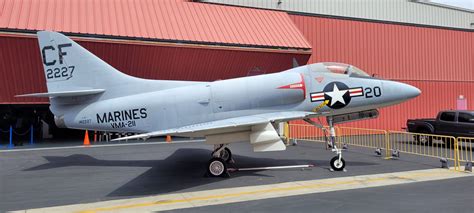
If you own a Douglas A-4 Skyhawk, you’re not just flying a fast plane — you’re holding onto a slice of U.S. Navy and Marine Corps history. Introduced in 1954, this lightweight attack aircraft shocked the Navy by weighing under 10,000 pounds clean, which was far lighter than its competitors. Powering it is a single Pratt & Whitney J52-P-6-A engine, delivering 8,500 pounds of thrust. That setup pushes the Skyhawk to a max speed of Mach 0.91.
Though only the Argentine Air Force and Brazilian Navy still operate this aircraft today, many of the nearly 3,000 units built are now privately owned. They show up at airshows, military museums, and even demo flights. As late as 2011, the New Zealand Air Force sold off its grounded Skyhawks to a U.S. firm for $7.9 million. If you’re in the market, you might still find models from the 1990s — one 1992 version is currently listed by Platinum Fighter Sales for $3.2 million.
Dassault Falcon 8X
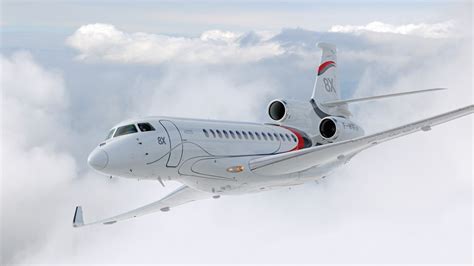
Until the Falcon 10X takes over, the Dassault Falcon 8X sits at the top of the French manufacturer’s civilian aircraft lineup. It’s also one of the last trijets standing, alongside its predecessor, the 7X. With three Pratt & Whitney Canada PW307D engines pushing a combined 20,166 pounds of thrust, it reaches speeds up to Mach 0.90. But it’s not all about speed — this jet has a range of 6,450 nautical miles, enough to go from London to Singapore without a stop.
Dassault leveraged its military experience in building the Falcon 8X. It features a Digital Flight Control System inspired by the Rafale fighter jet and includes FalconEye vision tech for better awareness in the cockpit. Comfort is also a major draw — the cabin measures 42 feet, 8 inches long, 7 feet, 8 inches wide, and 6 feet, 2 inches tall, comfortably seating up to 16 passengers, though most choose a 12-passenger setup. And yes, Max Verstappen owns one.
Cessna Citation X+
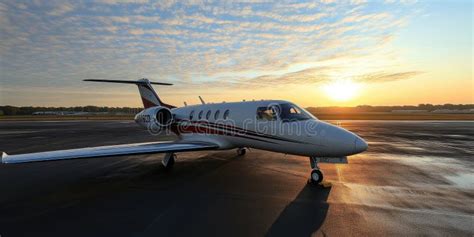
When Cessna rolled out the Citation X+ in 2013, it wasn’t just a refresh of the Citation X — it was a speed upgrade. Featuring two Rolls-Royce AE3007C2 turbofans with improved fan tech at the rear, this business jet reached a top speed of Mach 0.935. Inside the cockpit, the Garmin G5000 suite added to its appeal. Even with its raw power, it’s pretty efficient, burning just 5.6 gallons of fuel per minute. Its range? About 3,200 miles while carrying 12 passengers in comfort.
Though it was eventually surpassed by Bombardier’s Global 8000, the Citation X+ remains among the fastest civilian jets ever made. Sadly, production ended in 2018. Its successor, the Longitude, might offer better range, but it doesn’t match the X+ in flat-out speed — topping out at 644 mph. If you’re looking to buy, expect to spend between $3 million and $10 million depending on the model and condition.
Gulfstream G800
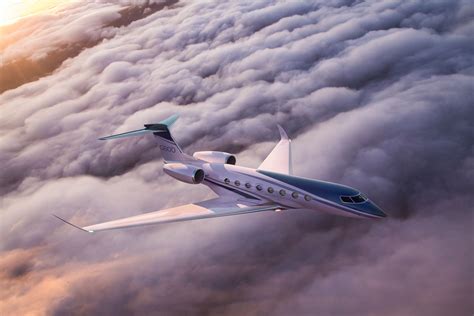
It’s just 11 mph shy of being the fastest private jet ever built, but the Gulfstream G800 is still a beast. It clocks in at Mach 0.935 and goes farther than any jet in its class — a whopping 8,200 nautical miles. Its record-breaking ability was proven in December 2023, when a G700 version completed a Tokyo-to-Savannah flight (6,365 nautical miles) in under 11 hours, setting a new city-pair record.
As Gulfstream’s latest addition to the G-series, the G800 sets high standards across the board — from cabin size and avionics to engine performance and range. Swapping out the old BR725 engines, the G800 now uses Pearl 700s, which produce 18,250 pounds of thrust and cut fuel use by 5%. For optimal range, pilots usually cruise at Mach 0.85, though high-speed runs still give 7,000 nautical miles.
Inside, the cabin is just as impressive. Configurable for up to 19 passengers, it features Gulfstream’s signature style: open living areas, top-tier materials, and huge oval windows. Even better, the cabin pressure system keeps altitude at just 2,840 feet, minimizing jet lag. The price? Over $70 million.
Bombardier Global 8000
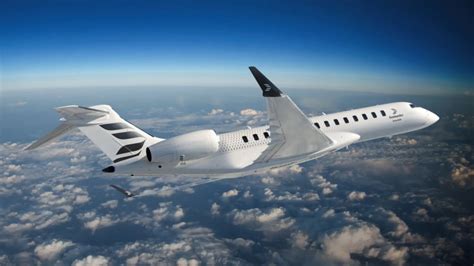
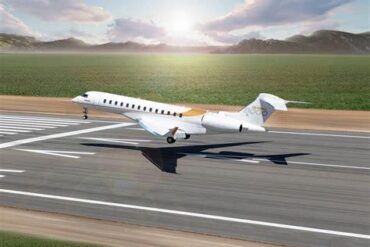
The crown for the fastest private jet currently belongs to the Bombardier Global 8000. Since the Concorde’s retirement, no other passenger jet has flown faster. With cruise speeds around Mach 0.92 and a max of Mach 0.95, it’s the pinnacle of private air travel. This record-setting status became official on May 16, 2025, when the aircraft made its first flight.
Powered by two General Electric Passport engines, each generating 18,000 pounds of thrust, the Global 8000 balances speed with exceptional range. It can fly 8,000 nautical miles nonstop, putting almost every major global city within reach from New York. Only a few spots in Southeast Asia and Australia are beyond its grasp. With its blend of power, range, and elegance, this jet commands a price tag of around $78 million.
Northrop T-38 Talon
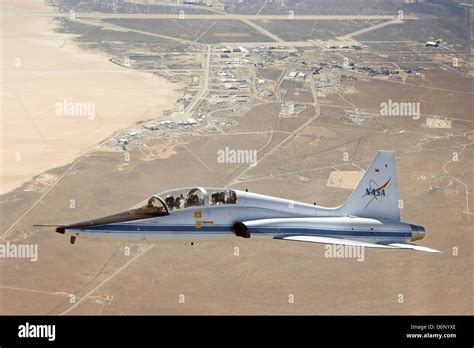
Flying at Mach 0.95 is decent—but it’s not enough for those chasing true supersonic speed. That’s where the Northrop T-38 Talon comes in. It’s lighter, more agile, and yes, much more cramped than your average jet. As the world’s first supersonic jet trainer, the T-38 can hit Mach 1.08 at sea level and around Mach 1.3 above 30,000 feet. This 46-foot-long aircraft has spent most of its service life training pilots from the U.S. Air Force.
Its two General Electric J85-GE-5 turbojet engines are so capable that, even after 64 years since its debut, the T-38 is still in active use for pilot training. NASA also relies on it for keeping astronaut skills sharp. However, the T-38’s era is winding down as the Air Force shifts to the T-7A Red Hawk. That said, the Talon’s retirement is a win for some civilian flyers, as a small number make their way into private ownership.
Don’t expect many choices though. Only the T-38A, the most basic version, has ever appeared on the civilian market—and even then, it’s incredibly rare. Chuck Thornton was the first private owner of a T-38. Another one reportedly showed up with a price tag of around $800,000.
Saab J35 Draken
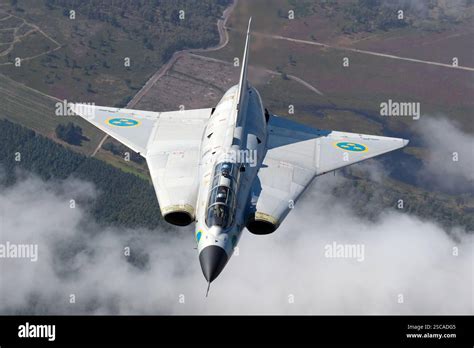
In the realm of fast and funky Cold War designs, the Saab J35 Draken—or “Dragon”—is in a league of its own. Designed by Swedish automotive and aerospace giant Saab, the J35 broke several barriers: the first Western European jet to sustain true supersonic flight, the first to exceed Mach 2, and the first to implement the wild double delta wing design. That wing pairs a steeply angled inner section with a broader outer one, letting the plane act like two different jets depending on speed.
Interestingly, the aerodynamic instability caused by that wing design enabled one of the most iconic aerial moves—the Cobra maneuver. This stunt involves the jet pulling its nose almost straight up before rapidly diving, and it remains a favorite at airshows. There’s another cool feature that makes the Draken attractive to private owners.
Thanks to its strong landing gear and a tough Svenska Flygmotor RM6B/C engine (a Swedish version of the Rolls-Royce Avon), the Draken could take off and land from short, messy stretches of highway. That makes it surprisingly practical. While owning one isn’t easy, it’s not totally out of reach. A Draken registered as N35350 is known to exist in the U.S., and one was once listed for $249,000.
Mikoyan-Gurevich MiG-21
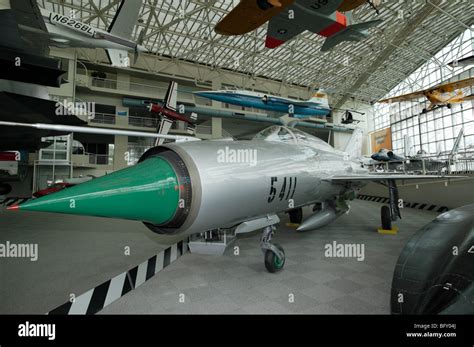
Like the Draken, the MiG-21—NATO codename “Fishbed”—was originally built to intercept fast targets. Designed by the famed Mikoyan-Gurevich bureau in the Soviet Union, it later became a competent fighter too. The Soviets took it seriously, producing over 11,000 units starting in the mid-1950s, with help from partner nations.
That production count makes it the most-built supersonic jet in history. After the Cold War, many MiG-21s ended up in the hands of private collectors. Even though it was created to battle U.S. jets, both the National Museum of the U.S. Air Force and the San Diego Air & Space Museum have them on display.
Prices vary a lot. In 2024, the Cavanaugh Flight Museum in Dallas listed one for $50,000. Back in 2006, a Chinese buyer famously got one on eBay for just half that. A Belgian seller even got a €5,250 offer for a rough airframe with a working cockpit. But buying is just the beginning. Pilot Paul van den Heuvel spent $165,000 to get his MiG-21 FAA-certified, then pays around $50,000 a year to keep it flying.
Lockheed F-104 Starfighter
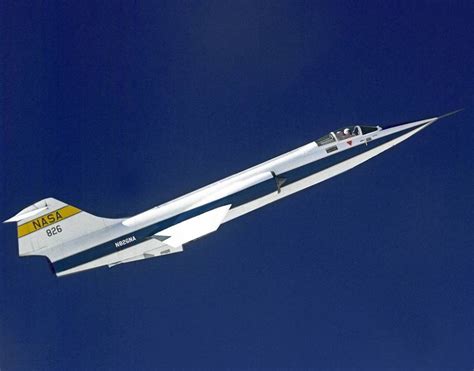
Clarence “Kelly” Johnson, the genius behind the F-104 Starfighter, also created the SR-71 Blackbird. The Starfighter didn’t reach Mach 3.2 like the SR-71, but it still impressed with Mach 2 speeds—groundbreaking at the time. A single General Electric J-79-7A turbojet gave it 15,800 pounds of thrust. With a wingspan of just 21 feet 9 inches, it earned the nickname “a missile with a man in it.”
Collectors love the Starfighter for good reasons. It’s a Cold War icon with service history across Europe and Vietnam. And few jets can still fly at twice the speed of sound, near 100,000 feet. But be warned—its safety record is pretty grim. Nicknames like “flying coffin” and “widowmaker” were sadly earned.
Although no longer used in active duty, its legacy lives on. Civilian team Starfighters Inc. flies them at airshows. At one point, they listed a model for $4.2 million, though the price later dropped to $305,000.
Mikoyan-Gurevich MiG-29
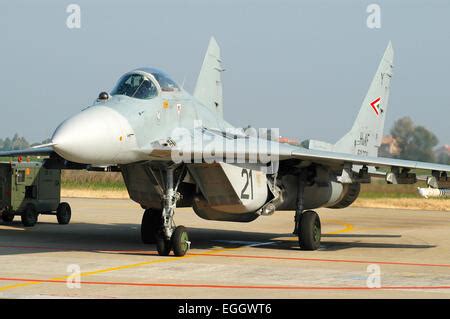
Another Cold War star, the MiG-29 “Fulcrum,” is often considered the fastest warbird in civilian hands. It can reach speeds of up to Mach 2.25 thanks to its two Klimov RD-33 turbofan engines. Designed for air superiority, it has an impressive thrust-to-weight ratio, letting it accelerate quickly and maneuver tightly in dogfights.
When the USSR collapsed, the MiG-29 was still relatively new but already widespread. Today, it’s used in many countries, from post-Soviet states to India, Egypt, and Poland. The jet’s popularity also led to several variants, including the MiG-29K for carriers and the tech-enhanced MiG-35.
It’s rugged too. Older MiG-29s had upper fuselage intake doors that opened when needed to avoid debris. Even the U.S. Air Force grabbed a few from Moldova after the Cold War. Oh, and Microsoft co-founder Paul Allen owned one—it eventually ended up with entrepreneur Jared Isaacman.