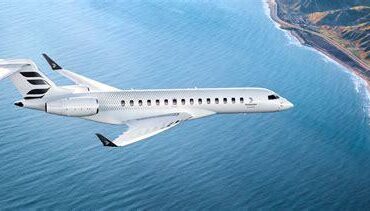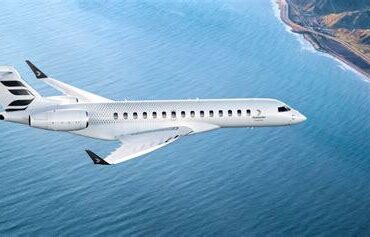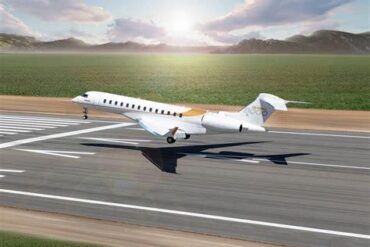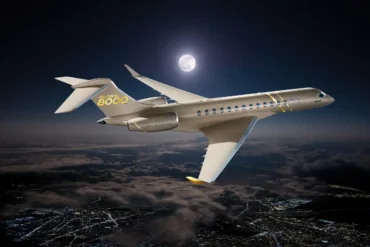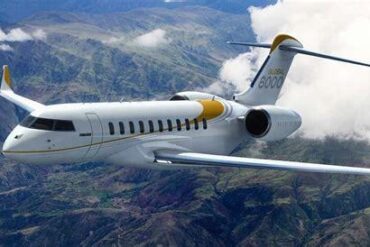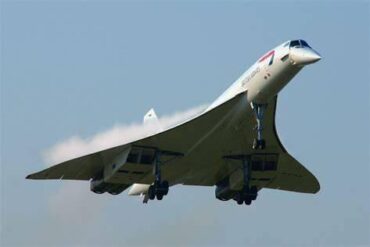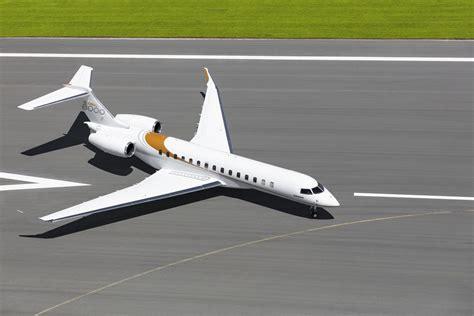
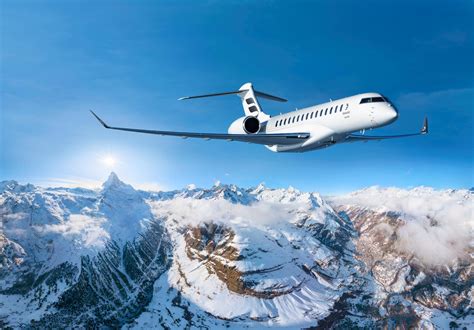
The Bombardier Global 8000 is not just a high-end business jet—it is a statement of intent. With its Mach 0.95 maximum operating speed, it is the closest any civilian aircraft has come to Concorde’s once-unrivaled pace since that iconic supersonic aircraft was retired in 2003. More than just numbers on paper, the Global 8000 offers a modern, real-world expression of speed, harmonized with range, comfort, and compliance with today’s rigorous aviation standards.
A Bold Return to Speed in Civil Aviation
For over two decades, the industry has moved toward efficiency and emissions control, often at the expense of speed. Aircraft have focused on stretching range and comfort, but rarely ventured near Mach 1. The Bombardier Global 8000 changes that, with its capability to cruise at Mach 0.92 and sustain it over transcontinental distances, reintroducing velocity as a key metric in aircraft performance.
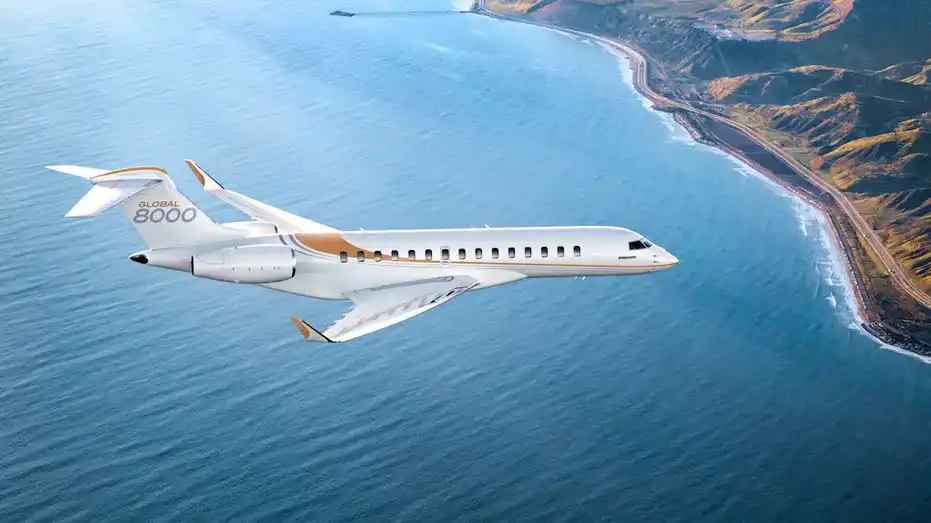
While Concorde soared at Mach 2, the Global 8000 is not chasing the same goal. Instead, it provides a near-supersonic cruising experience that is operationally sustainable, environmentally compliant, and financially viable. This balance makes it the fastest certified civilian jet in active production, an achievement that respects both history and modern demands.
The Aerodynamic Formula for Near-Mach Travel
At the heart of the Global 8000’s speed lies aerodynamic sophistication. Its wing design is one of the most refined in the transonic domain, with a swept-wing geometry and airfoil profile tailored to delay shockwave formation. As airflow approaches Mach 1, drag can spike dramatically—a phenomenon called wave drag. Bombardier’s engineers addressed this by creating a structure that minimizes drag rise and stabilizes lift.
This is coupled with advanced high-lift devices, ensuring stability and control at elevated speeds and altitudes. The result is a platform that doesn’t just brush the sound barrier—it can confidently fly at the edge of it for hours.
Powering Speed: The General Electric Passport Engines
Speed alone cannot be delivered without propulsion, and here the Global 8000 again impresses. Its twin General Electric Passport engines are purpose-built for high-speed, high-altitude operation. Designed with performance and emissions in mind, they deliver ample thrust even at the thin air of 51,000 feet, where the aircraft finds its optimal cruise envelope.
Unlike Concorde’s afterburning engines, the Passport engines operate quietly and cleanly, meeting the strictest current ICAO Stage 5 noise regulations and environmental standards. This makes the Global 8000 not just fast, but responsibly fast.
Certification and Performance: Speed Proven in the Skies
Bombardier’s claims of speed have been verified through rigorous FAA certification and supported by empirical data. During test campaigns, a modified Global 7500—used as a demonstrator for Global 8000 performance—broke the sound barrier, briefly exceeding Mach 1.015 in controlled conditions. While this is not the aircraft’s certified operational speed, it highlights the robust aerodynamic architecture and provides a strong buffer for the jet’s high-speed cruise.
What truly matters, however, is the certified envelope: Mach 0.95 maximum, and Mach 0.92 high-speed cruise, both achievable over long missions. For comparison, most ultra-long-range jets cruise between Mach 0.85–0.90, placing the Global 8000 in a league of its own.
Inside the Cabin: Speed Meets Ultra-Luxury
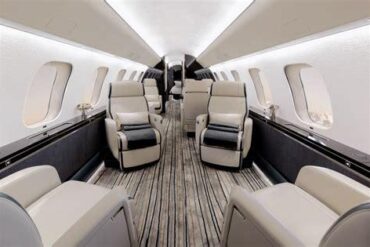
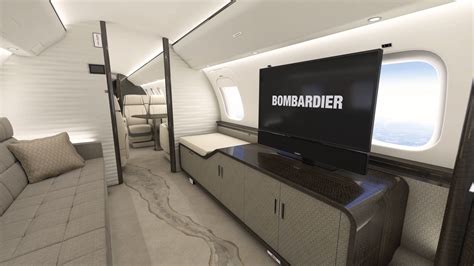
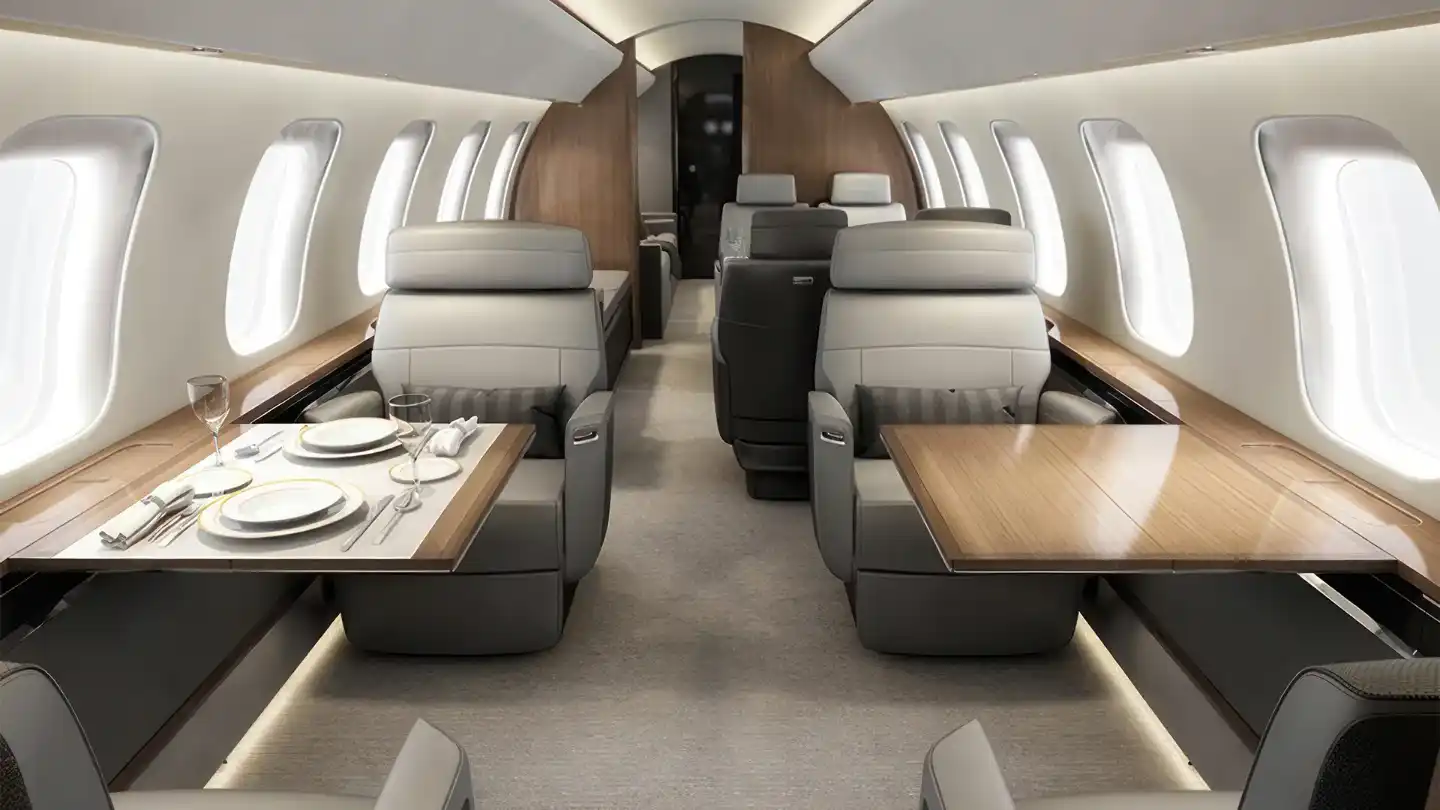
The Global 8000 does not trade speed for comfort. On the contrary, it complements its performance with a next-generation cabin experience. Designed with four customizable zones, the interior features Bombardier’s Nuage seating, ultra-quiet acoustics, and HEPA-filtered air circulation.
Passengers can sleep, work, dine, and relax in a cabin that offers sea-level equivalent pressure up to 41,000 feet, reducing fatigue and maximizing well-being on long-haul flights. The jet’s intercontinental range of ~8,000 nautical miles means nonstop routes like Dubai to Houston or Singapore to Los Angeles are routine.
Comparing Global 8000 to Other Elite Jets
To understand the Global 8000’s significance, consider its closest rivals:
- Gulfstream G700: Max speed of Mach 0.925, with a long-range cruise around Mach 0.85–0.90. Emphasizes range and comfort.
- Dassault Falcon 10X: Similar speed profile, capped at Mach 0.925, with slightly less range.
- Cessna Citation X+: Once the speed king with Mach 0.935, but with a modest range of just 3,460 nm and now discontinued.
In every case, no other aircraft offers the combined package of nearly Mach 1 speed and 8,000-nm range. This makes the Global 8000 not just a leader—but a category-defining aircraft.
The Concorde Comparison: Understanding the Legacy
Although comparisons to Concorde are inevitable, they must be qualified. The British-French icon flew passengers across the Atlantic at twice the speed of sound, but with enormous compromises—limited range, high noise, and fuel consumption, and tight seating.
The Global 8000 doesn’t attempt to recreate this. Instead, it achieves optimum performance within current regulations, offering near-sonic velocity, luxury, and efficiency without the economic or environmental drawbacks. It symbolizes a refined evolution of what high-speed civilian travel can be in the 21st century.
Expert and Pilot Perspectives: A Technical Triumph
Industry observers and pilots have expressed consistent admiration. FAA approval proved that Bombardier’s advertised performance wasn’t speculative. What impressed many was how close the aircraft could operate to the sound barrier, while still delivering exceptional safety margins.
Test pilots cited the Global 8000’s predictable and stable handling at high speeds, while engineers praised the aircraft’s fluid systems integration, particularly in managing control surfaces under varying Mach conditions. Analysts agree: this aircraft sets a new standard for subsonic jet performance.
Limitations: Not Supersonic, But Supremely Capable
It is crucial to clarify that the Global 8000 is not a supersonic jet. Its speed stays subsonic during standard operations, in compliance with global airspace noise and emissions rules. Unlike Concorde or the now-retired Tupolev Tu-144, the Global 8000 never breaks the sound barrier in routine service.
There are also experimental or retired aircraft that have flown faster, but none are in active civilian production today. The distinction Bombardier holds is as the fastest in-production, certified civilian aircraft, delivering speed that matters in daily operation.
The Price of Performance: Costing the Global 8000
Bombardier’s flagship jet commands a premium. As of its market entry, the Global 8000 is priced above $78 million, reflecting its top-tier specifications. Its first customer, Canadian billionaire Patrick Dovigi, received delivery in December 2025, marking the jet’s transition from prototype to prestige reality.
For buyers, the cost is justified not only by speed but by an unparalleled blend of comfort, efficiency, and status. Operators seeking to save hours on long transoceanic flights without sacrificing luxury will find no real alternative.
Why the Global 8000 Changes the Game
What the Global 8000 proves is that civilian aviation still has room for speed, even in a world shaped by sustainability, economics, and noise control. It shows that near-supersonic performance is not incompatible with comfort or responsibility. This aircraft doesn’t resurrect the Concorde dream—it reinvents the pursuit of speed for the modern age.
By bringing near-Mach performance into a realistic, comfortable, and regulatory-compliant platform, Bombardier has done more than build a fast jet. It has rekindled ambition in aerospace design, encouraging innovation within constraints.
For travelers, the Global 8000 is the ultimate expression of time-saving efficiency. For the aviation industry, it’s a wake-up call: performance still matters, and speed—done right—can be a luxury, not a liability.