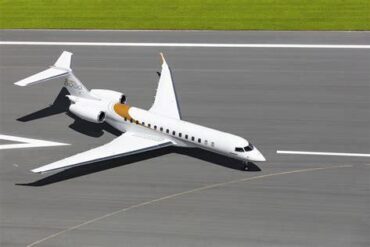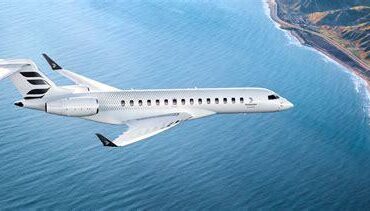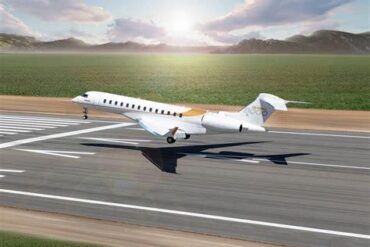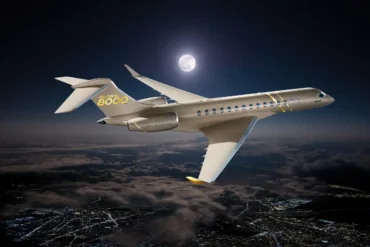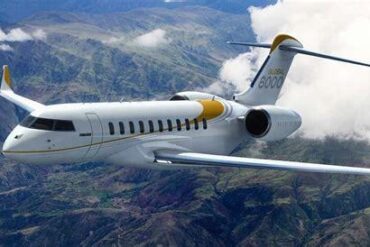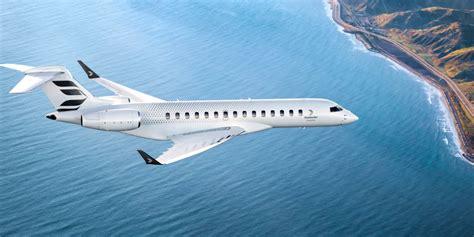
The return of extreme speed to civil aviation did not arrive with a sonic boom or a futuristic prototype streaking across the stratosphere. Instead, it emerged quietly in the form of a long-range business jet that never quite crosses Mach 1 but comes close enough to reopen an old conversation. In an era when aviation has been defined by efficiency, sustainability, and range optimization, the idea of a passenger aircraft cruising at Mach 0.95 feels almost rebellious. Yet that is exactly where modern ultra-long-range design has landed, led by Bombardier and its flagship Global 8000.
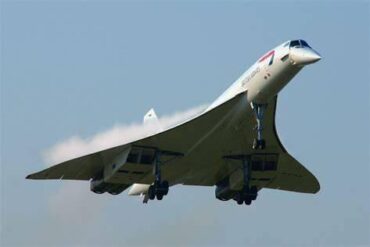
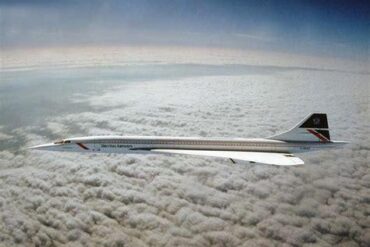
For more than two decades after the retirement of Aérospatiale-BAC Concorde in 2003, commercial aviation accepted a quieter truth: speed had become secondary. Airlines and manufacturers shifted toward fuel burn reduction, cabin comfort, and range expansion. The romance of ultra-fast intercontinental travel faded into aviation history, preserved only in museum exhibits and nostalgic memory. But the Global 8000 has reintroduced a subtle but powerful challenge to that narrative—without breaking the sound barrier, yet pushing right up against it in certified civil flight.
The aircraft’s most talked-about moment came when it completed its first high-profile performance mission, flying passengers from Montreal to Nice in just over six hours. The route was more than symbolic. It connected North America directly to the French Riviera at a pace that compressed an entire overnight journey into a single workday schedule. The timing also aligned with one of aviation’s most demanding events, the Monaco Grand Prix weekend, where private aviation traffic surges and time efficiency becomes an almost competitive sport of its own.
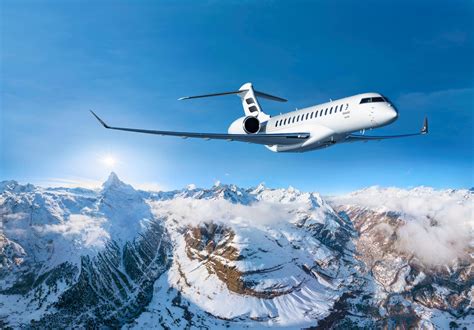
The Return of Speed in Civil Aviation After Concorde
The end of Concorde marked not just the retirement of a supersonic aircraft, but the conclusion of an era in which speed was the defining prestige metric of civil flight. For years afterward, manufacturers quietly avoided positioning their aircraft around velocity. Even high-performance jets were marketed in terms of range or cabin innovation rather than maximum cruise capability. The industry collectively moved away from a race that seemed impossible to continue economically.
That long pause makes the emergence of Mach 0.95 significant. It does not revive supersonic travel, but it restores a meaningful benchmark for what is possible within regulated commercial aviation. The Global 8000 represents the highest certified operating speed available to civilian operators today, and that distinction alone reshapes how modern business aviation is discussed. It sits in a rare category where numbers still matter, even if they fall just short of breaking the sound barrier.
What makes this achievement more interesting is the technological philosophy behind it. Instead of chasing Concorde-style supersonic performance, engineers focused on maximizing subsonic efficiency at the edge of physical limits. That means optimizing airflow, reducing drag at high altitude, and balancing engine performance with fuel efficiency in a way that allows sustained near-Mach 1 cruising without crossing into supersonic territory.
How Mach 0.95 Redefines Business Jet Performance
At first glance, Mach 0.95 may not sound dramatically different from Mach 0.90 or Mach 0.93, but in aviation terms those differences translate into meaningful real-world time savings. On transatlantic routes or intercontinental business missions, even a small increase in cruise speed compounds over several hours, producing arrival times that can shift entire schedules. For high-value passengers, that margin is not abstract—it can determine whether a meeting happens the same day or the next morning.
The Global 8000 is designed specifically for these margins. It combines its high-speed capability with an 8,000-nautical-mile range, allowing non-stop travel between city pairs that previously required either fuel stops or slower cruise profiles. Routes such as Dubai to Houston or Singapore to Los Angeles become not just possible, but operationally efficient at high speed.
Unlike earlier high-speed aircraft concepts, this jet does not sacrifice airport accessibility or operational flexibility. It avoids the sonic boom constraints that once limited Concorde’s route structure, allowing it to operate across thousands of airports worldwide. This flexibility is a defining difference between modern high-speed business aviation and historical supersonic transport.
Engineering Philosophy Behind the Global 8000
The Global 8000 is not an entirely new aircraft design but an evolution of the Global 7500 platform, refined to extend performance without compromising reliability. The strategy reflects a broader industry trend: incremental enhancement rather than radical reinvention. By building on a proven airframe, engineers reduce development risk while focusing innovation on performance optimization.
A key element in its design is aerodynamic refinement. Every curve of the fuselage and wing structure is tuned to minimize drag at high altitude cruise conditions. Advanced fly-by-wire systems continuously adjust control surfaces to maintain stability at speeds approaching Mach 1. Meanwhile, modern composite materials reduce weight while preserving structural strength under long-range operational stress.
The aircraft also benefits from engine improvements that emphasize efficiency across a wide flight envelope. Unlike Concorde’s afterburning turbojets, the Global 8000 relies on advanced turbofan engines designed for sustained high-altitude cruise efficiency. This allows it to operate at high speed without the extreme fuel consumption penalties that defined earlier supersonic aircraft.
Inside the Cabin: Speed Meets Long-Haul Comfort
High speed alone does not define the Global 8000 experience. The cabin environment is engineered to support ultra-long-duration flights without fatigue, even when crossing multiple time zones in a single journey. One of the most significant innovations is its exceptionally low cabin altitude, equivalent to just under 3,000 feet while cruising at over 40,000 feet. This reduces physiological stress on passengers and contributes to improved alertness upon arrival.
The cabin layout itself reflects a focus on productivity and rest rather than density. A four-zone configuration allows passengers to separate work, dining, relaxation, and sleep into distinct environments. In practical terms, this means a passenger can conduct meetings, dine comfortably, and still arrive prepared for immediate engagement at their destination.
Luxury in this context is not just aesthetic—it is temporal. The ability to preserve mental and physical energy across intercontinental travel becomes a form of value in itself. The aircraft’s design recognizes that time saved is only meaningful if the passenger arrives in a usable state, not simply faster.
Competitive Pressure: Bombardier vs Gulfstream
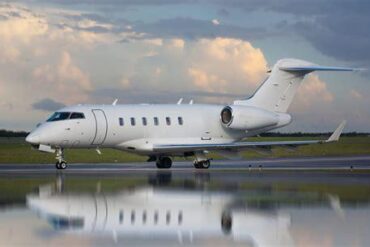
The Global 8000 does not exist in isolation. It enters a highly competitive arena dominated by Gulfstream Aerospace, whose flagship models such as the G700 and G800 define the upper limits of current business aviation performance. These aircraft operate at maximum speeds around Mach 0.935, placing them just behind Bombardier’s new benchmark.
While the numerical gap appears small, the psychological and marketing impact is substantial. In an industry where aircraft cost tens of millions of dollars, incremental performance advantages can influence purchasing decisions. For operators managing global schedules, even a few minutes saved per leg accumulate into meaningful operational flexibility over time.
However, the competition is not purely about speed. Gulfstream emphasizes cabin refinement, avionics sophistication, and long-range comfort, while Bombardier now adds high-speed advantage to a similarly strong package. The Global 8000’s challenge is to convince buyers that near-Mach 1 performance combined with intercontinental range offers a more complete solution than slightly slower rivals with comparable luxury.
The Legacy of the Global 7500 and Record-Breaking Foundations
The Global 8000 builds directly on the success of its predecessor, the Global 7500, which established a reputation for both range and speed consistency. Over its operational life, the aircraft accumulated an extensive record of city-pair speed achievements, demonstrating its ability to perform at high efficiency across diverse global routes.
This operational history provided critical data for engineers refining the Global 8000. Real-world performance insights allowed adjustments to aerodynamics, engine calibration, and flight management systems. Rather than relying solely on simulation, the aircraft’s evolution was grounded in measurable operational experience.
That legacy is important because it highlights a key shift in aviation development philosophy. Modern aircraft increasingly evolve through iterative refinement rather than disruptive redesign. The Global 8000 is therefore less a revolution and more the peak expression of a proven lineage.
Is Mach 0.95 the New Practical Limit of Civil Aviation Speed?
The question naturally arises: is Mach 0.95 the ceiling for modern civil aircraft operating within current regulatory and economic constraints? At present, it appears to be a practical boundary defined by physics, efficiency, and certification limits rather than technological incapacity.
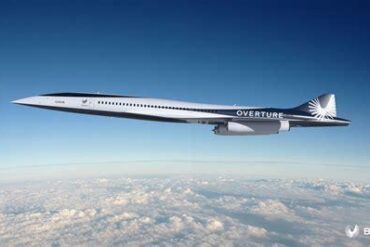
Breaking the sound barrier in commercial service introduces challenges that extend beyond engineering. Sonic boom regulations, fuel efficiency penalties, and airport compatibility constraints all create barriers that modern aviation has not yet resolved at scale. While experimental supersonic projects continue to develop, none have reached widespread commercial adoption.
In this context, Mach 0.95 becomes a compromise that feels almost optimal. It pushes aircraft to the edge of supersonic transition without crossing into regulatory and environmental complexity. It is fast enough to redefine long-haul travel expectations while remaining economically viable for real-world operations.
A New Benchmark for an Evolving Aviation Era
The arrival of Mach 0.95 capability marks a subtle but important shift in how civil aviation defines progress. Instead of chasing extremes, manufacturers are now exploring boundaries—how fast an aircraft can fly while remaining practical, efficient, and globally operable. The Global 8000 embodies that philosophy more than any aircraft in recent decades.
It does not replace Concorde, nor attempt to recreate its supersonic legacy. Instead, it establishes a new category of performance where speed is integrated into a broader system of range, comfort, and operational flexibility. In doing so, it restores relevance to a metric once considered outdated in modern aviation design.
As the industry continues exploring future supersonic concepts, Mach 0.95 stands as the present-day pinnacle. It represents the fastest point aviation can realistically reach today without crossing into a different technological and regulatory universe. And in that space between ambition and practicality, the Global 8000 has quietly rewritten what “fast” means in the modern sky.