Modern warfare is undergoing a profound transformation driven by the rapid evolution of unmanned aerial systems. Once viewed primarily as reconnaissance assets capable of relaying battlefield intelligence, military drones have evolved into highly sophisticated combat platforms capable of surveillance, precision strike missions, electronic warfare, and even cooperative operations alongside manned fighter aircraft. From high-altitude intelligence-gathering aircraft that can remain airborne for more than a day to stealthy loyal-wingman drones designed to accompany fifth-generation fighters into hostile airspace, today’s most advanced unmanned systems are redefining the balance between technology, cost, and combat effectiveness.
The rise of military drones reflects a broader shift in defense strategy. Nations increasingly seek platforms that can deliver persistent battlefield awareness while minimizing risk to pilots. Advances in satellite communications, artificial intelligence, sensor fusion, stealth technology, and precision-guided weaponry have accelerated this transition. As a result, drones are no longer supplementary tools; they have become central pillars of modern military planning.
The following aircraft represent some of the most capable and influential military drones currently in operational service or advanced deployment programs. Each platform demonstrates a unique philosophy of unmanned warfare, ranging from strategic intelligence collection to autonomous combat support.
The MQ-9 Reaper: The Global Standard for Armed Drones
The General Atomics MQ-9 Reaper remains the benchmark against which virtually every armed drone is measured. Developed as the successor to the MQ-1 Predator, the Reaper introduced a revolutionary combination of long-endurance surveillance and powerful strike capabilities within a single platform. This blend of persistence and lethality fundamentally changed how military planners approached counterterrorism operations, battlefield monitoring, and precision engagement missions.
Unlike earlier reconnaissance-focused drones, the MQ-9 was designed from the outset as a true hunter-killer aircraft. Its powerful Honeywell turboprop engine generates nearly ten times the power of its predecessor, enabling the aircraft to carry significantly larger payloads while maintaining exceptional endurance. Depending on configuration and mission profile, the Reaper can remain airborne for up to 27 hours, with specialized variants capable of approaching 48 hours of continuous flight.
The aircraft’s operational success stems largely from its extraordinary flexibility. Its seven hardpoints allow operators to deploy a wide range of precision-guided weapons, including AGM-114 Hellfire missiles, GBU-12 laser-guided bombs, and Joint Direct Attack Munitions. This diverse arsenal allows the drone to engage everything from individual vehicles to fortified positions with remarkable accuracy.
The Reaper’s service record is equally impressive. It has accumulated millions of flight hours with the United States Air Force and numerous allied nations, including the United Kingdom, France, Italy, India, and Japan. Its proven reliability and extensive combat experience have cemented its reputation as one of the most successful military aircraft of the twenty-first century.
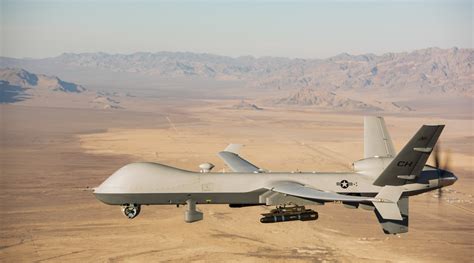
Another critical advantage lies in the aircraft’s operating altitude. Capable of reaching approximately 50,000 feet, the MQ-9 can remain beyond the reach of many conventional air-defense systems while maintaining continuous surveillance over vast operational areas. As military requirements evolve, newer Reaper variants are being adapted to carry long-range standoff weapons and cruise missiles, expanding their role beyond counterinsurgency operations and into potential peer-conflict scenarios.
Bayraktar TB2: The Affordable Drone That Changed Modern Warfare
Few military drones have influenced global defense thinking as dramatically as Turkey’s Baykar Bayraktar TB2. While it lacks the raw performance and payload capacity of larger Western systems, the TB2 demonstrated that relatively inexpensive unmanned aircraft can deliver strategic effects disproportionate to their cost.
The Bayraktar TB2 gained worldwide recognition through its combat performance in several conflicts, most notably during the war in Ukraine. Videos of successful strikes against armored vehicles, artillery batteries, and logistical assets showcased the effectiveness of combining precision-guided weapons with affordable drone technology.
The TB2’s greatest strength lies in its cost-efficiency. Whereas advanced American combat drones may cost tens of millions of dollars per unit, the Bayraktar can typically be produced for only a fraction of that amount. This affordability allows military forces to acquire larger fleets and absorb battlefield losses without jeopardizing overall operational effectiveness.
Powered by a modest piston engine, the TB2 sacrifices speed and payload capacity in favor of simplicity and reliability. Nevertheless, it remains capable of carrying precision-guided MAM-L smart munitions that have repeatedly demonstrated effectiveness against armored targets and defensive positions.
Its endurance also contributes significantly to mission success. Remaining airborne for roughly 24 hours, the aircraft can maintain persistent surveillance over active combat zones while simultaneously providing strike capability when opportunities emerge. This dual-role functionality has made it particularly attractive to countries seeking advanced aerial capabilities without the budget required for more sophisticated Western systems.
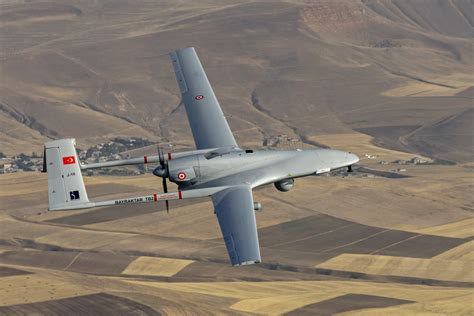
The Bayraktar’s broader significance extends beyond its technical specifications. It fundamentally challenged traditional assumptions regarding airpower by proving that precision strike capabilities no longer require massive investments in advanced fighter aircraft. In many conflicts, a fleet of relatively inexpensive drones can generate strategic outcomes that once demanded far more costly military assets.
CAIG Wing Loong II: China’s Powerful Export Success
China’s Wing Loong II represents one of the most significant competitors to Western unmanned combat aircraft in the global defense market. Developed by Chengdu Aircraft Industry Group, the drone combines substantial combat capability with a price point that appeals to nations seeking advanced military technology without Western procurement restrictions.
The aircraft occupies a strategic middle ground between affordability and performance. While it does not fully match the MQ-9 Reaper’s operational ceiling or payload capacity, it significantly outperforms many lower-cost alternatives and delivers a remarkably versatile combat package.
A major advancement introduced by the Wing Loong II is its use of a domestically developed WJ-9 turboprop engine. This achievement reduced reliance on foreign technologies while improving overall performance and export flexibility. The platform can operate at altitudes approaching 30,000 feet and carry approximately 480 kilograms of weapons and mission equipment.
Perhaps its most impressive feature is its weapons capacity. Equipped with six external hardpoints, the drone can carry as many as twelve precision-guided munitions simultaneously. These include anti-tank missiles, guided bombs, and other precision-strike weapons capable of engaging a broad range of battlefield targets.
Beyond kinetic operations, the Wing Loong II benefits from sophisticated satellite communication systems that enable beyond-line-of-sight operations. This capability dramatically expands operational reach, allowing the aircraft to conduct missions far from its ground control stations.
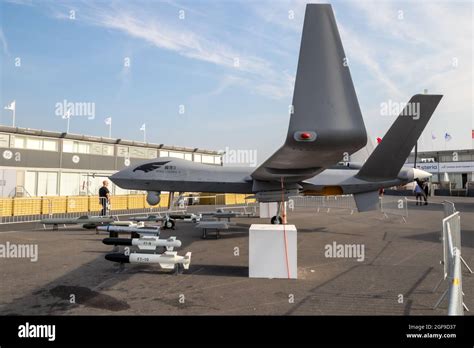
Combat experience has further enhanced the aircraft’s reputation. Export customers including Saudi Arabia, the United Arab Emirates, Egypt, and Algeria have deployed the platform extensively in regional conflicts. Operational use across Libya, Yemen, and Ethiopia has provided valuable battlefield validation, demonstrating the drone’s effectiveness in diverse combat environments.
The Wing Loong II illustrates China’s growing influence within the global defense industry. By combining capable technology with competitive pricing, it has become one of the most successful military drone exports currently available on the international market.
RQ-4 Global Hawk: The Ultimate Intelligence Gathering Platform
While armed drones often dominate headlines, intelligence remains the foundation of military decision-making. Few aircraft embody this principle more effectively than the Northrop Grumman RQ-4 Global Hawk.
Designed exclusively for intelligence, surveillance, and reconnaissance missions, the Global Hawk prioritizes information collection above all else. It carries no weapons, yet its strategic value often exceeds that of heavily armed combat aircraft because of its unparalleled ability to gather critical battlefield intelligence.
The aircraft’s enormous size immediately distinguishes it from most unmanned systems. Featuring a wingspan exceeding 130 feet and a lightweight composite airframe, the Global Hawk is optimized for extreme-altitude operations. Its Rolls-Royce turbofan engine allows it to cruise at approximately 60,000 feet, placing it above commercial air traffic, weather systems, and many conventional air-defense threats.
Its endurance is equally extraordinary. The aircraft can remain airborne for more than 34 hours while covering distances exceeding 12,000 nautical miles. This combination of altitude, endurance, and range allows military commanders to monitor vast geographic regions continuously without interruption.
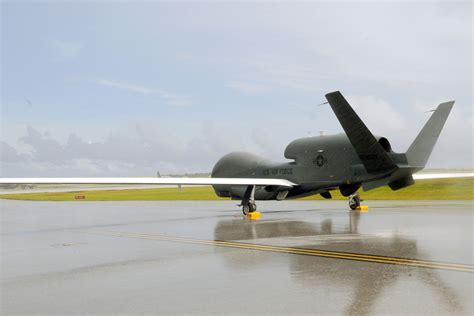
The heart of the Global Hawk’s capability lies in its sophisticated sensor suite. Carrying up to 3,000 pounds of advanced surveillance equipment, the aircraft can employ synthetic aperture radar, electro-optical imaging systems, infrared sensors, and ground-moving target indicators simultaneously. These technologies enable analysts to detect, track, and assess military activities across enormous operational areas.
Such capabilities come at a significant cost. Individual aircraft can exceed $130 million, while complete operational systems may surpass $220 million. These figures place the Global Hawk among the most expensive unmanned platforms ever developed.
Despite its exceptional performance, changing battlefield realities have prompted reassessment of the platform’s future. Increasingly sophisticated long-range air-defense systems pose substantial challenges to large, non-stealthy aircraft. Consequently, defense planners are gradually exploring more survivable alternatives that combine advanced reconnaissance capabilities with reduced detectability.
Boeing MQ-28 Ghost Bat: The Future of Collaborative Air Combat
Among all current military drone programs, none may have greater long-term significance than the Boeing MQ-28 Ghost Bat. Unlike traditional unmanned aircraft focused on surveillance or independent strike missions, the Ghost Bat was conceived as a collaborative combat aircraft designed to operate directly alongside manned fighters.
Developed by Boeing Australia for the Royal Australian Air Force, the MQ-28 represents the first military aircraft designed and produced in Australia in more than half a century. More importantly, it embodies a revolutionary approach to future air warfare.
Rather than replacing human pilots, the Ghost Bat enhances them. Operating in coordination with aircraft such as the F-35 Lightning II, F/A-18 Super Hornet, and E-7A Wedgetail, the drone acts as an intelligent force multiplier capable of extending sensor coverage, conducting electronic warfare, gathering intelligence, and potentially engaging targets independently.
Its low-observable design significantly reduces radar visibility, allowing it to accompany stealth fighters into contested airspace. Powered by a Williams FJ33 turbofan engine, the aircraft can achieve high subsonic speeds while maintaining a range exceeding 2,000 nautical miles.
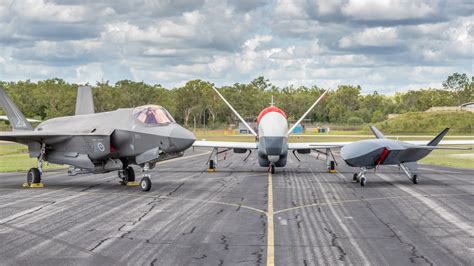
One of the platform’s most innovative features is its modular nose architecture. Operators can rapidly replace the entire forward mission package depending on operational requirements. Intelligence sensors, electronic warfare systems, communication relay equipment, or strike payloads can be installed with minimal preparation time, dramatically increasing mission flexibility.
Recent testing has demonstrated the aircraft’s growing maturity. Live-fire evaluations and coordinated exercises with Australian fighter aircraft have validated many of the concepts underpinning collaborative combat operations. These developments suggest that loyal-wingman drones may soon become integral components of frontline air forces.
As military aviation enters an era increasingly defined by networked warfare and autonomous systems, the Ghost Bat offers a glimpse into the future. Instead of relying solely on small numbers of extraordinarily expensive fighter jets, future air forces may deploy mixed formations in which crewed aircraft direct teams of intelligent unmanned companions capable of sharing risks and multiplying combat effectiveness.
Why Advanced Military Drones Are Transforming Warfare
The evolution of military drones reflects more than technological progress; it represents a fundamental shift in how nations project power, gather intelligence, and conduct combat operations. Platforms such as the MQ-9 Reaper, Bayraktar TB2, Wing Loong II, RQ-4 Global Hawk, and MQ-28 Ghost Bat each address different operational challenges, yet all share a common objective: extending military capability while reducing risk to human personnel.
The Reaper remains the gold standard for armed drone operations. The Bayraktar TB2 demonstrates the strategic value of affordability and mass deployment. China’s Wing Loong II highlights the growing competitiveness of international defense industries. The Global Hawk continues to provide unmatched strategic intelligence collection, while the Ghost Bat points toward a future in which autonomous systems and human pilots operate as integrated combat teams.
As artificial intelligence, stealth technologies, advanced sensors, and autonomous mission systems continue to mature, military drones will become even more capable and influential. The next generation of air warfare is already taking shape, and these five remarkable aircraft stand at the forefront of that transformation.