The United States military does not merely operate vehicles; it engineers systems of dominance. Every branch fields platforms designed to control space, time, and information in environments where mistakes are fatal and hesitation is punished. From armored formations designed to survive drone-saturated battlefields to warships that blur the line between physics and science fiction, America’s military vehicles are less about brute force and more about integration, survivability, and technological asymmetry.
Across six branches, these machines reflect distinct operational philosophies shaped by land warfare, sea control, air superiority, orbital persistence, and expeditionary combat. What follows is a branch-by-branch examination of the most advanced military vehicles currently shaping America’s arsenal, not as isolated marvels, but as tools embedded within modern, networked warfare.
U.S. Army: AbramsX and the AMPV Redefine Ground Combat
The Army’s modern battlefield is no longer dominated solely by armor-versus-armor engagements. Instead, it is crowded with loitering munitions, networked sensors, electronic warfare, and cheap autonomous drones capable of disabling billion-dollar platforms. The AbramsX represents a direct response to this reality.
Developed as a next-generation evolution of the M1 Abrams lineage, the AbramsX abandons tradition where it no longer serves survivability. Its unmanned turret fundamentally changes crew protection, relocating personnel deeper within the armored hull while reducing the tank’s profile. Integrated AI-assisted battlefield management systems allow the vehicle to process sensor data, identify threats, and coordinate with nearby units faster than any human crew could manage alone. A lighter overall design improves fuel efficiency and mobility without sacrificing lethality, while an automatic loading system increases firing consistency under combat stress.
The AbramsX is not simply a tank; it is a node in a digital ground-combat network, designed to fight alongside drones, infantry, and artillery as part of a synchronized system rather than a solitary spearhead.
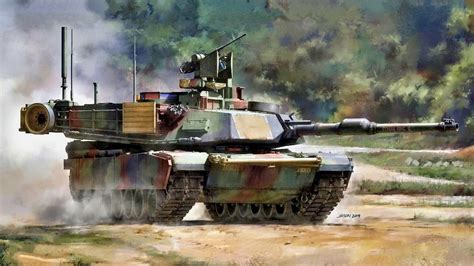
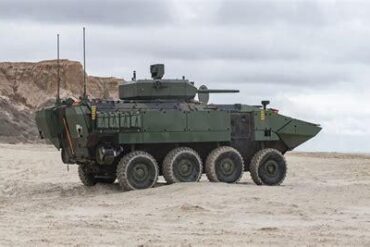
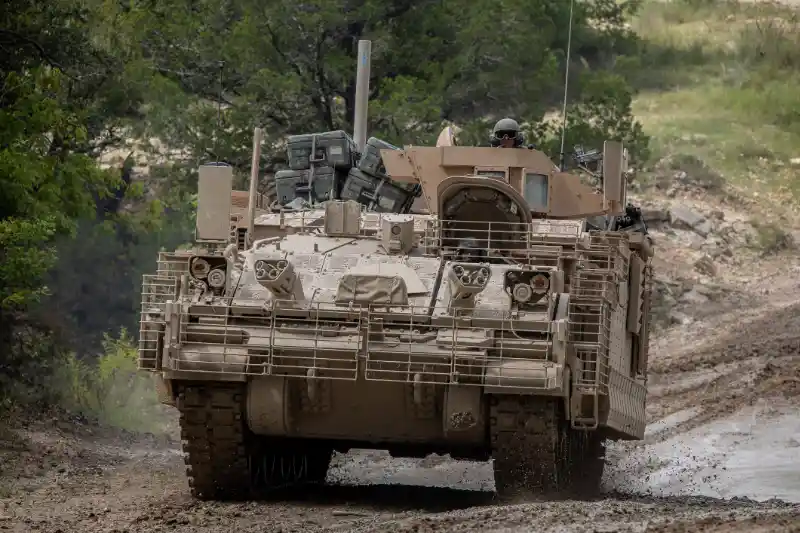
Equally transformative is the Armored Multi-Purpose Vehicle (AMPV), a platform that quietly solves one of the Army’s longest-running problems. Replacing the Vietnam-era M113, the AMPV is not a single vehicle but a modular family of armored solutions. Configured for medical evacuation, command and control, mortar operations, and troop transport, it provides heavy-brigade units with protected mobility that keeps pace with modern armor.
Delivered beginning in 2023, the AMPV emphasizes survivability against mines, improvised explosive devices, and indirect fire. Its role is not glamorous, but it is essential. Modern wars are won by logistics, command continuity, and casualty survival, and the AMPV strengthens all three simultaneously.
U.S. Navy: Surface, Subsurface, and Carrier-Based Supremacy
Naval power remains the backbone of American global influence, and the U.S. Navy’s most advanced vehicles embody a doctrine built around persistent presence and overwhelming reach.
At the center of this philosophy stands the Gerald R. Ford-class aircraft carrier, the most technologically advanced warship ever constructed. These carriers redefine sortie generation through the Electromagnetic Aircraft Launch System (EMALS), which replaces steam catapults with precise, digitally controlled launches that reduce airframe stress and increase operational tempo. Advanced Arresting Gear further streamlines recovery, enabling up to 160 sorties per day under sustained operations.
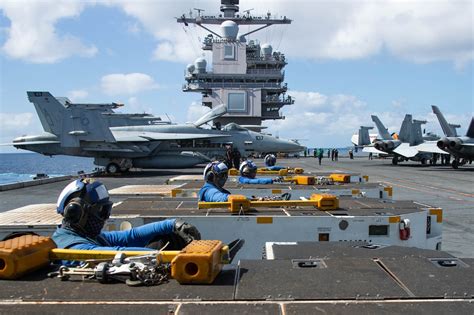
Beyond sheer scale, Ford-class carriers integrate automation that reduces crew requirements while increasing reliability. This is not incremental improvement; it is a generational shift in how naval aviation is projected across the globe.
Operating beneath the surface, the Virginia-class attack submarine represents America’s quietest and most adaptable undersea weapon. These submarines combine advanced sonar arrays, electronic warfare suites, and vertical launch systems capable of deploying cruise missiles, torpedoes, and special operations forces. Their true advantage lies in information dominance, tracking adversaries while remaining effectively invisible.
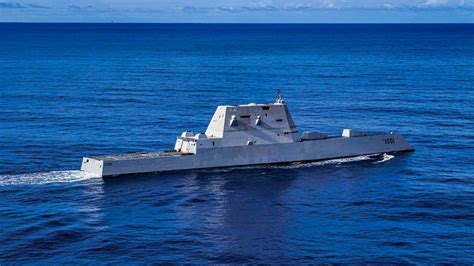
Complementing both platforms is the Zumwalt-class destroyer, a ship that appears unconventional because it is engineered around stealth and power generation. Its angular hull reduces radar cross-section dramatically, while its integrated power system supports advanced sensors and future directed-energy weapons. As the Navy transitions the Zumwalt into a hypersonic missile platform, it becomes less an escort and more a strategic strike asset disguised as a destroyer.
U.S. Marine Corps: Aviation That Thrives Where Others Cannot
The Marine Corps exists to fight where infrastructure is limited, terrain is hostile, and timing is unforgiving. Its most advanced vehicles reflect this reality through flexibility and survivability rather than sheer size.
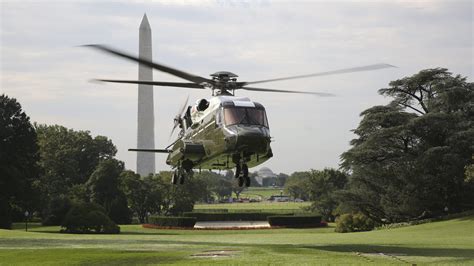
The VH-92A, best known to the public as Marine One when transporting the President, represents the pinnacle of rotary-wing safety and communications integration. Designed with enhanced crashworthiness, hardened avionics, and secure, multi-channel communications, it functions as a flying command center capable of operating under extreme contingencies.
In combat aviation, the AV-8B Harrier II remains a singular capability within the U.S. inventory. Its short takeoff and vertical landing (STOVL) design allows it to operate from forward bases, damaged runways, and amphibious assault ships. This capability enables Marine aviation to remain close to ground forces, reducing response times and increasing operational relevance in dispersed battlespaces.
While newer aircraft attract attention, the Harrier’s continued service highlights a core Marine philosophy: the best platform is the one that works where others cannot.
U.S. Coast Guard: Advanced Platforms for Maritime Control and Rescue
Often underestimated, the Coast Guard operates some of the most advanced multi-mission vehicles in the U.S. arsenal, blending military capability with law enforcement and humanitarian response.
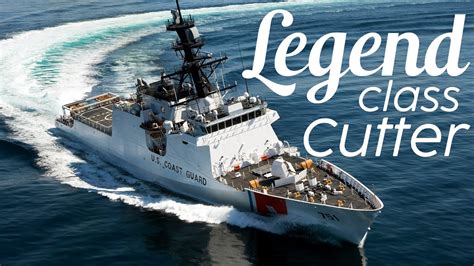
The Legend-class National Security Cutter (NSC) forms the backbone of modern Coast Guard operations. Designed for endurance, speed, and interoperability, these cutters support helicopter operations, UAV deployments, and small-boat interdictions simultaneously. Their enhanced range allows for sustained presence across vast maritime regions, from the Arctic to the Pacific.
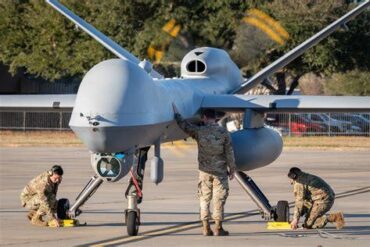
Aerial intelligence is provided by the MQ-9 Guardian, an unarmed variant of the Predator drone optimized for maritime surveillance. Operating from shore or deployed alongside cutters, the Guardian delivers long-endurance reconnaissance critical for search-and-rescue missions and national security patrols.
Completing the triad is the HC-130J Super Hercules, a long-range aircraft that dramatically expands the Coast Guard’s reach. With increased speed, altitude, and endurance over previous models, it enables rapid response across oceans where minutes often determine survival.
U.S. Air Force: Dominance Through Information and Stealth
Air superiority has evolved from dogfights to data fusion, and the Air Force’s most advanced vehicles reflect this shift.
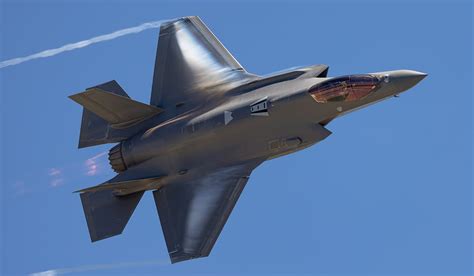
The F-35 Lightning II is not simply a fighter; it is an airborne sensor network. Its ability to gather, fuse, and distribute battlefield data transforms it into a command node as much as a strike platform. With stealth shaping, advanced electronic warfare systems, and multirole flexibility, the F-35 reshapes how air campaigns are conducted.
At the strategic level, the B-21 Raider represents a leap beyond traditional bombers. Designed as a sixth-generation platform, it integrates advanced stealth, open-architecture systems, and digital mission planning that allow rapid adaptation to emerging threats. Capable of carrying both conventional and nuclear payloads, the B-21 ensures deterrence while remaining survivable in heavily contested airspace.
This pairing illustrates the Air Force’s modern doctrine: win the information war first, then deliver force precisely and invisibly.
U.S. Space Force: The X-37B and the Militarization of Persistence
The newest branch of the U.S. military operates in the most unforgiving environment imaginable. The X-37B Orbital Test Vehicle embodies the Space Force’s focus on endurance, experimentation, and strategic ambiguity.
Launched aboard SpaceX rockets and remaining in orbit for hundreds of days, the X-37B serves as a reusable platform for testing advanced materials, propulsion concepts, and orbital maneuvering. Its small payload bay enables satellite deployment and retrieval experiments, while its autonomous reentry capability demonstrates unmatched flexibility.
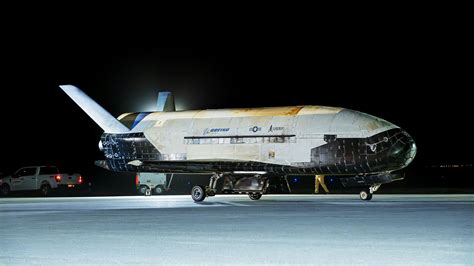
The vehicle’s missions remain largely classified, reinforcing its strategic value. In space, uncertainty itself is a form of deterrence, and the X-37B thrives in that gray zone.
A Unified Arsenal Built for Modern Warfare
What unites these vehicles is not raw firepower, but integration across domains. Each platform is designed to operate within a network that spans land, sea, air, and space, sharing information faster than adversaries can respond. This approach reflects an understanding that future conflicts will be decided less by numbers and more by systems thinking.
America’s most advanced military vehicles are not relics of Cold War excess. They are carefully engineered responses to a world where threats are adaptive, asymmetric, and technologically savvy. In that environment, dominance belongs not to the strongest machine, but to the smartest one operating within a coordinated force.