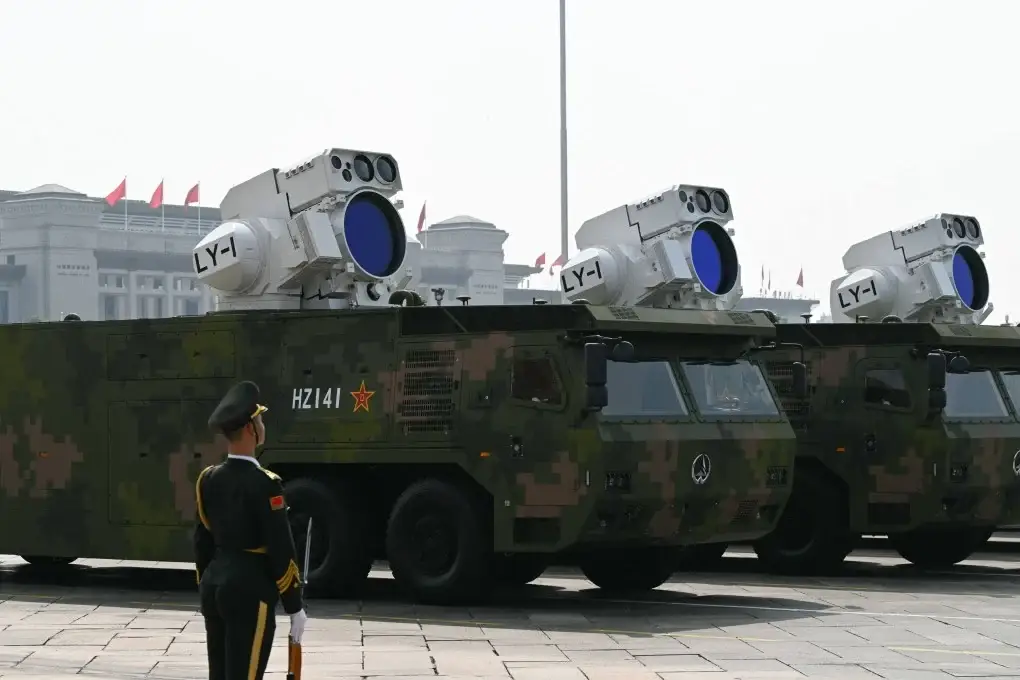
China’s rapid march toward next-generation warfare is transforming global defense dynamics at a pace few predicted a decade ago. In an era defined by missile dominance, autonomous systems, and stealth-first airpower, the People’s Liberation Army (PLA) now fields weapons that in some categories have no Western equivalents. Many of these systems were showcased during the high-profile September 3, 2025 Beijing military parade, revealing a defense ecosystem built around long-range strike, real-time data fusion, unmanned lethality, and directed-energy defenses. The integration of sensors, networks, and multi-domain kill chains has become the defining signature of China’s military modernization strategy.
As these platforms mature, they reshape the balance of power across the Indo-Pacific and beyond. Several systems now pose credible challenges to U.S. carrier strike groups, regional air forces, and even strategic missile defenses. Understanding the capabilities behind each system is critical to evaluating China’s evolving military posture.
PL-15: The Long-Arm Air Dominance Missile
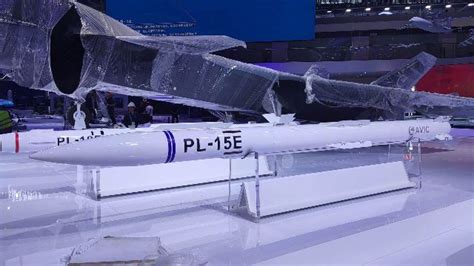
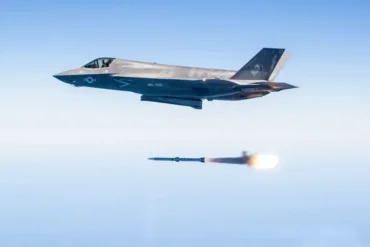
The PL-15, a beyond-visual-range air-to-air missile, stands at the core of China’s air-superiority doctrine. First revealed in 2017 and deployed on fighters such as the J-10C and J-15, this missile is built for decisive engagement beyond the enemy’s ability to respond. A dual-pulse solid rocket motor provides exceptional endgame maneuverability, while the missile’s estimated 200–300 km range pushes it into a class that only the newest Western systems aspire to match.
Its Mach 4 terminal speed allows it to cover 124 miles in roughly two and a half minutes, creating a narrow window for evasion. In 2025, Pakistan demonstrated the missile’s combat value when it reportedly used a PL-15 to down an Indian Rafale, pushing global air forces to reassess their defensive envelopes.
DF-21D: The Original Anti-Ship Ballistic Missile
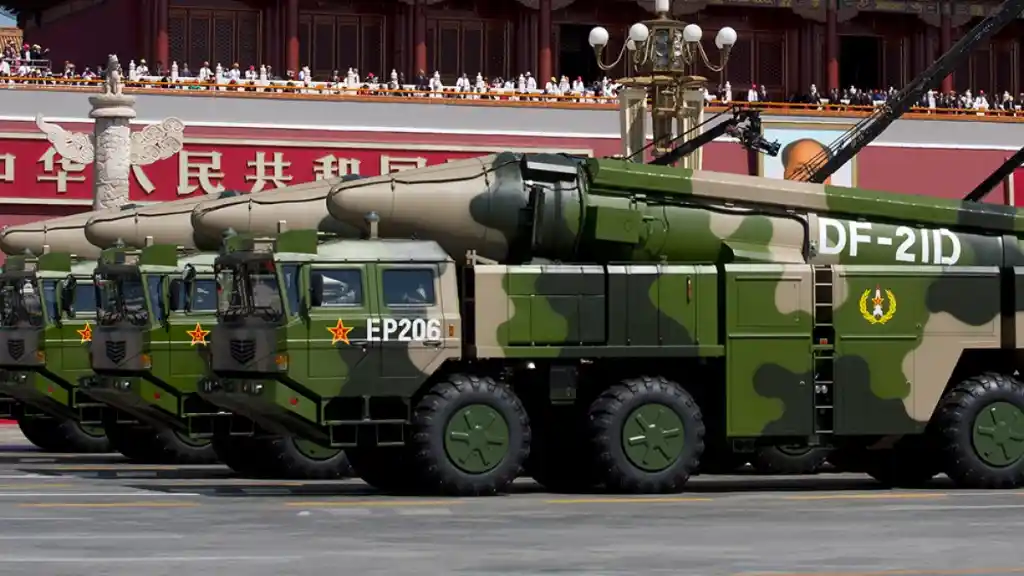
The DF-21D, often referred to as the world’s first genuine anti-ship ballistic missile (ASBM), is a lynchpin of China’s anti-access/area-denial strategy. Entering service in 1991 after development began in the 1980s, the DF-21 family evolved into four main variants, with the DF-21D specifically engineered to threaten aircraft carriers at standoff distances.
With an estimated range between 311 and 1,336 miles, the missile’s maneuverable re-entry vehicle and rumored 20-meter CEP make it a uniquely dangerous weapon. Western navies consider it a central reason for adjusting carrier deployment patterns in contested waters.
DF-26: The “Guam Killer” With Dual Capabilities
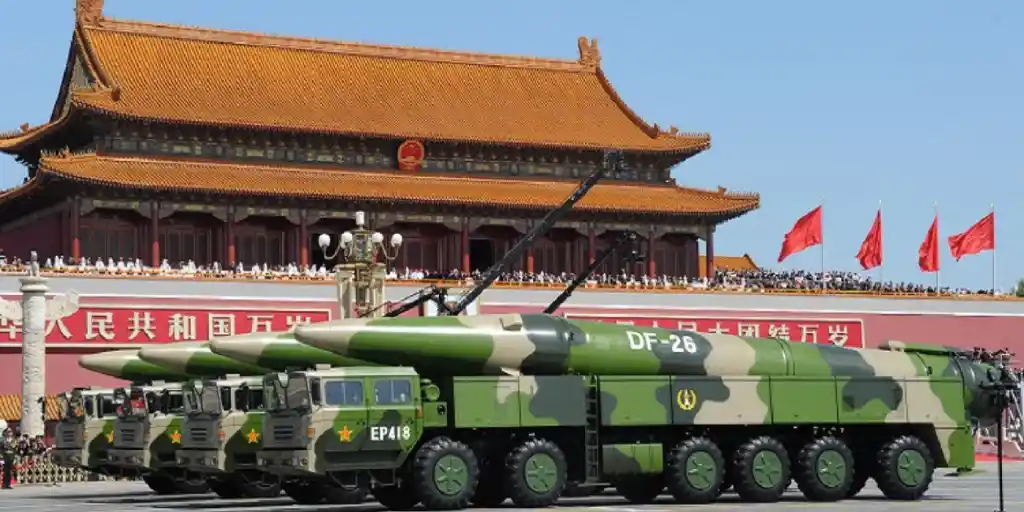
The DF-26 is among China’s most strategically disruptive missile systems. With a reach of 4,000 km (2,485 miles), it can strike fixed bases including Guam, a key hub of U.S. power projection. Its three-stage solid-fuel design supports both conventional and nuclear warheads, granting it a rare dual-role capability in intermediate-range arsenals.
At 14 meters long and weighing over 20,000 kg, the DF-26 is also highly mobile, complicating detection and early-warning efforts. The U.S. noted in 2022 that China’s stockpile had surpassed 500 units, underscoring the scale of its long-range strike ambitions.
YJ-21: Hypersonic Strike From Air and Sea
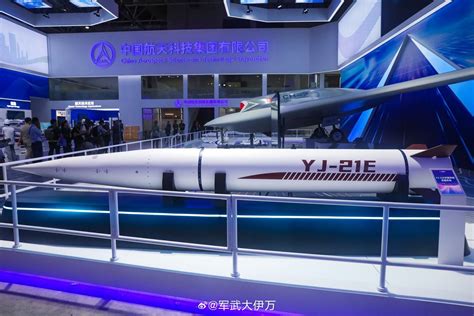
The YJ-21 hypersonic anti-ship missile represents a generational leap in terminal-speed lethality. Initially launched from surface combatants, newer air-launched variants are being integrated onto H-6K bombers, giving China a mobile hypersonic strike capability once limited to conceptual Western programs.
Powered by a two-stage solid-fuel engine, the YJ-21 travels at Mach 6 and reaches out to approximately 930 miles. Its speed and maneuverability drastically reduce reaction time for naval defenses, positioning it as one of the PLA Navy’s most formidable anti-surface weapons.
LY-1: China’s Ship-Based High-Energy Laser Weapon
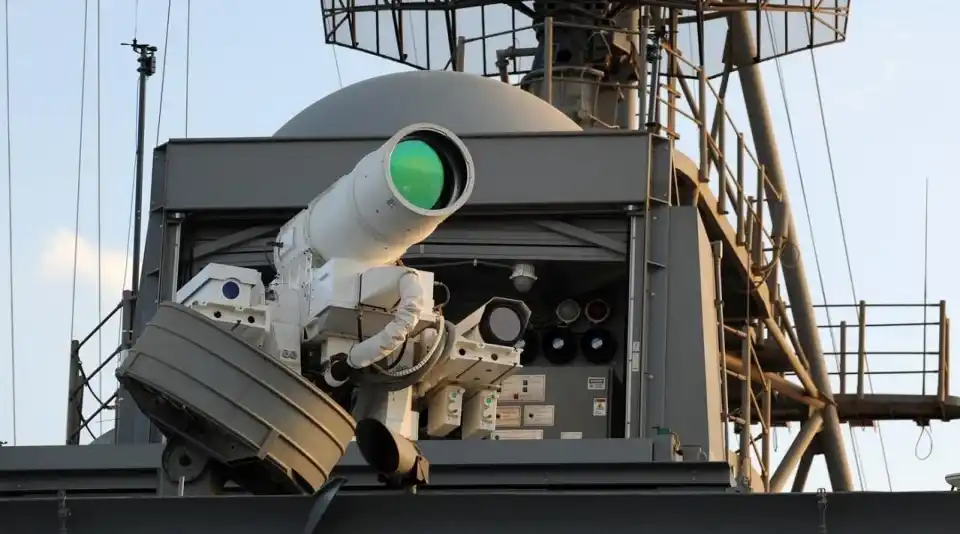
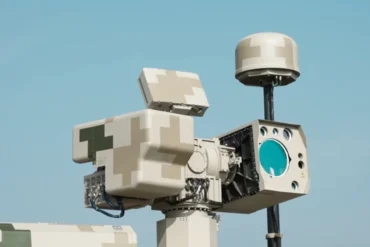
The LY-1 (Liaoyuan-1) laser marks China’s official entry into high-energy directed-energy weapons for naval defense. Positioned as a competitor to the U.S. Navy’s HELIOS system, the LY-1 may deliver between 180–250 kW of laser output — a potentially higher figure than its American counterpart.
Its larger aperture and advanced cooling systems suggest a focus on countering drones, loitering munitions, and even approaching missiles at close range. As directed-energy platforms mature, they will likely become the PLA’s first line of defense against massed swarm attacks.
J-35: China’s Carrier-Capable Fifth-Generation Stealth Fighter
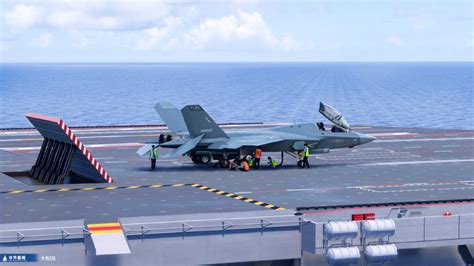
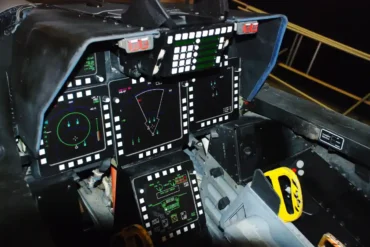
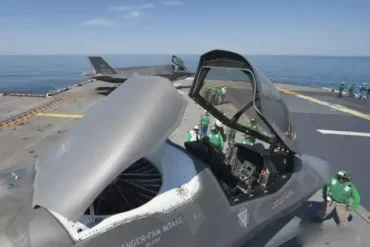
The Shenyang J-35 represents China’s most advanced carrier-capable stealth fighter. Developed in two variants — the land-based J-35A and the carrier model — the aircraft combines a low observable profile with meaningful payload capacity, capable of carrying up to 12 missiles.
Twin WS-19 engines deliver roughly 48,000 pounds of thrust, granting the fighter an estimated Mach 1.9 top speed and a combat radius approaching 932 miles. Its climb rate of nearly 49,000 ft/min and operational ceiling of 52,000 feet reflect the PLA’s ambition to field a direct counterpart to the U.S. F-35 in both blue-water and littoral combat.
JL-3: The Submarine-Launched Missile Able to Reach the Continental U.S.
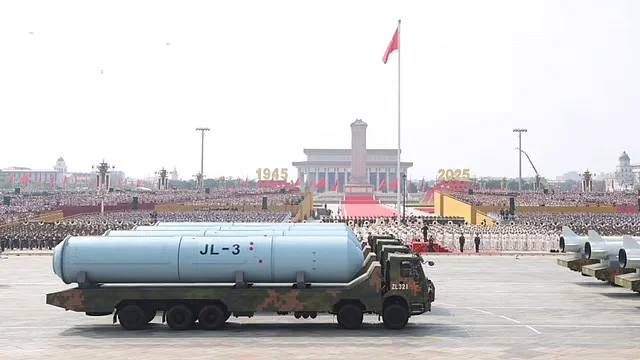
The JL-3 (Ju-Lang 3) is China’s most powerful submarine-launched ballistic missile to date. With a 10,000 km range, it significantly exceeds the capabilities of the JL-2. When deployed aboard Jin-class SSBNs, with 12 missiles per submarine, the JL-3 grants China a more survivable second-strike nuclear deterrent.
U.S. Strategic Command noted in 2023 that JL-3-equipped submarines could reach targets across the continental United States, altering strategic calculations. With China projected to exceed 1,000 nuclear missiles by 2030, the JL-3 is central to this growing arsenal.
DF-61: China’s Next-Generation MIRV-Capable ICBM
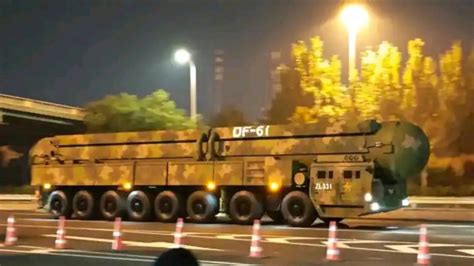
The DF-61 has emerged as a subject of global attention despite Beijing’s limited disclosures. Analysts believe it is an evolution of the DF-41 and may incorporate MIRV (multiple independently targetable re-entry vehicle) technology to increase warhead survivability and penetration.
Its unexpected appearance in public — notably during an ice-skating event in October 2025 where performers held a model of the missile — indicates that the system may be nearing a more advanced stage of development.
HSU100 & AJX002: Giant Autonomous Underwater Drones
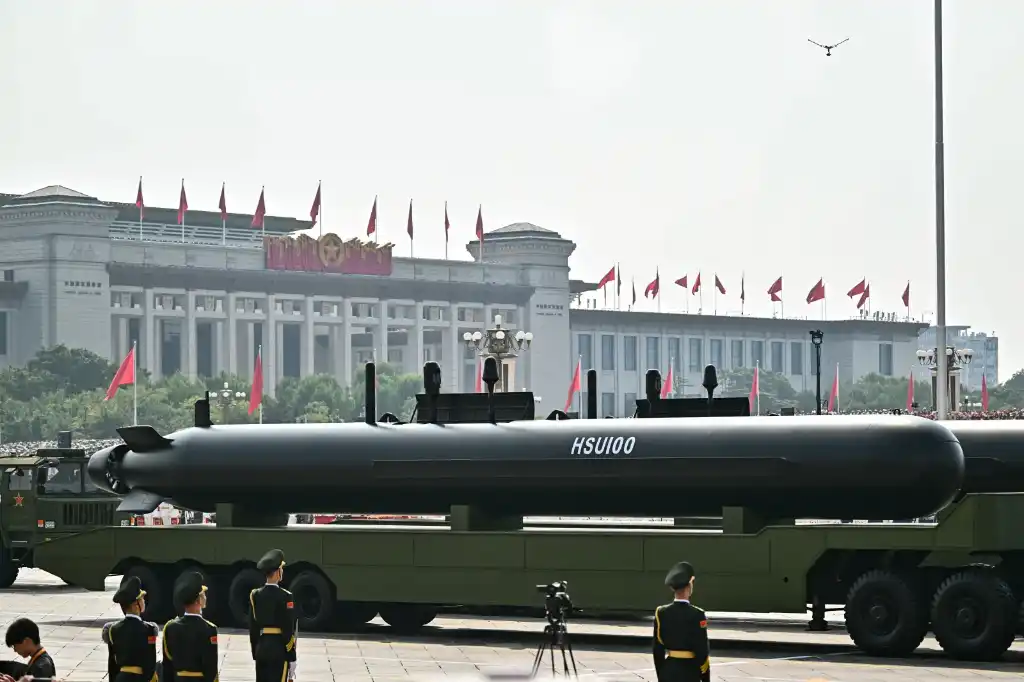
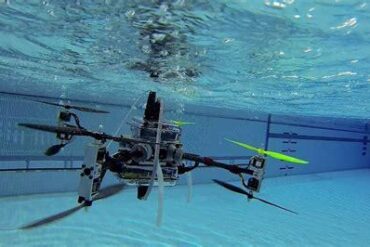
China is pioneering a new domain of unmanned undersea warfare. The HSU100, spanning approximately 20 meters, is one of the world’s largest autonomous underwater drones, surpassing even the U.S. Navy’s Orca in scale. Designed for long-endurance missions, it likely carries torpedoes, mines, and ISR payloads.
The AJX002, showcased in the 2025 parade, appears purpose-built as a minelayer or underwater strike drone. While technical disclosures remain minimal, China is now believed to operate at least five families of unmanned submersibles — the largest variety of any navy today.
PLZ-05: A Long-Range, High-Precision Self-Propelled Howitzer
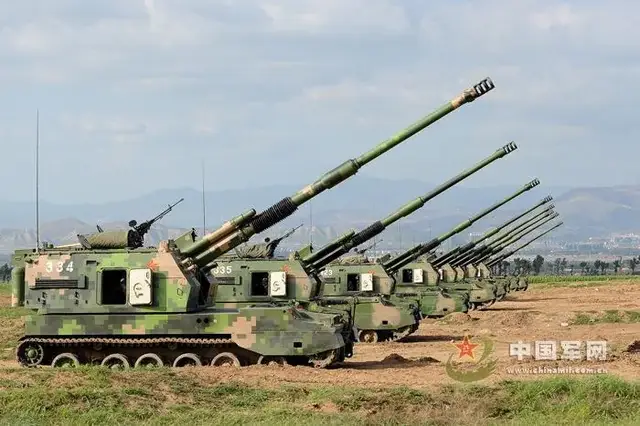
The PLZ-05 is China’s primary tracked 155 mm self-propelled howitzer, reflecting decades of artillery modernization. Entering service around 2005, it fires to 39 km with standard ammunition and up to 50 km with specialized rounds.
Carrying 30 shells onboard, supported by a roof-mounted 12.7 mm gun and smoke-screen launchers, the PLZ-05 combines mobility with sustained firepower. Its laser-guided projectiles, accurate to roughly 20 km, give ground forces a powerful precision-strike option.
Robot Wolves: Autonomous Assault and Reconnaissance Platforms
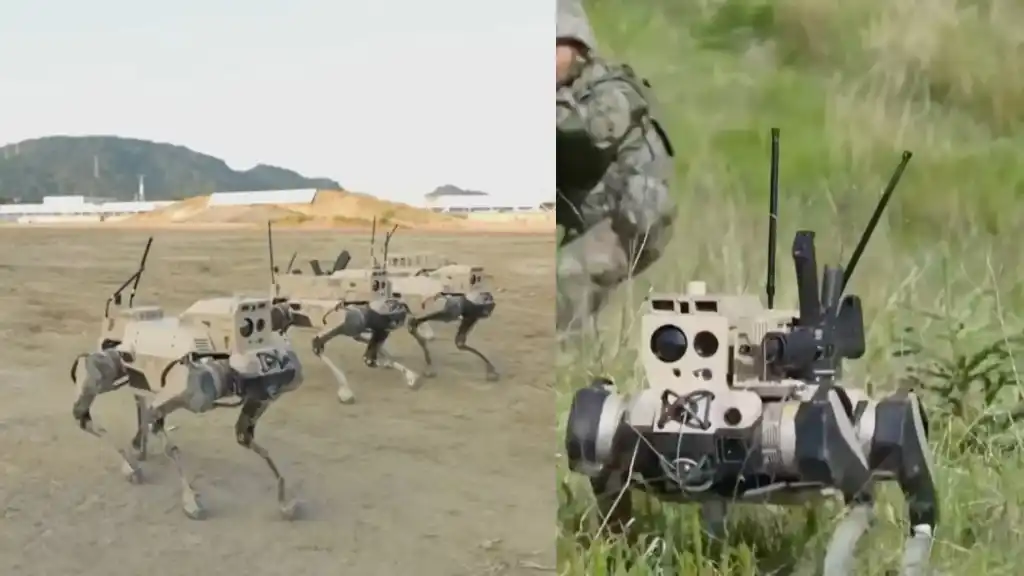
China’s so-called Robot Wolves captured global attention with their unsettling resemblance to mechanical hunting animals. Developed by China South Industries, each 150-lb quadruped robot can travel 10 km, climb ladders, and traverse rugged slopes.
Their sensor suite reportedly merges infrared, optical, and electrical feeds to track targets up to 150 meters away. State media claims a 90% first-shot hit probability, though verification remains elusive. Regardless, their intended roles — beach-landing vanguards, perimeter security, and assault support — point toward a future where autonomous ground forces operate in coordinated swarms.
GJ-21: The Stealth UCAV Evolving Into an Unmanned Bomber
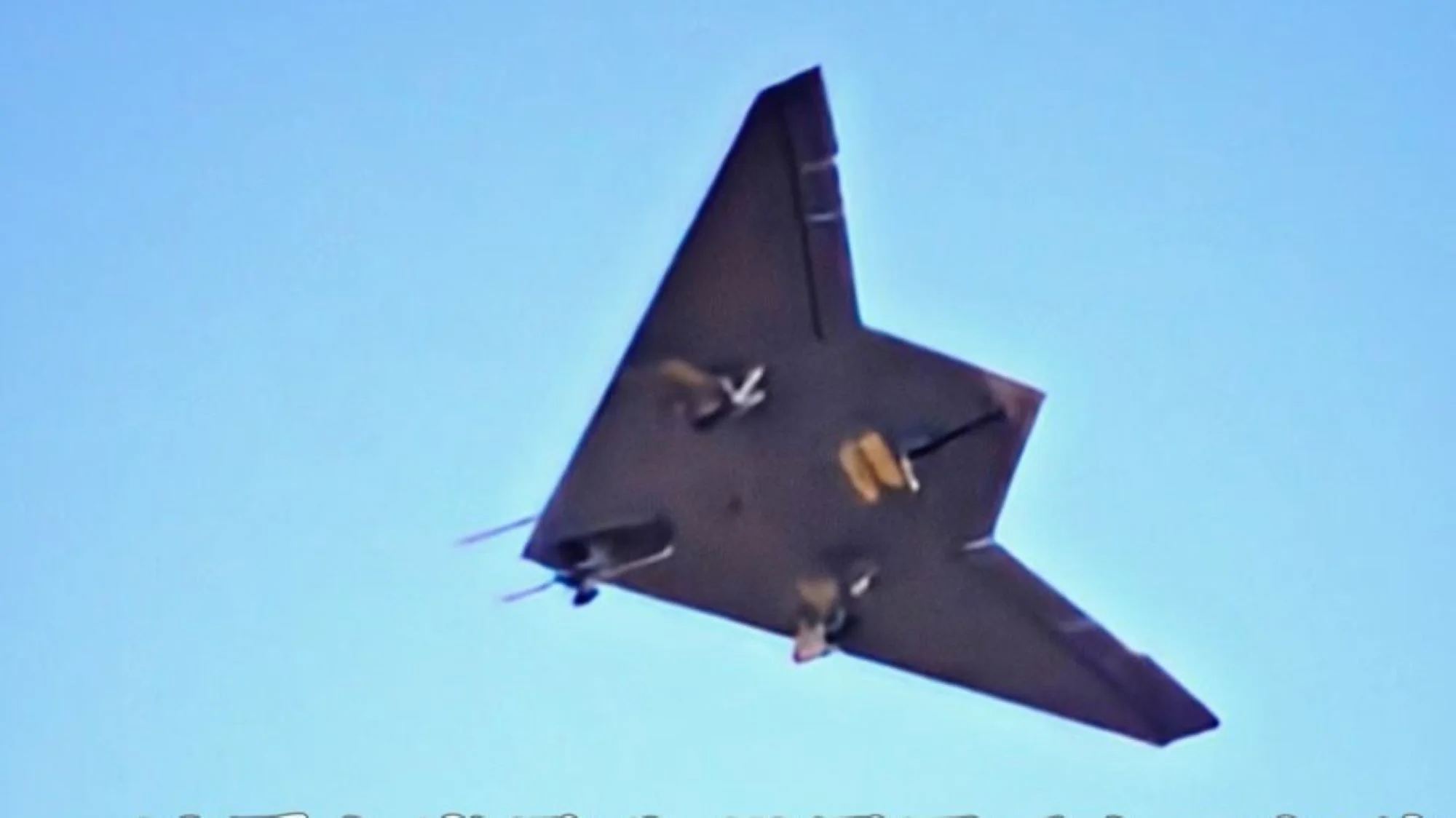
The GJ-21 flying-wing unmanned combat aerial vehicle represents one of China’s most ambitious unmanned aviation projects. With a wingspan of roughly 14 meters and an internal weapons bay, it is believed to operate as a stealth strike platform capable of deploying precision-guided bombs.
Its lineage traces back to the GJ-11/Sharp Sword, but improvements in shaping, materials, and engine design position the GJ-21 closer to an operational unmanned bomber. Reports suggest it may eventually fly from Type 076 amphibious carriers, utilizing folding wings for onboard storage.
Conclusion: The Future of China’s Multi-Domain Lethality
China’s most advanced military weapons reflect a sweeping doctrine built on range, speed, autonomy, and integrated targeting. From hypersonic missiles to stealth fighters, underwater drones to robotic assault units, the PLA has invested heavily in systems designed to complicate adversary decision-making and compress reaction timelines across every domain.
As these technologies mature, they reshape strategic assumptions in the Indo-Pacific and underscore an accelerating global race for next-generation military dominance.