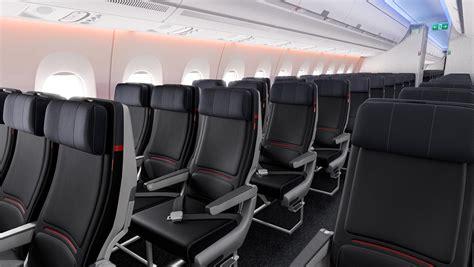
Airline cabins have quietly become one of the most competitive arenas in modern aviation. Aircraft manufacturers may design the airframe, engines, and wings, but the true battleground for passenger loyalty lies inside the fuselage. In 2026, the United States’ largest airlines are investing billions of dollars in cabin redesigns that introduce some of the newest and most technologically sophisticated seats flying anywhere in the world.
For decades, US carriers often lagged behind their counterparts in Asia and the Middle East when it came to premium seating innovation. Airlines such as Singapore Airlines, Emirates, and Qatar Airways established reputations for enclosed suites, luxurious finishes, and expansive personal space while many American carriers focused more heavily on operational efficiency and route expansion.
That narrative is changing rapidly. With a renewed focus on premium travelers and evolving expectations among leisure passengers, airlines in the United States are now deploying entirely new seat designs across widebody and narrowbody aircraft.
The transformation is particularly visible in the fleets of United Airlines, American Airlines, and Delta Air Lines, where next-generation business class suites, redesigned premium economy cabins, and technology-rich economy seats are redefining what passengers experience on long-haul and domestic flights alike.
These upgrades are not cosmetic tweaks. They represent a fundamental shift in how airlines view onboard space, privacy, and technology integration.
The Rising Importance of Cabin Design in Modern Aviation
Aircraft cabins have evolved dramatically over the past decade. A modern airline seat is no longer just a place to sit—it has become a fully integrated personal environment combining entertainment, connectivity, storage, and ergonomic comfort.
Airlines increasingly compete on the ability to deliver three things: privacy, space, and digital convenience. Sliding doors, wireless charging pads, Bluetooth audio pairing, USB-C power outlets, and massive high-definition seatback screens are now expected by travelers who regularly interact with equally advanced technology on the ground.
The economic logic behind this shift is straightforward. Premium travelers generate a disproportionate share of airline revenue. Business class tickets can cost several times more than economy fares, and airlines are designing cabins to maximize that profitability while still improving the experience for the majority of passengers.
At the same time, the boundaries between cabin classes are evolving. Premium economy cabins—once a niche product—have become a standard feature on intercontinental aircraft. Economy seats themselves are also benefiting from better entertainment systems, improved ergonomics, and increased connectivity.
By 2026, several US airlines are operating aircraft with the newest generation of cabin seats anywhere in the global aviation industry.
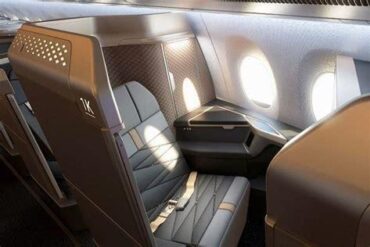
United Airlines’ Elevated Polaris Suites Redefine Business Class
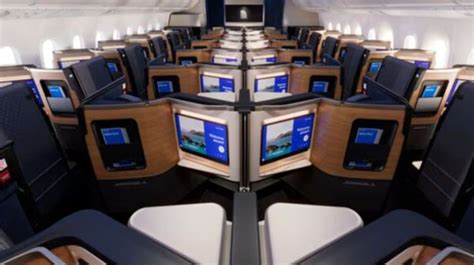
United Airlines has emerged as one of the most aggressive investors in premium cabin innovation. The airline’s latest Boeing 787-9 Dreamliner deliveries debut an entirely reimagined onboard experience known as the United Elevated interior.
Rather than simply updating its original Polaris seats introduced in 2016, the airline chose a more ambitious path: replacing them with fully enclosed Polaris suites featuring sliding privacy doors.
This upgrade aligns United with the growing global standard among premium airlines. Privacy doors are no longer seen as luxury gimmicks—they have become a defining feature of modern business class design.
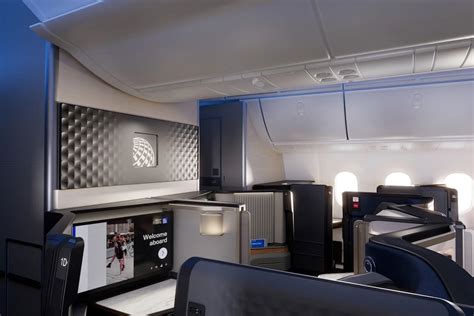
The new Polaris suites introduce several important upgrades:
- Large high-definition seatback screens
- Wireless charging pads
- Bluetooth audio connectivity
- Expanded personal storage compartments
- Improved ergonomic seat cushioning
Each suite is designed to provide a sense of personal territory within the cabin. Travelers can recline, work, dine, or sleep in a space that feels less like a seat and more like a compact private room.
The design also reflects the realities of modern long-haul travel. Flights between the United States and Asia or Europe often last 8 to 15 hours, and passengers increasingly expect an environment that allows them to rest, work, and relax without interruption.
Polaris Studio: United’s “Business Plus” Concept
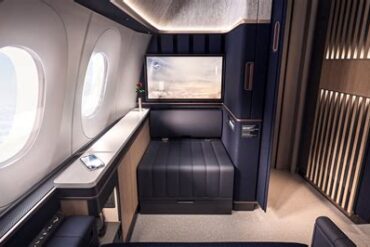
Perhaps the most intriguing element of United’s new cabin is the Polaris Studio, an enhanced front-row seating concept that effectively creates a premium tier within business class.
Located at the front of the Polaris cabin, these seats provide significantly more personal space than standard suites. The design includes an ottoman that enables companion dining, expanded surface space for working or eating, and upgraded amenities.
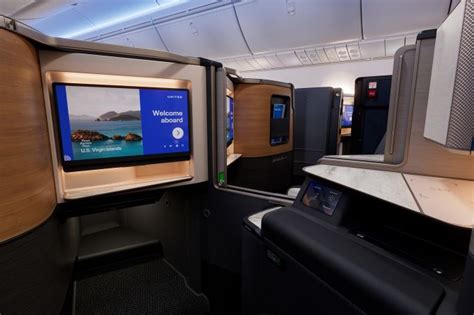
This approach allows United Airlines to deliver something close to a traditional first-class experience without actually installing a separate first-class cabin.
The strategy is clever from both an operational and financial standpoint. First class requires significant cabin space and high operating costs, while Polaris Studio provides many of the same benefits within the footprint of a business class layout.
The airline is installing these interiors on a growing subfleet of Boeing 787 aircraft serving long-haul routes from major hubs such as:
- Newark Liberty International Airport (EWR)
- Chicago O’Hare International Airport (ORD)
- San Francisco International Airport (SFO)
By increasing the number of premium seats on these aircraft, United is betting heavily on the continued strength of high-yield international travel demand.
Upgraded Premium Economy and Economy on United’s Dreamliners
While premium cabins often receive the most attention, United’s newest Boeing 787 interiors also deliver meaningful improvements for passengers seated further back in the aircraft.
The airline’s Premium Plus cabin, which functions as its premium economy product, now features upgraded seat designs with enhanced cushioning, privacy dividers, and significantly larger entertainment screens.
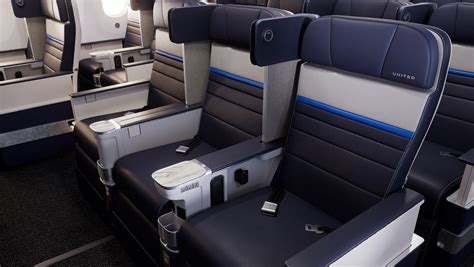
Bluetooth connectivity allows passengers to pair their own headphones directly with the inflight entertainment system—an upgrade that eliminates the need for traditional airline headphone adapters.
Economy class travelers are also experiencing notable improvements. United is installing some of the largest seatback screens found in any US airline economy cabin, alongside multiple power options including USB and USB-C ports.
These upgrades demonstrate an important industry truth: although premium travelers generate more revenue, economy passengers still make up the vast majority of airline customers. Improving their experience is essential for maintaining brand loyalty.
American Airlines Introduces the Flagship Suite
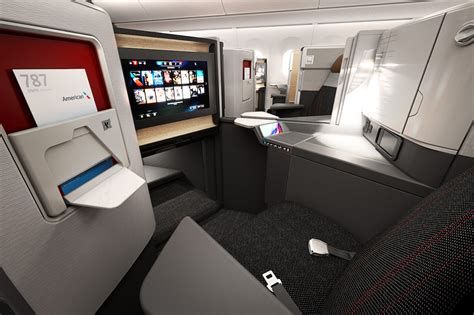
American Airlines is also undertaking one of the most significant cabin transformations in its history. The airline’s newest Boeing 787-9 Dreamliners debut the long-anticipated Flagship Suite, a next-generation business class seat designed to rival the best products offered by international carriers.
For years, American’s previous business class seat lagged behind competitors that offered enclosed suites. The Flagship Suite closes that gap decisively.
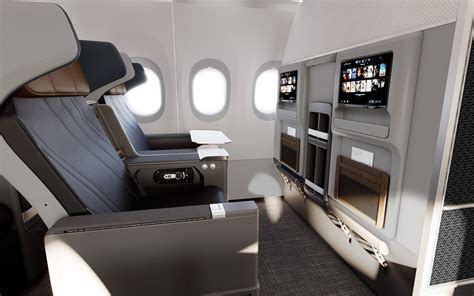
Each suite includes privacy doors, chaise-style seating, wireless charging, USB-C and AC power outlets, and expanded personal storage areas.
Passengers can adjust the seat to multiple positions—from upright work mode to relaxed lounging configurations—before converting it into a fully flat bed for overnight flights.
Design details also play an important role. Adjustable headrests, premium materials, and refined lighting give the cabin a more modern and upscale atmosphere.
The result is a product that finally places American Airlines on equal footing with many of its global competitors.
Premium Economy Expansion on American’s 787-9
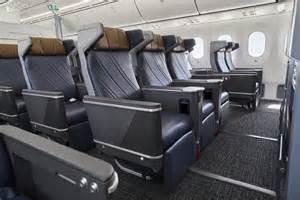
American Airlines has not limited its redesign to business class. The airline’s newest 787-9 aircraft feature a significantly upgraded premium economy cabin with 32 dedicated seats.
These seats provide noticeably more space than standard economy and include several comfort-focused features:
- Enhanced legroom
- Adjustable calf and footrests
- Privacy headrest wings
- Large entertainment screens
- USB-C and AC power outlets
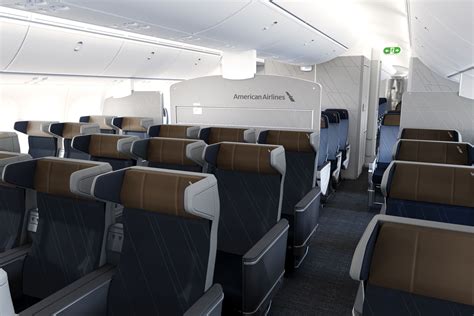
Premium economy has grown into one of the most profitable cabin segments for long-haul airlines. It appeals to travelers who want additional comfort without paying the considerably higher price of business class.
American’s new cabin reflects this reality by allocating a larger portion of the aircraft to premium seating categories.
A Tech-Forward Economy Cabin Experience
Passengers flying in the main cabin of American’s newest Dreamliners will notice that the technology upgrades extend throughout the aircraft.
One of the most striking features is the installation of 4K QLED seatback entertainment screens—among the sharpest displays currently flying on commercial aircraft.
These systems also include Bluetooth audio connectivity, allowing passengers to use wireless headphones with the inflight entertainment platform.
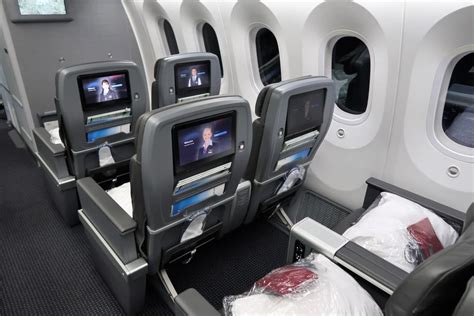
The result is an economy cabin experience that feels noticeably more modern than older aircraft still flying within the airline’s fleet.
American Airlines’ strategy with these aircraft is clear: create premium-heavy cabin layouts that increase revenue potential while simultaneously improving the baseline experience for every traveler.
Expanding the Flagship Suite Across the Fleet
The new Boeing 787-9 is only the beginning of American Airlines’ cabin modernization program.
The airline has already announced plans to expand the Flagship Suite concept across additional aircraft types, including retrofitted widebody jets and upcoming long-range narrowbody aircraft.
Aircraft expected to receive similar interiors include:
- Boeing 777-300ER
- Future Airbus A321XLR long-range aircraft
This fleetwide rollout will significantly increase the number of lie-flat business class seats available across the airline’s global network.
Consistency is the ultimate goal. Passengers booking premium cabins will increasingly encounter the same design language and technology features regardless of which aircraft operates their flight.
That uniformity simplifies the travel experience and strengthens brand identity.
Delta Air Lines Expands Its Newest Domestic Cabin
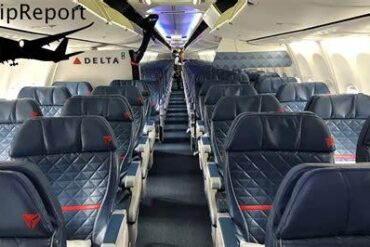
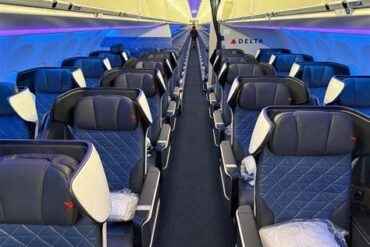
Delta Air Lines is taking a slightly different approach to cabin innovation. Instead of unveiling an entirely new seat design in 2026, the airline is rapidly expanding the deployment of its latest narrowbody interior through additional Airbus A321neo deliveries.
These aircraft represent the newest generation of Delta’s domestic cabin design and are becoming increasingly common on routes throughout the United States.
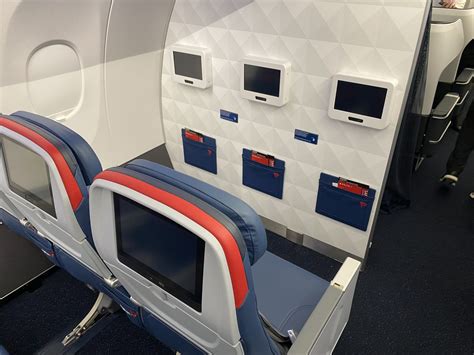
The A321neo interiors feature updated first-class recliner seats, refreshed economy seating, and a modern cabin aesthetic defined by improved lighting and larger overhead storage bins.
Every seat on the aircraft includes a seatback entertainment screen, a feature that Delta has consistently maintained even as some competitors experimented with removing them.
The airline’s emphasis on onboard entertainment reflects its belief that passengers still value integrated seatback systems despite the rise of personal device streaming.
Premium Density in Delta’s Narrowbody Fleet
Another defining feature of Delta’s A321neo fleet is its high premium seat density.
A substantial portion of the cabin is dedicated to the airline’s First Class and Comfort+ products, allowing Delta to capture revenue from passengers willing to pay for extra space on domestic flights.
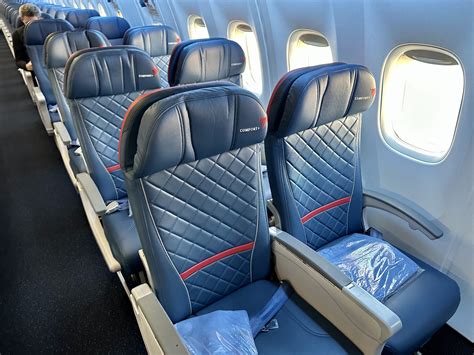
Although the seat models themselves may not be brand new to frequent Delta travelers, the sheer number of aircraft entering service ensures that these cabins represent some of the newest seats operating within the US domestic market.
Delta has also been refurbishing older aircraft such as the Boeing 757, giving them refreshed interiors that more closely resemble the airline’s latest designs.
Why 2026 Marks a Turning Point for US Airline Seats
The developments across United, American, and Delta illustrate a broader transformation within the US airline industry.
For years, American carriers often appeared cautious when introducing radical seat designs. Enclosed suites, expansive premium cabins, and luxury finishes were more commonly associated with airlines in Asia and the Middle East.
That gap is now narrowing rapidly.
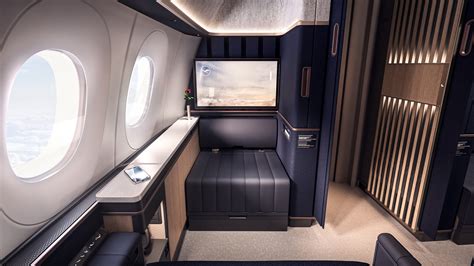
The newest aircraft entering US fleets in 2026 showcase several defining trends:
- Fully enclosed business class suites becoming standard
- Expanded premium economy cabins
- Technology integration across every seat
- Higher proportions of revenue-generating premium seating
Even economy cabins are evolving, with larger screens, improved connectivity, and more ergonomic seat designs becoming common features.
The Future of Cabin Innovation
The transformation taking place in 2026 is likely only the beginning. Airlines are continuing to experiment with new seating layouts, digital personalization tools, and improved passenger comfort technologies.
Future cabins may include AI-driven entertainment recommendations, adaptive lighting systems that adjust to passenger circadian rhythms, and more modular seating arrangements designed to accommodate different travel styles.
What is already clear is that airline seats are no longer simple pieces of furniture bolted to the floor. They are becoming sophisticated travel environments designed to maximize comfort, productivity, and privacy at 35,000 feet.
For passengers flying with United Airlines, American Airlines, and Delta Air Lines, the newest cabin seats of 2026 signal an era in which American carriers are no longer catching up to global competitors—they are actively shaping the future of inflight comfort.