Investor Optimism Meets Fleet Reality
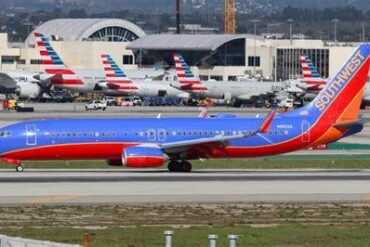
Southwest Airlines entered the year riding a wave of market enthusiasm. Following the release of its annual results, investors responded with striking confidence, sending the airline’s stock soaring nearly 19% in a single day — its largest surge since 1978 — and pushing shares to a four-year high. Analysts framed the moment as a structural turning point, pointing to business model adjustments, cost discipline, and ambitious 2026 projections as signals that the carrier’s long-term profitability engine was reigniting.
Yet beneath that optimism sat a far more complicated operational reality. Tucked deep within Southwest’s 10-K SEC filing was a disclosure that sharply reframed the airline’s growth trajectory: Boeing delivery delays would leave the carrier more than 100 aircraft short of its contractual expectations for 2026. For an airline built entirely around the Boeing 737 platform, such a shortfall is not a minor scheduling inconvenience — it is a structural constraint that touches capacity planning, route expansion, maintenance economics, and ultimately revenue generation.
Southwest’s all-737 strategy has historically been its operational superpower. Fleet commonality simplifies pilot training, maintenance tooling, spare parts logistics, and scheduling flexibility. But that same strategic purity now amplifies exposure. When Boeing stumbles, Southwest feels the tremor across its entire network.
A Delivery Schedule That No Longer Adds Up
Southwest’s contracted order book paints a picture of aggressive modernization. Across the next six years, the airline is slated to receive hundreds of Boeing 737 MAX aircraft, split primarily between the MAX 7 and MAX 8 variants. The original 2026 delivery schedule alone called for 167 aircraft — an extraordinarily high number that would require sustained output exceeding three aircraft per week.
Reality has intervened. In its filing, Southwest acknowledged that it now expects to receive only 66 MAX 8 deliveries in 2026, with MAX 7 deliveries effectively absent due to certification delays. Compounding the issue, 81 aircraft originally due in 2024 and 2025 remain undelivered and have been rolled into future commitments.
This cascading backlog creates a compounding deficit. Aircraft that were meant to replace aging jets, enable new routes, and absorb demand growth simply will not arrive on time. Capacity plans must therefore be rewritten, often at higher cost and lower efficiency.
Southwest’s Deep Commitment To The 737 MAX
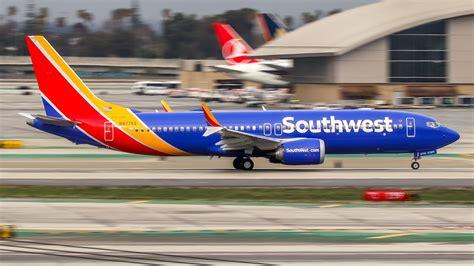
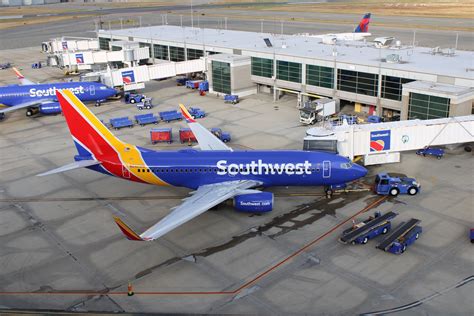
Southwest’s relationship with the 737 MAX program stretches back to 2011, when it placed an initial firm order for 150 aircraft. Over time, that commitment expanded dramatically. Today, the airline operates more than 300 MAX 8 jets and holds firm orders and options for hundreds more, making it the largest customer for the type globally.
That loyalty persisted even through the MAX crisis — the crashes, global groundings, regulatory scrutiny, and reputational damage that reshaped Boeing’s commercial business. Southwest stayed the course, betting that long-term economics would outweigh short-term disruption.
The bet was rooted in hard math. The MAX family delivers double-digit fuel efficiency improvements, lower maintenance costs, and greater range. For a low-cost carrier whose margins are exquisitely sensitive to fuel prices, these gains are existential, not incremental.
But loyalty does not immunize an airline from industrial bottlenecks. Production constraints, supply chain fragility, and regulatory hurdles have slowed the flow of aircraft to a trickle relative to contractual expectations.
Why The MAX 7 Matters More Than Any Other Variant
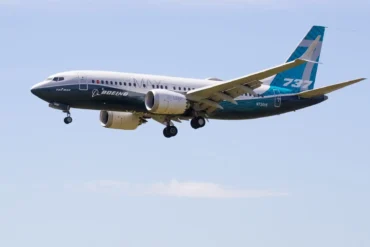
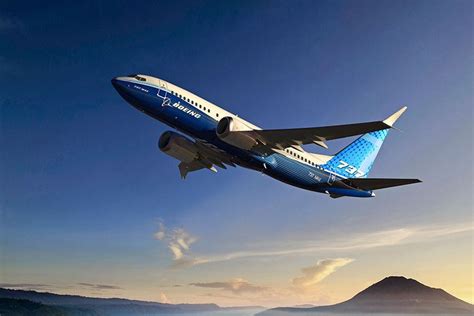
Among all delayed deliveries, none carry more strategic weight than the 737 MAX 7. This smallest MAX variant is the designated successor to Southwest’s Boeing 737-700 fleet — aircraft that have formed the backbone of its short-haul network for decades.
Southwest once operated more than 500 of these jets. Over 300 remain in active service today, many approaching 20 years of age with exceptionally high cycle counts — a reflection of the airline’s rapid-turn, high-frequency operating model. These aircraft are maintenance-intensive, less fuel-efficient, and increasingly costly to keep in frontline service.
The MAX 7 is engineered as their spiritual and economic replacement. It offers:
- Roughly 1,000 additional nautical miles of range
- Higher passenger capacity within similar operating economics
- Approximately 18% lower fuel cost per seat
Those metrics are transformative for route planning. Longer range opens new city pairs. Lower seat costs improve margins on competitive routes. Higher capacity boosts revenue per departure.
But eight years after its public launch, the aircraft remains uncertified.
Certification Delays And The Regulatory Bottleneck
Southwest originally expected to introduce the MAX 7 into service in 2019. That timeline has slipped repeatedly, primarily due to regulatory scrutiny following the broader MAX crisis and subsequent technical redesign requirements.
The most recent hurdle centers on the engine anti-ice (EAI) system — a component responsible for preventing ice accumulation within engine inlets during certain atmospheric conditions. Engineers have finalized a redesign, and Boeing has submitted the solution to regulators for validation.
Boeing leadership has expressed confidence that certification could arrive sometime in 2026. Even under that optimistic scenario, first airline deliveries would likely begin in 2027 at the earliest.
Certification is not merely a paperwork exercise. It requires exhaustive testing, engineering validation, safety modeling, and regulator sign-off. Since the MAX grounding, the FAA has adopted a far more conservative posture — prioritizing procedural rigor over manufacturer timelines.
In practical terms, this means Southwest’s fleet renewal clock keeps ticking while its replacement aircraft remain grounded on paper.
The 2031 Retirement Deadline Pressure
Southwest’s board has not moved its retirement target for the 737-700 fleet: 2031 remains the cutoff year. That immovable deadline transforms delivery delays into a logistical compression problem.
To meet contractual obligations, Boeing would need to deliver 269 MAX 7 aircraft to Southwest within roughly five years following certification. That equates to an average pace of one aircraft every week — sustained, uninterrupted, and assuming no further disruptions.
Such throughput would challenge even a fully stabilized production system. Achieving it while the manufacturer is still scaling output, resolving supply constraints, and integrating new assembly capacity adds additional uncertainty.
If Southwest exercises the majority of its remaining MAX options — widely expected — the required production tempo would rise even further.
Production Caps And Industrial Constraints
Aircraft certification is only half the bottleneck. Production capacity forms the second choke point.
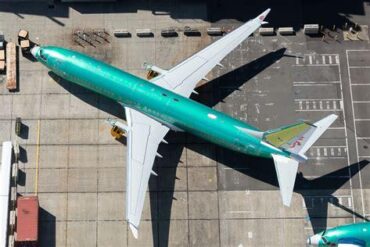
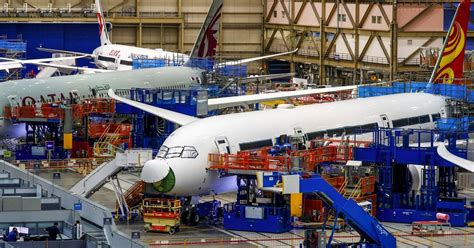
The FAA currently caps Boeing’s 737 MAX output at 42 aircraft per month — a restriction imposed to ensure manufacturing quality and safety oversight. Boeing aims to raise that ceiling to 47 per month by mid-2026, with longer-term ambitions of reaching 53 monthly by year’s end.
Supporting this ramp-up are several industrial initiatives:
- Supply chain stabilization following pandemic-era disruptions
- Integration of Spirit AeroSystems manufacturing operations
- Activation of a fourth 737 assembly line in Everett
Some analysts project that production could reach 63 aircraft per month by 2028. Even if achieved, output must be distributed across dozens of airline customers worldwide — not allocated solely to Southwest.
Financial Fallout And Contractual Leverage
Delivery delays do not merely disrupt planning — they impose tangible financial penalties.
Airlines structure growth forecasts, staffing plans, and route launches around fleet arrivals. When jets fail to materialize, carriers must extend leases, defer retirements, or forego expansion opportunities. Each workaround carries cost implications.
Southwest has moved to cushion the blow through supplemental agreements with Boeing. These renegotiations include confidential financial credits, delivery flexibility provisions, and other concessions designed to offset operational harm.
Such compensation can soften balance sheet impact but cannot fully replace lost strategic momentum. Aircraft availability defines how fast an airline can grow, which markets it can enter, and how efficiently it can operate.
Network Growth And Competitive Positioning
Fleet shortages ripple outward into network strategy. Without sufficient aircraft, Southwest must make difficult allocation decisions:
- Prioritize high-demand trunk routes over experimental markets
- Delay international or long-range expansion enabled by MAX performance
- Maintain older aircraft longer than economically ideal
Competitors with more diversified fleets — or more reliable delivery pipelines — gain relative advantage. Capacity discipline may support pricing power in the short term, but constrained growth limits market share expansion.
In a post-pandemic travel environment where demand recovery has outpaced aircraft supply globally, every delayed jet represents foregone revenue opportunity.
Operational Complexity Of An Aging Sub-Fleet
Keeping older 737-700 aircraft in service longer introduces operational drag. Aging jets require heavier maintenance checks, more frequent component replacements, and higher downtime ratios.
Cycle-heavy airframes — aircraft that have accumulated large numbers of takeoff-landing sequences — experience structural fatigue at accelerated rates. Southwest’s short-haul model intensifies this wear pattern.
Maintenance cost per seat therefore rises just as fuel efficiency lags behind newer variants. The result is margin compression — subtle per flight, but enormous across thousands of annual departures.
What Happens If Delays Persist
If certification or production timelines slip further, Southwest may face several strategic forks:
- Extending retirements deeper into the 2030s
- Leasing interim lift from secondary markets
- Slowing growth targets embedded in investor guidance
- Re-phasing capital expenditure planning
None are ideal. Leasing adds cost. Deferred retirements add maintenance burden. Slower growth pressures valuation multiples that currently price in expansion.
The airline’s public optimism reflects confidence in eventual resolution — not immunity from interim turbulence.
A Partnership Under Strain — But Not Broken
Despite the friction, Southwest remains operationally and strategically bound to Boeing. Its training systems, maintenance infrastructure, spare parts inventories, and scheduling algorithms are all optimized for the 737 platform.
Fleet diversification — while theoretically risk-reducing — would introduce enormous transition cost and complexity. Pilot retraining alone would represent a multi-year, billion-dollar undertaking.
Thus, the relationship endures. Negotiated credits, revised delivery schedules, and production coordination form the practical toolkit for navigating delays.
The Strategic Stakes Through 2031
Between now and the 2031 retirement deadline lies one of the most consequential fleet transitions in Southwest’s history. Hundreds of aircraft must be replaced, growth must be layered atop replacement, and operational reliability must be preserved throughout.
The success or failure of that transition hinges on three interlocking variables:
- MAX 7 certification timing
- Boeing production ramp execution
- Supply chain stability across the aerospace sector
If aligned, Southwest emerges with one of the youngest, most fuel-efficient narrowbody fleets in the world. If misaligned, the airline faces prolonged cost pressure and constrained expansion.
Broken promises in aviation are rarely theatrical. They manifest quietly — in deferred routes, extended maintenance checks, and spreadsheets rewritten at midnight. Yet their cumulative force can reshape an airline’s decade.
Southwest’s optimism remains real. So do its constraints. The next five years will determine which proves more powerful.