Modern air combat has evolved far beyond the cinematic dogfights that once defined aerial warfare. In 2026, victory in the skies is no longer determined by who turns tighter or flies faster—it is decided long before opposing pilots ever see each other. Today’s battlespace is a layered, digital ecosystem where stealth, sensor fusion, network-centric warfare, and autonomous systems converge into a single, decisive advantage. The aircraft that dominate this era are not just fighters or bombers; they are flying command nodes, data relays, and force multipliers.
This transformation reflects a deeper doctrinal shift. Air forces are no longer building isolated platforms; they are constructing integrated combat networks where each aircraft—manned or unmanned—plays a specialized role. High-end stealth jets act as battlefield quarterbacks, while cheaper, expendable drones extend reach, absorb risk, and overwhelm defenses. The result is a dynamic ecosystem where information superiority outweighs raw performance.
Within this new paradigm, a handful of aircraft stand out—not just for their capabilities, but for how they redefine the very nature of air warfare. These machines represent the cutting edge of strategy, technology, and doctrine, each embodying a critical piece of the future fight.
Kratos XQ-58A Valkyrie: The Rise of the Loyal Wingman
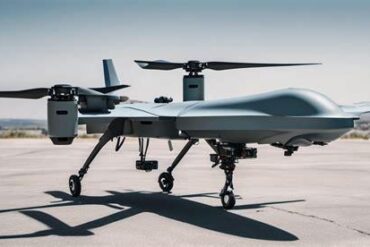
The emergence of the Kratos XQ-58A Valkyrie signals a profound shift in how air power is projected. Unlike traditional fighters, the Valkyrie is not designed to replace pilots—it is built to augment and protect them, operating as part of a coordinated system alongside manned aircraft.
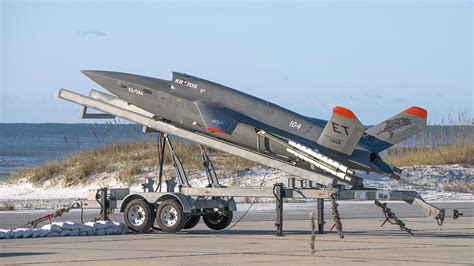
What makes the Valkyrie revolutionary is its cost-to-capability ratio. With an estimated unit cost between $3 million and $10 million, it is dramatically cheaper than any modern fighter jet. This affordability enables a new operational concept: mass deployment through attrition tolerance. Commanders can afford to lose Valkyries in combat—something unthinkable with $80–$130 million manned aircraft.
The aircraft’s launch and recovery system further enhances its flexibility. By using rocket-assisted takeoff rails and parachute recovery, it eliminates the need for traditional runways. This allows it to operate from remote, austere environments, complicating enemy targeting and enabling rapid deployment in contested regions.
But the Valkyrie’s true power lies in its role as a “loyal wingman.” Controlled by advanced fighters like fifth-generation stealth jets, it can:
- Conduct reconnaissance deep in contested airspace
- Deliver precision strikes against ground or air targets
- Act as a decoy to expose enemy defenses
- Absorb incoming fire to protect high-value assets
This concept fundamentally changes engagement dynamics. Instead of risking a single pilot and aircraft, commanders can deploy coordinated swarms, overwhelming enemy systems through sheer volume and distributed capability. The battlefield becomes less about individual platforms and more about networked formations acting as a single organism.
Northrop Grumman B-21 Raider: The Invisible Backbone of Strategic Power
If the Valkyrie represents the future of tactical flexibility, the Northrop Grumman B-21 Raider embodies the next evolution of strategic dominance. As the world’s first operational sixth-generation stealth bomber, it is designed not just to strike—but to penetrate, survive, and orchestrate operations in the most heavily defended environments on Earth.
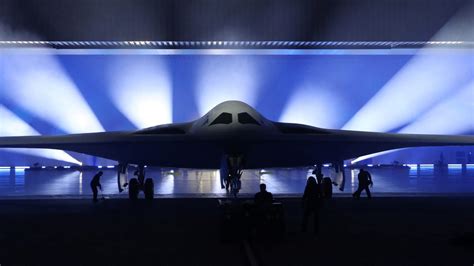
The B-21 builds on decades of stealth experience but pushes the concept further with all-aspect low observability, meaning it is difficult to detect from any angle, across multiple sensor types. This dramatically increases survivability against modern integrated air defense systems, which rely on layered radar and infrared detection.
Unlike its predecessor, the B-2 Spirit, the Raider is engineered for scalability and sustainability. It is designed to be more affordable to produce and operate, enabling a larger fleet size. This shift reflects a critical lesson: even the most advanced aircraft must be available in sufficient numbers to matter strategically.
What truly sets the B-21 apart is its dual role as both strike platform and data node. It is expected to:
- Coordinate drone swarms across vast distances
- Relay sensor data between dispersed forces
- Execute long-range precision strikes
- Potentially operate without a crew in certain missions
This capability transforms the bomber from a single-purpose weapon into a central hub within the battlespace network. It does not merely deliver ordnance—it shapes the entire engagement by managing information flow and orchestrating distributed assets.
The Raider’s ability to operate from forward and austere bases further enhances its strategic value. By reducing reliance on large, vulnerable airfields, it increases operational unpredictability and resilience, ensuring that strike capabilities remain intact even in contested scenarios.
Boeing F-15EX Eagle II: The Ultimate Missile Truck
While stealth dominates headlines, the Boeing F-15EX Eagle II proves that raw performance and payload still have a decisive role in modern combat. This aircraft represents the pinnacle of 4.5-generation fighter evolution, combining legacy strengths with cutting-edge avionics and weapons systems.
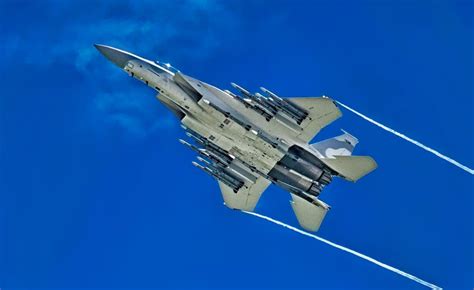
The Eagle II’s defining characteristic is its unmatched payload capacity. In an air-to-air configuration, it can carry up to 22 long-range missiles, far exceeding the internal weapon limits of stealth fighters. This makes it an ideal complement to fifth-generation aircraft, which prioritize stealth over payload.
In practice, this creates a powerful tactical pairing. Stealth fighters can penetrate enemy airspace undetected, identify targets, and transmit data back to the F-15EX. The Eagle II, operating at a safer distance, can then launch long-range missiles based on this data, striking enemies it cannot even see directly.
This concept, often referred to as “sensor-shooter decoupling,” is a cornerstone of modern air combat doctrine. It allows each platform to specialize, maximizing overall effectiveness.
Beyond its payload, the F-15EX retains the Eagle family’s legendary performance. It is one of the fastest and highest-flying fighters in service, capable of rapid response and sustained operations. Its advanced radar and electronic warfare systems ensure that it remains competitive even against more modern adversaries.
Importantly, the F-15EX is also cost-effective to operate, making it a practical choice for sustained missions and high-tempo operations. In an era where not every task requires stealth, it provides a reliable and powerful workhorse that complements more specialized platforms.
Chengdu J-20 Mighty Dragon: The Strategic Stealth Hunter
The Chengdu J-20 Mighty Dragon represents a different approach to stealth fighter design—one shaped by regional priorities and strategic objectives. Built for long-range operations in the Asia-Pacific, it is optimized for endurance, reach, and targeted lethality.
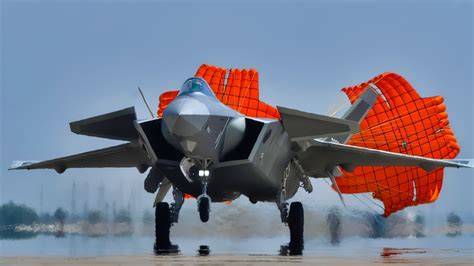
Unlike many Western fighters, the J-20 emphasizes extended patrol capability. Its larger airframe accommodates increased fuel capacity and sizable internal weapons bays, allowing it to remain on station for longer periods while maintaining a stealth profile.
This design supports its primary mission: neutralizing high-value targets such as aerial refueling tankers and airborne early warning aircraft. By targeting these critical enablers, the J-20 aims to disrupt the entire enemy air network, rather than engaging fighters directly.
Recent upgrades to its engines and radar systems have significantly improved its performance, narrowing the gap with its Western counterparts. Its advanced sensors enhance its ability to detect and engage targets at beyond-visual-range (BVR) distances, where modern air combat is primarily conducted.
A particularly notable development is the introduction of a two-seat variant, which suggests a broader operational role. The second crew member may be dedicated to managing drones or coordinating complex missions, effectively turning the aircraft into a command platform for unmanned systems.
With a growing fleet size and continuous technological improvements, the J-20 has become a central pillar of its nation’s air power strategy. It reflects a doctrine focused on denial, disruption, and regional dominance, leveraging stealth and range to shape the battlespace.
Lockheed Martin F-35 Lightning II: The Digital Quarterback of the Skies
At the heart of modern air combat lies the Lockheed Martin F-35 Lightning II, an aircraft that redefines what it means to achieve air superiority. Rather than excelling in a single area, the F-35 integrates multiple capabilities into a cohesive system centered on information dominance.
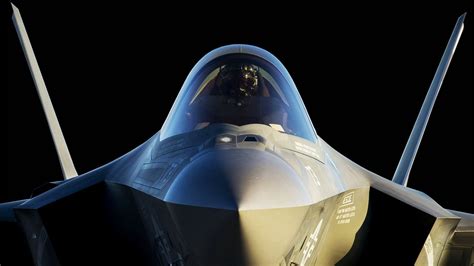
The F-35’s most powerful weapon is not its missiles—it is its sensor fusion and data-sharing capability. The aircraft collects information from radar, infrared sensors, electronic warfare systems, and external sources, then synthesizes it into a single, coherent picture of the battlefield.
This information is shared across a secure network, allowing other platforms—fighters, bombers, drones, and ground units—to operate with unprecedented situational awareness. In effect, the F-35 acts as a central node in a vast combat network, enabling coordinated actions across multiple domains.
Its stealth design allows it to operate in contested environments, but it is not the most stealthy or the fastest aircraft. This is a deliberate trade-off. The F-35 prioritizes scalability and interoperability, ensuring that it can be produced in large numbers and integrated across allied forces.
The aircraft’s advanced helmet-mounted display exemplifies its innovative approach. Pilots can:
- See through the aircraft using distributed sensors
- Switch seamlessly to night vision
- Track targets across multiple domains
- Receive real-time tactical updates
This creates a “God’s-eye view” of the battlefield, dramatically reducing pilot workload while enhancing decision-making speed.
With over a thousand units already in service and many more planned, the F-35 is not just an aircraft—it is the foundation of a global air combat ecosystem. Its widespread adoption ensures interoperability among allied forces, creating a unified network capable of responding to threats anywhere in the world.
The Future of Air Combat: Networks, Autonomy, and Dominance
The aircraft defining modern air combat are not isolated innovations—they are interconnected pieces of a larger transformation. Together, they illustrate a future where networks matter more than platforms, and collaboration outweighs individual performance.
Stealth fighters like the F-35 and J-20 provide access and awareness, penetrating contested airspace and gathering critical data. Heavy platforms like the B-21 extend reach and coordination across global distances. Legacy-inspired aircraft like the F-15EX deliver sheer firepower, while autonomous systems like the Valkyrie introduce scalability and resilience.
This integrated approach creates a battlespace where:
- Engagements occur at extreme distances
- Decisions are driven by real-time data
- Risk is distributed across manned and unmanned systems
- Victory is achieved through coordination rather than confrontation
As technology continues to evolve, the line between aircraft, drone, and data node will blur even further. Future platforms will likely be defined not by their physical characteristics, but by their ability to connect, process, and act within an ever-expanding network.
The age of the lone fighter ace has given way to the era of the connected force, where success depends on how well each component contributes to the whole. These five aircraft do more than dominate the skies—they redefine what dominance means in the first place.