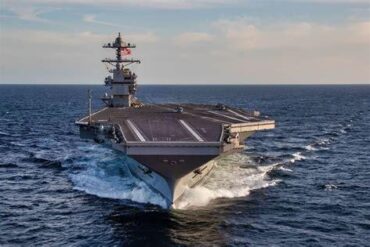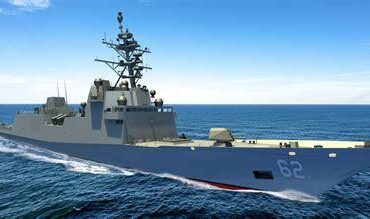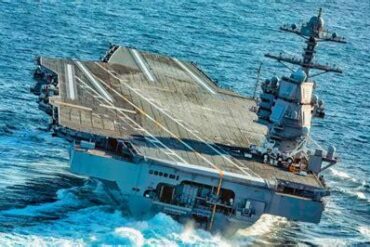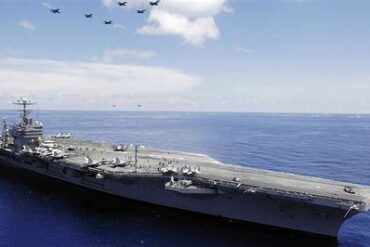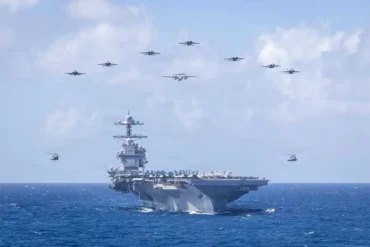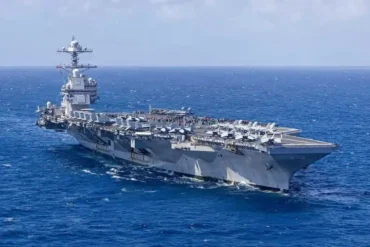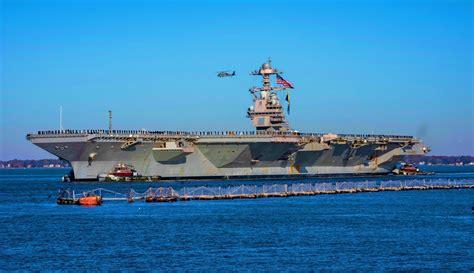
The United States Navy is investing more than $120 billion in a supercarrier program that will not fully mature until 2043, a timeline that has sparked intense debate among military strategists, lawmakers, and defense analysts. In an age increasingly defined by hypersonic missiles, unmanned systems, and rapidly evolving geopolitical realities, critics question whether building massive aircraft carriers over nearly two decades remains a wise investment. Yet for the Pentagon, the Gerald R. Ford-class program is far more than a shipbuilding effort. It is a long-term strategy designed to preserve American maritime dominance well into the second half of the twenty-first century.
The sheer scale of the undertaking is unprecedented. The Navy is not merely constructing individual warships; it is replacing an entire generation of nuclear-powered carriers that have served as the backbone of American global power projection since the Cold War. These vessels are expected to remain operational for nearly a century, carrying technologies that do not yet exist and adapting to battlefields that remain largely unknown.
The stakes could hardly be be higher. Aircraft carriers have historically represented the ultimate symbol of naval supremacy, capable of projecting combat power anywhere on Earth without relying on foreign bases. The Navy believes this capability will remain indispensable, even as warfare evolves dramatically in the coming decades.
By the time the final planned Ford-class ships enter service in the early 2040s, they will have consumed decades of planning, thousands of industrial contracts, and billions in taxpayer investment. The question facing policymakers is not simply whether carriers remain relevant, but whether America can afford to abandon them.
After examining the strategic rationale, technological innovations, industrial realities, and future battlefield requirements, the answer becomes clearer: Washington sees these ships not as relics of the past, but as the foundation of future naval warfare.
Why the US Navy Is Planning Decades Ahead
Military procurement operates on timescales unlike almost any other industry. Designing, funding, building, testing, and deploying a nuclear-powered supercarrier requires decades of continuous effort. Consequently, the Ford-class timeline extending toward 2043 is not viewed by naval planners as unusually long. Instead, it reflects the reality of constructing some of the most complex machines ever built.
The Ford-class program exists primarily to replace the aging Nimitz-class fleet. Many of these carriers entered service during the 1970s and 1980s and are steadily approaching retirement after approximately fifty years of operation. As older carriers leave service, new vessels must be ready to assume their responsibilities without creating dangerous capability gaps.
Long-term procurement also protects the industrial base. Nuclear carrier construction demands highly specialized labor, advanced manufacturing facilities, and thousands of suppliers spread across the United States. Without predictable contracts extending decades into the future, these unique capabilities could disappear permanently.
Rather than viewing 2043 as an excessively distant date, Navy planners see it as a necessary milestone in sustaining uninterrupted carrier operations for future generations.
The Strategic Logic Behind a $120 Billion Investment
At first glance, spending $120 billion on a handful of ships appears extraordinary. Critics frequently argue that the same funds could purchase hundreds of smaller combatants, submarines, or unmanned systems.
However, the Navy measures value differently.
A supercarrier is not merely a warship. It functions simultaneously as:
- A mobile airbase.
- A command-and-control center.
- A logistics hub.
- A nuclear-powered strategic asset.
- A sovereign piece of American territory at sea.
Unlike overseas military bases, carriers require no diplomatic permission to operate. They can reposition rapidly, remain on station for extended periods, and respond immediately to emerging crises.
Whether responding to conflicts in the Western Pacific, deterring aggression in the Middle East, or conducting humanitarian missions after natural disasters, carriers provide unmatched flexibility.
For Washington, this combination of mobility, survivability, and political independence justifies the immense cost.
Gerald R. Ford-Class Carriers Represent the Biggest Carrier Revolution in Half a Century
The transition from the Nimitz design to the Ford class constitutes the most significant transformation in American carrier aviation since the advent of nuclear propulsion.
Although the new carriers resemble their predecessors externally, nearly every critical internal system has been redesigned.
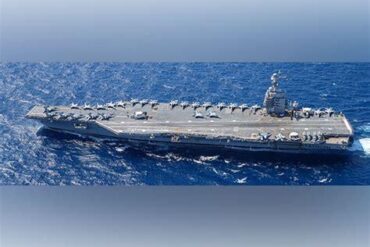
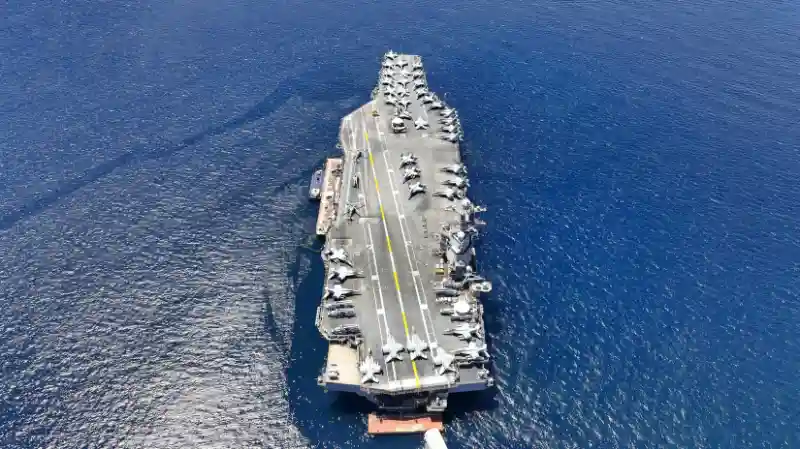
The flight deck, stretching approximately 1,092 feet (333 meters), has been reconfigured to increase operational efficiency dramatically. Aircraft movements have been streamlined, maintenance procedures simplified, and sortie generation rates significantly improved.
Perhaps the most revolutionary innovation is the replacement of traditional steam catapults.
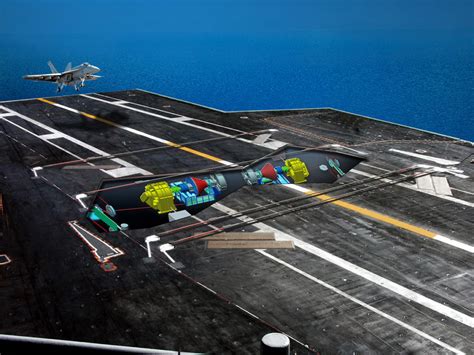
Instead of relying on decades-old steam technology, Ford-class carriers employ the Electromagnetic Aircraft Launch System (EMALS). Using powerful linear induction motors, EMALS precisely controls aircraft acceleration during launch.
This capability offers several advantages:
- Reduced stress on aircraft structures.
- Improved reliability over time.
- Greater launch efficiency.
- Compatibility with both manned and unmanned aircraft.
- Expanded launch envelopes for future aircraft designs.
Equally transformative is the Advanced Arresting Gear (AAG) system, which replaces hydraulic recovery equipment with electrically controlled mechanisms capable of handling a wider variety of aircraft weights.
Together, EMALS and AAG fundamentally redefine carrier flight operations.
Massive Electrical Capacity Is Preparing Carriers for Future Warfare
One of the most important yet least visible Ford-class improvements lies deep within the ship.
The class utilizes twin Bechtel A1B nuclear reactors, representing a substantial leap beyond the reactors powering Nimitz-class carriers.
These advanced reactors generate approximately three times more electrical power than previous designs.
This excess power is crucial because future naval warfare will demand enormous energy reserves.
Emerging technologies expected to define future combat include:
- Directed-energy weapons.
- High-powered lasers.
- Electromagnetic railguns.
- Advanced electronic warfare suites.
- Artificial intelligence processing systems.
- Next-generation radar arrays.
Traditional ships often require costly structural modifications to accommodate such technologies. Ford-class carriers were specifically designed with sufficient electrical margins to integrate future systems throughout their operational lives.
Considering these ships may remain in service until the next century, such adaptability is essential.
Early Development Problems Triggered Intense Criticism
The Ford-class program has not progressed smoothly.
Indeed, its early years were marked by technical setbacks, budget overruns, and congressional scrutiny.
The USS Gerald R. Ford (CVN-78) experienced numerous developmental challenges. The electromagnetic launch system suffered reliability issues. Advanced weapons elevators repeatedly failed to meet performance requirements. Certain components required redesign, delaying operational certification.
Manufacturing defects also emerged, including propulsion-related problems and specialized welding concerns.
These setbacks fueled criticism that the Navy had attempted to introduce too many revolutionary technologies simultaneously.
When individual ships cost more than $13 billion, even relatively minor delays can translate into enormous additional expenses.
Opponents argue that concentrating so much capability into a single platform creates unacceptable strategic and financial risk. They question whether a future adversary armed with large numbers of precision-guided missiles could neutralize such expensive assets.
Yet supporters counter that pioneering technologies inevitably encounter early difficulties. The first nuclear submarines, jet aircraft, and stealth fighters all experienced developmental challenges before evolving into highly successful platforms.
Operational lessons learned aboard USS Gerald R. Ford are now being incorporated into future ships, significantly reducing technical risk.
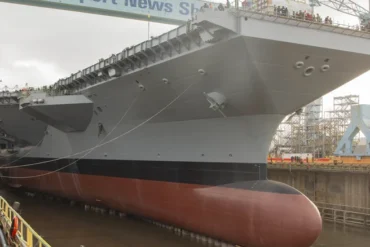
Only One American Shipyard Can Build Nuclear Supercarriers
A little-known reality dramatically influences carrier timelines.
Only a single shipyard in the United States possesses the infrastructure necessary to build nuclear-powered aircraft carriers:
Newport News Shipbuilding, operated by Huntington Ingalls Industries in Virginia.
This unique capability creates significant constraints.
Construction occurs within specialized dry docks specifically configured for nuclear carrier assembly. Each vessel occupies enormous physical space, meaning a new ship cannot progress to certain stages until another has moved elsewhere.
The resulting production schedule resembles an extraordinarily complicated industrial puzzle.
Current projected timelines include:
| Hull Designation | Ship Name | Expected Delivery |
|---|---|---|
| CVN-80 | USS Enterprise | 2031 |
| CVN-81 | USS Doris Miller | 2034 |
| CVN-82 | USS William J. Clinton | 2039 |
| CVN-83 | USS George W. Bush | 2043 |
Because carrier construction spans decades, the Navy increasingly relies on block-buy procurement strategies.
These agreements allow suppliers to plan years ahead, reducing costs and maintaining critical industrial expertise. However, they also lock substantial portions of naval budgets into a single program for extended periods.
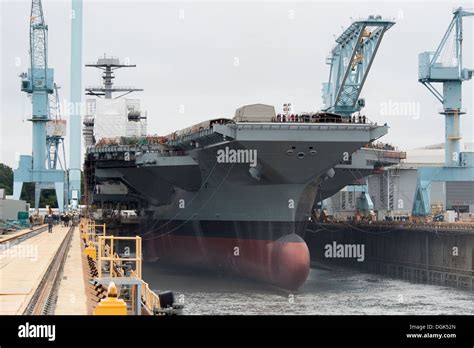
The Carrier Debate: Floating Fortress or Floating Target?
No aspect of the Ford-class program generates more controversy than survivability.
Modern adversaries possess increasingly sophisticated anti-access and area-denial capabilities. Nations such as China have developed long-range anti-ship ballistic missiles, cruise missiles, cyber warfare tools, and extensive surveillance networks specifically intended to threaten carrier strike groups.
Critics argue that these developments undermine traditional carrier operations.
Why spend billions on concentrated platforms, they ask, when adversaries can potentially field thousands of relatively inexpensive precision weapons?
The Navy rejects this argument.
Carrier proponents emphasize that striking a moving carrier at sea remains extraordinarily difficult. Carrier strike groups rarely operate alone. Instead, they deploy with layered defenses including destroyers, cruisers, submarines, electronic warfare systems, fighter aircraft, and missile interceptors.
Moreover, carriers can travel at speeds exceeding 30 knots, continuously changing position across vast oceanic areas.
Finding, tracking, targeting, and successfully attacking such formations remains one of the most challenging tasks in modern warfare.
The Navy therefore believes carriers remain survivable when integrated within broader fleet operations.
Why Carriers Remain Essential in the Indo-Pacific
The strategic importance of carriers becomes particularly evident in the Indo-Pacific.
The region encompasses immense distances, limited basing options, and rapidly intensifying geopolitical competition.
Fixed airbases can be identified, monitored, and targeted years in advance. Carriers, by contrast, provide mobile airpower that can reposition thousands of miles without warning.
For allies such as Japan, carrier deployments symbolize tangible American commitment.
For potential adversaries, they complicate military planning.
A carrier strike group arriving unexpectedly near a regional flashpoint provides policymakers with flexible response options unavailable through land-based aviation alone.
Whether deterring aggression, supporting allies, conducting freedom-of-navigation operations, or responding to humanitarian emergencies, carriers remain central to American Indo-Pacific strategy.
Ford-Class Carriers Are Being Built for an Autonomous Future
Perhaps the strongest argument supporting the Ford program is its adaptability.
Future carrier air wings will look dramatically different from today’s.
The introduction of the MQ-25 Stingray unmanned aerial refueling aircraft already demonstrates this transition. By extending fighter range substantially, the MQ-25 allows carriers to operate farther from hostile coastlines while still striking distant targets.
Looking further ahead, the Navy expects to field:
- Sixth-generation carrier fighters.
- Collaborative combat aircraft.
- Autonomous reconnaissance systems.
- AI-enabled mission management platforms.
- Robotic loyal wingmen.
The Ford class was deliberately engineered to support these future capabilities.
Because the ship itself serves as a flexible aviation infrastructure platform, its combat relevance evolves alongside its embarked aircraft.
This design philosophy explains why planners accept lengthy development timelines. They are not simply building ships for today’s conflicts. They are constructing adaptable maritime command nodes expected to dominate global sea lanes for the next fifty to ninety years.
Ultimately, the Navy’s $120 billion supercarrier investment reflects a belief that while technologies and adversaries will change, the strategic value of mobile sea-based airpower will endure. The carriers arriving in 2043 are therefore intended not merely to fight future wars, but to shape them.