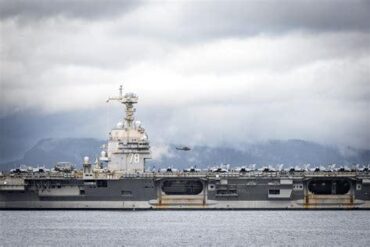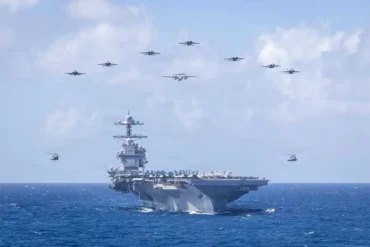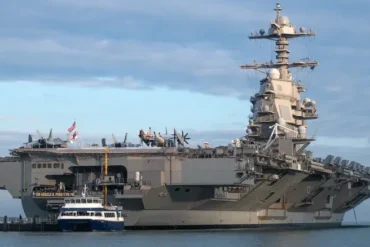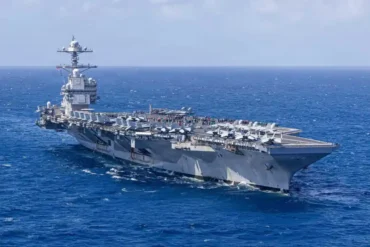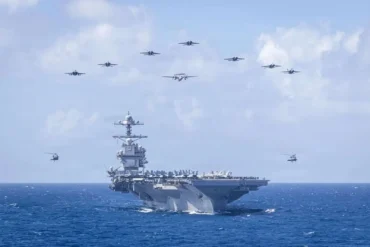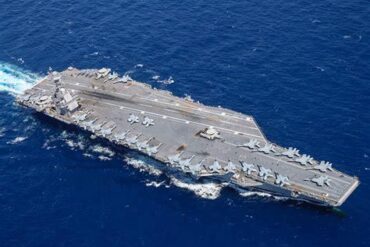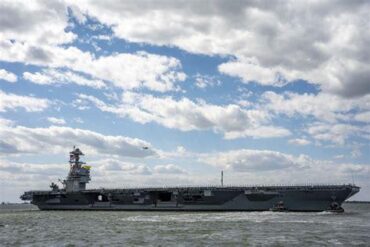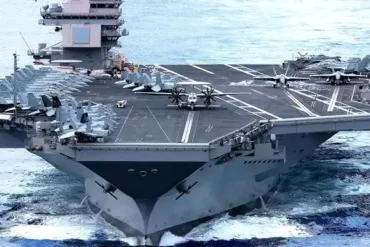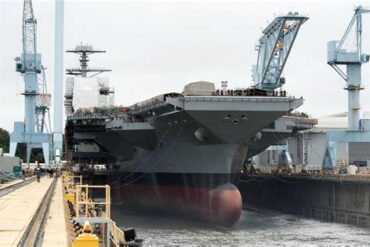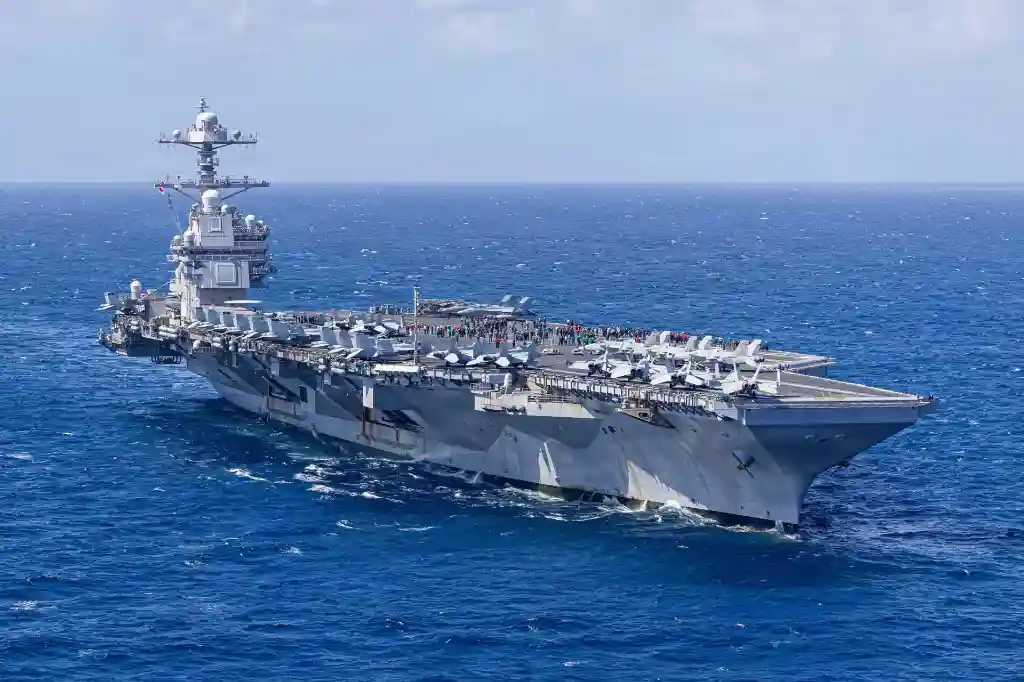
The confirmed fire aboard the USS Gerald R. Ford (CVN-78) during active U.S. operations linked to the Iran conflict has triggered a deeper examination of how modern carrier strike groups sustain prolonged, high-tempo warfare. While officially categorized as a non-combat incident, the scale and duration of the blaze—combined with its operational context—have elevated it from a routine onboard emergency to a revealing stress test of U.S. naval aviation endurance under wartime conditions.
The fire, which reportedly originated within a laundry ventilation system, spread through interconnected airflow networks and required over 30 hours of continuous firefighting efforts. More than 600 sailors were displaced, forcing large segments of the crew into improvised living arrangements. Though propulsion and combat systems remained unaffected, the incident introduced a disruptive variable into one of the most complex military platforms ever deployed.
Fire at Sea: A Contained Incident with Strategic Ripples
In isolation, shipboard fires are not unprecedented. What makes this event notable is its timing—occurring during active combat support operations in the Red Sea as part of sustained U.S. strikes against Iranian targets. The Ford, widely regarded as the most advanced aircraft carrier in the world, is not merely a naval asset; it is a floating airbase designed to project continuous, high-intensity airpower without reliance on regional infrastructure.
The fact that the carrier remained mission-capable throughout the incident reflects the robustness of its core combat systems. However, operational capability is not binary. A warship can remain technically functional while experiencing degraded efficiency, particularly when crew cohesion, rest cycles, and internal logistics are disrupted.
Smoke exposure injuries, though non-life-threatening, and the prolonged displacement of personnel suggest a temporary but meaningful decline in habitability conditions, which directly impacts operational rhythm.
Ventilation Systems and the Hidden Vulnerabilities of Modern Warships
From an engineering standpoint, the fire highlights a paradox within the Ford-class design philosophy. These carriers incorporate highly integrated systems intended to improve efficiency, reduce crew size, and enhance automation. Yet such integration can also create pathways for rapid hazard propagation.
The ventilation network, designed to regulate airflow across vast internal compartments, became a conduit for smoke and heat. This raises critical questions about fire isolation protocols in next-generation naval architecture. If containment depends on rapid compartmentalization, any delay—whether mechanical or procedural—can allow localized incidents to escalate across multiple zones.
This is not a design flaw in the simplistic sense, but rather a trade-off inherent in complexity. The more interconnected a system becomes, the greater the need for redundant safeguards and rapid-response damage control.
Operational Tempo in the Iran Conflict: Why Every Sortie Counts
The USS Ford’s role in the current conflict environment is far from symbolic. It serves as a central node in a persistent air campaign, launching sorties that include:
- F/A-18E/F Super Hornet strike missions
- EA-18G Growler electronic warfare operations
- E-2D Advanced Hawkeye airborne early warning coordination
These aircraft form the backbone of carrier-based strike cycles, enabling continuous pressure on Iranian military infrastructure, including missile sites and air defense networks.
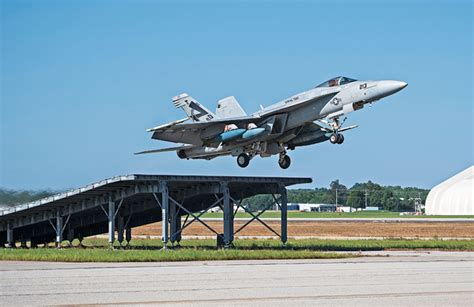
Sustained operations of this nature depend on a delicate balance of maintenance precision, crew endurance, and flight deck coordination. Even minor disruptions—fatigue, delayed maintenance checks, or reduced coordination efficiency—can ripple outward, affecting sortie generation rates.
In high-intensity scenarios, the difference between launching 120 sorties per day versus 100 is not trivial. It can determine the tempo of battlefield shaping, the success of suppression campaigns, and the ability to respond to time-sensitive targets.
Crew Fatigue: The Silent Constraint on Naval Power
Warships do not operate on technology alone; they run on human endurance. The displacement of over 600 sailors into makeshift accommodations introduces a variable that is often underestimated in strategic analysis: sleep disruption.
Fatigue affects:
- Flight deck safety, where split-second decisions are routine
- Maintenance accuracy, where minor errors can cascade into major failures
- Command decision-making, particularly under sustained operational pressure
Extended deployments amplify these effects. The Ford is reportedly nearing ten consecutive months at sea, with multiple theater transitions. That kind of operational stretch pushes both personnel and equipment toward their upper tolerance limits.
There’s a quiet irony here: the world’s most advanced carrier can project immense power outward, yet its internal equilibrium depends on something as simple—and fragile—as whether its crew got enough sleep.
Carrier Rotation and the Risk of Operational Gaps
The U.S. Navy appears to be managing this strain through planned carrier rotation, with the USS George H.W. Bush (CVN-77) preparing to deploy as a relief platform. However, naval logistics operate on timelines that are anything but instantaneous.
Transit from the Atlantic to the Middle East, followed by theater integration and operational ramp-up, can take weeks. During this overlap period, the Ford must continue to shoulder the burden of primary strike operations.
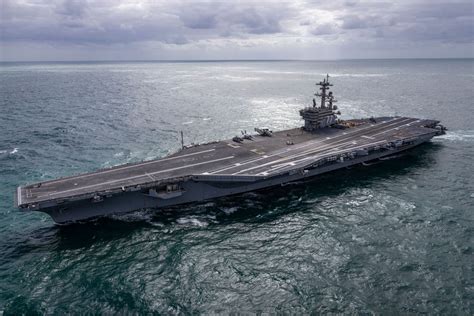
If the Ford were to experience further degradation—whether from system wear, crew fatigue, or residual fire damage—the result would not be a sudden collapse in capability, but a gradual thinning of operational intensity.
In a conflict environment where continuous pressure is strategic currency, even a temporary dip in sortie generation can alter adversary behavior, giving opposing forces space to reposition, regroup, or reinforce.
Strategic Implications Beyond a Single Incident
This event underscores a broader challenge facing the U.S. Navy: maintaining persistent global carrier presence amid overlapping commitments. The Ford’s deployment is not occurring in isolation; it is part of a wider network of obligations spanning multiple regions.
A single incident, even non-combat in origin, can therefore have outsized strategic implications. It highlights the reality that modern naval power is not just about firepower, but about sustainability under pressure.
The incident also reinforces the importance of:
- Redundancy in critical systems
- Resilient habitability infrastructure
- Adaptive crew management strategies
These factors are often overshadowed by discussions of weapons systems and platform capabilities, yet they are equally decisive in determining long-term operational effectiveness.
Rethinking Carrier Survivability in the Modern Era
Looking forward, the Ford fire is likely to influence how the Navy approaches shipboard survivability design. Areas of focus may include improved ventilation isolation mechanisms, enhanced automated fire suppression systems, and more flexible crew accommodation protocols during emergencies.
But beyond technical upgrades, the deeper lesson lies in recognizing that high-intensity naval warfare is as much about endurance as it is about firepower.
The USS Gerald R. Ford remains operational, its air wing still capable of projecting force across the region. Yet the incident serves as a reminder that even the most advanced systems operate within limits—limits defined not just by engineering, but by human resilience and logistical reality.
And in a prolonged conflict, those limits are not theoretical. They are tested, hour by hour, somewhere between the flight deck and the engine room, where the real battle for sustained dominance quietly unfolds.