Air India’s North American network is entering an unusual phase in which some journeys stretch to more than 21 hours of scheduled block time. The extraordinary durations are not simply a reflection of enormous geographic distances. They are largely the consequence of airspace restrictions that have forced the airline to use longer routings and, on several services, intermediate stops for fuel, crew changes, or both.
The situation is particularly striking for flights connecting India with the United States and Canada. With Air India avoiding Pakistani airspace and also unable to use Iranian airspace because of the ongoing conflict, several routes have been pushed onto significantly longer paths. Some services that currently require a European or Indian stop are scheduled to return to nonstop operation, creating an unusual contrast between the airline’s August schedule and what passengers may experience later in the year.
The longest example is Delhi–Newark via Rome, which reaches a maximum scheduled block time of 21 hours and 20 minutes on August 31. That figure places the service among the longest scheduled passenger journeys operated by Air India and demonstrates how geopolitical restrictions can reshape the practical geography of international aviation.
Air India’s Longest North American Flights in August
Air India’s seven longest North American services in August cover routes from Delhi and Mumbai to major American and Canadian gateways. The figures are based on maximum block time rather than pure airborne time. This distinction matters because block time includes taxiing at both airports and incorporates a limited allowance for operational delays.
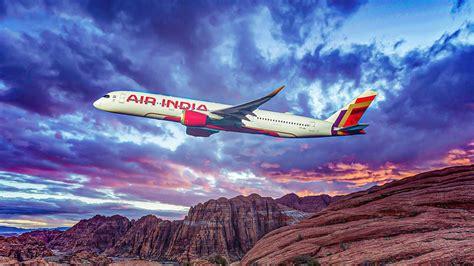
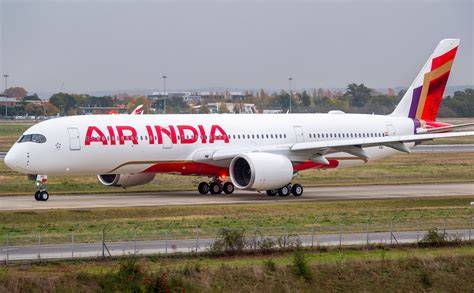
At the top of the list is Delhi to Newark via Rome Fiumicino, with a maximum block time of 21 hours and 20 minutes. The service resumes on August 31 using an Airbus A350-900, making it the standout example of Air India’s current ultra-long routing.
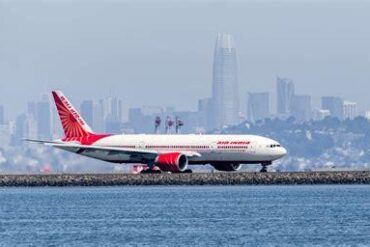
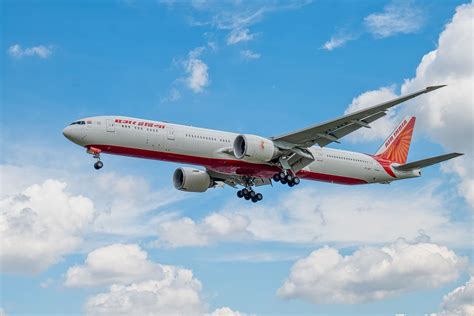
The second-longest service operates in the opposite direction. San Francisco to Delhi via Kolkata reaches 21 hours and 15 minutes and is scheduled daily with a Boeing 777-300ER. Although the routing looks unusual on a map, the intermediate stop reflects the operational constraints facing the airline while it cannot use some of its historically convenient air corridors.
The remaining August routes include Delhi–JFK via Rome at 20 hours and 40 minutes, Mumbai–JFK via Rome at 20 hours and five minutes, and Mumbai–Newark via Rome at 20 hours. Delhi–Vancouver via Kolkata reaches 19 hours, while Delhi–Toronto is now considerably shorter following the return of nonstop service.
These durations also highlight an important feature of long-haul aviation: the longest journey is not necessarily the longest route by geographical distance. Wind patterns, available airspace, aircraft performance, airport constraints, and fuel requirements can all influence how airlines build schedules.
Why Air India Is Operating Such Long Routings
Air India’s unusually long North American flights are primarily a consequence of airspace restrictions rather than a deliberate attempt to create record-breaking journeys. Avoiding Pakistan forces westbound flights from India toward North America to take less direct paths. The inability to use Iranian airspace adds another major constraint.
For an airline operating high-frequency intercontinental services, these restrictions have significant consequences. A detour can add hours to a journey, increase fuel consumption, complicate crew planning, and potentially require an intermediate airport where an aircraft can refuel and crews can be changed.
That is why Rome Fiumicino and Kolkata appear prominently in the current schedule. They provide practical operational solutions even though they make the passenger journey considerably longer.
The situation is also dynamic. Air India’s schedule indicates that some of these one-stop operations are intended to become nonstop services from September. Whether every planned change materializes remains uncertain, particularly because international airspace conditions can change rapidly.
Delhi–Toronto Returns to Nonstop Operation
One of the most important changes occurred on Delhi–Toronto Pearson, where Air India removed its Vienna stop from August 1. The move cut almost three hours from the maximum block time and restored a far more competitive nonstop product.
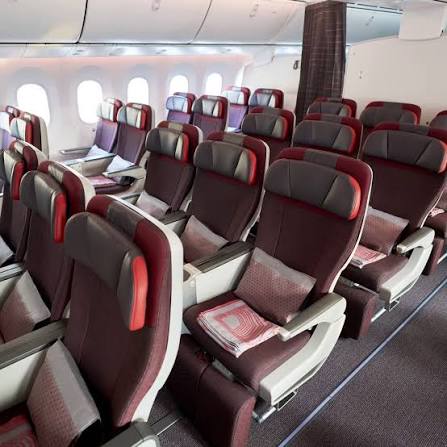
The change also coincided with a major aircraft transition. Air India shifted the route from the 777-300ER to the Boeing 787-9, marking the airline’s first North American operation with that particular 787 variant.
The aircraft are especially notable because they were delivered directly to Air India rather than inherited from Vistara. They feature the carrier’s newer cabin configuration, including premium economy, giving the nonstop Toronto service a product advantage alongside its shorter journey time.
From September, however, the schedule becomes more complicated. Air India plans to increase Delhi–Toronto from daily service to 10 flights per week. The additional three weekly departures are scheduled to operate through Vienna using 777-300ER aircraft, while the daily 787-9 flights remain nonstop.
This creates an interesting split within the same city pair: passengers may see dramatically different journey times depending on the flight they select.
What Happens to Air India’s New Mumbai–Toronto Route?
Air India is also preparing to launch Mumbai–Toronto during the winter schedule. The first departure is scheduled for October 25, with three weekly flights using the 777-300ER.
The market has substantial demand. Approximately 128,000 round-trip passengers traveled between Mumbai and Toronto in the referenced market data, making the city pair an important opportunity for Air India. The airline’s decision also follows the cessation of Air Canada’s winter operation, which most recently involved a Heathrow routing.
The crucial question is whether Mumbai–Toronto will actually operate nonstop.
The current schedule shows a maximum block time of 16 hours and 30 minutes and lists the flights as nonstop. However, the 777-300ER is being used, and Air India currently has no other nonstop Mumbai-to-North America service in its network. That makes the planned operation considerably more ambitious than the restored Delhi–Toronto service.
Operational realities could therefore determine what passengers eventually see in October. A nonstop Mumbai–Toronto flight would be a significant addition to Air India’s North American network, but the airline could still introduce a stop if aircraft performance, airspace restrictions, or fuel requirements make the published plan impractical.
Air India’s Seven Longest North American Services
The August schedule can be summarized through seven key city pairs and routings:
- Delhi–Newark via Rome: 21 hours 20 minutes
- San Francisco–Delhi via Kolkata: 21 hours 15 minutes
- Delhi–New York JFK via Rome: 20 hours 40 minutes
- Mumbai–New York JFK via Rome: 20 hours 05 minutes
- Mumbai–Newark via Rome: 20 hours
- Delhi–Vancouver via Kolkata: 19 hours
- Delhi–Toronto nonstop: 17 hours 15 minutes
These figures show just how dramatically routing can affect international flight times. The difference between the shortest and longest services on the list is more than four hours, even though every flight connects India with North America.
The Bigger Picture for Air India’s North American Network
Air India’s current schedule illustrates the delicate balance between network expansion and operational reality. The airline clearly wants to strengthen its North American presence, but geopolitical restrictions have made some of its planned nonstop services much harder to operate efficiently.
The return of nonstop Delhi–Toronto service is an encouraging development, particularly with the newer 787-9. Meanwhile, the planned Mumbai–Toronto launch could further strengthen Air India’s position in the Canada market if the nonstop schedule survives operational scrutiny.
For passengers, however, the most important lesson is simple: published flight times can change significantly when international airspace conditions change. A route advertised as nonstop may remain so, while another may temporarily require a technical stop or crew change.
Air India’s seven longest North American flights therefore tell a larger story than simply which journeys take the most time. They reveal how wars, airspace restrictions, aircraft selection, fuel planning, and network strategy can all reshape the world’s long-haul aviation map—sometimes turning a theoretically direct flight into a journey of more than 21 hours.