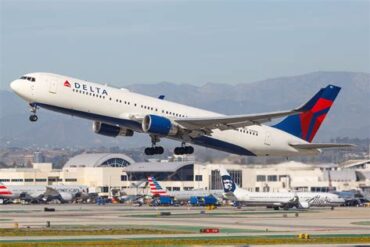
Delta Air Lines has removed 21 long-haul destinations from its network over the past decade, a striking change for an airline that now operates one of the largest and most profitable international networks in the United States. The cuts include major global markets such as Singapore, Beijing, Dubai, Mumbai and Osaka, alongside established European destinations including Geneva, Düsseldorf, Manchester and Stuttgart.
At first glance, the disappearing routes might suggest that Delta Air Lines is pulling back from international flying. The broader network tells a different story. Delta’s summer 2026 schedule was its largest ever, and its total network capacity has grown by roughly 16% over the past decade. Instead of simply reducing its global presence, the airline has become increasingly selective about where it deploys expensive long-haul aircraft.
That distinction is important. Delta now operates more than 5,500 daily departures to over 300 destinations, but it no longer needs to serve every international market with its own aircraft. Partnerships, joint ventures, seasonal demand and a growing premium cabin strategy allow the airline to maintain access to many destinations without necessarily operating a nonstop flight itself. The 21 discontinued long-haul airports therefore reveal how Delta’s network strategy has evolved rather than simply showing where it has stopped flying.
Delta Air Lines’ 21 Discontinued Long-Haul Airports
The destinations disappeared at different points during the past decade. Four routes had ended by the close of 2016, while additional services disappeared before the pandemic. Several major Asian routes, including Beijing, Osaka and Mumbai, were eventually lost during the pandemic-era restructuring. More recently, Delta ended service to Stuttgart in 2024 and Geneva, London Gatwick and Papeete in 2025.
The full list shows how broad the transformation has been. Bangkok was last served from Tokyo Narita in 2016 with a Boeing 767-300ER, while Brasília disappeared from Delta’s network the same year following its Orlando service. Dubai, once served from Atlanta with the long-range Boeing 777-200LR, also ended in 2016. Pisa and other European leisure markets likewise disappeared during this earlier period.
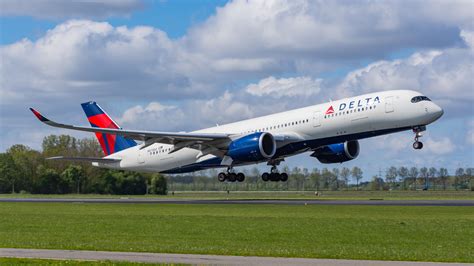
Beijing was last served from Detroit in 2020 using the Airbus A350-900, covering approximately 6,632 miles each way. Mumbai, another extremely long route, was operated from New York JFK using the Boeing 777-200LR over approximately 7,783 miles. Singapore was last served by Delta from Tokyo Narita in 2019, while Nagoya remained on the network until 2023 through Detroit.
| Destination | Last Delta Route | Distance | Last Served | Aircraft |
|---|---|---|---|---|
| Bangkok | NRT–BKK | 2,889 miles | 2016 | 767-300ER |
| Beijing | DTW–PEK | 6,632 miles | 2020 | A350-900 |
| Brasília | MCO–BSB | 3,810 miles | 2016 | 757-200 |
| Dubai | ATL–DXB | 7,599 miles | 2016 | 777-200LR |
| Dubrovnik | JFK–DBV | 4,512 miles | 2021 | 767-300ER |
| Düsseldorf | ATL–DUS | 4,507 miles | 2023 | 767-300ER |
| Fukuoka | HNL–FUK | 4,397 miles | 2019 | 767-300ER |
| Geneva | JFK–GVA | 3,864 miles | 2025 | 767-300ER |
| Glasgow | JFK–GLA | 3,216 miles | 2019 | 757-200 |
| London Gatwick | JFK–LGW | 3,470 miles | 2025 | 767-300ER |
| Málaga | JFK–AGP | 3,658 miles | 2019 | 757-200 |
| Manchester | JFK–MAN | 3,341 miles | 2017 | 767-300ER |
| Moscow | JFK–SVO | 4,661 miles | 2017 | 767-300ER |
| Mumbai | JFK–BOM | 7,783 miles | 2020 | 777-200LR |
| Nagoya | DTW–NGO | 6,545 miles | 2023 | A330-200 |
| Osaka | SEA–KIX | 5,040 miles | 2020 | 767-300ER |
| Papeete | LAX–PPT | 4,095 miles | 2025 | 767-300ER |
| Pisa | JFK–PSA | 4,131 miles | 2016 | 757-200 |
| Ponta Delgada | JFK–PDL | 2,557 miles | 2019 | 757-200 |
| Singapore | NRT–SIN | 3,324 miles | 2019 | 767-300ER |
| Stuttgart | ATL–STR | 4,682 miles | 2024 | 767-300ER |
Why Delta No Longer Needs to Operate Every Route Itself
Delta’s transformation is particularly visible in Asia, where the airline once relied heavily on Tokyo Narita as an international connecting hub. Delta inherited the structure through Northwest Airlines and used Narita to distribute passengers throughout the region.
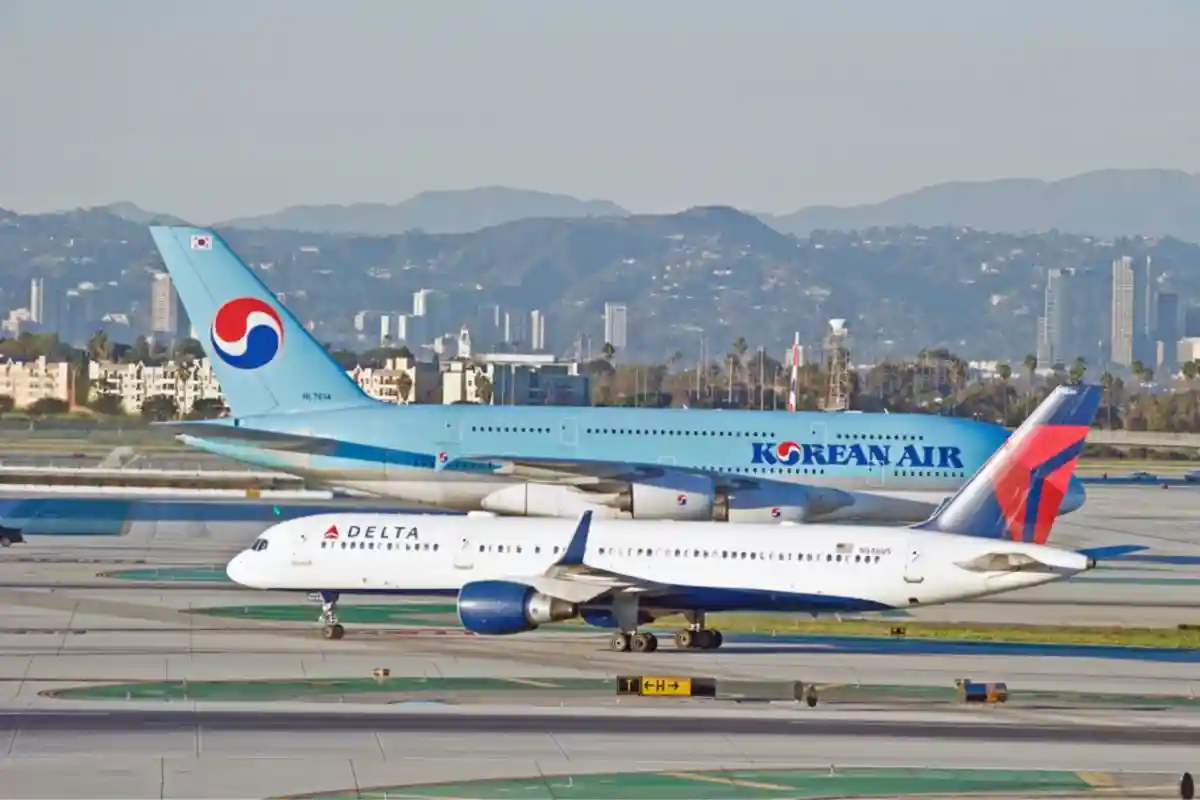
That model gradually became less important as Delta shifted its Tokyo operation toward Haneda Airport and developed a much deeper relationship with Korean Air. Seoul-Incheon became the central connecting point for much of Delta’s Asian network, giving the airline access to destinations that it does not necessarily need to serve with its own aircraft.
Singapore is a useful example. Delta no longer operates its former Tokyo Narita–Singapore service, but the destination remains accessible through its partnership with Korean Air. Delta has said customers can reach Singapore and more than 80 other destinations throughout Asia through Seoul-Incheon. In other words, removing a nonstop flight does not necessarily remove the destination from the commercial network.
Europe follows a similar pattern. Delta’s relationships with Air France-KLM and Virgin Atlantic give it access to extensive connecting networks through major European hubs. These joint ventures coordinate elements such as schedules, pricing, revenue management and network planning while sharing economics on covered traffic.
That changes the economics of serving secondary European cities. A passenger traveling to Geneva does not necessarily require a Delta-operated JFK–Geneva nonstop. The traveler can potentially connect through Amsterdam or Paris, allowing Delta to use its aircraft on another route while still participating in the broader journey.
Delta’s New Long-Haul Network Targets Premium Leisure
The most revealing part of Delta’s network change is not simply the destinations it has dropped. It is the destinations it has chosen to emphasize instead.
Delta has reduced or ended service to cities including Düsseldorf, Manchester, Stuttgart, Glasgow and Geneva, while expanding or launching services involving markets such as Sardinia, Malta, Catania, Porto, Marrakech and Naples. These categories are not absolute, because business travelers certainly visit leisure destinations and vacationers travel to traditional industrial centers. However, the network increasingly reflects stronger demand for premium leisure and experience-driven travel.
This represents a significant change from the mid-2010s. Delta’s earlier international network emphasized geographic coverage, traditional corporate markets and its own aircraft connecting passengers through major hubs. Its newer strategy places greater weight on yield, premium demand, loyalty revenue and aircraft opportunity cost.
Seasonality has also become more important. A route does not necessarily need to operate successfully every month of the year to make sense for Delta. A destination that produces strong premium demand during a concentrated summer season can justify aircraft deployment that might otherwise sit on a less attractive route during that period.
The result is a network that can change substantially from season to season. Instead of treating every international destination as a permanent part of the map, Delta can move capacity toward markets where customers are demonstrating stronger willingness to pay.
SkyMiles and American Express Change the Economics
Delta’s loyalty ecosystem has become another important part of this transformation. SkyMiles is no longer simply a mechanism for rewarding customers who fly frequently. The program has become increasingly connected to everyday consumer spending through its relationship with American Express.
Delta’s American Express remuneration increased from approximately $2 billion in 2015 to $8.2 billion in 2025, according to the supplied figures. That growth gives Delta another way to monetize its most valuable customers beyond the fare generated by an individual flight.
Premium revenue has expanded sharply as well. Delta’s premium ticket revenue increased from approximately $10.1 billion in 2015 to $22.2 billion in 2025, while Main Cabin revenue was considerably closer to that figure. The shift helps explain why a route’s passenger count and load factor alone no longer tell the entire story.
Delta’s 2025 Route Race provided an unusual demonstration of how loyalty can influence network decisions. Nearly 150,000 votes were cast, with SkyMiles members selecting Sardinia and employees selecting Malta. Delta subsequently launched both markets, showing how customer engagement can become part of network development.
New Widebody Aircraft Make Premium Demand More Important
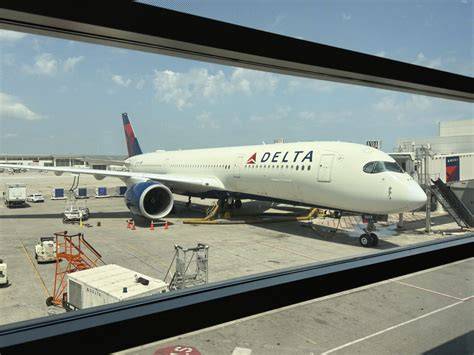
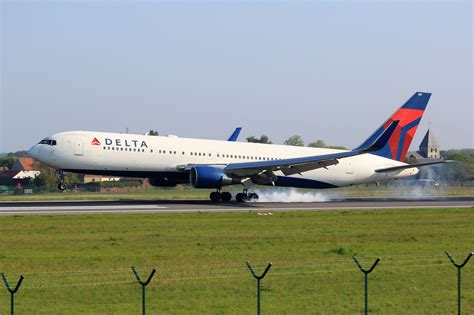
The aircraft itself is another major piece of the puzzle. Ten years ago, Delta relied heavily on aircraft such as the Boeing 767, Airbus A330 and Boeing 777 for international flying. Its fleet has since evolved toward newer widebodies, including the Airbus A350-900 and A330-900neo, while Premium Select has become more widespread.
The premium share of Delta’s widebody aircraft has consequently increased. A 225-seat Boeing 767-300ER configuration had around 25 premium seats, representing approximately 11% of total capacity. A current 281-seat A330-900 configuration has 57 premium seats, while a 275-seat A350-900 configuration can offer around 80 premium seats.
Delta’s planned A350-1000 takes the concept even further, with a 304-seat configuration featuring approximately 101 premium seats. That represents about one-third of the aircraft’s total capacity.
The implications are significant. An aircraft can be filled to a high load factor while producing very different financial results depending on which passengers occupy its cabins. A flight with strong demand in economy but weak premium demand can therefore face a different commercial assessment from a similarly full flight carrying a larger proportion of high-fare passengers.
Why Stuttgart Could Be 85% Full and Still Disappear
Delta’s former Atlanta–Stuttgart route illustrates this point particularly clearly. The service recorded load factors of approximately 84% to 85% in the years shown, which might traditionally have appeared to support continuation.
Yet passenger volumes changed dramatically. The route carried approximately 130,273 round-trip passengers in 2019, compared with just 45,003 in 2023 and 43,768 in 2024. The resulting reduction was more than 65% compared with 2019.
| Year | Round-Trip Passengers | Load Factor | Change vs. 2019 |
|---|---|---|---|
| 2019 | 130,273 | 84.24% | — |
| 2023 | 45,003 | 84.98% | -65.5% |
| 2024 | 43,768 | 84.99% | -66.4% |
The high load factor was maintained partly because Delta substantially reduced capacity. That means the percentage of occupied seats alone did not reveal the full economics of the route. Fares, premium cabin performance, cargo, frequency, aircraft utilization and alternative opportunities for the aircraft all matter when an airline decides how to deploy a widebody.
What the 21 Airport Cuts Reveal About Delta
Taken together, Delta’s 21 discontinued long-haul airports show a network that is becoming more deliberately managed. The airline is not simply chasing the largest possible number of international destinations. Instead, it can use joint ventures to provide connectivity, deploy seasonal capacity where demand is concentrated, and place newer widebody aircraft on markets capable of supporting larger premium cabins.
That explains why destinations such as Stuttgart, Geneva or Manchester can disappear while Mediterranean and experience-focused markets receive additional attention. The issue is not simply whether passengers want to travel between two cities. Delta must determine whether operating the aircraft itself produces enough value compared with the alternatives available across its global network.
The shift also explains why the airline’s international map can look smaller in certain places while its overall long-haul presence continues expanding. A passenger may see fewer Delta aircraft at one airport but still have access to the destination through a partner. Meanwhile, the Delta aircraft that previously operated that route can be reassigned to a market with stronger premium demand or more attractive seasonal economics.
The 21 canceled long-haul airports therefore represent more than a list of discontinued flights. They trace Delta Air Lines’ transition from a carrier focused heavily on geographic coverage into one that increasingly manages its international network as a portfolio of opportunities. In this model, connectivity does not always require Delta metal, year-round service is not always necessary, and a high load factor is not enough by itself.
Delta’s modern strategy is ultimately built around the value of each aircraft, each customer and each available seat. Its evolving network shows an airline increasingly willing to let partners provide breadth while its own fleet concentrates on markets where premium demand, loyalty economics and changing travel patterns can support the next stage of its international growth.