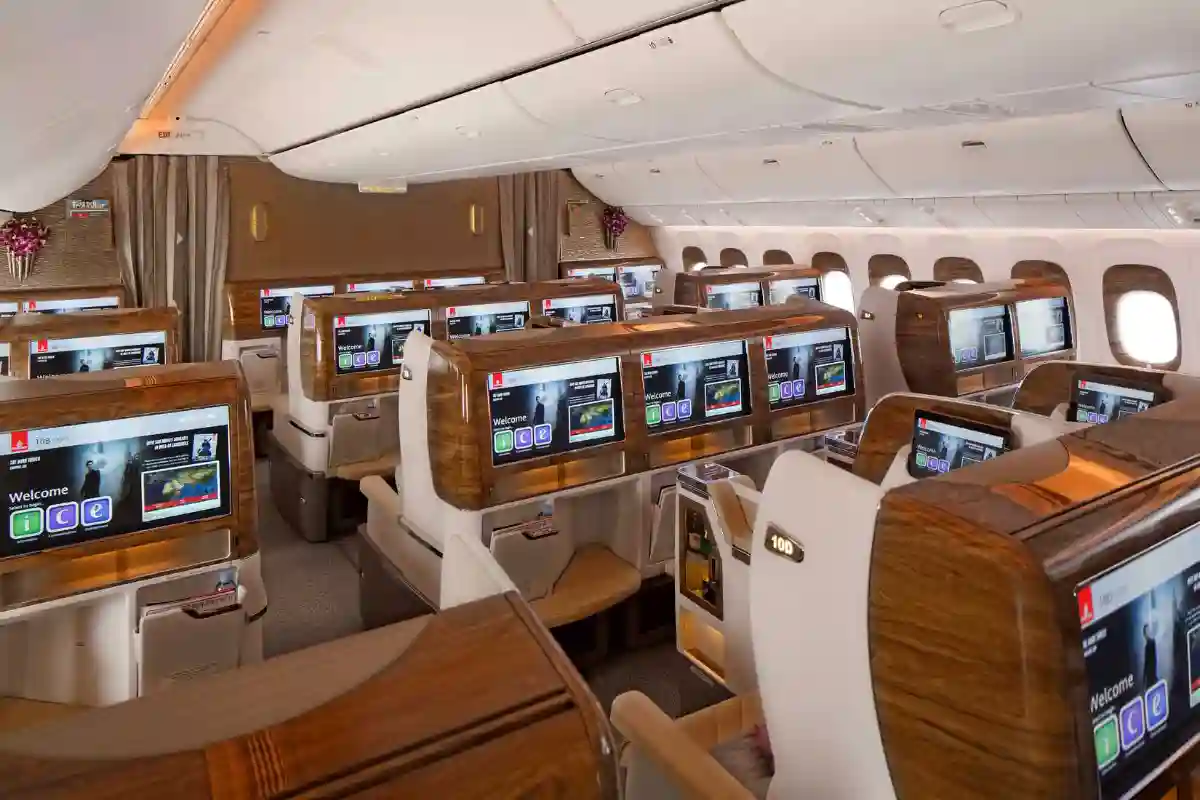
For years, Emirates’ Boeing 777 fleet presented a strange contradiction for a carrier famous for premium travel. The airline built its reputation around spacious cabins, sophisticated service, and some of the world’s most recognizable premium products, yet many passengers booking Emirates Business Class on US routes could still find themselves in a seven-abreast 2-3-2 configuration. That meant three seats in the center of the aircraft, with only some passengers enjoying direct access to the aisle. Now, that long-running compromise is finally disappearing as Emirates replaces the older layout with a much more modern 1-2-1 Business Class cabin.
The change is part of Emirates’ enormous fleet modernization program, which began in earnest in 2022 and covers 219 aircraft, including 110 Airbus A380s and 109 Boeing 777s. The program, valued at roughly $5 billion, goes well beyond new upholstery or cosmetic improvements. Emirates is fundamentally changing how passengers experience its older widebody aircraft, adding Premium Economy, installing redesigned Business Class seats, and bringing more consistent premium products to a fleet that has accumulated a wide range of cabin configurations over the years.
That matters particularly on the airline’s US network. Emirates connects Dubai with major American gateways including Chicago, Boston, Dallas/Fort Worth, Houston, Seattle, Miami, and Orlando, and refurbished 777s are increasingly appearing on these services. For travelers who remember the old Emirates 777 Business Class cabin, the difference is substantial. The middle seat has disappeared, every Business Class passenger can reach the aisle directly, and the seat itself now converts into a proper fully flat bed.
Emirates’ Old 2-3-2 Business Class Was Becoming Difficult to Defend
The 2-3-2 arrangement was once a familiar feature of Emirates’ Boeing 777 fleet. With seven seats across the cabin, it allowed the airline to accommodate more Business Class passengers than a conventional 1-2-1 layout. From an airline capacity perspective, that made sense. From the passenger’s perspective, however, the arrangement came with an obvious disadvantage: not every Business Class passenger had direct aisle access.
A traveler seated in the middle of the three-seat block could find themselves surrounded on both sides, while a window passenger might have to step over a sleeping companion to reach the aisle. That is a particularly awkward compromise on long-haul flights, where passengers expect Business Class to provide not merely a wider seat but a genuinely private and convenient environment.
The seat itself was another issue on many of the older 777s. Emirates historically operated numerous aircraft with angled-flat Business Class seats rather than fully flat beds. These seats reclined deeply and included a leg rest, extending to approximately 69 inches, or 175 centimeters. That could be perfectly adequate for shorter journeys, but on an overnight flight between Dubai and the United States, the limitations became much harder to overlook.
Emirates did eventually introduce fully flat seating on some aircraft using the 2-3-2 configuration. It also introduced a more spacious 2-2-2 Business Class cabin on some Boeing 777-200LR aircraft in 2018, giving those passengers wider seats and fully flat beds. Nevertheless, the seven-abreast 2-3-2 arrangement remained widespread across the fleet for years.
The New Emirates 777 Business Class Uses a 1-2-1 Layout
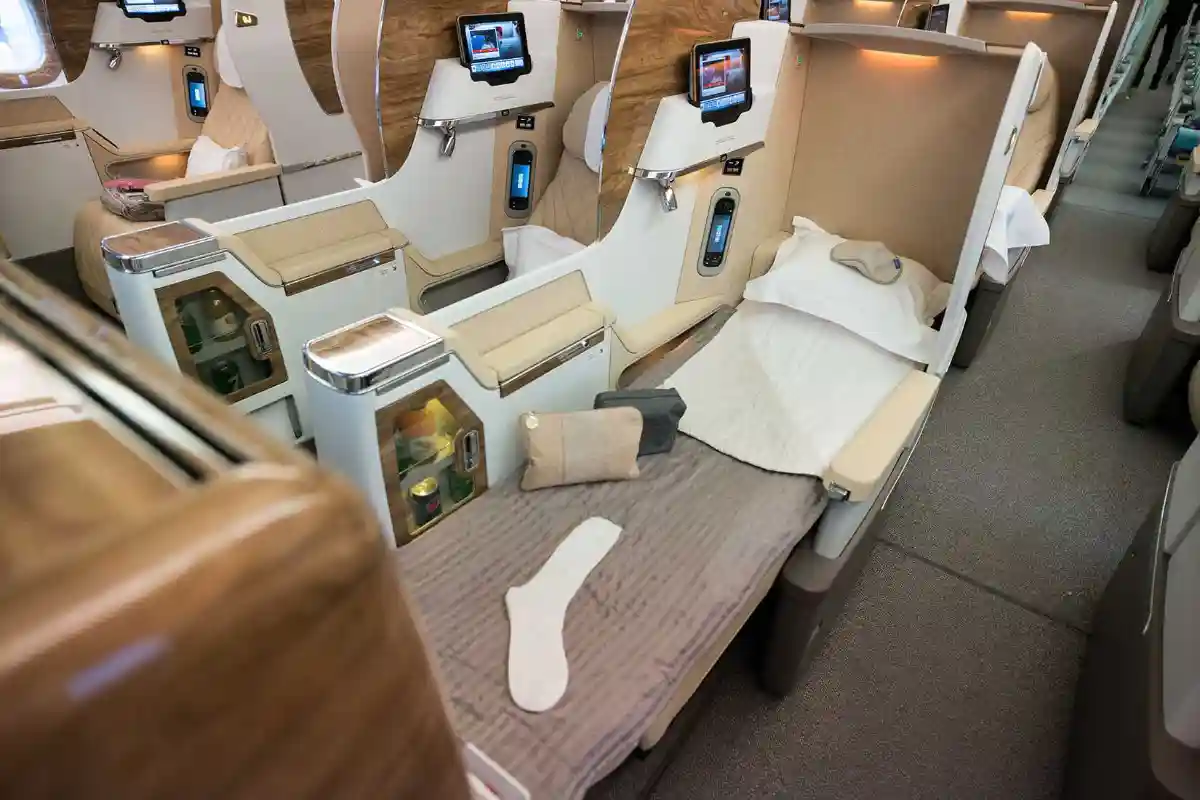
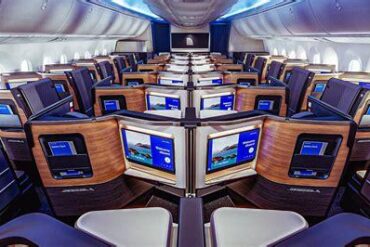
The biggest change in the refurbished aircraft is immediately visible. Emirates has replaced the old seven-abreast arrangement with a staggered 1-2-1 Business Class configuration, transforming the cabin from a relatively dense premium layout into a product much closer to what travelers now expect from a leading long-haul airline.
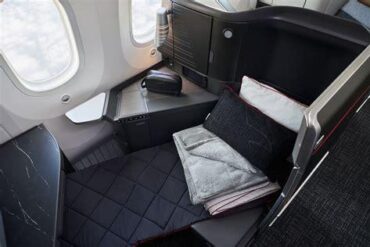
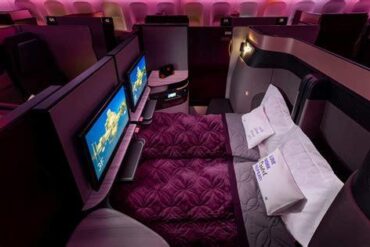
The refurbished 777s feature 38 Business Class seats, based on Safran Seats’ S-Lounge platform. Each seat measures approximately 20.7 inches wide and offers up to 44 inches of pitch. More importantly, every seat converts into a fully flat bed measuring around 79 inches, or 201 centimeters, in length.
That combination changes the experience considerably. A passenger sitting beside the window no longer needs to climb over another traveler to access the aisle. Someone traveling alone can also enjoy a much greater sense of personal space, while couples seated in the center section have a dedicated pair of seats rather than sharing a traditional three-seat block.
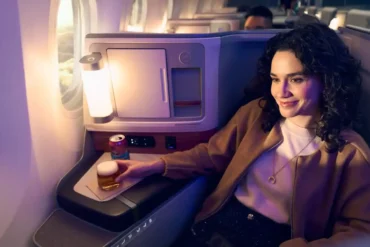
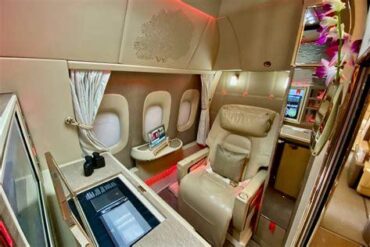
The technology has been upgraded as well. Each Business Class seat comes with a 23-inch HD entertainment screen connected to Emirates’ ICE system. Passengers also receive a personal minibar, a large work and dining table, storage for personal belongings and electronic devices, and charging facilities.
The importance of these changes becomes even clearer on the airline’s longest US services. A Business Class passenger flying for many hours between the United States and Dubai is likely to spend a significant portion of the journey sleeping, working, eating, or watching entertainment from the seat. A fully flat bed and direct aisle access therefore affect almost every stage of the flight rather than simply improving the appearance of the cabin.
Premium Economy Gives Emirates Another Important Product
The Business Class redesign is only half of the story. Emirates has also introduced Premium Economy on its refurbished Boeing 777s, giving passengers another option between conventional Economy and Business Class.
This is a major strategic change for Emirates because the airline had historically lacked a true intermediate premium cabin. Travelers wanting more space and comfort than Economy provided generally had two choices: accept the standard economy experience or pay a considerably higher fare for Business Class.
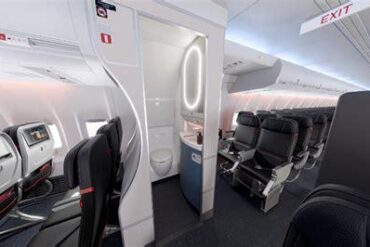
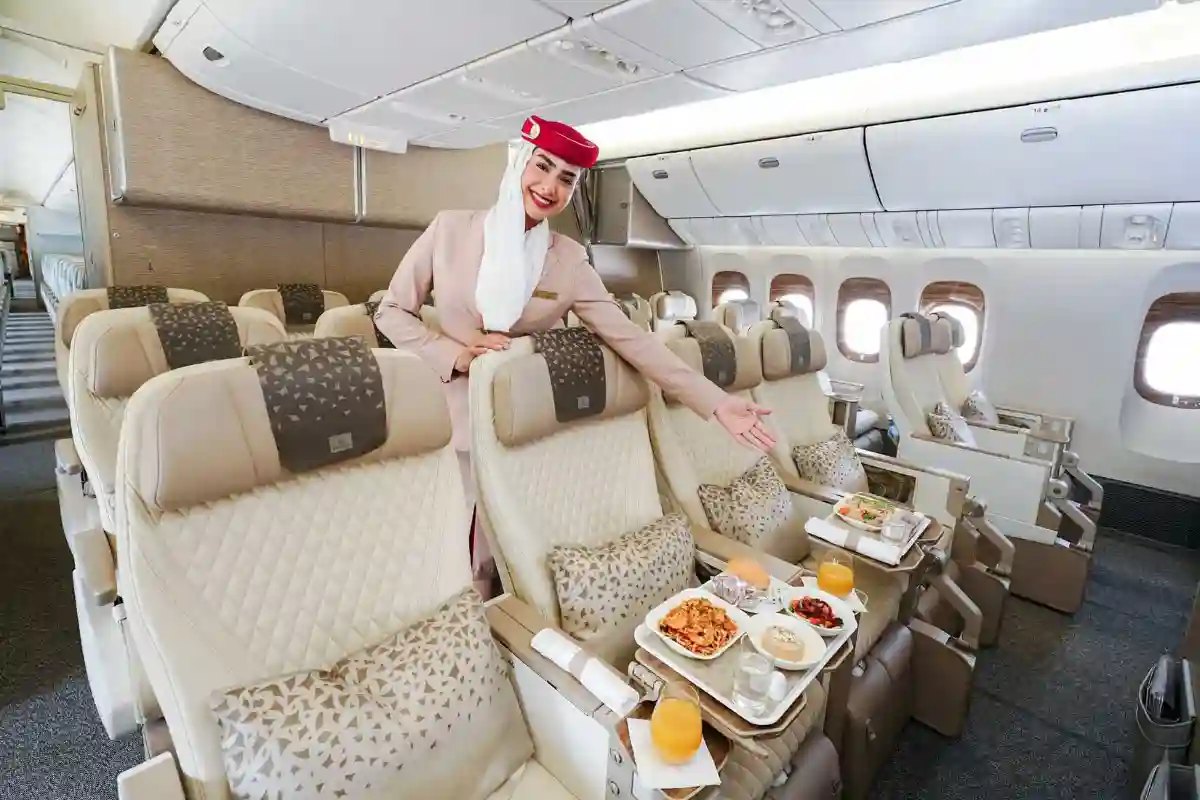
The refurbished 777 now offers 24 Recaro PL3530 Premium Economy seats arranged in a 2-4-2 configuration. The seats are approximately 19.5 inches wide and provide up to 40 inches of pitch, while the seatback reclines by around eight inches.
Each seat includes an adjustable headrest, calf rest, footrest, and retractable bi-folding table. Passengers also receive a 13.3-inch HD touchscreen, USB-A and USB-C charging ports, and a universal AC power outlet.
The visual design is deliberately upscale. Cream-colored leather, polished wood finishes, and a small cocktail table integrated into the armrest make the cabin feel considerably more refined than traditional Economy. Ghaf Tree motifs also appear throughout the cabin, tying the Premium Economy design into Emirates’ broader visual identity.
There are, of course, important differences between Premium Economy and Business Class. The seats do not become beds, storage is more limited, and passengers do not receive the same lounge access or premium amenity packages associated with Business Class. Service also remains closer to Economy than Business Class.
Nevertheless, the product fills a gap that had existed in Emirates’ network for years. The airline is ultimately targeting passengers who want additional space, comfort, and refinement without paying the substantial premium associated with a long-haul Business Class ticket. Emirates has also indicated a broader ambition to scale its Premium Economy offering to around 4 million seats.
Which US Routes Are Getting Emirates’ Refurbished 777s?
The refurbished aircraft are no longer limited to a small number of showcase routes. Emirates has steadily introduced them across its network, including several important US destinations.
In the United States, refurbished 777s have appeared on services to Dallas/Fort Worth, Houston, Chicago, Boston, Seattle, Miami, and Orlando. The precise aircraft assignment and frequency can vary, but the growing presence of refurbished aircraft means more passengers have an opportunity to experience the new cabin.
Dallas/Fort Worth and Houston have received refurbished Boeing 777-200LR aircraft configured with 38 Business Class seats, 24 Premium Economy seats, and 214 Economy seats. Orlando has also been served by this configuration.
Chicago, meanwhile, has seen a refurbished Boeing 777-300ER featuring 38 Business Class seats, 24 Premium Economy seats, and 256 Economy seats. Boston, Seattle, and Miami have also received refurbished 777-300ER aircraft with 38 or 40 Business Class seats, depending on the configuration.
The aircraft are not exclusively concentrated in North America. Emirates has deployed refurbished 777s to destinations across Europe, Asia, the Middle East, Africa, and South America, including Brussels, Zurich, London Stansted, Lisbon, Dublin, Madrid, Frankfurt, Tokyo Haneda, Seoul, Hong Kong, Kuala Lumpur, Beijing, Johannesburg, Cape Town, São Paulo, and Bogotá.
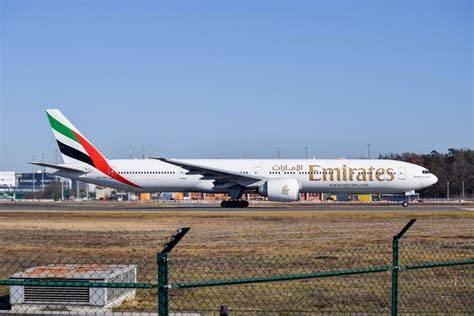
That broad deployment is important because it suggests the refurbishment is becoming a genuine fleet-wide product transition rather than a limited experiment. Emirates has been moving through the program at a substantial pace, with each aircraft requiring approximately 18 to 27 days to complete.
The airline completed its 100th retrofit aircraft in 2026, comprising 47 A380s and 53 777s. Around 20 additional aircraft were scheduled for upgrades by the end of December 2026, while the remaining fleet continues to move through the program.
The Emirates 777X Will Bring Another New Business Class
Even as Emirates replaces the old 2-3-2 product, the airline is already preparing for another transformation. Emirates has 270 Boeing 777X aircraft on order, with the majority consisting of the larger 777-9. The first aircraft is expected to join the fleet in the second quarter of 2027.
The 777X will not simply receive the same Business Class seats being installed on refurbished 777s. Emirates has already offered an early glimpse of another new premium product, and the design appears substantially more private.
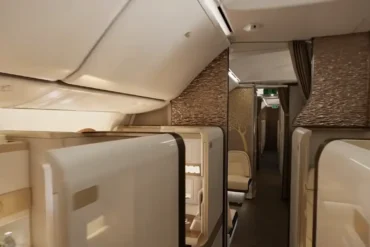
The emerging 777X Business Class concept uses a staggered arrangement that appears to draw inspiration from Safran’s newer Unity platform, although Emirates has not publicly confirmed the final supplier or seat platform. The most obvious difference is the increased level of privacy. The early design shows higher partitions and a privacy door, creating an environment that is significantly more enclosed than the current refurbished 777 product.
There also appears to be a dedicated drinks area integrated into the seat structure, a wireless charging pad, and a touchscreen for controlling the seat. In other words, Emirates is not treating the refurbished 777 cabin as the final destination for its Business Class product. Instead, the retrofit appears to be an important bridge between its older cabins and the next generation of premium travel.
Emirates Is Moving Beyond the Old Seven-Abreast Era
The retirement of the Emirates 2-3-2 Business Class configuration is more than a seating change. It reflects how dramatically expectations for long-haul premium travel have evolved.
A seven-abreast Business Class cabin was increasingly difficult to reconcile with an industry where direct aisle access, fully flat beds, privacy, and personal storage have become standard selling points. Emirates could continue operating older products because of its enormous fleet and complex aircraft configurations, but the gap between those cabins and its newest premium offerings was becoming increasingly obvious.
The refurbishment program closes much of that gap. The new 1-2-1 Business Class cabin provides direct aisle access and a fully flat bed, while Premium Economy creates a new middle tier for travelers who want more than Economy without paying for Business Class. At the same time, Emirates is preparing an even more private Business Class product for the 777X.
For passengers flying Emirates between Dubai and the United States, that means the long-standing 2-3-2 era is finally coming to an end. The replacement is not simply a different seat arrangement. It is a broader rethink of what the airline wants its Boeing 777 to offer: more privacy, direct aisle access, fully flat sleeping space, Premium Economy, modern entertainment, and a more consistent premium experience across its global network.
After years of operating some of the industry’s most recognizable but increasingly dated seven-abreast Business Class cabins, Emirates is finally bringing its 777 product much closer to the expectations associated with its premium brand. And with the 777X arriving from 2027, the next chapter of Emirates Business Class is already taking shape.