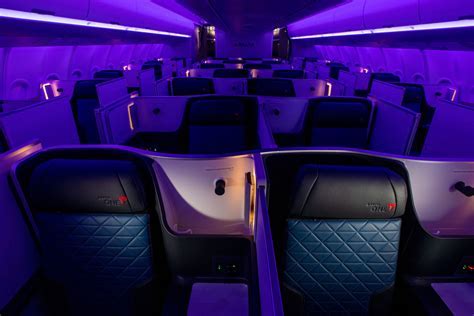
Delta Air Lines has launched a bold campaign to reassert its dominance in the long-haul premium market by revamping its business-class product—Delta One—across new and existing aircraft. The airline’s flagship experience now includes fully enclosed suites with sliding doors, offering elite passengers a sanctuary in the skies. However, despite these advancements, significant discrepancies in passenger experience remain across Delta’s diverse fleet of wide-body aircraft.
While travelers departing from Seattle-Tacoma International Airport often enjoy the full suite of Delta’s luxury offerings aboard next-generation Airbus A330-900neo and Airbus A350 jets, others departing from major hubs like Atlanta or New York-JFK can find themselves aboard outdated Boeing 767-300s with markedly inferior cabins. This uneven standard is drawing criticism even as Delta continues to deploy strategic upgrades.
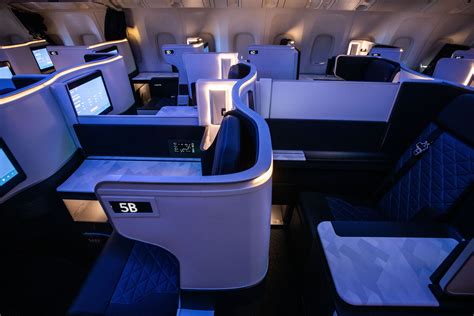
Delta One Suites: The New Standard on A330-900neo and A350 Aircraft
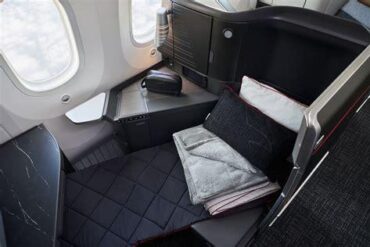
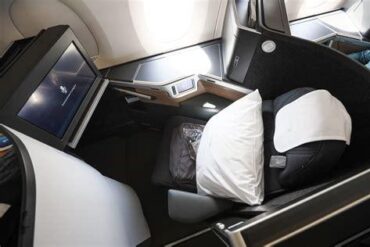
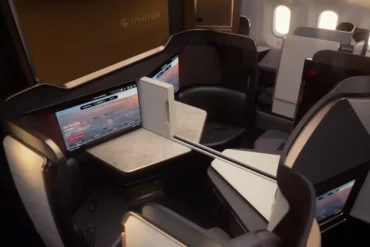
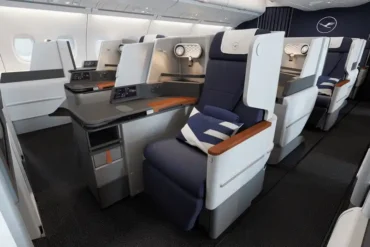
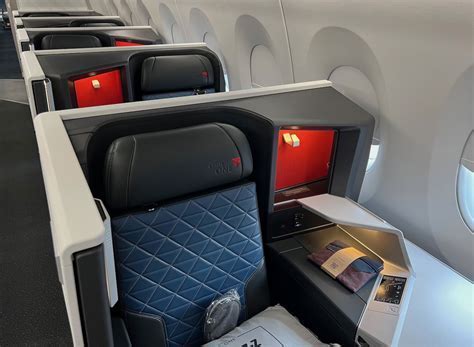
At the heart of Delta’s premium transformation is the introduction of Delta One Suites, a private, lie-flat business-class product that competes with the best in the industry. These suites feature sliding privacy doors, dedicated storage compartments, and luxurious textiles, all designed to evoke a boutique hotel experience at 35,000 feet. Each suite comes equipped with a large IFE screen, ambient lighting, and noise-canceling headphones, tailored to the demands of international business travelers.
The Airbus A330-900neo and A350-900 fleets are now almost exclusively equipped with this cabin standard. From a passenger’s perspective, this ensures a seamless and comfortable transoceanic journey, provided they board the right aircraft type. Unfortunately, Delta’s legacy wide-body aircraft remain inconsistent in matching this quality.
Legacy Aircraft Retrofitting: Progress and Limitations
Delta has committed to retrofitting its older Airbus A330-200 and A330-300 aircraft with Delta One Suites, replacing the now-outmoded reverse herringbone pods. These older business-class layouts were once the industry standard, offering direct aisle access and a degree of privacy. But with the market evolving rapidly, they’ve fallen short of current expectations for exclusivity and design.
The airline confirmed that Boeing 767-400ER aircraft—though not receiving full-suite upgrades—will feature a modified Delta One cabin, offering enhanced seating without sliding doors. Still, the airline plans to phase out the even older 767-300s, which will not receive any upgrades, citing their imminent retirement.
This segmented approach has created a three-tier business-class product, making it difficult for frequent flyers to know what to expect without researching their aircraft model in advance.
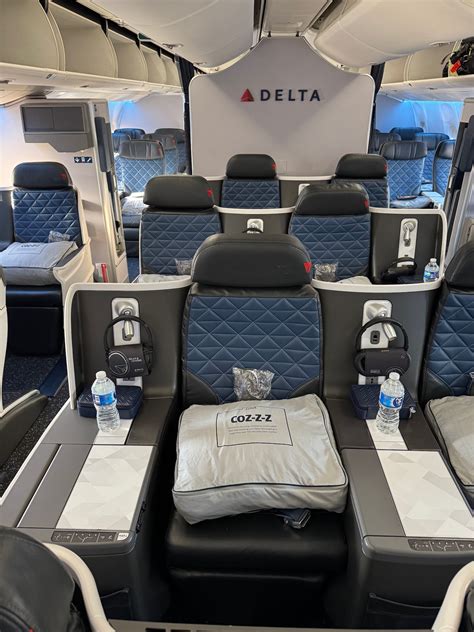
A350 Fleet Configurations: From LATAM Legacy to Premium-Dense Layouts
Delta’s A350 fleet reveals an intriguing mosaic of configurations. The most basic variant, dubbed “35L”, was inherited from LATAM Airlines and features a 2-2-2 layout with no Delta Premium Select cabin—making it the least desirable among Delta’s long-haul options. These aircraft often lack the privacy and premium density found in other A350 variants.
The original Delta configuration, known as “359”, includes 32 Delta One Suites, providing a more competitive product, albeit one that hasn’t seen substantial hardware refreshes. Then there’s the newly upgraded “35H” variant, which pushes the envelope with 40 Delta One Suites, achieved by sacrificing Premium Select recliners and cutting down economy seats by 31. This pivot underscores Delta’s shift toward high-margin premium travelers and away from mass economy traffic on select international routes.
Premium Domestic Routes: The Rise of the A321neo Subfleet
As part of its broader premium strategy, Delta is deploying a specialized premium-heavy subfleet of Airbus A321neo aircraft on high-value domestic routes, particularly those connecting New York to Los Angeles and Boston to Los Angeles. These planes are outfitted to replicate the premium experience usually reserved for international flights.
Paul Baldoni, Delta’s SVP of Network Planning, stated that these jets are intended to service only transcontinental flights for now, with no immediate plans to deploy them across the Atlantic. However, he hinted that network expansion using these jets remains a distinct possibility, especially if market demand justifies the shift.
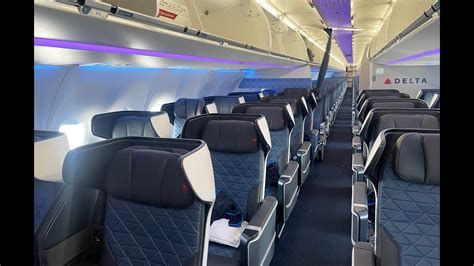
Premium Select Expansion: Domestic Comfort Takes Center Stage
Building on the successful deployment of Premium Select seats on flights between New York and Los Angeles, Delta is now setting its sights on the equally lucrative New York to San Francisco corridor. Though a full rollout date hasn’t been disclosed, this shift reflects Delta’s recognition of the increasing demand for a middle-tier premium product—one that bridges the gap between business and economy.
Premium Select offers reclining seats with extra legroom, enhanced meal service, and dedicated overhead bin space, making it ideal for business travelers who don’t require a full suite experience. Expanding this cabin class aligns with Delta’s vision of tiered luxury, allowing travelers more flexibility in comfort and price point.
Austin as a Strategic Growth Market
Delta is placing significant emphasis on Austin, Texas, reasserting it as a key growth hub in its post-pandemic strategy. The city has emerged as a tech and business powerhouse, and Delta has responded with increased investment, better infrastructure, and a higher frequency of flights.
In contrast to cities like Cincinnati or Memphis, which have seen a reduction in Delta’s focus, Austin is viewed as a long-term strategic play. This includes expanding premium offerings, improving terminal experiences, and potentially introducing premium-heavy aircraft to the Austin network as demand grows.
Seattle: The Benchmark for Delta’s Premium Experience
Seattle has quietly become Delta’s crown jewel in terms of premium passenger experience. Every transpacific flight departing from Seattle is now operated by either an A350 or A330-900neo, guaranteeing passengers access to the latest Delta One Suites and Premium Select cabins.
This shift wasn’t driven solely by competition—although Alaska Airlines’ presence and the proximity to Asia played contributing roles—but also by the cargo capacity and high-revenue seating configuration of these aircraft. Seattle’s premium demand density made it the logical choice for deploying Delta’s most modern wide-bodies.
Customer Expectations vs. Fleet Reality
Despite Delta’s high-profile upgrades, the airline continues to grapple with the reality of fleet inconsistencies. Travelers who book Delta One expect a unified standard. However, a business-class seat on a Boeing 767-300 is a world apart from the privacy and elegance of an A350 suite.
This uneven experience has led to mixed customer satisfaction scores. Frequent flyers have taken to social media and aviation forums to express frustration at the lack of transparency in aircraft assignments. Delta’s reliance on mixed configurations, inherited aircraft, and slow rollout of retrofits has made it challenging to guarantee consistency.
What’s Next for Delta’s Premium Ambitions?
Delta’s roadmap for the future suggests a consolidation around premium-heavy, suite-equipped aircraft. As the airline retires aging 767-300s and expands its A330-900neo and A350 fleets, the eventual goal is a network where Delta One truly means Delta One, no matter the departure airport.
Simultaneously, Delta is banking on Premium Select as a key growth driver, especially on domestic transcontinental routes and select international markets where lie-flat seating may be excessive but extra comfort is expected.
To win in a market increasingly driven by high-value business travelers, Delta is betting that consistency and luxury are not mutually exclusive. Whether it can retrofit fast enough—and clearly communicate those changes to passengers—will determine how far this strategy flies.