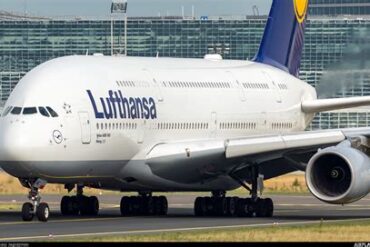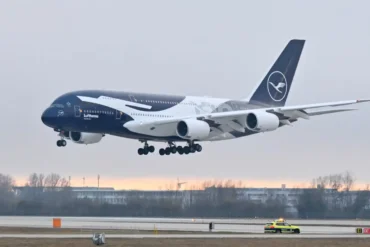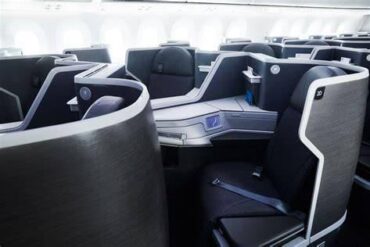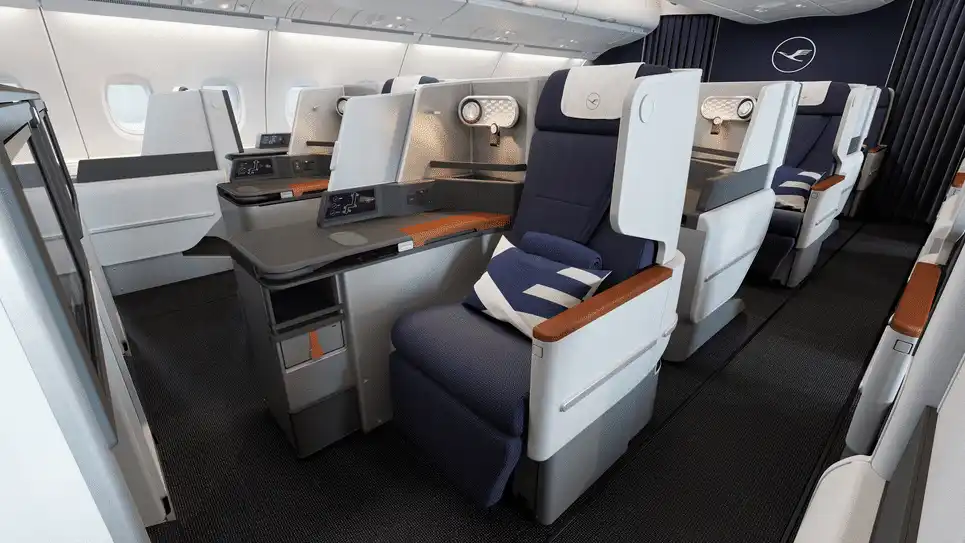
The Airbus A380 has always been a symbol of scale and ambition, and Lufthansa is preparing to give the world’s largest passenger aircraft a thoroughly modern premium edge. Beginning in April, the German flag carrier will debut a newly retrofitted Business Class cabin on its A380 fleet, delivering full aisle access for every passenger and signaling a renewed commitment to long-haul comfort on its flagship double-deckers.
For travelers accustomed to Lufthansa’s existing A380 Business Class, the change is immediately meaningful. The current 2-2-2 configuration, once considered generous, increasingly feels dated in an era where privacy and direct aisle access define premium expectations. The new cabin replaces that layout with a contemporary 1-2-1 arrangement, ensuring that every seat connects directly to the aisle and eliminating the need to step over a neighbor during night flights.
Aisle Access Becomes the New Baseline in the Sky
Lufthansa’s decision to refit the A380 with Thompson-manufactured Business Class seats reflects a broader industry shift. Direct aisle access has evolved from a luxury perk into a baseline expectation for premium long-haul travelers, particularly on ultra-long routes served by aircraft like the A380. By adopting a 1-2-1 layout, Lufthansa aligns its superjumbo offering with global standards set by leading international carriers.
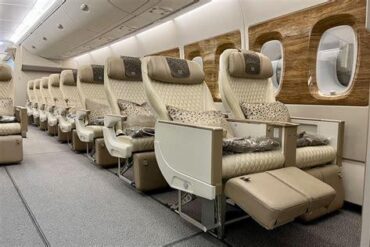
The redesigned seats bring tangible physical improvements alongside better access. Each seat measures approximately 22 inches in width, offering ample personal space, while the fully flat bed extends beyond 6.5 feet, comfortably accommodating taller passengers. Privacy has been carefully considered through improved shell design and refined spacing, creating a calmer, more secluded environment without sacrificing the social openness that some travelers appreciate in Business Class.
Fewer Seats, Stronger Statement
One of the most telling aspects of the retrofit is what Lufthansa is willing to give up. Business Class capacity on the A380 will decrease from 78 seats to 68, a deliberate reduction that underscores the airline’s focus on quality rather than density. On an aircraft renowned for its size, sacrificing seats is a clear signal that passenger experience now outweighs pure capacity metrics.
Heiko Reitz, Hub Manager Munich for Lufthansa Airlines, has emphasized that this retrofit reinforces the airline’s long-term plans for the A380. As the only European Union carrier still operating a meaningful A380 fleet, Lufthansa is positioning itself as the continent’s steward of the type, committed to keeping the aircraft relevant and desirable well into the decade.
The First Aircraft Already Headed for Transformation
The first Airbus A380 to receive the new Business Class cabin is registered D-AIMC, affectionately known within Lufthansa as “Mike Charlie.” Delivered in 2010, the aircraft has accumulated nearly 16 years of service, with a pause during the pandemic years when much of the global A380 fleet was grounded. Its selection as the launch aircraft is symbolic, blending the A380’s early operational history with a distinctly modern interior future.
After completing its latest revenue service flight into Munich from Delhi, the aircraft is set to be ferried to Elbe Flugzeugwerke GmbH in Dresden. There, the Business Class retrofit will be carried out alongside scheduled maintenance work, ensuring that the cabin transformation coincides with technical refreshment.
A380 Renewal Within a Wider Fleet Modernization
The A380 Business Class upgrade is not an isolated project. Lufthansa is simultaneously introducing new seating products across its Boeing 747-8 and Airbus A350-900 fleets, marking the most extensive cabin modernization program in the airline’s history. By refreshing multiple widebody types in parallel, Lufthansa aims to create a more consistent premium experience across its long-haul network, regardless of aircraft type.
This strategy is particularly relevant for frequent flyers who value predictability. Whether boarding an A350, a 747-8, or the iconic A380, passengers can increasingly expect comparable comfort standards, modern aesthetics, and thoughtful ergonomics.
The A380’s Unique Place in European Aviation
Lufthansa’s continued investment in the A380 carries broader significance for European aviation. Following the retirement of the type by Air France and the United Kingdom’s exit from the European Union, Lufthansa stands alone within the EU as an A380 operator. Its fleet of eight aircraft represents not just operational capacity, but a statement of confidence in the superjumbo’s enduring appeal on high-demand long-haul routes.
Historically, Europe has seen both extremes of A380 operation, from Air France’s large pre-pandemic fleet to Hi Fly Malta’s brief single-aircraft experiment. Lufthansa’s approach sits firmly in the middle, maintaining a focused, premium-oriented A380 presence tailored to key intercontinental markets.
April Debut Signals Confidence in the Superjumbo’s Future
Once the retrofit work is completed, D-AIMC is expected to return to Munich in April, ushering in the first commercial flights with the new Business Class cabin. For passengers, the debut represents more than a seat upgrade. It signals Lufthansa’s belief that the Airbus A380 still has a meaningful role to play in premium long-haul travel, provided it evolves with passenger expectations.
By pairing full aisle access with improved privacy, generous dimensions, and a clear reduction in seat density, Lufthansa is transforming the A380 Business Class from a product of its time into one ready for the decade ahead. In doing so, the airline ensures that the world’s largest passenger jet remains not just impressive in size, but compelling in experience.