In recent weeks, Canadian defence authorities have vigorously reaffirmed their support for moving forward with the procurement of the F-35A stealth fighter, signaling that the project will proceed at full speed unless explicitly instructed otherwise. This bold posture comes amid mounting tensions in U.S.-Canada relations, rising program costs, and public scrutiny of the strategic necessity and financial burden of such a monumental defense investment.
The backdrop is clear: Canada’s current fighter fleet, composed largely of aging CF-18 (F/A-18A/B) aircraft, is approaching the end of its operational life. The Royal Canadian Air Force and senior officials in the Department of National Defence argue that to maintain credible air defence capabilities—and interoperability with North American and NATO partners—the nation must transition before 2032 to a more advanced fleet. At a hearing before the House of Commons, Lieutenant-General Jamie Speiser-Blanchet and Deputy Defence Minister Stefani Beck both presented the urgency of this modernization effort.
Speiser-Blanchet, appointed as the new Commander of the Canadian Air Force, was challenged over whether Canada might adopt a “mixed fleet” strategy—acquiring F-35s while retaining a subset of CF-18s for redundancy or cost mitigation. She acknowledged that the overlap would be inevitable during the transition period but cautioned that maintaining two types of fighters in parallel would significantly increase logistical complexity, training burdens, and infrastructure duplication. She also emphasized that adversaries already field fifth-generation aircraft (such as those in China and Russia) and that delay increases Canada’s risk exposure. The message was clear: the longer Canada waits, the more strategic and technological ground it loses.
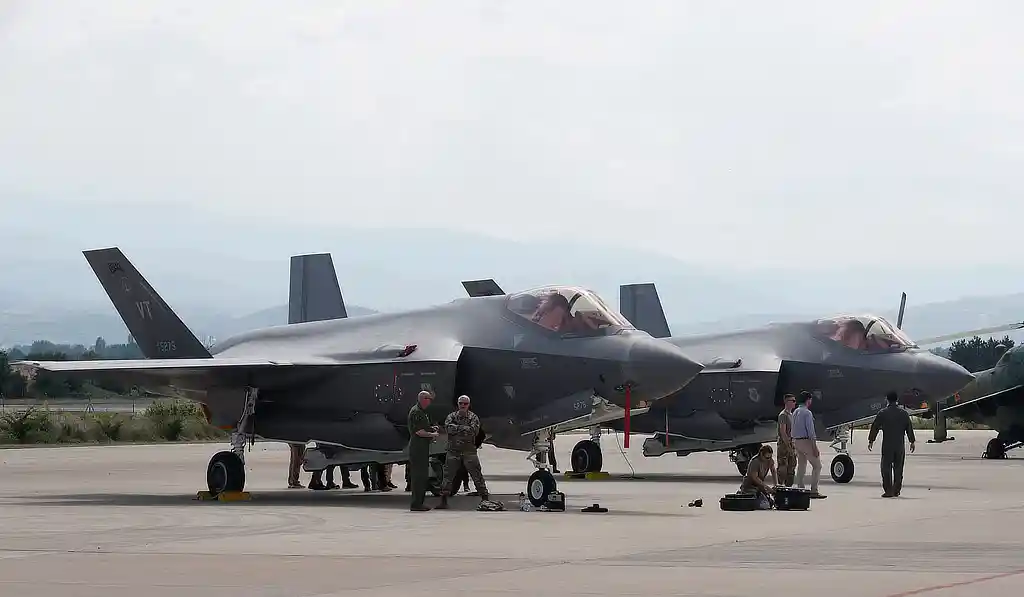
Deputy Minister Beck told members of the Public Accounts Committee that Canada is proceeding “full steam ahead … with the arrangements we have in place until we hear otherwise.” She confirmed that Canada is committed to at least 16 F-35s, with four already fully paid and funds allocated for eight more in parts and prepayments. Beck also affirmed that the procurement process continues apace, with infrastructure upgrades, pilot training pipelines, and technical preparation underway ahead of the first deliveries.
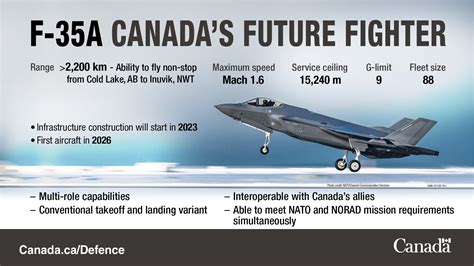
Currently, the first aircraft are scheduled for 2026 delivery, primarily to support training and familiarization, and full operational deployment is slated for 2028. The full fleet of 88 F-35A jets, already decided by the government in 2023, remains under consideration—but recent geopolitical shifts and budgetary reassessments have introduced potential reversals or modifications to that plan.
Concerns over costs have not gone unnoticed. The program’s estimated price tag has ballooned from around CAD 19 billion in 2019 to CAD 27.7 billion by 2025. Officials attribute much of the escalation to changes imposed by the U.S. Defense Department’s joint project office—higher security requirements for hangars, sensitive infrastructure, and facility upgrades at Canadian bases—and lingering delays in construction and certifications. Foreign exchange volatility is another major driver: for each one-cent shift in USD/CAD, Canada’s acquisition cost swings by approx. CAD 250 million.
Some critics have raised the specter of a so-called “remote disable lock” embedded in the F-35 design—a capability that could theoretically allow external parties to disable the jets remotely. In response, Canada’s air force policy adviser Van der Maelle flatly denied such claims, stating that the aircraft do not possess a “remote-lockout” function. Furthermore, the procurement plan emphasizes industrial participation, with roughly 30 Canadian firms slated to contribute components and systems. Crucially, about 75% of lifecycle maintenance and sustainment funding is expected to remain in Canada, positioning the program not just as a military investment but an economic stimulus for Canadian aerospace and defense sectors.
Looking ahead, Parliament is scheduled to receive a detailed modernization report on October 21, which may shed light on pending issues such as financing adjustments, updated risk assessments, and contingency plans if the full 88-aircraft commitment proves untenable. That report is likely to become a focal point of political debate and media scrutiny.
Strategic Imperatives: Why Canada Believes It Must Proceed
The Canadian government’s rationale is anchored in multiple strategic imperatives. First, air sovereignty: Canada’s vast airspace, especially in the Arctic and northern approaches, demands a state-of-the-art intercept and deterrence capability that legacy fighters may no longer reliably deliver. Secondly, NORAD interoperability: Canada’s role in continental air defence is deeply intertwined with the U.S., and many argue that fielding a mixed fleet could erode tactical synchrony. U.S. officials, including Ambassador Pete Hoekstra, have publicly asserted that Canada’s reluctance to commit fully to the F-35 risks degrading integration within North American defense architecture.
Third, deterrence posture: adversary states now operate or develop advanced stealth, sensor-fused missiles and long-range strike capabilities. Delaying Canada’s transition could leave gaps in regional security and complicate alliance contributions. Fourth, industrial and economic considerations: Canadian participation in the F-35 supply chain is seen as a pathway to sustaining domestic defense capabilities, supporting jobs, and securing long-term technological footing in future systems.
Risks, Contention & the Political Gamble
Despite strong advocacy, the F-35 acquisition is not without peril. Expandable cost overruns, infrastructure delays, and political volatility all threaten to derail the plan. The significant jump in project cost—nearly 50% over several years—has generated skepticism from opposition MPs and oversight bodies. Exchange rate hazards remain unpredictable; a shift in U.S. interest rates or fluctuations in oil markets could ripple into increased project costs overnight.
Politically, the decision rests squarely with the Prime Minister and his cabinet. Though procurement continues, the ultimate commitment to 88 aircraft remains unsettled. A partial buy could be in the offing, or worst case, a pivot to alternative platforms. Some critics even urge Canada to consider aircraft from other suppliers—European, Swedish, or non-U.S. options. That said, turning away from the F-35 would carry diplomatic and alliance costs.
The specter of industrial and sovereign capability loss is another concern. If Canada undercommits, domestic firms may be squeezed out of the supply chain, eroding future defense innovation capacity. Opponents also warn of the complexity of integrating new aircraft into aged infrastructure and training pipelines already stretched thin.
Technical & Programmatic Realities of the F-35A
The F-35A is a fifth-generation multirole stealth fighter designed for air superiority, precision strike, surveillance, and networked warfare. Its capacity to fuse data from multiple sensors and connect with allied systems gives it an edge in contested environments. Canada’s version will align with U.S. standards to maximize interoperability with NORAD and NATO partners.
Key technical advantages include:
- Low observable design (stealth) enabling deep penetration into defended airspace
- Advanced sensor fusion and situational awareness, with onboard radar, electronic warfare, and infrared systems
- Networked communications and datalinks, connecting with allied platforms and command centers in real time
- Multirole lethality, with capacity for air-to-air and air-to-ground payloads
However, the transition comes with challenges: the F-35’s maintenance and sustainment demands are rigorous, requiring new tooling, training, software management, and infrastructure security. Legacy hangars must be upgraded or replaced to meet classified data protection requirements. Cybersecurity becomes paramount when operating such an advanced platform. Furthermore, pilot training pipelines will need overhaul to integrate stealth tactics, sensor management, and joint mission roles unlike those of the CF-18 era.
Timing, Deliveries, and Transition Phases
Under the current schedule, the first drop of F-35s is due in 2026, primarily destined for U.S. bases to support pilot and technician training. From there, Canada expects to begin integrating the aircraft into domestic bases by 2028, phasing out the CF-18s gradually until full transition by 2032. During the interim, dual-fleet operations will require careful management.
Speiser-Blanchet acknowledged that the CF-18s will remain in service throughout the transition and that some level of overlap is unavoidable. But she also stressed that prolonging the overlap or extending CF-18 operations beyond 2032 would amplify costs and complexity. The initial 16-aircraft tranche functions as a bridge: it enables training, logistics validation, and groundwork for the full fleet rollout while providing operational confidence in the system.
Economic and Industrial Participation: Canadian Stakes
A pivotal feature of Canada’s plan is industrial offset and domestic participation. Roughly 30 Canadian firms are slated to engage in component manufacture, assemblies, or support services. This offers an opportunity to embed Canadian aerospace firms deeper into global defense supply chains. Moreover, the project commits to keeping 75% of lifecycle maintenance and sustainment costs within Canada, thereby supporting jobs, technical expertise, and long-term sovereignty.
Proponents argue this approach transforms the F-35 deal from a mere arms purchase to a strategic economic investment. If executed properly, Canada could emerge with strengthened defense-industry capabilities ready to participate in future projects—such as drone systems, next-generation fighters, or multinational aerospace ventures.
Political and Alliance Impacts
Within Parliament, the F-35 program carries significant political risk. Opposition parties will scrutinize overruns, delayed timelines, and shifting commitments. The October 21 report to Parliament will likely be a flashpoint—MPs will demand transparency on budgeting, compliance, contingency plans, and alternatives. A pivot away from the F-35 could be framed as either fiscal prudence or strategic retreat, depending on perspective.
On the alliance front, U.S. officials have made clear the implications of Canada diverging from the F-35 path. The U.S. Ambassador has repeatedly warned that a mixed fleet reduces interoperability, creates technical barriers, and undermines joint mission readiness under NORAD. U.S. defense planners view commonality of systems, logistics, and doctrine as central to continental defence effectiveness.
For Canada, standing firm on the F-35 could reaffirm its commitment to continental defence and to alignment with U.S. and NATO strategic priorities. Conversely, wavering or downsizing could lead to diplomatic friction and diminished strategic influence within collaborative defense systems.
Conclusion: Canada at a Crossroads
Canada’s pivot to the F-35 is more than an aircraft procurement—it’s a pivotal decision about national strategy, alliance alignment, industrial capacity, and long-term deterrence in a contested era. By pushing “full steam ahead,” Canadian defence leaders are signaling that they view the stakes as existential. The window for hesitation is closing, and the transition to a fifth-generation fleet is viewed as essential to preserving sovereign air defense capability.
Yet the path is littered with financial uncertainty, infrastructure gaps, political volatility, and strategic risk. Whether Canada can complete the transition by 2032, maintain fiscal discipline, and preserve industrial benefits while keeping alliance trust intact remains to be seen. The October parliamentary report will likely crystallize much of the debate, forcing the government to either double down or recalibrate. For now, the gears of procurement are in motion—and Canada’s aviation future is firmly tied to the trajectory of the F-35 program.
As the country evaluates how to modernize and defend its skies against evolving threats, the F-35 decision stands as a central fulcrum in Canada’s defense posture, economic strategy, and global standing.