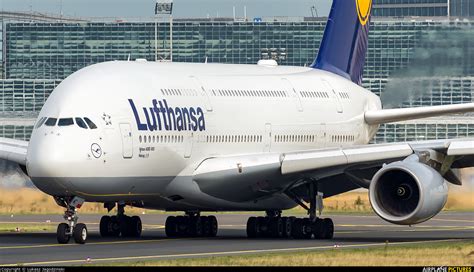
Lufthansa has begun a significant transformation of its Airbus A380 business class experience, marking a long-awaited shift toward modern long-haul standards. The German flag carrier recently returned its first refurbished superjumbo to service after more than two months of cabin upgrades, introducing a completely redesigned business class layout that finally delivers direct aisle access for every passenger.
For travelers accustomed to the airline’s previous configuration, the change represents a substantial leap forward in comfort, privacy, and accessibility. The refurbishment removes the long-criticized paired seating arrangement and replaces it with a more spacious, privacy-focused cabin design that aligns with modern premium travel expectations.
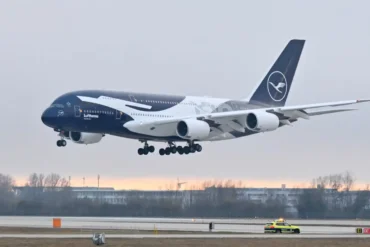
The first aircraft to undergo the transformation, registered D-AIMC, has already resumed international operations. Nicknamed “Mike Charly” according to the phonetic alphabet, the aircraft now serves as the blueprint for the remaining A380 upgrades planned across Lufthansa’s fleet.
A Major Shift From the Old 2-2-2 Layout
For many years, Lufthansa’s Airbus A380 business class followed a 2-2-2 seating configuration, a design that placed six seats across each row. While this layout allowed airlines to maximize passenger capacity, it also created noticeable drawbacks—particularly for travelers seated at the window.
In the previous configuration, passengers sitting by the windows were forced to step over their seatmate to reach the aisle. This inconvenience became increasingly outdated as competing airlines introduced cabins where every seat offered unrestricted aisle access.
The older arrangement included 78 angled flatbed seats, with the outer pairs angled toward the windows while the center seats faced inward toward each other. Though the setup worked reasonably well for couples traveling together, it provided limited privacy for solo passengers and lacked the spacious feel expected from modern business class cabins.
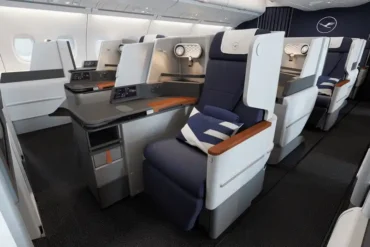
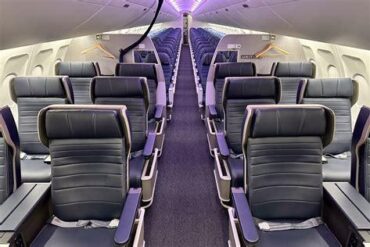
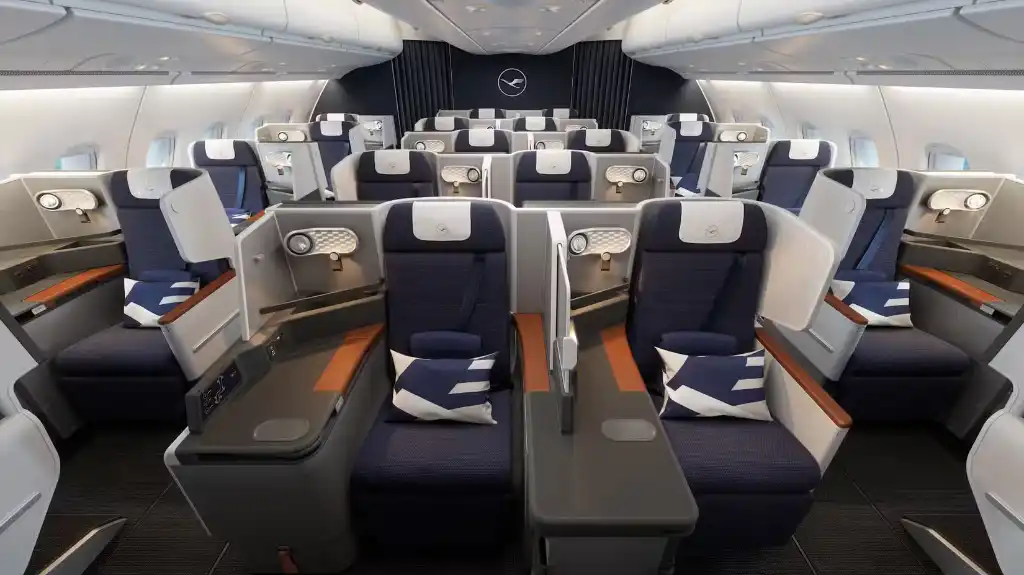
Lufthansa’s redesign directly addresses these shortcomings. By adopting a four-abreast 1-2-1 staggered configuration, the airline has dramatically improved accessibility while enhancing personal space.
New 1-2-1 Seating Brings Privacy and Comfort
The refurbished Airbus A380 business class now features 68 newly installed flatbed seats, reducing overall capacity but significantly improving the passenger experience. The shift from 78 to 68 seats reflects a deliberate move toward quality over density, prioritizing comfort rather than maximizing seat count.
Each seat is arranged so that passengers enjoy direct aisle access without climbing over another traveler, a feature that has become standard across many international premium cabins.
The seats themselves are manufactured by Thompson Aero Seating, a company widely known for designing advanced business class solutions for global airlines.
These new seats provide:
- 23-inch seat width (58 cm) for greater personal space
- Fully flat beds exceeding two meters in length
- Individual seating layouts that enhance privacy
- Improved storage and workspace areas
The staggered configuration ensures that passengers alternate between seats positioned closer to the aisle and seats tucked closer to the window, creating a natural sense of separation between travelers.
For solo flyers, this arrangement offers significantly greater privacy than the previous design. Window seats now feel more exclusive, while middle seats remain suitable for couples traveling together.
Enhanced In-Flight Entertainment and Technology
Beyond seating, Lufthansa used the refurbishment period to upgrade several aspects of the aircraft’s onboard technology. The new business class environment introduces improved in-flight entertainment systems, allowing passengers to enjoy media with greater flexibility.
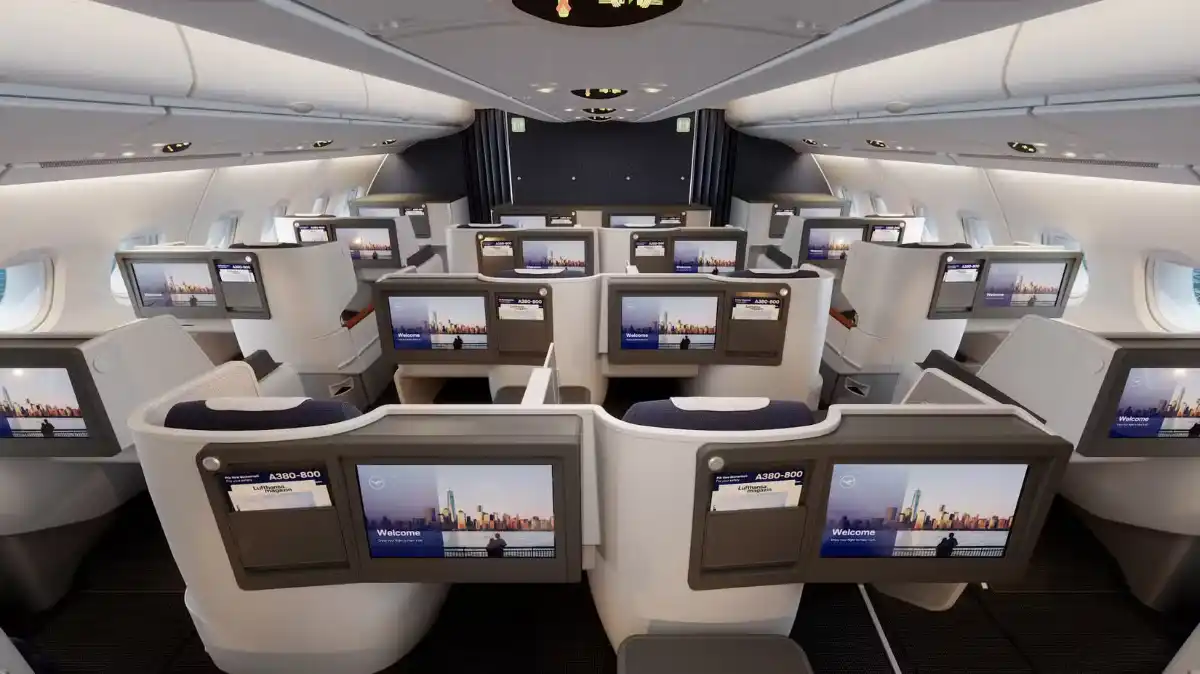
Each seat now features a larger 18-inch display screen, providing clearer visuals and easier navigation through the airline’s entertainment catalog.
A particularly notable upgrade is Bluetooth connectivity, enabling passengers to connect their own wireless headphones directly to the entertainment system. This eliminates the need for airline-provided wired headsets and offers travelers a more familiar listening experience.
The cabin also benefits from updated interior finishes and refreshed design elements, contributing to a more contemporary atmosphere throughout the upper deck.
Part of a Long-Term A380 Fleet Strategy
The business class redesign is not limited to a single aircraft. Lufthansa plans to retrofit all eight Airbus A380s in its fleet, integrating the new cabin layout during scheduled maintenance cycles.
The airline expects the entire program to continue through mid-2027, ensuring that each superjumbo receives the same modernized business class product.
The refurbishment process itself takes place at Dresden Airport, a facility known for performing complex aircraft maintenance and cabin upgrades. Each aircraft spends several weeks on the ground while technicians replace seats, update cabin infrastructure, and conduct routine maintenance tasks.
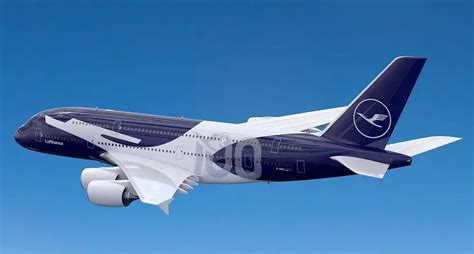
The next aircraft scheduled for refurbishment is D-AIMH, a particularly distinctive A380 that carries Lufthansa’s special blue 100th anniversary livery.
The First Refitted A380 Returns to Service
Before its upgrade, the aircraft D-AIMC completed its final pre-refit passenger flight on January 28, operating flight LH763 from Delhi to Munich. Shortly afterward, it was ferried to Dresden for refurbishment, where the aircraft remained for more than two months.
According to flight tracking data from Flightradar24, the aircraft returned to Munich on April 21 via a short ferry flight. Soon after, Lufthansa placed the aircraft back into service on flight LH452 from Munich to Los Angeles, marking the debut of the airline’s refreshed A380 business class experience.
This milestone represents a key moment for the airline’s premium strategy. The A380 remains one of the most iconic aircraft in commercial aviation, and Lufthansa’s continued investment signals confidence in its long-term role within the carrier’s fleet.
Lufthansa’s A380 Future Extends Into the 2030s
Despite widespread predictions that the Airbus A380 would disappear from global fleets following the pandemic, Lufthansa has reaffirmed its commitment to the aircraft. The airline plans to operate the superjumbo well into the 2030s, particularly on high-demand long-haul routes.
The updated business class cabin plays a crucial role in this strategy. By aligning the A380’s premium offering with modern passenger expectations, Lufthansa ensures the aircraft remains competitive with newer widebody jets such as the Airbus A350 and Boeing 787 Dreamliner.
Travelers departing from Munich will be among the first to experience the upgraded aircraft. Early deployment routes include major international destinations such as Boston, Los Angeles, Washington Dulles, and Delhi, all markets where premium demand remains strong.
For Lufthansa, the revamped A380 business class represents more than just a cabin upgrade. It reflects a broader commitment to refining the airline’s premium travel experience while keeping one of aviation’s most recognizable aircraft relevant for the next decade of global travel.