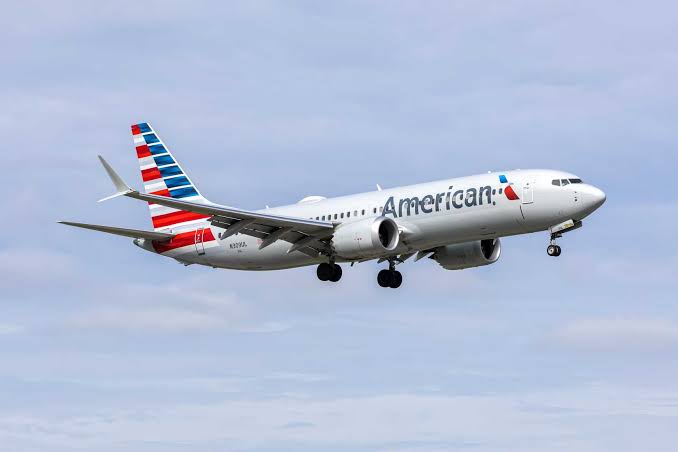
American Airlines has quietly redrawn a slice of its international map. Eight routes that carried passengers during the first half of this year are absent from the carrier’s 2027 schedule, a spread of cuts that reaches from ninety-minute hops to Canada and Mexico all the way to widebody corridors linking the United States with Europe, the Middle East and Australia. The affected services departed from seven different hubs, with Phoenix Sky Harbor International Airport (PHX) alone surrendering two connections. The circumstances behind each withdrawal differ sharply, and passenger demand explains only part of the story.
An analysis of US Department of Transportation data shows that the removed routes were far from uniform in performance. Several filled more than eighty percent of their seats, while others limped along below sixty percent. Read together, the numbers expose a carrier rebalancing capacity rather than retreating from the world stage, and they illuminate American’s singular international identity: an airline that sends roughly three of every four international departures south toward Latin America and the Caribbean instead of east across the Atlantic or west over the Pacific.
The eight cancellations touch Phoenix twice, and they include a transfer of daily service from Philadelphia to Doha to partner Qatar Airways, the withdrawal of seasonal transatlantic flying, and the quiet discontinuation of regional links that once seemed routine. Some services ended earlier this year, while Phoenix to Monterrey is scheduled to finish this month. Each route carries its own logic, and each reveals something about how American now thinks about where its aircraft earn their keep.
The Full List of American Airlines Cancelled International Routes for 2027
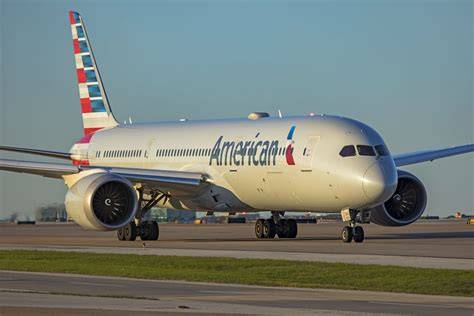
Los Angeles to Brisbane was the first to fall, with the last departure in January 2026 aboard a Boeing 787-9 Dreamliner. Philadelphia to Doha followed in February, also flown by a 787-9. Miami to Paris ceased in March on a smaller Boeing 787-8 Dreamliner. Chicago O’Hare to San José, Costa Rica ended in April using a Boeing 737 MAX 8, and New York-JFK to Toronto closed in May with an Embraer E175. Phoenix to Tijuana last operated in August on a Bombardier CRJ700, the same month Dallas/Fort Worth to Zurich flew its final Boeing 777-200ER rotation. Phoenix to Monterrey, also an E175 service, is scheduled to conclude in November 2026.
The long-haul withdrawals carry the most weight. American introduced Dallas to Zurich Airport (ZRH) only this past summer, and it will not return next year. Neither will the limited seasonal service from Los Angeles International Airport (LAX) to Brisbane Airport (BNE), which had operated alongside joint-business partner Qantas. The most emotionally resonant loss is Miami to Paris Charles de Gaulle Airport (CDG), a route American first launched in 1992 and later downgraded to seasonal status after the pandemic. The planned December 2026 resumption has been scrapped entirely.
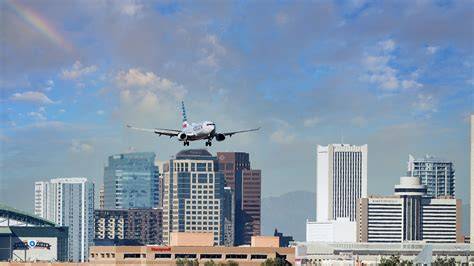
Shorter international routes suffered too. American ended New York-JFK to Toronto in May and consolidated its service to Canada’s largest city at LaGuardia Airport (LGA). Phoenix lost its Tijuana connection in August, with Monterrey scheduled to follow in November. The route from Chicago O’Hare International Airport (ORD) to San José was suspended in April, and although local reports at the time described the interruption as temporary, it is not reappearing on the 2027 schedule.
Load Factor Data Shows Which American Airlines Cuts Were Obvious and Which Were Not
Passenger demand provides one explanation for the cuts, but not the whole story. The two Phoenix routes recorded especially weak load factors during the first half of 2026. Tijuana International Airport (TIJ) fell as low as forty percent at the start of the year, and Monterrey’s General Mariano Escobedo International Airport (MTY) was not much better, finishing the period at 58.2% across 12,335 passengers and 21,204 seats. Cutting those routes seems like an obvious decision.
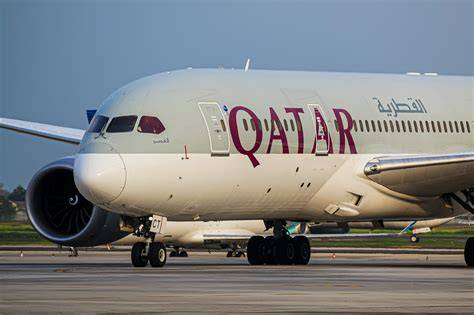
By contrast, Philadelphia to Doha reached an impressive 85.8% load factor across 26,314 passengers and 30,672 seats, yet it was suspended because of Middle East hostilities, and oneworld partner Qatar Airways later restored nonstop service. Chicago O’Hare to San José filled 82.4% of seats with 25,661 passengers aboard 31,132 seats, a strong figure for a narrowbody regional international route. Dallas to Zurich reached 79.8%, Los Angeles to Brisbane 79.7%, Miami to Paris 78.5% and New York-JFK to Toronto 70.9%. Fill rates alone did not drive these decisions; seasonality, aircraft reallocation and higher fuel costs loomed over every calculation.
The carrier acknowledged as much. In a statement obtained by Reuters, American said: “As part of targeted actions to strengthen the airline, American will moderate its planned growth.” That phrasing signals prudence rather than panic, a deliberate throttling of less-profitable flying while fuel prices squeeze margins across the industry.
How American Airlines International Network Differs From Delta and United
American’s international operations diverge substantially from those of arch-rivals Delta Air Lines and United Airlines. Partly because of a smaller widebody fleet, especially after heavy pandemic-era retirements, and partly because of hub placement and legacy operations, approximately 75% of American’s international departures serve Latin America and the Caribbean, where the carrier now offers more than 100 destinations. Delta and United each send less than half their international flights to that region, at 45% and 47% respectively.
The gaps widen elsewhere. Canada accounts for 9% of American’s international flying but 18% at both Delta and United. Europe, the Middle East and Africa represent just 14% of American’s departures against 30% at Delta and 23% at United. Asia-Pacific is the starkest contrast of all: 2% for American, 7% for Delta and 12% for United. This geographical concentration defines American more than any single route or aircraft type.
Capacity therefore pools heavily at Miami International Airport (MIA) and Dallas/Fort Worth International Airport (DFW). In the first half of 2027, Miami will handle 39% of the airline’s international departures across its ten hub airports, with Dallas responsible for a further 24%. Together the two account for roughly two-thirds of the carrier’s international traffic, an extraordinary concentration that shapes everything from crew bases to lounge investment.
A modest shift is coming, however. While Miami is scheduled to grow another 4.9% under the 2027 schedule, Philadelphia International Airport (PHL) and John F. Kennedy International Airport (JFK) are both expected to expand approximately 7% as American raises transatlantic capacity, notably through new Airbus A321XLR routes. These eight cancellations thus represent a redistribution of capacity rather than a retreat from international flying, a reshuffling of metal toward corridors where the airline believes its future margins live.