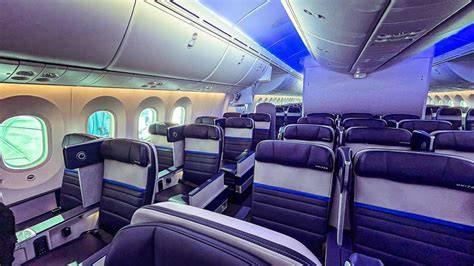
Every premium economy cabin tells the same quiet story. Two passengers board with near-identical itineraries, one settles into the wider seat with the footrest and the welcome drink, and the other walks past the curtain to a standard row in economy. Neither did anything obviously wrong on the day of departure, and neither did anything obviously clever. Yet the outcome was decided long before either of them reached a boarding gate. What separates the two travelers is not charm, attire, or timing, but a ranking system that has already weighed their ticket, their loyalty history, their spending, and the instrument they used to request an upgrade.
How Airlines Actually Decide Who Gets a Premium Economy Upgrade
Major carriers publish far more of their upgrade logic than most travelers assume. United Airlines and American Airlines both outline the categories and tiebreakers that govern upgrade priority, and frequent flyer communities have spent years reverse-engineering the rest. The picture that emerges is neither random nor personal. It is an algorithmic hierarchy built around revenue, loyalty engagement, fare value, cabin purchased, and the type of upgrade being requested. Every passenger is scored, sorted, and placed into a queue that updates automatically as seats open up. Understanding that queue changes how travelers book, and it explains why identical status badges produce wildly different outcomes.
Credit Card Spending Can Matter As Much As Flying
The most stubborn myth in premium cabins is that upgrades reward frequency. In reality, modern loyalty programs increasingly reward total customer value, and that value is measured across both flights and ground spending. A passenger who takes one expensive long-haul journey, charges a heavy volume to a co-branded airline credit card, and shops through the carrier’s portal can outrank a traveler who flies twice as often on discounted short-haul hops. Airlines are not tracking miles alone; they are tracking revenue.
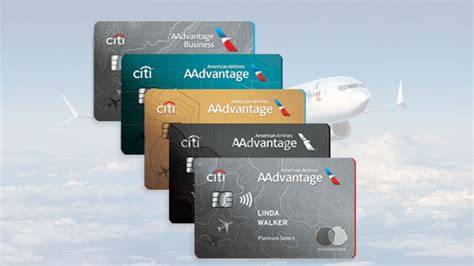
American Airlines offers the clearest illustration. Within its elite upgrade hierarchy, status still determines the broad tier in which a passenger competes, but Loyalty Points act as a decisive tiebreaker among travelers who share the same elite level. A passenger who has accumulated more Loyalty Points over the previous twelve months may take priority over another traveler at the identical status level, even if the second passenger flies more segments. Those points can be earned from flying, but they can also be earned from credit card activity, partner bookings, and everyday spending routed through the AAdvantage ecosystem.
The practical consequence is that a heavy card spender with modest flying can edge past a road warrior whose travel is cheap and whose points come only from the air. Airlines are effectively asking a single question: who delivers the most value to the business over twelve months? Whether that value arrives through the cabin door or through a credit card statement matters less than the total. American publishes the broad priority order on its official upgrades page, while analyses from outlets such as NerdWallet and One Mile at a Time have unpacked how those Loyalty Points reshape the ranking.
Your Fare Class Quietly Shapes Your Chances
Two passengers can sit in the same economy cabin on the same flight and still be ranked apart, and the reason hides in a single letter of their booking. Airlines assign every ticket a fare class, a letter code such as Y, B, M, or G, that reflects its price and flexibility rather than which physical cabin it occupies. That hidden letter functions as a powerful tiebreaker whenever travelers share the same elite status and the same upgrade category.
United’s published guidance lays out a precise hierarchy for economy upgrade priority. Full-fare Y tickets sit at the top, followed by B, then M, E, U, H, Q, V, W, S, T, L, K, and finally G. Travelers holding higher fare classes receive priority over those who purchased deeply discounted tickets, and the gap is structural rather than incidental. A full-fare Y ticket can cost considerably more upfront, but it carries substantially better upgrade weight than the cheapest flexible-or-not seat in the same cabin.
The logic from the airline’s side is straightforward. A carrier wants to reward the passenger who generated more revenue on that specific flight, so the algorithm is designed to recognize that difference automatically. This is also why dynamic pricing matters to an upgrade hunter: two passengers may pay very different sums for the same fare class depending on demand, booking date, seat inventory, route competition, and predicted sales. A traveler who booked early during a fare sale may hold the same letter code as someone who paid far more later in the booking curve. The lowest fare saves money at checkout, but it can quietly cost an upgrade weeks later, which is why frequent flyers often repeat the old warning: buy nice or buy twice.
Premium Economy Occupies Its Own Upgrade Ladder
Passengers tend to think of premium economy as economy with extra legroom. Airlines think of it as a distinct cabin with its own strategic position in the upgrade hierarchy, one that often sits closer to business class than to the back of the aircraft. United’s Premium Plus product shows the principle clearly. Travelers already seated in Premium Plus generally receive upgrade consideration before those booked in standard economy, and fare classes tied to that cabin, including O, A, and R, are seated ahead of economy passengers when upgrades to Polaris business class open up.
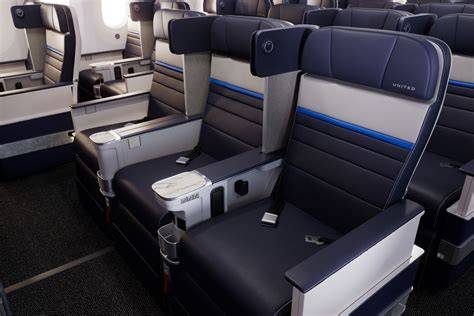
That means premium economy functions as a stepping stone to business class rather than a dead-end comfort upgrade. A traveler who purchases premium economy gains immediate comfort and simultaneously enters a queue that ranks ahead of standard economy when premium inventory becomes available. Airlines structure priority this way because a premium economy customer has already demonstrated a willingness to pay above the economy baseline, and carriers reward that demonstrated value whenever limited upgrade space appears.
For frequent flyers chasing business class, this reframes the purchase entirely. Booking premium economy is not merely paying for a nicer seat on today’s flight; it is a calculated move that may improve odds on the same flight and on future ones. The initial fare is higher, but the floor of the upgrade ladder is higher too, and upgrades to Polaris are frequently granted to exactly these cabins first.
Paying For an Upgrade Often Beats Elite Status
Elite status is valuable, but many travelers overestimate its power in a crowd of paid requests. One of the most misunderstood realities of airline upgrades is that passengers redeeming miles, applying upgrade certificates, or using dedicated upgrade currency frequently receive priority ahead of travelers waiting for a complimentary elite upgrade. The mid-tier member who spends an upgrade instrument can leapfrog a higher-status traveler waiting patiently for a free seat.
United illustrates the principle. Redeemable PlusPoints and mileage upgrade requests generally rank above those relying solely on complimentary elite upgrades, a point covered at length by The Points Guy and Upgraded Points. From the airline’s perspective this is fully rational: a carrier receives additional value when a customer redeems miles, applies a certificate, or commits resources toward a premium seat, whereas a complimentary upgrade is a cost the airline absorbs to retain loyalty.
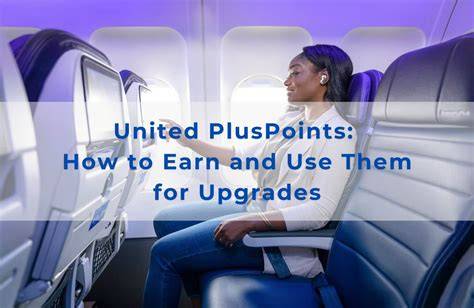
The lesson for travelers is that status gets them into the queue, while willingness to spend points or instruments gets them through it. Many flyers assume they sit near the top of the list based on their status badge alone, only to discover that numerous paid and mileage requests already occupy the available seats ahead of them. Higher-status holders can be defeated by lower-status passengers who chose to spend, which makes upgrade instruments the most reliable lever in the entire system.
The Computer Usually Decides Long Before You Reach the Gate
Perhaps the deepest misconception in commercial aviation is the belief that gate agents personally select who receives an upgrade. While agents certainly manage last-minute seat assignments, the vast majority of upgrade decisions are made by automated systems, including sophisticated tools such as Sabre Upgrade IQ, operating long before boarding begins. Reservation systems continuously evaluate passengers by status, fare class, upgrade type, spending history, and dozens of additional signals, then clear upgrades automatically as seats become available and rank travelers according to established rules.
Industry analyses of United’s process note that automated clearing handles most upgrades until departure draws close, with only the final hours seeing gate agents directly manage the remaining list. The queue itself was constructed days or even weeks earlier, sometimes at the moment of booking, which means the listing a traveler sees at the airport is the product of mathematics rather than negotiation.
Charm, appearance, and a friendly conversation with a gate agent are always welcome, but they rarely move a traveler inside an upgrade slot that was scored long before any airport interaction. The final determinant is not luck and not rapport; it is revenue, loyalty engagement, fare value, cabin purchased, and the type of request in play. Travelers who understand the queue book premium economy instead of economy, purchase higher fare classes when upgrades matter, route card spending into the loyalty program, and spend points or certificates rather than waiting for a complimentary seat to open. When the next upgrade clears, or fails to clear, the answer is already written in the data.