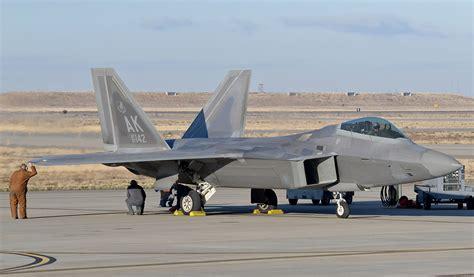
The Lockheed Martin F-22 Raptor was designed to dominate the skies long before electronic warfare became one of the defining threats of modern combat. Built during the final years of the Cold War, the aircraft entered service with unmatched stealth, speed, maneuverability, and sensor fusion. Yet even the world’s premier air superiority fighter carried a dangerous vulnerability into the 21st century: its dependence on GPS.
That weakness is now being aggressively addressed.
The US Air Force and Northrop Grumman have begun fielding the LN-351 Embedded GPS/Inertial Navigation System-Modernized, better known as EGI-M, a major navigation and anti-jamming upgrade designed to ensure the F-22 can survive and fight inside heavily contested electromagnetic environments. The system combines encrypted GPS M-code technology with advanced fiber-optic inertial navigation capabilities, allowing the Raptor to maintain combat effectiveness even when adversaries attempt to jam, spoof, or completely deny satellite navigation signals.
The timing of the upgrade reflects the rapidly changing realities of modern warfare. American planners increasingly expect future conflicts against near-peer adversaries such as China or Russia to feature massive electronic attacks targeting satellites, communications systems, and navigation networks. In that kind of battlespace, aircraft unable to operate without reliable GPS risk becoming ineffective within minutes.
For the F-22, that risk was becoming impossible to ignore.
The Air Force’s answer is not merely a software patch or incremental improvement. The LN-351 fundamentally changes how the Raptor navigates, shares information, and survives inside hostile airspace. More importantly, it transforms the aircraft from an isolated stealth predator into a deeply connected combat node capable of coordinating with allied fighters, drones, ships, and ground systems in real time.
The upgrade may prove to be one of the most important survivability enhancements the F-22 has received since entering operational service.
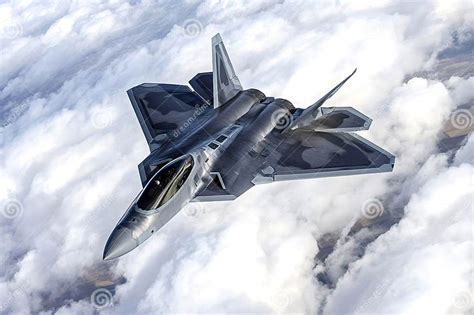
The Growing Threat Of GPS Warfare
For decades, GPS provided the United States military with an overwhelming tactical advantage. Precision-guided munitions, stealth aircraft navigation, synchronized battlefield operations, and long-range targeting all relied heavily on uninterrupted satellite positioning data.
America’s rivals noticed.
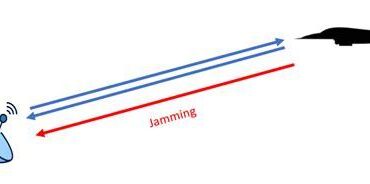
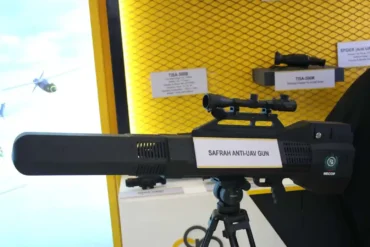
China and Russia invested enormous resources into electronic warfare systems specifically designed to disrupt or manipulate GPS signals. Modern battlefield jammers can flood operational areas with interference powerful enough to degrade aircraft navigation accuracy, interrupt weapons guidance, and confuse digital battlefield coordination. More sophisticated spoofing systems can even feed false positioning information directly into enemy platforms.
That creates catastrophic risks for advanced fighters.
An F-22 conducting long-range intercept operations relies on precise navigation for sensor alignment, target geometry calculations, stealth route planning, and missile employment. Even small errors can dramatically reduce combat effectiveness. A complete loss of GPS could compromise strike coordination, disrupt formation operations, and potentially prevent weapons from functioning as intended.
In Indo-Pacific war planning, where enormous operational distances stretch across oceans and remote islands, GPS disruption represents one of the most dangerous scenarios American pilots may face.
The LN-351 upgrade was specifically designed for that environment.
Instead of depending entirely on external satellite signals, the new system constantly cross-checks GPS information against highly accurate inertial navigation data generated internally by the aircraft itself. Fiber-optic gyroscopes and precision inertial sensors monitor movement independently of outside signals, allowing the F-22 to continue operating even when GPS becomes unreliable or disappears completely.
This blended navigation architecture gives the aircraft a critical survival advantage. If enemy jamming attempts distort incoming GPS signals, the system can immediately detect inconsistencies and prioritize trusted inertial data instead.
In practical terms, the Raptor learns how to fight blind.
Why M-Code GPS Changes Everything
At the heart of the LN-351 system is M-code GPS technology, one of the most significant upgrades to American military navigation security in decades.
M-code signals are transmitted by modern GPS III satellites operated by the US Space Force. Unlike older military GPS formats, M-code is heavily encrypted, far more resistant to interference, and capable of operating in environments saturated with electronic attack systems.
Traditional GPS signals are comparatively fragile. Enemy jammers can overwhelm them through sheer signal power, particularly near contested frontlines. M-code dramatically improves signal strength while incorporating modern cryptographic protections that make spoofing extraordinarily difficult.
The technology also enables directional signal concentration. Instead of broadcasting equally across massive regions, military satellites can focus encrypted transmissions toward specific operational areas where combat forces require maximum navigation reliability.
That capability matters enormously for stealth aircraft.
The F-22 was built to penetrate heavily defended airspace where advanced integrated air defense systems attempt to deny access through radar coverage, missiles, and electronic warfare. Reliable navigation becomes essential when pilots must maneuver precisely while minimizing emissions that could reveal their position.
With M-code integration, the Raptor gains far greater resilience during deep-penetration missions against technologically advanced opponents.
The upgrade also ensures interoperability with future American combat systems. As newer aircraft, autonomous drones, naval platforms, and missile systems adopt M-code architectures, the F-22 can operate seamlessly within that encrypted ecosystem rather than remaining trapped inside older navigation standards.

The Open Architecture Revolution Inside The F-22
One of the most strategically important aspects of the modernization effort has little to do with navigation accuracy.
It is about escaping vendor lock.
Historically, updating the F-22 has been notoriously expensive and painfully slow. The aircraft was developed during an era when defense contractors frequently built proprietary software ecosystems that tightly controlled how systems could be modified or integrated. Any major changes often required extensive recertification of entire software environments, turning relatively small upgrades into massive multi-year projects.
The LN-351 changes that equation through open architecture design principles.
Instead of functioning as a rigid standalone system, the new navigation suite supports modular integration and rapid software adaptation. New applications, anti-jamming algorithms, cybersecurity updates, or sensor enhancements can now be installed without redesigning the aircraft’s entire software infrastructure.
That flexibility may ultimately matter more than the hardware itself.
Electronic warfare evolves at astonishing speed. Adversaries continuously develop new methods for interference, spoofing, cyber intrusion, and signal degradation. A fighter locked into static software becomes vulnerable quickly, no matter how advanced it once appeared.
The Air Force increasingly recognizes that future combat effectiveness depends on upgrade speed as much as raw performance.
The F-22’s older systems struggled in that environment. Integrating new technologies often required lengthy testing cycles and massive engineering efforts. The LN-351’s plug-and-play architecture allows technicians to deploy targeted fixes and improvements far faster than before.
If a new jamming tactic appears in the Pacific theater tomorrow, specialists can potentially develop and distribute software responses across the fleet in dramatically shorter timeframes.
That agility transforms the Raptor into a continuously evolving platform rather than a frozen Cold War masterpiece.
From Lone Wolf To Networked Battlefield Commander
The F-22’s greatest modern weakness was never stealth or maneuverability. It was isolation.
Despite possessing some of the most advanced sensors ever installed on a fighter aircraft, the Raptor historically struggled to share information efficiently with other American and allied systems. Its proprietary communications architecture limited integration with broader battlefield networks, creating what many analysts described as a “Tower of Babel” problem.
The aircraft could see threats others could not detect, but transmitting that information without compromising stealth proved difficult.
Modernization efforts are now solving that problem.
The combination of upgraded navigation systems, modern data links, and open mission architecture allows the F-22 to function as a central information hub inside coalition operations. Instead of merely acting as an individual stealth fighter, the aircraft becomes a high-speed battlefield quarterback coordinating sensors, targeting data, and tactical awareness across multiple platforms.
This dramatically compresses decision timelines.
In modern warfare, victory increasingly depends on how quickly forces can detect threats, process information, and execute coordinated responses. Seconds matter. The side capable of sharing targeting information fastest often gains overwhelming advantage before the enemy can react.
The upgraded F-22 now contributes directly to that high-speed combat ecosystem.
Using secure shared data links, the Raptor can transmit targeting information to fourth-generation fighters such as the F-15EX and F-16 without those aircraft activating their own radars. That allows less stealthy aircraft to launch weapons using F-22 sensor data while remaining electronically quiet themselves.
For allied air forces operating Eurofighter Typhoons or other coalition platforms, the benefit is equally significant. The Raptor effectively extends its stealth-enabled situational awareness across the broader coalition force.
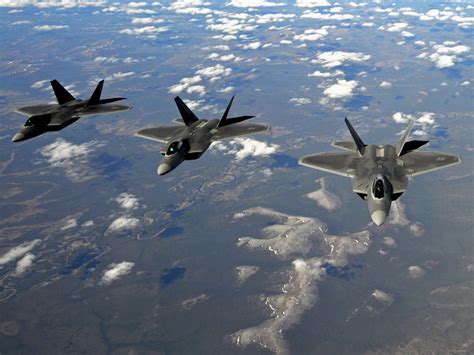
Fighting In GPS-Denied Airspace
The phrase “GPS-denied environment” has become one of the defining concepts of modern military planning.
Future battlefields are expected to feature intense electronic disruption across every operational domain. Satellites may be jammed, communications interrupted, networks attacked, and signals manipulated continuously throughout combat operations.
Aircraft incapable of adapting to those conditions risk operational paralysis.
The LN-351 system gives the F-22 a critical layer of independence from that vulnerability.
Its inertial navigation components use high-precision gyroscopes to calculate aircraft position based on movement rather than satellite input. While inertial systems naturally accumulate drift over time, modern fiber-optic designs dramatically reduce that error rate compared with older technologies.
The result is a fighter capable of navigating accurately for extended periods even with minimal or zero GPS access.
Equally important, the system continuously evaluates incoming navigation data for integrity. If GPS signals appear compromised or manipulated, the aircraft can reject corrupted information automatically.
That creates resilience against spoofing attacks designed to deceive pilots or onboard systems.
In practical combat terms, the F-22 can maintain mission effectiveness deeper inside enemy anti-access and area-denial zones where electronic warfare systems are operating at full intensity.
For the Indo-Pacific theater, where Chinese anti-access networks represent one of America’s primary strategic concerns, that capability is indispensable.
Long-range operations across vast maritime regions require reliable navigation under contested conditions. The upgraded Raptor is now far better equipped for exactly that mission profile.
Preparing For Collaborative Combat Aircraft
The Air Force is not upgrading the F-22 simply to preserve an aging fighter.
It is preparing the aircraft to operate inside an entirely new combat ecosystem.
Future American airpower strategy increasingly revolves around Collaborative Combat Aircraft, autonomous drones designed to fly alongside manned fighters while performing reconnaissance, jamming, decoy operations, weapons delivery, and electronic warfare missions.
The F-22 is expected to play a major command-and-control role within that architecture.
Through enhanced data links and modernized networking systems, Raptor pilots will be able to direct autonomous systems in real time while maintaining broader situational awareness of the battlespace. Drones can scout ahead into dangerous airspace, absorb enemy attention, jam hostile radars, or launch attacks before the manned fighter commits itself fully.
That dramatically expands the combat power of each F-22 sortie.
The aircraft essentially evolves from a standalone fighter into a force-multiplying command node capable of orchestrating manned-unmanned operations across contested regions.
This transformation aligns directly with broader Air Force modernization efforts leading toward the Next Generation Air Dominance program and Boeing’s newly selected F-47 stealth fighter initiative.
Until sixth-generation aircraft arrive in meaningful numbers during the 2030s, the F-22 remains America’s premier air superiority platform. Extending its survivability and connectivity is therefore critical for maintaining deterrence during a transitional era of military aviation.
Why The Raptor Still Dominates The Sky
Nearly three decades after its introduction, the F-22 remains one of the most formidable combat aircraft ever constructed.
Its combination of stealth shaping, supercruise capability, high-altitude performance, sensor fusion, agility, and air-to-air lethality still sets global benchmarks. While newer aircraft may surpass the Raptor in individual areas, few platforms match its balanced excellence across every dimension of aerial combat.
That enduring dominance explains why the Air Force continues investing billions into modernization despite the aircraft’s age.
The Raptor was never obsolete. It was simply constrained by the technological assumptions of the era in which it was built.
Today’s upgrades are removing those constraints.
The LN-351 anti-jamming navigation system, open mission architecture, secure networking improvements, and integrated data-sharing capabilities collectively transform the F-22 into something far more dangerous than before. It remains a stealth predator, but now operates as part of a fully connected digital battlespace capable of coordinating across allied forces, autonomous systems, and next-generation combat networks.
The aircraft that once hunted alone can now lead entire formations silently through some of the most electronically hostile environments on Earth.
That evolution may ultimately define the Raptor’s second life.
The original F-22 was built to dominate the skies of the late 20th century. The modernized version is being reshaped for the wars of the mid-21st century, where information, connectivity, and resilience against electronic attack may matter just as much as speed and stealth.
For the Air Force, ensuring the Raptor can survive without GPS is not merely a technical improvement.
It is preparation for the future of air warfare itself.