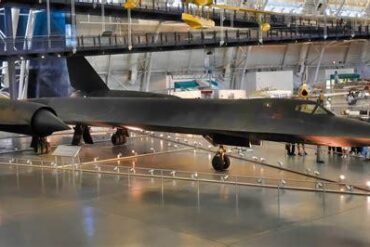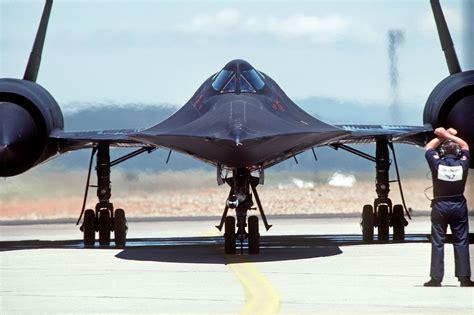
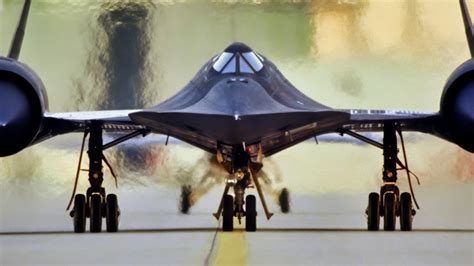
When we speak of the SR-71 Blackbird, the mind often conjures up an image of an alien silhouette slicing through the stratosphere, sleek and stealthy. Photographs make it seem majestic, powerful, and unapproachable. But what truly astonishes people is not just the jet’s speed or its titanium skin — it’s the moment they finally see it in person. The perception gap between photographic awe and physical proximity is where reality hits hardest. You never quite grasp its scale until it looms before you.
At first glance, the SR-71 appears surprisingly compact. Many enthusiasts who’ve grown up seeing its photos online or in books are left momentarily disoriented upon encountering it in a museum hangar. As one observer, known as TheodoreK2, put it: “I couldn’t believe how small it was.” This sentiment set off a cascade of reflections across aviation communities, revealing a fascinating pattern: people consistently overestimate the SR-71’s physical size — until they stand beside it.
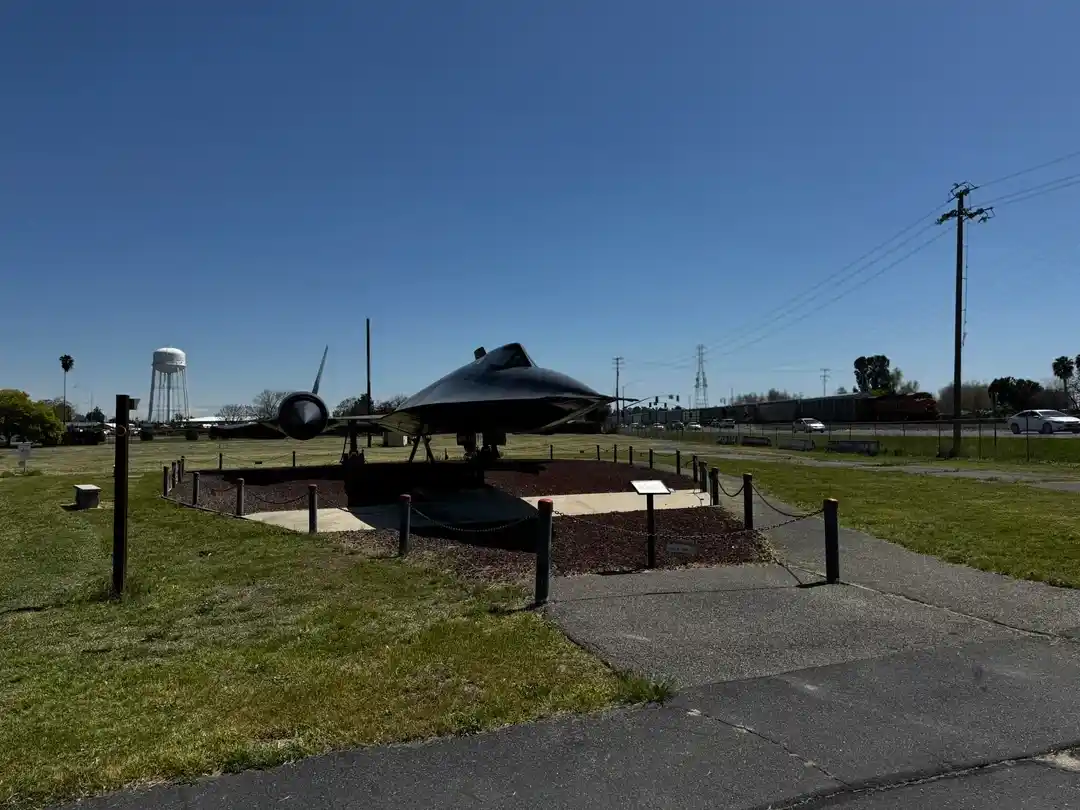
The Illusion of Grandeur: When Photos Deceive the Eye
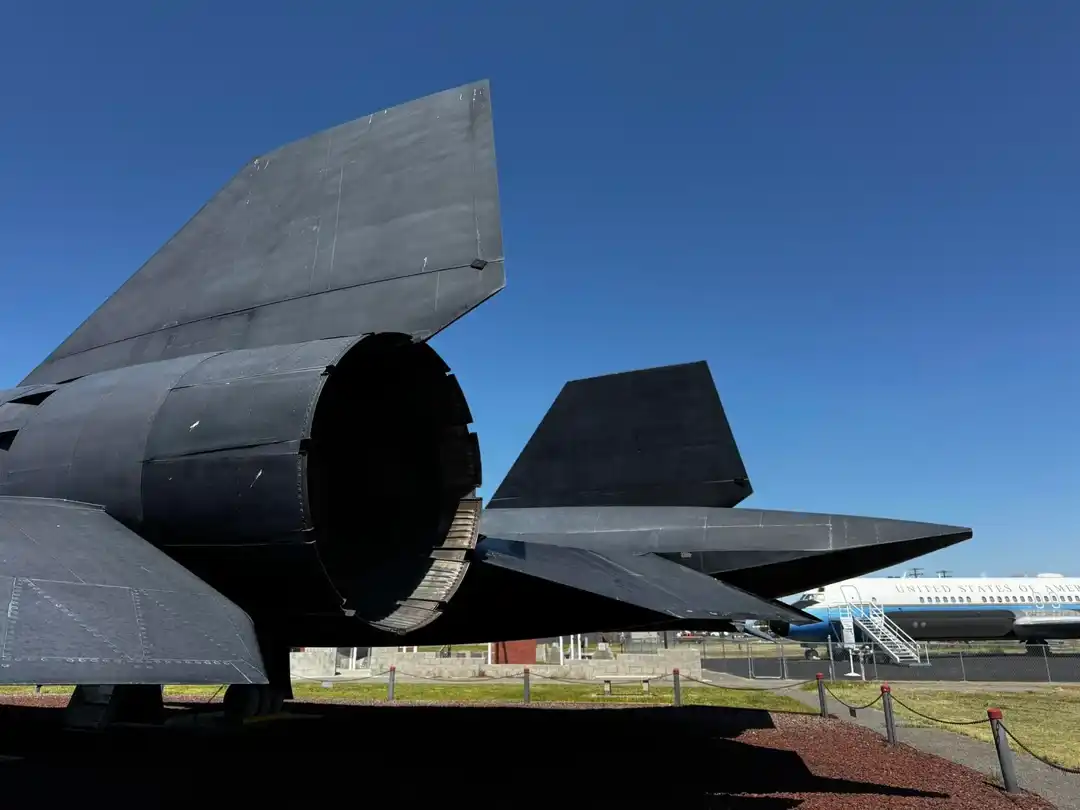
It’s a cognitive trick. The SR-71’s razor-sharp profile, long fuselage, and massive delta wings create an impression of enormity in images. Paired with its legendary status as the fastest manned aircraft, our minds inflate its presence. But when enthusiasts finally see one — often at museums like Udvar-Hazy, Castle Air Museum, or the Intrepid Sea, Air & Space Museum — they’re struck by how low it sits to the ground, how slim its wings are, and how narrow the fuselage looks without a zoom lens exaggerating its girth.
One visitor at Evergreen Aviation & Space Museum in Portland, Oregon noted that while standing next to the SR-71, they could touch the intake spike without stretching — a surprising realization for an aircraft that could exceed Mach 3. Plastic_Dinner_8045, another community member, recalled thinking the F-14 felt massive in contrast, even though the SR-71 surpasses it in performance metrics.
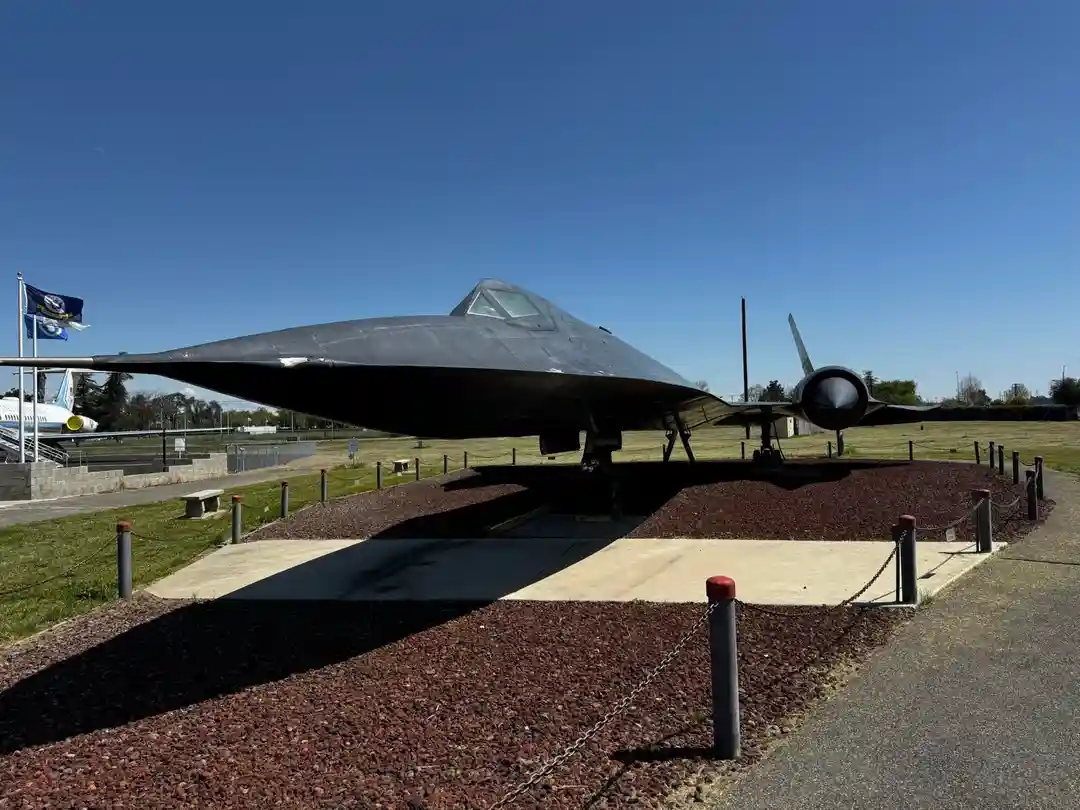
Up Close at the Museums: Anecdotes of Scale and Awe
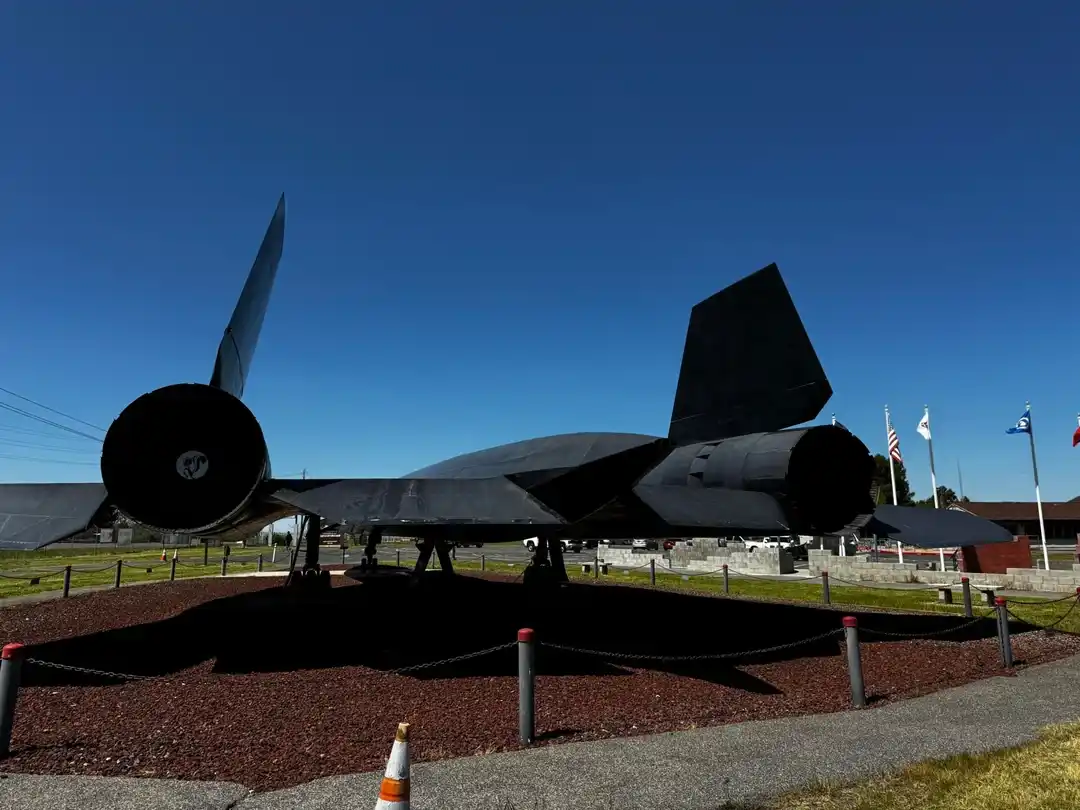
Seeing the SR-71 in person isn’t just a technical experience — it’s deeply visceral. At Beale Air Force Base, one visitor bumped their head on the engine cone, a small but telling reminder of how grounded this high-altitude beast really is. Another, standing at just 5′7″, reached up and touched the intake spike — an interaction that’s impossible to replicate through a screen.
Museum settings provide not only the physical presence of the aircraft, but also often include open cockpit days, like those at Udvar-Hazy, where visitors can immerse themselves in the analog heat of the Blackbird’s interior. The cockpit, crammed with dials, gauges, and tightly packed panels, tells a story of a bygone era — an era that didn’t rely on digital shortcuts. The speed indicator alone, reading well beyond Mach 3, grounds the imagination firmly in fact.
One enthusiast, Supercrown07, shared the intensity of heat radiating from the cockpit display — even decades after the aircraft’s retirement. It wasn’t just the engineering they remembered; it was the sensation of history wrapped in titanium.
Misjudging the Titans: When Expectations Collide with Reality
Even seasoned professionals have had their assumptions shattered. Wj333, who interned at Grumman’s Calverton plant, remembered massive airframes during their time on the shop floor — but the SR-71, viewed later at the Intrepid Museum in New York, struck them as comparatively modest. Another user, fwankie, had spent years working on E-2 Hawkeyes and F-18 Hornets. Naturally, they expected the SR-71 to tower above — yet, surprisingly, it did not.
This disconnect is not limited to the Blackbird. As TheodoreK2 pointed out, the B-17 Flying Fortress appeared almost comically tiny in person. Likewise, Izibella described the P-51 Mustang as “microscopic.” These aircraft have been mythologized so thoroughly that physical scale becomes a distorted echo of digital exaggeration.
The Technical Titan: Engineering Beyond Size
Make no mistake — physical size does not equate to capability. The SR-71 is a triumph of 1960s engineering. Designed by the Skunk Works team led by Clarence “Kelly” Johnson, it operated at altitudes above 85,000 feet and routinely cruised at speeds exceeding 2,200 mph. Despite its sleek appearance, it weighed roughly the same as a Boeing 737.
What truly made the SR-71 remarkable wasn’t just speed, but the materials and methods that birthed it. The aircraft was composed primarily of titanium, much of which had to be covertly sourced from the Soviet Union — the very country it was designed to surveil. There were no modern computers or CAD software. Every curve, every joint, every aerodynamic nuance was conceived and tested with analog tools and raw intellect.
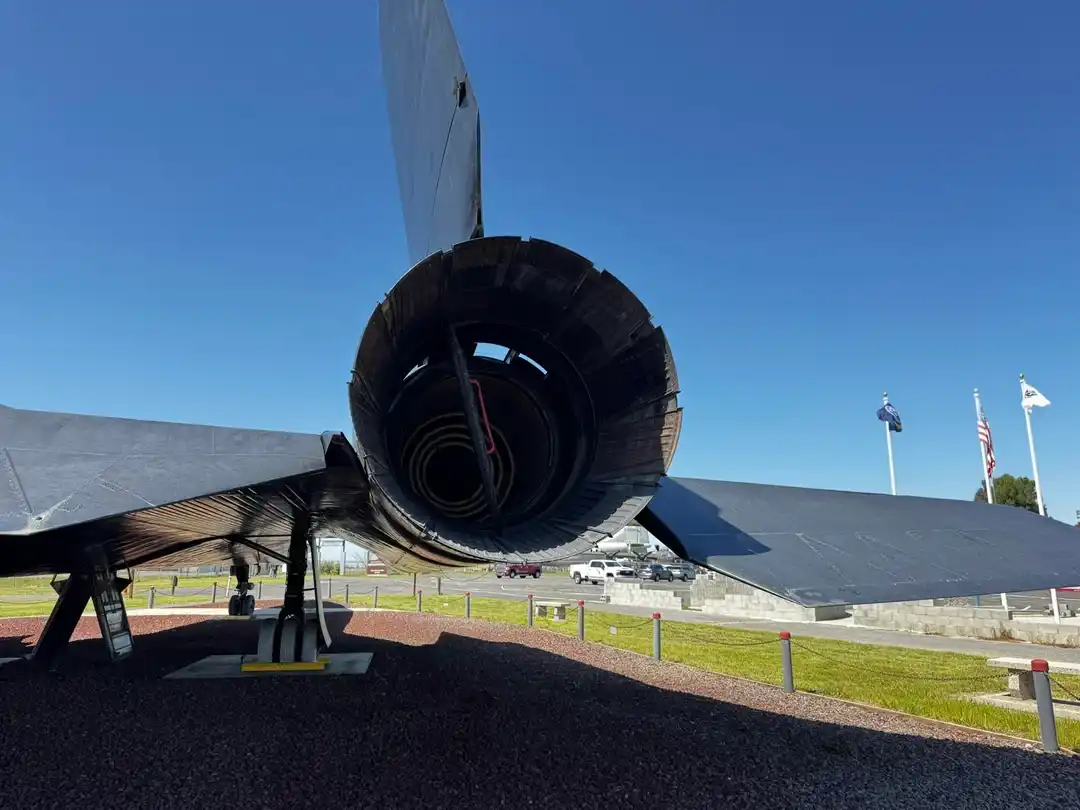
One cannot overstate the significance of this analog masterpiece. Its fuel expanded in flight, its panels gapped when cold, and its spikes retracted automatically depending on Mach number. These were not bugs — they were deliberate design features enabling performance still unmatched today.
Book of Secrets: Skunk Works and the Human Element
No serious discussion about the SR-71 is complete without referencing Skunk Works by Ben R. Rich, successor to Kelly Johnson. This insider account lays bare the psychological and technical trials involved in building an aircraft that essentially outran missiles. It underscores that size was never the point — survivability and stealth were.
The cockpit may be analog, but its legacy is digital. The SR-71 inspired generations of engineers, many of whom credit their career paths to a single childhood museum visit. It wasn’t the aircraft’s length that ignited passion — it was its capability.

The Final Verdict: A Marvel That Defies Its Footprint
Even after understanding the dimensions — 107 feet long, 55-foot wingspan, 18 feet high — the Blackbird doesn’t seem massive until you wrap yourself in its aura. And still, it feels smaller than expected. What amplifies its size is not the raw measurement, but the context: the thunderous roar of its Pratt & Whitney J58 engines, the way it sloughs off atmospheric drag at Mach 3, and how it routinely redefined the limits of what aircraft could be.
The aviation community agrees: to understand the SR-71, you must see it. Not just see it — stand beneath it, walk around it, breathe the cold smell of aged titanium. Digital renderings fall flat. It takes scale references — a person standing beside the nacelle, a child dwarfed beneath the tail — to even begin to grasp its dimensions.
Museums such as Castle AFB, Cosmosphere in Hutchinson, Kansas, and Smithsonian’s Udvar-Hazy Center continue to preserve that experience. For those who haven’t made the pilgrimage, they remain the only way to reconcile imagination with reality.
Final Thoughts: Beyond Metrics, Into Memory
In the end, the SR-71’s impact is not measured in wingspan or length. It is measured in awe — the breath held when first glimpsing its silhouette, the stillness of a museum floor broken only by whispered reverence, the photos taken with a sense of disbelief. It is a machine that flew higher, faster, and smarter than anything of its time — and though it may seem modest in size, it remains monumental in legacy.