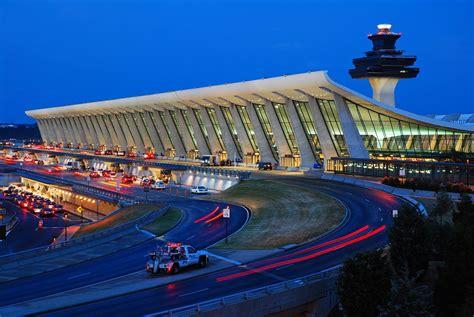
For decades, the gravitational center of transpacific aviation has leaned decisively toward the American West Coast. Geography made that inevitable. Flights from Tokyo, Seoul, Taipei, and Beijing arc across the Pacific and find Los Angeles, San Francisco, and Seattle waiting conveniently at the edge of the continent. It was efficient. It was logical. It became doctrine.
Yet aviation history has a habit of bending when economics, politics, and demographics align. That bend is now visible over the Mid-Atlantic. Washington, DC is emerging as the next big transpacific gateway, and the shift is not cosmetic. It is structural, strategic, and quietly transformative for how airlines design long-haul networks between Asia and the United States.
The rise of Washington Dulles International Airport (IAD) is not driven by geography alone. It is powered by something more durable: concentrated premium demand, global political gravity, alliance connectivity, and an economy dense with decision-makers who fly long-haul frequently—and often in the front cabin.
The Structural Advantage: Why Dulles Owns Intercontinental Growth in the Capital Region
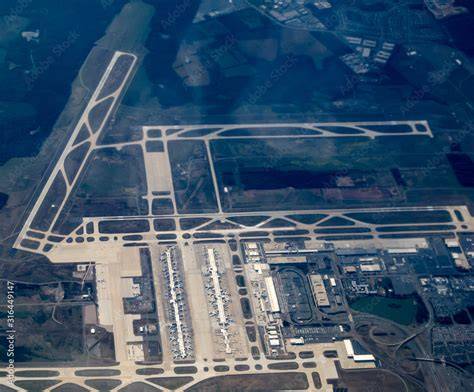
The Washington metropolitan area is served by multiple airports, but only one carries the infrastructure and regulatory freedom to dominate long-haul flying. Reagan National Airport (DCA) operates under the FAA’s perimeter rule, which restricts most nonstop flights to a limited range. That rule effectively blocks sustained intercontinental growth. The result is simple and powerful: IAD is the region’s true intercontinental workhorse.
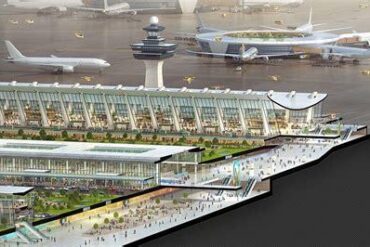
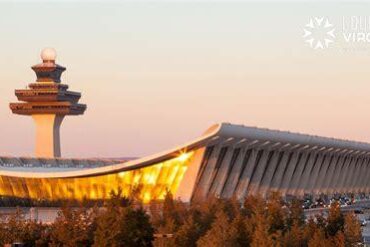
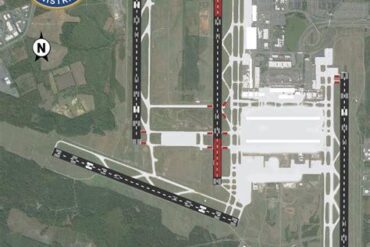
Located in Northern Virginia, west of downtown Washington, D.C., Dulles was purpose-built for scale. Long runways. Widebody gates. International processing capacity. Expansion headroom. These are not cosmetic features; they are competitive advantages in a market where aircraft like the Boeing 787 and Airbus A350 demand both runway length and terminal sophistication.
In 2024, more than 27 million passengers moved through Dulles, including a record 10.38 million international travelers. That figure matters. International passenger volume is the bloodstream of transpacific viability. Even more telling is the airport’s forward posture: expansion plans targeting 218 gates, positioning it to absorb sustained long-haul growth without operational bottlenecks.
Behind this scale sits another critical pillar: United Airlines. With roughly 220 daily departures across United and United Express, Dulles functions as one of the airline’s most strategically valuable hubs. In the international arena, United operates nonstop service from IAD to more than 30 global destinations, with strong coverage across Europe, Asia, and Latin America. That connectivity converts Washington from a point-to-point market into a network multiplier.
Washington’s Premium Demand Engine: Politics, Defense, Finance, Technology
Transpacific success is not about filling seats; it is about filling the right seats. The economic viability of 14- to 16-hour flights depends disproportionately on business class and premium economy demand. Washington, D.C., is engineered for exactly that.
The region is the seventh-largest metropolitan area in the United States, but its economic composition is what makes it exceptional. It is the epicenter of federal government travel, home to defense contractors, global consulting firms, multinational technology players, financial institutions, think tanks, and international organizations. More than 20 S&P 500 companies maintain headquarters in the broader region.
These are not price-sensitive leisure flows. These are time-sensitive, schedule-driven travelers who value nonstop service and are willing to pay for it. When airlines evaluate new long-haul routes, they search for durable premium demand—passengers who travel repeatedly, not just seasonally. Washington delivers that in density.
Layered on top of corporate demand is diplomacy. Embassies, delegations, multilateral institutions, and policy forums generate consistent traffic to Northeast Asia and beyond. Direct flights are not just convenient; they are strategically valuable.
Dulles’ Asia Network: Smaller Footprint, Strategic Weight
Compared to Los Angeles or San Francisco, Washington Dulles operates a leaner Asia portfolio. Yet its network punches above its weight because each route connects to a major Asian hub capable of distributing passengers onward.
Nonstop service to Tokyo Haneda (HND) is operated daily by both United Airlines and All Nippon Airways (ANA). That dual-carrier presence signals strength. Haneda is not only Tokyo’s preferred airport for business travel but also a premium-heavy route anchored in corporate and governmental demand.
Seoul Incheon (ICN) is served daily by Korean Air, linking Washington directly into one of Northeast Asia’s most powerful transfer hubs. From Incheon, passengers disperse across Japan, China, Southeast Asia, and Oceania with minimal friction.
Beijing Capital (PEK) remains connected via Air China, supporting diplomatic, governmental, and corporate flows that lean heavily toward nonstop preference.
What stands out is not the sheer number of routes, but their strategic density. Each link ties Washington to a major Asian gateway that amplifies connectivity across the region. Add United’s domestic feed, and Dulles becomes a powerful East Coast launchpad for transpacific traffic originating far beyond the Beltway.
EVA Air’s Taipei–Washington Bet: A Calculated Expansion
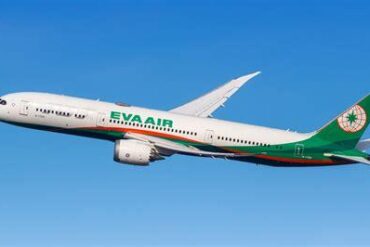
The clearest signal that Washington’s transpacific narrative is accelerating comes from EVA Air’s launch of nonstop service between Taipei Taoyuan (TPE) and Washington Dulles. Scheduled to begin June 26 with four weekly flights using the Boeing 787-9, this route is not opportunistic experimentation. It is a deliberate network play.
The 787-9 is optimized for long, thin routes—markets with strong premium demand but measured total volume. Its fuel efficiency lowers trip costs, while its three-cabin configuration allows airlines to capture high-yield passengers without sacrificing broader seat economics.
Starting at four weekly frequencies reflects discipline. It provides schedule utility for business travelers while limiting initial capacity risk. This is how modern long-haul markets are responsibly opened: calibrated frequency, alliance connectivity, and a premium-focused cabin strategy.
Taipei itself is a formidable hub. EVA Air’s network extends deep into Southeast Asia, Japan, South Korea, and mainland China. When paired with United’s feed at Dulles, the route does not merely connect two cities. It connects two ecosystems.
The Financial Logic: Why the Numbers Work
From a financial standpoint, Washington–Taipei is a compelling pairing. The Washington region’s economic profile skews toward sectors known for premium travel: government, defense, technology, and finance. These passengers disproportionately occupy business class and premium economy seats—the revenue backbone of ultra-long-haul operations.
At the same time, the route represents a competitive white space. No carrier previously linked Taipei and Washington nonstop. That absence creates pricing power. Time-sensitive travelers who previously connected via West Coast hubs or Tokyo now gain a direct alternative. Convenience commands a premium.
Cost discipline reinforces the opportunity. The 787-9’s efficiency reduces operating risk. A measured four-times-weekly launch tempers exposure while testing sustained demand. Connectivity on both ends multiplies addressable traffic well beyond local origin-and-destination flows.
This is not speculative optimism. It is network design rooted in alliance synergy and premium demand forecasting.
Beyond Geography: Why the East Coast Is Gaining Transpacific Momentum
The rise of Washington as a transpacific gateway reflects a broader industry shift. Airlines increasingly prioritize yield over sheer volume. West Coast hubs remain powerful, but they are also saturated, competitive, and often capacity-constrained.
The East Coast offers something different: access to dense corporate markets with fewer nonstop transpacific options. Flights may be longer, but modern aircraft have erased much of the operational penalty once associated with extended stage lengths.
The Boeing 787 and Airbus A350 families have rewritten route economics. Ultra-long-haul flying is no longer restricted to the largest coastal cities. It can now be sustained by markets with strong premium demand and reliable alliance feed. Washington fits that profile with precision.
Moreover, global diplomacy is not migrating westward. The political and economic gravity of Washington remains constant. Airlines that link Asia directly to that center gain strategic relevance beyond ticket sales. They become embedded in the rhythms of policy, trade, and defense.
The India Question and Future Growth Vectors
One notable gap remains: nonstop service to India. Air India’s suspension of Delhi–Washington flights in September 2025 left an opening in a market with clear diplomatic and diaspora ties. As fleet modernization progresses across global carriers, Washington stands as a logical candidate for renewed India connectivity.
Future growth may also include deeper Southeast Asian access or expanded frequency to existing Northeast Asian hubs. The infrastructure at Dulles can absorb it. The demand profile can justify it. The alliance networks can distribute it.
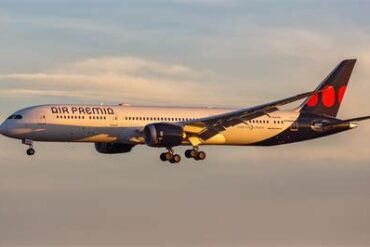
Air Premia’s planned four-times-weekly Seoul service beginning April 2026 further signals confidence in the market’s depth. When multiple carriers independently converge on a long-haul strategy, it suggests durable fundamentals rather than fleeting enthusiasm.
Washington’s Strategic Position in the Next Era of Transpacific Aviation
Washington, D.C., is not replacing Los Angeles or San Francisco. It is redefining the architecture of transpacific connectivity. Instead of a single coastal funnel, airlines are building a distributed network of high-yield gateways. Dulles is central to that evolution.
The airport’s strengths are layered:
- Structural freedom from perimeter constraints.
- A dominant Star Alliance hub anchored by United Airlines.
- Concentrated premium demand from government, defense, and technology sectors.
- Record international passenger growth.
- Expandable infrastructure ready for additional widebody operations.
Each factor alone would be helpful. Combined, they create strategic inevitability.
Airlines are not chasing headlines; they are chasing margin, resilience, and long-term relevance. Washington offers all three. As modern aircraft continue to stretch the boundaries of efficient long-haul flying, the Mid-Atlantic capital stands increasingly aligned with the economics of the Pacific.
The quiet rewriting of transpacific norms is already underway. Washington Dulles is no longer simply the airport serving America’s capital. It is becoming one of the most consequential bridges between Asia and the political and economic heart of the United States.