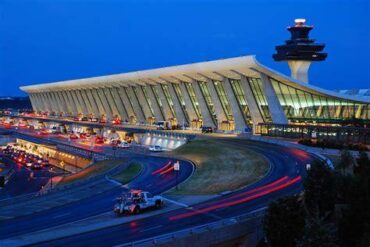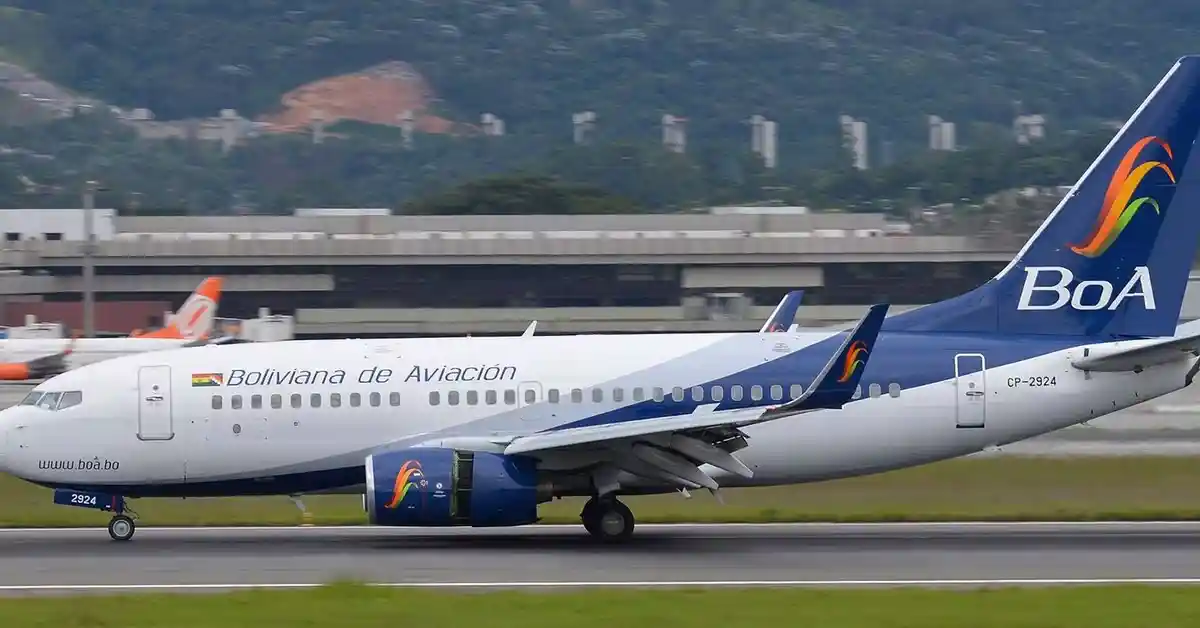
The aviation world has witnessed some remarkable long-haul operations, but few are as grueling—or as baffling—as Boliviana de Aviación’s (BoA) newly launched service from Santa Cruz, Bolivia to Washington Dulles International Airport. On paper, it’s a bold expansion of Bolivia’s US network. In practice, it might just be the world’s most punishing Boeing 737 route.
A New Chapter for Bolivia’s Flag Carrier
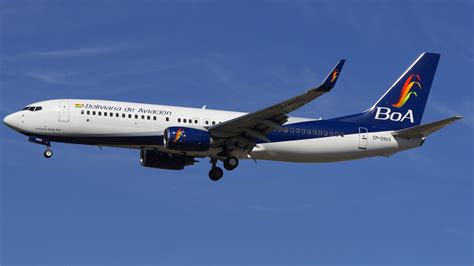
On December 16, BoA commenced a route that defies both convention and comfort. The Santa Cruz–Panama City–Washington Dulles flight spans an arduous 3,655 nautical miles (6,769 kilometers) in each direction. It’s the kind of distance typically handled by widebody jets—aircraft designed for comfort on long journeys. Instead, BoA entrusted this route to its aging Boeing 737-800, configured entirely in economy class.
This isn’t BoA’s first foray into the U.S. market—it’s just their boldest. Previously, the airline operated only to Miami, a route backed by significantly higher demand. Now, with the Dulles addition, BoA is seeking to tap into the under-served but scattered Bolivian diaspora in the Greater Washington D.C. area, where over 35,000 Bolivians reside. When including Virginia and Maryland, estimates swell to over 150,000.
A Marathon on Narrow Wings: The Route in Detail
BoA’s route to Washington is not direct. Instead, it’s broken into two legs:
- Santa Cruz to Panama City
- Panama City to Washington Dulles
With a brief 40-minute stop in Panama City, the entire journey stretches beyond ten hours of block time. The schedule is sparse—only twice a week, on Tuesdays and Thursdays, and only during the festive season through January 8. Originally slated to operate into February, the route has already seen multiple schedule revisions, a likely result of underwhelming bookings.
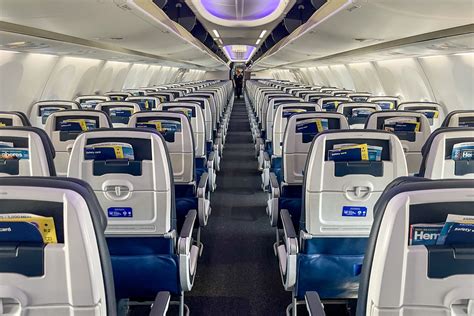
This is not a route designed with business travelers or luxury seekers in mind. There’s no seat-back entertainment, no in-flight Wi-Fi, and no premium cabin. Just 168 tightly packed economy seats, many on a plane pushing 17 years of age. The aircraft in question, CP-3204, exemplifies BoA’s fleet condition: functional but far from modern.
A $820 Gamble: Cost vs. Comfort
While the journey may sound punishing, the pricing tries to soften the blow. BoA’s round-trip fares start at around $820, which is roughly $150 cheaper than competitors like Copa Airlines. That price might be palatable for a once-a-year trip home for the holidays, but it comes at a physical cost: sitting in a cramped cabin for a long-haul stretch with zero onboard amenities.
Even long-haul low-cost carriers—often criticized for their spartan service—usually operate widebodies with slightly better comfort and optional extras. BoA’s use of a narrowbody 737-800 for such an extensive route makes this service an extreme outlier in the industry.
Demand Doesn’t Match the Distance
The question lingers: Why launch this route? Booking data for the year leading up to October 2025 paints a stark picture. Just 24,000 round-trip passengers flew between D.C. and Santa Cruz, making it the second-largest U.S. market to Santa Cruz—but a distant second to Miami’s 84,000 passengers.
BoA hopes to scoop up connecting passengers heading to other South American destinations, leveraging Santa Cruz as a regional hub. But with limited weekly frequencies and a high-discomfort flight, this strategy seems optimistic at best. The route feels more symbolic—a gesture of connection rather than a commercial slam dunk.
Following LAB’s Turbulent Footsteps
For aviation historians, there’s déjà vu here. BoA’s predecessor, the now-defunct Lloyd Aéreo Boliviano (LAB), also operated flights to Washington Dulles—its last service ended in 2008. LAB struggled to make the route viable, reportedly filling only 62% of its seats.
BoA seems to be retracing that path, albeit cautiously. With only eight round-trip flights planned over the holiday period and 2,688 total seats to sell, the stakes are low. However, if this winter proves disappointing, BoA’s tentative plans to resume the service in June for the peak summer may be scrapped or radically revised.
What It’s Like Onboard: A Test of Endurance
Imagine this: You board a dated 737 in the tropical heat of Santa Cruz, anticipating a two-leg journey that will have you land in the winter chill of Washington D.C. more than ten hours later. There’s no touchscreen to distract you, no Wi-Fi to keep you connected. Just a seat, a tray table, and a long horizon.
Passengers accustomed to legacy carriers on similar-length flights might find BoA’s offering shockingly austere. Airlines like United, American, or even Avianca often provide entertainment systems, charging ports, and at least the option of more frequent flights or connections.
The BoA experience strips travel down to its bones. If you didn’t pack a tablet, a battery bank, and several hours of downloaded entertainment, you’re out of luck. It’s aviation at its most utilitarian.
Strategic or Symbolic? The Route’s Future Hangs in the Balance
BoA’s Washington gamble is as much about identity as it is about profit. For the Bolivian community abroad, this flight offers a direct bridge home. For the airline, it represents ambition—a desire to punch above its weight in a world of megacarriers and hub-centric strategies.
But symbolism doesn’t pay fuel bills. And flying a narrowbody on ultra-long-haul routes—with no frills, sparse frequencies, and unproven demand—is a strategy fraught with risk. The Panama stopover adds operational complexity without significantly boosting appeal. Unless load factors improve or ancillary revenue increases, BoA may be forced to pull the plug, just as it quietly curtailed its winter schedule.
Final Thoughts: A Route Only the Bold Will Board
In the world of aviation, certain flights earn legendary status not for their luxury, but for their sheer unlikeliness. BoA’s Santa Cruz–Dulles service is one of them. It’s a flight that challenges industry norms, stretches aircraft design intentions, and tests passenger patience.
Yet, there’s something undeniably compelling about it. In an age where air travel is increasingly homogenized, BoA’s long-haul 737 flight is authentic, raw, and unforgettable—for better or worse. Whether it succeeds or fades into obscurity, it will be remembered by those bold enough to endure it.