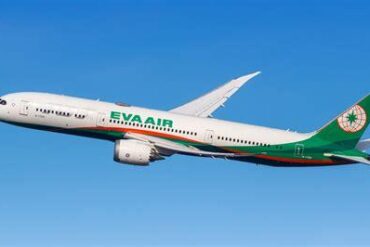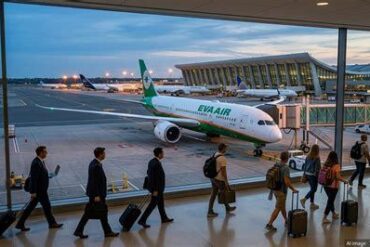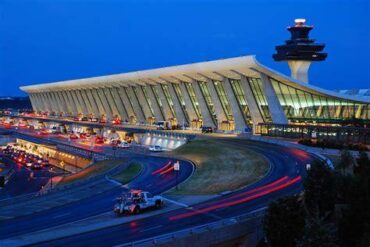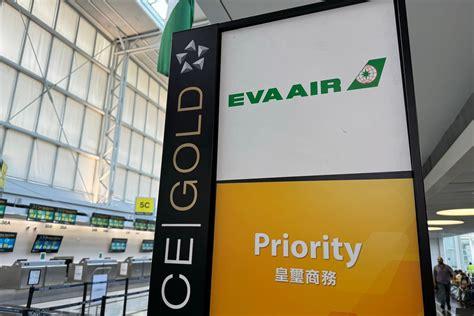
EVA Air is set to expand its North American footprint with the launch of a new nonstop route between Taipei Taoyuan International Airport (TPE) and Washington Dulles International Airport (IAD) beginning June 26, 2026. The four-times-weekly service will mark the Taiwanese carrier’s 10th destination in North America and its first-ever link to the U.S. capital region, positioning EVA Air strategically in one of the world’s most politically and economically influential corridors.
The new service will operate as flight BR4 from Taipei, departing at 7:30PM and arriving in Washington at 10:30PM local time after a scheduled block time of 15 hours. The return sector, BR3, will depart Washington at 1:50AM and arrive in Taipei at 5:45AM the following day, with a block time of 15 hours and 55 minutes. Eastbound flights will operate on Mondays, Wednesdays, Fridays, and Saturdays, while westbound departures from Washington are scheduled for Tuesdays, Thursdays, Saturdays, and Sundays.
At 7,864 miles, the Taipei–Washington sector will rank among EVA Air’s longest routes. While Houston remains marginally farther in pure distance, operational realities—including the continued closure of Russian airspace—have made the Washington route one of the carrier’s most time-intensive long-haul operations. The detours required for transpacific flights underscore the complexity of modern route planning in a geopolitically fragmented aviation landscape.
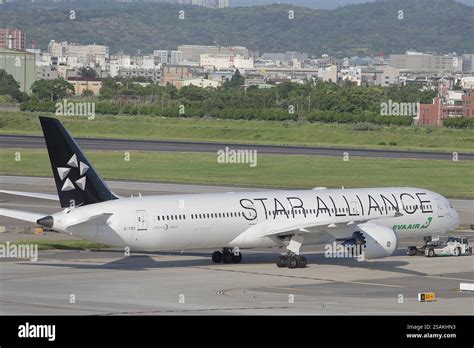
Fleet and Cabin Configuration: Boeing 787-9 on Ultra-Long Haul
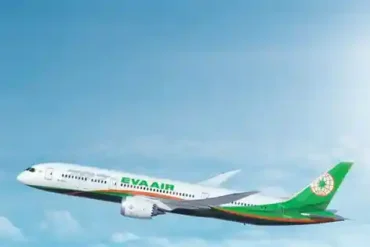
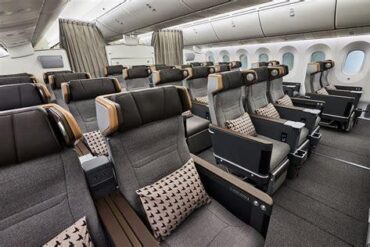
EVA Air will deploy its three-cabin Boeing 787-9 Dreamliner on the route, configured with 278 seats. The layout includes 26 business class seats, 28 premium economy seats, and 224 economy class seats. This aircraft choice balances range efficiency with passenger comfort, leveraging the 787’s composite structure, improved cabin humidity, and lower cabin altitude to mitigate long-haul fatigue.
The business class cabin, while not featuring the most cutting-edge hard product in the industry, is widely recognized for its exceptional soft product. EVA Air has built a reputation for meticulous service, refined catering, premium beverage selections, and high-quality amenity kits. For transpacific travelers—particularly those connecting onward within Asia—the consistency of service often weighs as heavily as seat design. Premium economy, meanwhile, remains a critical revenue driver on long-haul routes, appealing to both corporate travelers with tighter budgets and leisure passengers seeking added comfort.
Strategic Importance of Washington Dulles
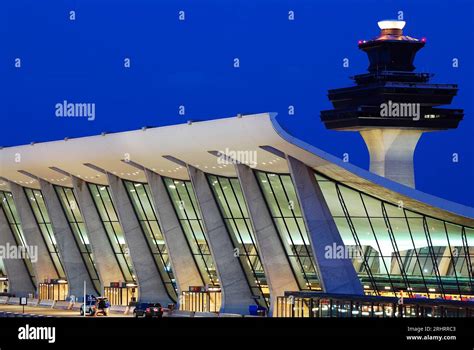
Washington Dulles represents more than just another dot on EVA Air’s route map. The airport serves as a major hub for United Airlines, a fellow member of the Star Alliance, enabling seamless onward connections throughout the United States and beyond. This alliance synergy is central to the route’s viability. Approximately 60% of EVA Air’s North America passengers are connecting travelers from other Asian destinations, and Washington is expected to mirror that transit-heavy profile.
The Washington metropolitan area presents a distinctive demand mix. Government institutions, defense contractors, financial organizations, and technology firms generate consistent premium traffic. In addition, the region is home to roughly 320,000 Asian residents, including approximately 14,000 Taiwanese nationals. While that Taiwanese population alone would not typically justify an ultra-long-haul route, it forms part of a broader demand ecosystem that includes diplomatic travel, academic exchange, and multinational corporate movement.
Competitive Dynamics in Taiwanese Aviation
EVA Air’s move into Washington also reflects intensifying competition among Taiwan’s international carriers. Alongside EVA Air, both China Airlines and Starlux Airlines have aggressively expanded their long-haul networks in recent years. Securing underserved North American markets before competitors do can deliver long-term strategic advantage, especially when alliance partnerships are involved.
By leveraging its Star Alliance membership and United Airlines connectivity, EVA Air is particularly well positioned for success at Dulles. The route not only strengthens the airline’s U.S. presence—joining Chicago, Dallas, Houston, Los Angeles, New York JFK, San Francisco, Seattle, Toronto, and Vancouver—but also reinforces Taipei’s role as a transpacific hub linking North America with Southeast Asia and beyond.
As bookings open for June 2026 departures, the Taipei–Washington Dulles route stands as a calculated expansion rather than a speculative gamble. It reflects alliance coordination, network optimization, and competitive positioning in a market where long-haul aviation is as much about geopolitical navigation as it is about distance.