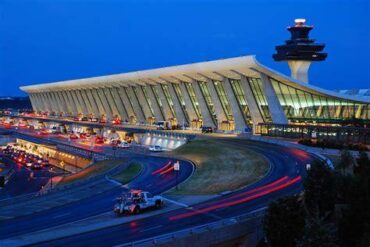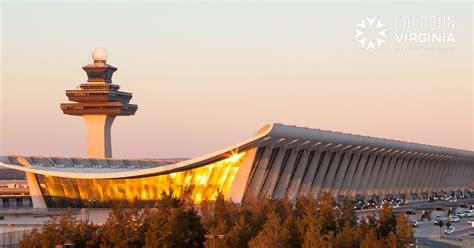
Washington Dulles International Airport (IAD) had a milestone week that underscored its growing prominence in the global aviation network. Traditionally a business-focused gateway for political power players and international diplomats, the airport has now been thrust into the global spotlight for a very different reason: leisure connectivity expansion driven by United Airlines. The Chicago-based legacy carrier took another major leap in its international route expansion, with two brand-new transatlantic services launched in the same week, marking a turning point not only for the airline but also for the airport’s role in global travel.
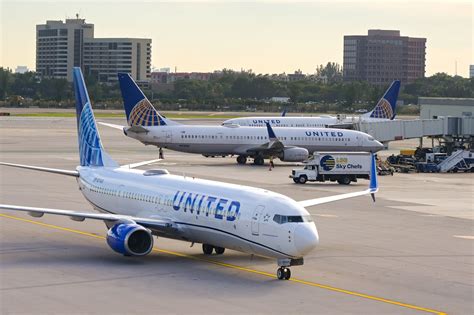
United Airlines Powers Dulles’ Leap into Leisure Travel
While United Airlines has long been the dominant presence at IAD, its focus has recently shifted from merely serving high-frequency business routes to opening up a rich variety of seasonal leisure routes. The past week saw the launch of new nonstop flights to Nice Côte d’Azur Airport (NCE) and Venice Marco Polo Airport (VCE), both of which are marquee European summer destinations.
The shift signals a broader strategic evolution for United. While the airline has consistently maintained solid transatlantic traffic via Newark and Chicago, using Washington Dulles as a jump-off point for Mediterranean and European tourism destinations enhances its hub diversity and route resilience.
Opening the French Riviera: Washington to Nice
On May 23, United Airlines launched its inaugural seasonal service between IAD and Nice, operating four times weekly. With flight UA242 departing in the evenings and arriving the next morning, the carrier is aligning this service with the sleep cycles of transatlantic travelers, a move that adds comfort and convenience. This strategic launch isn’t just symbolic—it’s substantial. According to Gregoire Dutoit, United’s Country Sales Manager for France, this route provides a 30% capacity boost between the U.S. and Nice on United’s network.
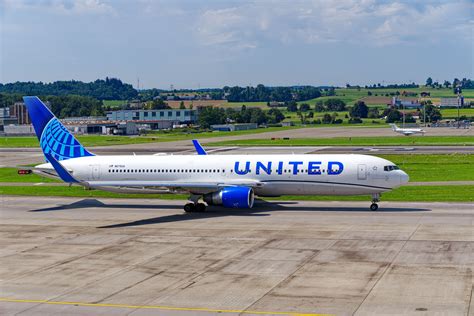
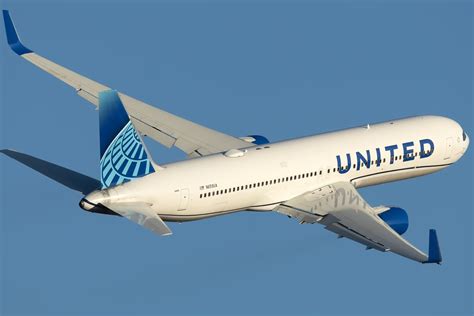
The route uses the Boeing 767-300ER, a workhorse for United’s mid-range international flights. Equipped with lie-flat Polaris business seats and upgraded premium economy and economy cabins, the aircraft supports both luxury vacationers and price-conscious adventurers.
The new Nice service complements United’s existing transatlantic offerings to France, including year-round flights from Paris Charles de Gaulle (CDG) to Newark, Washington D.C., Chicago, and San Francisco. The result is a French-American air corridor that is more robust than ever.
A Romantic Gateway: United’s Venice Service Begins
Simultaneously, United Airlines also began its new nonstop flights to Venice (VCE)—a historic city that holds irresistible appeal for North American tourists. The Washington-Venice service is the only direct connection between the two cities, operating daily throughout the summer season before switching to a four-times-weekly model in October. The return flight structure mirrors that of the Nice route, with red-eye departures and daylight returns.
What’s notable here is the extended commitment United is making to Venice overall. While the Washington route will go seasonal, the Newark–Venice service is being extended deeper into the calendar year, operating from late March through mid-December—seven weeks longer than usual. The implication is clear: United sees a sustained demand curve for travel to Italy, and it is adjusting its schedules to maximize that opportunity.
Dulles as a Launchpad: United’s Global Vision Comes to Life
These two launches are not isolated incidents but part of a sweeping global expansion strategy by United Airlines. This summer, the airline is executing its largest international expansion in company history, with eight new transatlantic routes. Of these, two launched from Dulles—a testament to the airport’s growing importance in the Star Alliance carrier’s global roadmap.
From Newark, United is launching service to unserved destinations like Nuuk (Greenland), Palermo (Italy), Bilbao (Spain), Faro (Portugal), and Madeira Island (Portugal). From Dulles, a new connection to Dakar, Senegal will further push the airport into the realm of pan-continental relevance. By the end of the season, United will offer more than 760 weekly transatlantic flights, the largest international schedule ever offered by any U.S.-based airline.
United’s East Meets West: New Fifth-Freedom Ambitions
The expansion isn’t limited to Europe and Africa. United’s transpacific strategy also includes new fifth-freedom routes using Tokyo Narita (NRT) as a mini-hub. These routes include services to Ulaanbaatar, Mongolia and Kaohsiung, Taiwan—both markets previously untouched by U.S. carriers. Additionally, a service to Koror, Palau underscores United’s aggressive push into niche international markets.
The inclusion of these unique destinations reflects a strategic pivot. United is moving beyond volume-driven international service and shifting toward a destination exclusivity model, where being the only U.S. carrier serving a location becomes a competitive asset.
The Hub Network Strategy That Powers It All
Under CEO Scott Kirby, United’s route development strategy is driven by a belief that network depth and diversity are its true competitive advantages. Delta focuses on brand. American has concentrated on partnerships. United, by contrast, is betting big on being everywhere first—even if that means blazing a trail into lesser-known international airports.
This belief is being reinforced with every schedule change. The airline has moved up the start of seasonal European routes such as Athens, Dubrovnik, Barcelona, and Palma de Mallorca, stretching the profitable season for these destinations. Aircraft upgrades have also been introduced on high-demand routes, with widebodies replacing narrowbodies and higher-capacity jets serving key long-haul services.
Reaping the Rewards of Aggressive Internationalism
The results of this bold expansion speak for themselves. United Airlines now serves 147 international destinations, with over 800 daily flights operated globally. A full 40 of these international destinations are unique to United among U.S. carriers. This means customers are now more likely to find exotic routes operated solely by United—creating a value proposition no other legacy carrier can match.
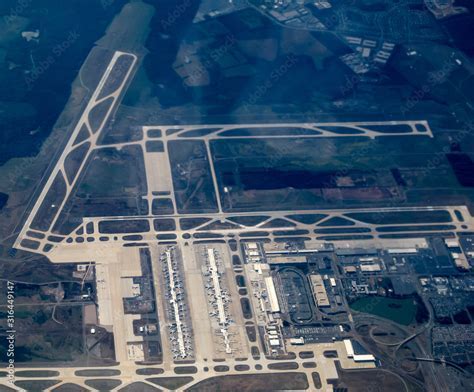
For Washington Dulles International Airport, this is an inflection point. No longer just a facilitator of high-level governmental travel, IAD is emerging as a serious player in the global leisure travel landscape. And United Airlines is the catalyst.
Final Thoughts: A Big Week With Big Implications
The simultaneous launch of nonstop routes to Nice and Venice was not just a symbolic move. It was a calculated, strategic decision that aligns with United’s broader ambitions to become the most globally connected airline in the U.S. commercial aviation market.
For travelers in the Washington metropolitan area, the result is clear: more destinations, better aircraft, and a deeper array of choices. For United Airlines, these launches prove that its network-first strategy is more than just talk—it’s a new chapter in how global air travel is being defined.
And for Washington Dulles International Airport, last week was more than just big—it was transformational.