Washington Dulles International Airport has long stood as the capital region’s primary international gateway, yet its future now sits at the center of federal deliberation. The White House is weighing a potential redesign of Dulles, elevating what was once a regional infrastructure issue into a national conversation about competitiveness, symbolism, and modernization. Positioned roughly 25 miles west of downtown Washington, Dulles is not merely an airport. It is the front door to the United States for diplomats, heads of state, business leaders, and millions of global travelers each year.
The timing of this renewed focus is no coincidence. Dulles recently recorded a record-breaking 29 million passengers in 2025, a 6.4% increase year-over-year, even as nearby Reagan National experienced a decline. The growth underscores the airport’s strategic importance in handling long-haul and international traffic. Yet rising demand has also exposed structural and operational constraints that many believe can no longer be addressed through incremental upgrades.
At the heart of the discussion is a senior-level meeting expected to shape the next phase of evaluation. While no formal blueprint or funding package has been unveiled, federal involvement signals that the conversation has moved beyond cosmetic improvements. The administration is examining whether Dulles can be adapted for the next generation of aviation—or whether it requires a comprehensive architectural and operational transformation.
Why Washington Dulles International Airport Faces Redesign Pressure
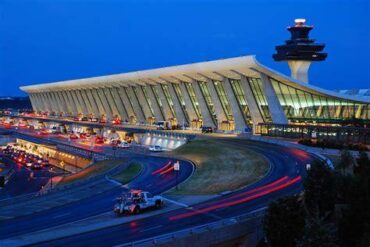
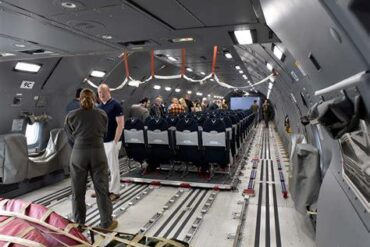
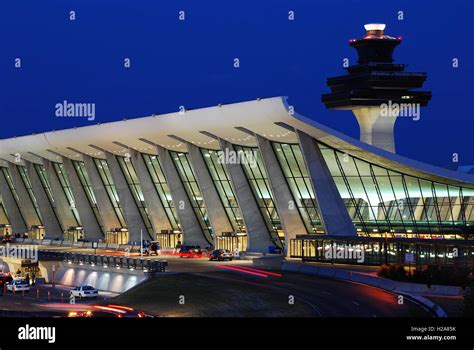
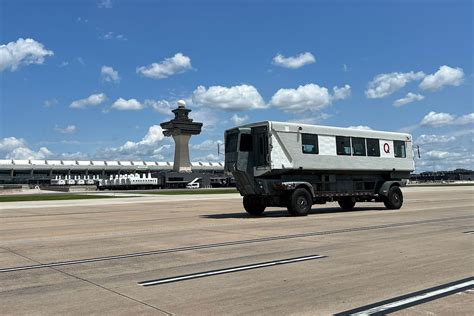
Dulles opened in 1962 as a bold vision of the future. Designed by architect Eero Saarinen, its sweeping roofline remains one of the most recognizable airport terminals in the world. At the time, the concept was revolutionary: aircraft parked away from the main terminal, and passengers were transported via mobile lounges directly to their planes. The idea promised flexibility and elegance.
Six decades later, that innovation feels increasingly strained. Mobile lounges—once futuristic—are now frequently cited as inefficient bottlenecks. Passenger flow between concourses can feel fragmented, and navigating the airport often requires more time and patience than at competing global hubs. While expansions have been added over the years, the core design was never intended to manage today’s volume of widebody jets, digital security infrastructure, and seamless connection demands.
International comparisons have sharpened the critique. Airports in Doha, Singapore, Istanbul, and Munich have invested heavily in expansive terminals, integrated transit systems, and digitally optimized passenger experiences. These facilities are designed around intuitive movement and high-capacity efficiency. By contrast, Dulles still operates within a mid-20th-century framework that struggles to align with 21st-century expectations.
The White House’s Strategic Calculation
Federal interest in Dulles extends beyond passenger comfort. The airport serves as a logistical artery for government travel, diplomatic arrivals, and international delegations. For visiting officials, Dulles is often the first physical encounter with American infrastructure. That symbolic dimension matters.
Recent remarks from national leadership have emphasized that while Dulles possesses “a great building,” it does not function as a great airport. This distinction captures the policy dilemma. The Saarinen terminal is architecturally iconic, yet operational performance is increasingly under scrutiny. Any redesign effort must reconcile preservation of a historic landmark with the need for modern efficiency.
The White House is reportedly exploring whether substantial modernization of core terminal infrastructure can meet projected demand or whether a more fundamental redesign is necessary. That evaluation will likely involve federal agencies, the Metropolitan Washington Airports Authority, airline partners, and potentially private investors. The scale of coordination alone suggests that if changes move forward, they will be transformative rather than incremental.
Infrastructure Gaps And Passenger Experience Challenges
Despite periodic upgrades, Dulles has faced persistent criticism regarding passenger circulation, aging concourses, and limited amenity space. International travelers often encounter congestion at security checkpoints and customs processing areas during peak periods. As global passenger volumes continue to rebound and expand, these pressure points become more pronounced.
The airport is currently developing a 435,000-square-foot, 14-gate concourse designed primarily for United Airlines operations. While this addition represents meaningful investment, it addresses only part of a broader infrastructure puzzle. Modern hub airports are engineered around seamless interconnectivity—rail links, high-capacity corridors, expansive retail zones, and adaptable gate configurations for next-generation aircraft.
Dulles’ layout, by contrast, was conceived in an era when air travel volumes were dramatically lower. Retrofitting such infrastructure is inherently complex. Security requirements have evolved significantly since the early 2000s, and any redesign must integrate stringent federal protocols without creating additional friction for passengers.
Economic Stakes For Northern Virginia And Beyond
The implications of a Dulles redesign extend well beyond aviation aesthetics. Northern Virginia’s economy is deeply intertwined with the airport’s performance. Corporate headquarters, technology firms, defense contractors, and international organizations rely on efficient global connectivity. As long-haul networks expand, hub competitiveness becomes an economic multiplier.
Airlines also evaluate infrastructure quality when allocating routes. A modernized Dulles could strengthen its position as a premier East Coast transatlantic and transpacific gateway. Enhanced gate capacity, improved passenger throughput, and upgraded cargo facilities would increase operational flexibility. In a competitive aviation landscape, even marginal efficiency gains can influence route planning decisions.
At the national level, infrastructure modernization aligns with broader policy goals. Across the United States, airports in New York and Los Angeles have embarked on sweeping redevelopment projects. These initiatives have redefined expectations of what American aviation infrastructure can deliver. If Dulles follows a similar trajectory, it could signal a wider federal push to upgrade aging transportation assets.
Balancing Preservation With Transformation
One of the most delicate aspects of any Dulles redesign lies in preserving its architectural heritage. The Saarinen terminal is not simply functional space; it is a cultural landmark. Demolition or drastic alteration would likely spark debate among preservationists and architects.
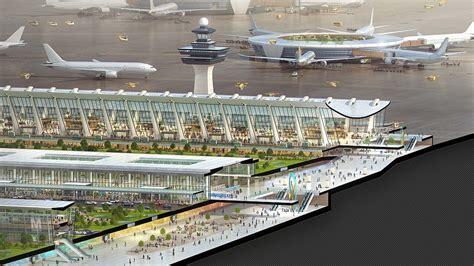
Yet preservation without modernization risks stagnation. A viable path forward may involve integrating new terminal structures behind or adjacent to the historic facade, preserving the iconic silhouette while expanding operational capacity. Such hybrid solutions have been implemented at other legacy airports, where historic terminals coexist with contemporary expansions.
Construction sequencing presents another formidable challenge. Dulles cannot pause operations during redevelopment. Any large-scale project would unfold in carefully staged phases, potentially over a decade or more. Maintaining airline schedules, government travel logistics, and international connectivity during construction will require meticulous planning.
What A Redesigned Dulles Could Look Like
If momentum builds, a redesigned Washington Dulles International Airport could feature centralized security screening, expanded customs facilities, direct rail-integrated connections between concourses, and flexible gate configurations capable of accommodating larger, next-generation aircraft. Passenger amenities would likely evolve toward open concourse designs with greater natural light, diversified retail offerings, and integrated digital navigation systems.
The long-term objective would not merely be aesthetic improvement but operational reinvention. Efficient passenger movement reduces delays, enhances airline profitability, and strengthens global perception. For travelers, that translates into shorter connection times, clearer wayfinding, and a more cohesive airport journey.
While no definitive plan has emerged, the significance of White House involvement cannot be understated. Federal engagement elevates Dulles from a regional infrastructure concern to a matter of national competitiveness. The anticipated 2026 discussions are expected to influence the direction of modernization efforts, even if immediate construction timelines remain undefined.
Washington Dulles International Airport stands at a crossroads between legacy and reinvention. Its iconic architecture reflects a moment of mid-century optimism, yet its operational framework strains under contemporary demands. A redesign, if realized, would mark not just a construction project but a recalibration of how America presents itself to the world. In an era where infrastructure doubles as diplomacy, the future of Dulles carries weight far beyond the runway.