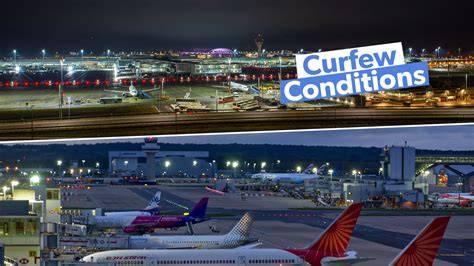
Jet aircraft have grown quieter, more fuel-efficient, and more precisely flown, yet they remain unmistakably loud at the two moments residents notice most: the surge of thrust on takeoff and the low, dragging approach into landing. Around major international hubs, where aircraft can arrive and depart at a near-constant pace for eighteen or twenty hours a day, that noise becomes a daily intrusion into the lives of the people living beneath the flight paths. Airports have responded with noise abatement procedures, preferred runway rotations, and steeper climb profiles, but for a handful of the world’s most prominent gateways, quieter flying has not been enough. Those airports impose outright night flight curfews, closing their runways for several hours so that nearby communities can sleep. The consequences ripple far beyond noise: curfews shape route networks, dictate aircraft choices, bend airline timetables for entire continents, and occasionally decide whether a new service can exist at all.
What makes curfews so consequential is that they are rarely absolute. Most operate as a hard ban on scheduled operations during a core overnight window, surrounded by shoulder periods in which a limited number of movements are tolerated, often at reduced capacity or with surcharges attached. Some airports stop short of a formal ban and instead enforce movement caps and noise quotas that have roughly the same effect. Either way, the rules compress flying into a narrower slice of the day, and airlines must build their schedules around that constraint rather than around passenger demand alone. The five airports below illustrate how differently a curfew can be written and how profoundly each version alters the way airlines plan long-haul flying.
London Heathrow (LHR): Night Quotas Instead of a Hard Curfew
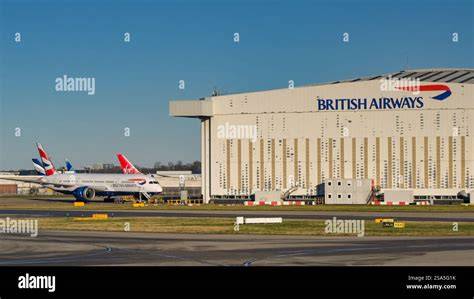
London Heathrow is the airport most often discussed in curfew debates, and yet it does not operate a conventional ban. Instead, overnight flying is tightly rationed by the UK government, which allows roughly 5,800 aircraft movements a year during the night quota period. Departures are not scheduled between about 10:45 pm and 6:00 am, though arrivals are not formally prohibited. In practice, the arrival picture is just as restrictive: Heathrow has no scheduled arrivals between roughly 10:55 pm and 4:50 am, while a voluntary arrangement discourages flights from landing before 4:30 am when they are scheduled to touch down between 4:30 am and 6:00 am. Healthrow’s night flights are granted by season, and unused summer movements can be carried into winter, adding an unusual layer of flexibility to an otherwise rigid system. Scheduled overnight freight is effectively absent, which helps explain why the hub is so heavily oriented toward passenger widebodies and early-morning long-haul arrivals. The overall effect is an airport that functions as a night-closed facility in spirit while retaining a narrow legal channel for red-eye services.
Heathrow’s constraints matter more than most because the airport is already one of the most capacity-starved in the world. It operates just two runways, making it one of the busiest two-runway airports anywhere, and the whole facility is slot-restricted, meaning every takeoff and landing requires a coordinated time allocation. The night restrictions narrow that pool of precious slots even further, leaving airlines with almost no room to launch or expand service. Competition for Heathrow access is fierce, access is expensive, and many of the carriers that arrive overnight are flying long-haul routes whose block times leave no alternative but to reach London in the small hours. The result is that Heathrow’s night regime does not merely limit noise; it defines which markets can be served and which airlines can realistically serve them.
Zurich Airport (ZRH): A Clean Closure From 11:30 pm to 6:00 am
Zurich is Switzerland’s largest airport and the primary hub of SWISS, with more than 60 airlines linking the airport to well over 200 destinations across Europe, North America, Asia, and Africa. It is predominantly a Star Alliance gateway thanks to SWISS, itself part of the Lufthansa Group, though SkyTeam and oneworld carriers maintain meaningful presences, and a long list of independent airlines fills out the network. That breadth of connectivity sits on top of one of the cleanest curfews in Europe: Zurich officially does not operate between 11:30 pm and 6:00 am. In normal practice, the last flights of the day are scheduled to arrive or depart before 11:00 pm, leaving a 30-minute grace period to absorb late running. When the airfield is closed, no operations are permitted at all, and exceptions require special approval from the authorities.
Zurich’s regime goes further than a simple closure. Certain aircraft types face cutoffs earlier than the general 11:30 pm deadline because of their noise characteristics, and the final movements of the day attract surcharges designed to discourage airlines from pushing flights toward the boundary. The airport’s physical layout, three runways feeding three airside piers, Terminal A, B, and E, connected to a central airside building and a groundside complex containing check-in, shopping, parking, and public transport, shows how a compact hub can be engineered to move people quickly within a very short operating day. The curfew does limit scheduling flexibility, but because most carriers have little interest in launching flights after midnight, Zurich has preserved an unusually strong long-haul network, with early-morning departures timed to connect through the hub rather than to launch red-eye services to Asia or Africa.
Frankfurt Airport (FRA): Fully Closed Between 11:00 pm and 5:00 am
Frankfurt, the main hub of Lufthansa and one of Europe’s largest and busiest airports, is entirely closed to scheduled traffic between 11:00 pm and 5:00 am. No flights may operate in or out during those hours. The hours immediately around the core ban are almost as restricted, with 10:00 pm to 11:00 pm and 5:00 am to 6:00 am operating as heavily constrained shoulder periods in which capacity falls well below daytime levels. The only permitted exceptions are genuine emergencies, disaster relief flights, and medical aid missions. Given that Lufthansa alone connects Frankfurt with more than 150 destinations, and the full carrier mix pushes the airport past 250 destinations worldwide, the closure forces an entire Star Alliance network to be staged around a five-hour nightly silence.
The operational response is visible in the airport’s infrastructure. Frankfurt has four runways, three of them parallel to one another; one of the parallel strips is used mainly for arrivals, while a separate runway handles departures. The configuration allows the airport to concentrate traffic during the shoulder periods without crossing paths, maximizing throughput in the short window before the ban takes effect. The terminal complex spans about 144 gates across three terminals, including the new Terminal 3 that opened in April of this year, and it serves a constellation of alliance and independent carriers that all share the same nightly deadline. Frankfurt is busy enough during the daytime that unrestricted night flying would substantially raise its noise footprint, and the closure is essentially a trade the region made decades ago and has kept ever since. The cost is paid by long-haul carriers that would otherwise operate late-night departures to North America or Asia, and by regional feeders that must complete their rotations before the clock runs out.
Orange County John Wayne Airport (SNA): America’s Strictest Small-Hub Curfew
John Wayne Airport in Orange County occupies a different category entirely. It is not a major international hub but a spoke airport with intense, high-yield demand to destinations across North America, constrained by facilities that were never designed for the traffic the region generates. The airport’s short runway and the required steep climb angle make it a demanding environment for flight crews and aircraft performance alike, and its noise abatement procedures are among the most publicized in the United States. The centerpiece is one of the strictest nightly curfews of any US airport: departures are prohibited from 10:00 pm to 7:00 am, while arrivals are banned from 11:00 pm to 7:00 am. On Sundays, the restrictions extend until 8:00 am.
Orange County’s rules are enforced rigidly, with limited exceptions only for genuine emergencies or delays outside an airline’s control. Commercial aircraft use a single runway of just 5,700 feet, forcing powerful takeoffs followed by the airport’s signature steep climb, a departure profile that residents and pilots alike recognize immediately. The main building houses three airside terminals and 22 gates, and Terminal C includes a Federal Inspection Station that enables non-precleared international arrivals, served by carriers such as Aeromexico, Air Canada, and WestJet. What makes SNA instructive is that its curfew is not a minor scheduling irritant but a hard limit on the airport’s daily life: early-morning departures and late-evening arrivals cluster aggressively against the boundaries, and any disruption after the cutoff ripples into the following day with no ability to recover overnight.
Sydney Kingsford Smith (SYD): A Curfew Driving the Creation of a New Airport
Sydney Kingsford Smith is Australia’s busiest airport and the primary hub of Qantas. More than 50 airlines connect Sydney with roughly 100 destinations across Asia, Africa, North America, and South America, and the airport is slot-restricted, meaning capacity is managed rather than purely demand-driven. On top of that, the airport generally does not permit takeoffs or landings between 11:00 pm and 6:00 am. Shoulder periods between 11:00 pm and midnight and between 5:00 am and 6:00 am allow a limited number of flights, and exceptions are made for emergency aircraft, law enforcement, and aeromedical services. Combined with slot controls, the curfew makes growth for new or existing carriers close to impossible, and it has been cited repeatedly in the long-running case for a second gateway.
That second gateway now exists. Western Sydney International (Nancy Bird Walton) Airport (WSI) has opened to passenger flights and, crucially, operates without a curfew. For airlines that want to serve Sydney overnight, WSI offers the option that Kingsford Smith cannot. Singapore Airlines is among the carriers whose plans illustrate the shift, with new services to WSI departing Sydney for Singapore after the Sydney curfew begins, converting an overnight restriction into an opportunity. The lack of a curfew at WSI is expected to attract more carriers as Kingsford Smith remains at capacity, turning the curfew from a scheduling annoyance into a structural force that is redrawing the map of commercial aviation in New South Wales.
Why Night Curfews End Up Shaping Entire Airline Networks
The common thread across all five airports is that a curfew never affects only the flights operating within the closed window. Because long-haul aircraft must be positioned for their next rotation, a restriction on late-evening departures often forces a carrier to accelerate inbound flights, re-sequence connections, or forgo certain city pairs altogether. Airlines respond by building early-morning banks so that aircraft arrive just after the airport reopens, by scheduling red-eye arrivals that land seconds before the cutoff, and by favoring aircraft with lower noise footprints so they can use the most restrictive slots. The curfew also disciplines the wider network: a Sydney service must be timed to lock into a global schedule that reconciles with partners and onward connections, and a Frankfurt rotation must account for the five-hour shutdown in the middle of the night.
Curfews also create their own regulatory micro-systems. Heathrow’s quota trading and seasonal carry-over, Zurich’s surcharges on final movements, Frankfurt’s legal exceptions for emergencies and medical flights, Orange County’s Sunday extension, and Sydney’s limited shoulder movements all reflect the same underlying tension: communities want sleep, airlines want access, and regulators mediate with clocks, caps, and cash. The airports that manage this tension well remain among the most connected in the world; the ones that do not end up pushing flights elsewhere, exactly as Sydney is now doing with its new curfew-free airport to the west.
For travellers, the practical consequences are subtle but real. A late-booked flight into Zurich may simply not exist beyond 11:00 pm, and a delayed connection at Frankfurt can leave an aircraft stranded until 5:00 am. A red-eye into Orange County must be timed to touch down before the cutoff, and Sydney-bound carriers face a blackout that is now reshaping their route planning. In each case, the curfew is not background noise in the industry’s operations manual; it is a governing rule that determines when planes fly, which routes survive, and where the future of air travel will be built.