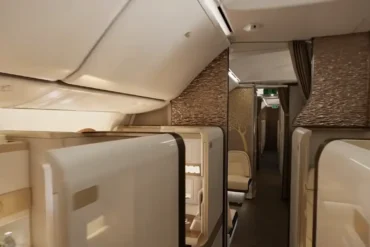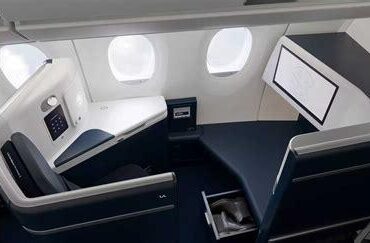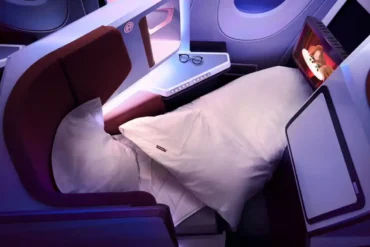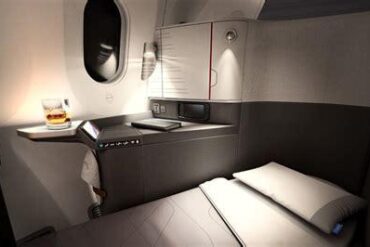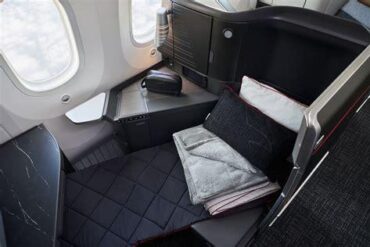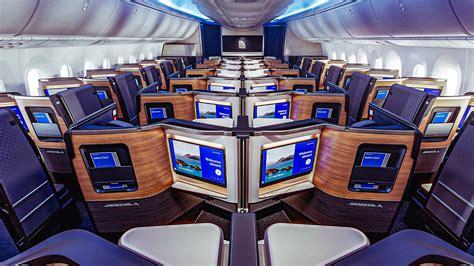
For years, airlines have competed to create the ultimate business class experience, investing billions of dollars into premium cabins designed to resemble luxury hotels in the sky. Modern long-haul aircraft now feature fully flat beds, personal entertainment systems, wireless charging, direct aisle access, high privacy walls, and sliding suite doors that promise passengers a more exclusive journey.
However, travelers stepping aboard some of the newest aircraft from major carriers have encountered an unexpected situation. The expensive privacy doors surrounding their premium seats may be installed but permanently locked open. In some cases, entire business class suites cannot even be purchased, despite being physically present inside brand-new aircraft.
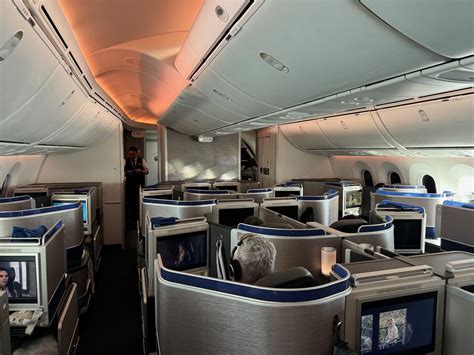
This unusual situation is not caused by manufacturing failures, missing components, or airlines attempting to reduce passenger comfort. Instead, it represents a complicated conflict between rapid cabin innovation and aviation safety certification requirements. As airlines transform traditional business class seats into private personal spaces, regulators must ensure these new designs meet decades-old safety standards originally created for much simpler cabin layouts.
The challenge affects several major airlines, including United Airlines, American Airlines, Lufthansa, KLM Royal Dutch Airlines, and JetBlue Airways, each developing different solutions while waiting for regulators to approve the latest generation of premium seating technology.
Why Privacy Doors Became a Major Aviation Certification Challenge
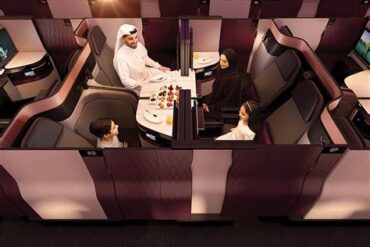
The rise of enclosed business class suites accelerated after the introduction of Qatar Airways’s revolutionary Qsuite in 2017. The product changed passenger expectations by bringing first-class-style privacy into business class, creating a new industry standard that competitors quickly attempted to match.
Today, a premium long-haul cabin is no longer simply a collection of comfortable seats. Airlines increasingly design suites with sliding doors, tall partitions, large screens, storage compartments, dining tables, and adjustable privacy features. These additions create a more personal experience, but they also introduce engineering questions that previous generations of aircraft interiors never had to answer.
Traditional business class cabins were relatively open. Passengers could easily be seen by cabin crew, emergency exits were visually accessible, and there were fewer physical barriers between seats and aisles. Modern suites are different. A passenger sitting behind a closed door is effectively inside a small private compartment.
For regulators such as the Federal Aviation Administration (FAA) and the European Union Aviation Safety Agency (EASA), the question is not whether passengers enjoy privacy. The question is whether that privacy can exist without affecting emergency evacuation, crash protection, fire safety, airflow, and crew visibility.
A simple sliding door may appear to be just a lightweight piece of cabin equipment, but from a certification perspective it becomes another moving structure inside an aircraft. Every hinge, locking mechanism, and panel must be evaluated.
The Hidden Engineering Behind a Business Class Suite Approval
One of the most important parts of aircraft seat certification is dynamic crash testing. Premium seats must successfully pass the well-known 16g certification test, which simulates the forces experienced during a survivable accident.
During these tests, engineers analyze how seat structures behave under extreme forces and how passengers would move during impact. Modern business class layouts create additional challenges because many seats are arranged at angles rather than facing directly forward.
A traditional economy seat has a predictable crash position. A modern business class suite may include angled seating, extended foot compartments, privacy walls, and additional structures surrounding the passenger. Engineers must demonstrate that these features do not increase injury risks.
The privacy door creates another layer of complexity. Regulators must confirm that passengers can quickly leave their seats during an emergency and that cabin crew can maintain visibility throughout the aircraft.
Additional concerns include:
- Emergency evacuation speed during smoke or fire situations
- Passenger visibility during abnormal events
- Rapid decompression effects on enclosed spaces
- Cabin airflow and smoke movement
- Door operation reliability and mechanical failure risks
A luxury feature that appears simple to travelers can require years of testing, computer modeling, physical certification trials, and regulatory review.
Why Airlines Are Delivering Aircraft Before Suite Doors Are Approved
The aviation industry operates under a difficult balance. Airlines want to introduce new aircraft quickly because every delayed aircraft represents lost revenue, while regulators must ensure every passenger feature meets strict safety requirements.
This has created a temporary solution: airlines can operate aircraft with advanced business class suites while certain features remain unavailable.
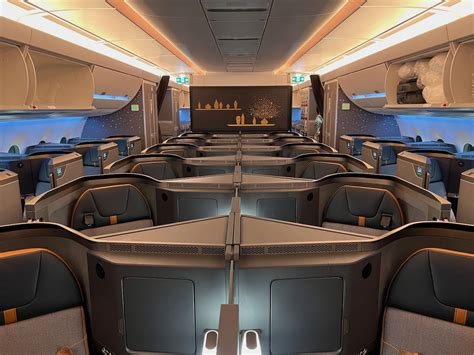
United Airlines provides one of the clearest examples. The carrier introduced its new Boeing 787-9 Dreamliner “Elevated” cabin featuring redesigned Polaris suites with privacy doors. However, until final certification approval, those doors remain locked in the open position.
Passengers can enjoy the new seat design, larger personal space, and upgraded cabin features, but the defining privacy element cannot yet be used.
This approach allows United to avoid keeping completed aircraft on the ground while waiting for a single cabin component to receive regulatory approval.
American Airlines experienced a similar situation with some of its newer aircraft interiors. The airline temporarily operated business class suites without fully functional privacy doors while certification processes continued.
For airlines, this compromise is financially important. A modern wide-body aircraft can cost hundreds of millions of dollars, and keeping a finished aircraft parked because of an interior certification issue creates significant losses.
Lufthansa And KLM Face Bigger Premium Cabin Restrictions
Some airlines have faced even greater challenges because their new business class products depend heavily on suite certification.
Lufthansa’s highly anticipated Allegris cabin represents one of the biggest premium upgrades in the airline’s history. The new design introduces several different business class seat types, including suites with privacy doors and enhanced personal space.
However, certification delays forced Lufthansa to limit availability on some aircraft. Instead of selling the entire business class cabin, the airline restricted bookings while waiting for regulatory approval.
On certain Boeing 787-9 aircraft, only a small portion of the installed business class seats could be sold, leaving many completed suites unavailable despite passengers physically seeing them onboard.
This creates a unique problem for airlines. Premium cabins generate some of the highest revenue per passenger, especially on long-haul routes. Empty business class suites represent lost income that cannot easily be recovered.
KLM faces a similar situation with its upcoming Airbus A350-900 aircraft. The airline planned to introduce a new World Business Class cabin featuring modern suite designs, but certification requirements have affected when those premium seats can be fully marketed.
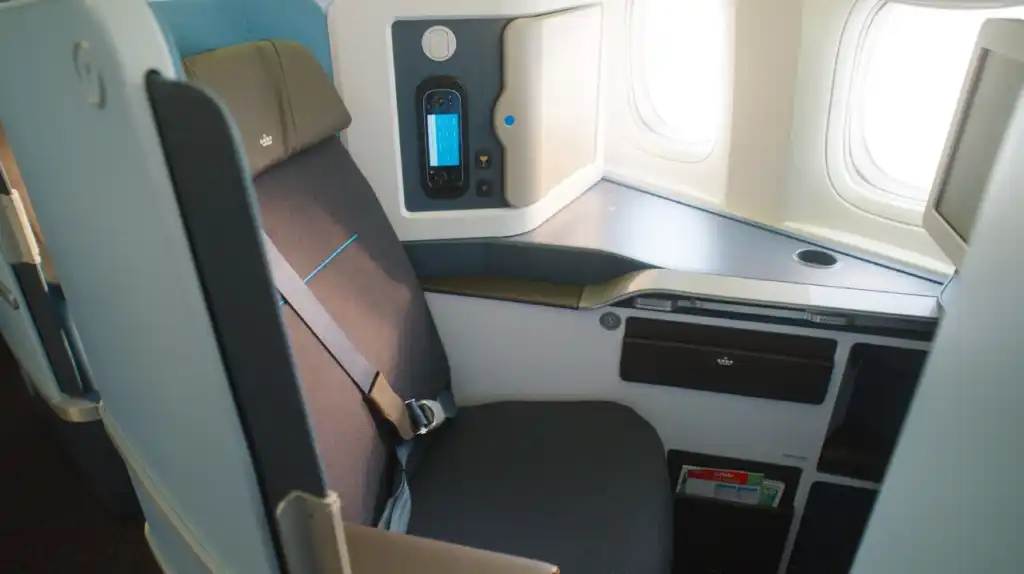
The issue demonstrates how premium aviation has changed. Airlines are no longer competing only with aircraft size or flight schedules. They are competing through personalized experiences, and every new feature must pass increasingly complex safety evaluations.
Why JetBlue Took A Different Approach With Business Class Doors
While some airlines are waiting for approvals, others have questioned whether privacy doors are worth the additional operational complexity.
JetBlue Airways offers an interesting example. The airline’s Mint business class product introduced premium seating with privacy features, but JetBlue eventually chose to disable some suite doors on certain aircraft.
The reason was not passenger demand. Instead, it involved the operational requirements associated with managing enclosed suites.
Even after certification approval, airline procedures generally require suite doors to remain open during taxi, takeoff, and landing. Cabin crews must ensure compliance, and some aircraft configurations may require additional staffing.
For JetBlue, the economics did not always justify the extra operational burden. The airline determined that maintaining full door functionality could create additional costs that outweighed the passenger benefit on certain aircraft.
This decision highlights a larger reality: innovation in aviation is not only about creating impressive technology. Airlines must also consider staffing, maintenance, reliability, and long-term operating costs.
The Future Of Airline Business Class Will Depend On Smarter Certification
The current privacy door issue reflects a broader transformation happening throughout commercial aviation. Premium cabins are becoming increasingly sophisticated, but certification systems designed decades ago must adapt to these new realities.
Future business class products will likely include even more advanced features, including larger personal spaces, movable partitions, enhanced digital systems, and more customizable environments. Each improvement will require regulators to carefully evaluate how it affects aircraft safety.
Rather than slowing innovation, certification authorities are attempting to create a safer path for new cabin technology. Airlines and seat manufacturers are now working more closely with regulators earlier in the design process to identify potential issues before aircraft enter service.
This cooperation should reduce future delays, but certification will always remain a major part of aviation development.
The irony is that one of the smallest features in a modern aircraft cabin has become one of the most complicated. A lightweight sliding privacy door represents the future of premium travel, but until regulations fully catch up with cabin innovation, passengers may continue boarding the world’s newest business class suites only to find one surprising instruction: keep the door open.