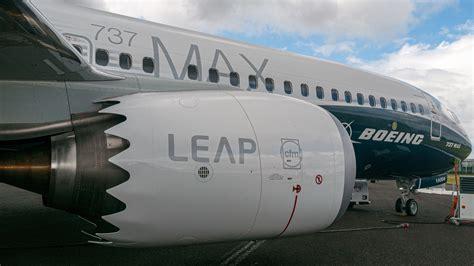
The Boeing 737 MAX stands as a testament to modern aerospace engineering, embodying a tightly integrated system where airframe and engine co-evolved to deliver both performance and commercial viability. Central to this design is the CFM LEAP-1B engine, a powerplant whose dimensions, performance envelope, and aerodynamic compatibility make it the only viable engine for the MAX. Any deviation from this exclusive pairing would dismantle the very framework upon which the aircraft was conceived.
The Legacy Design Challenge of the 737 MAX
The 737 MAX is not a clean-sheet aircraft. It is the latest evolutionary step in a lineage dating back to 1967. That design heritage imposed a fundamental limitation: low ground clearance. Early 737s were designed to sit close to the tarmac to enable easy servicing at airports without jetways or specialized ground equipment. But as engine technology progressed, larger turbofans with higher bypass ratios became the industry standard for fuel efficiency—posing a serious challenge for Boeing.
Enter the LEAP-1B. CFM International tailored this engine specifically to fit under the wing of the MAX. Its approximately 69-inch fan diameter, down from the LEAP-1A’s 78 inches used on the Airbus A320neo, represents a radical reengineering to make a modern turbofan work within an aging design envelope. Boeing didn’t just shrink the fan. It also raised the nose landing gear, shifted the engine mounting point forward, and reshaped the nacelle—an intricate ballet of mechanical redesigns aimed at restoring aerodynamic harmony.
Certification Constraints That Define Possibility
Switching engines on a modern jetliner is not like swapping batteries in a remote control. Regulatory certification is one of the most stringent barriers in aviation, and the 737 MAX was certified as a derivative of the 737NG. This approach enabled Boeing to expedite regulatory approval, but it came with a trade-off: any substantial redesign, especially involving flight-critical systems, would necessitate a full, costly, and time-consuming recertification.
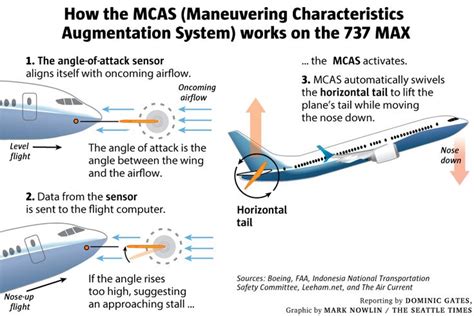
Changing engines alters the aircraft’s entire performance profile—thrust curve, airflow over the wings, stall behavior, and pitch stability. That’s precisely why the MCAS system was developed: to counteract pitch-up tendencies at high angles of attack due to the forward-mounted, heavier LEAP-1B. Any alternate engine, whether the Pratt & Whitney GTF or even a larger LEAP variant, would shift the aerodynamic forces enough to invalidate the MAX’s current certification.
The Economics of Engine Exclusivity
From a business standpoint, Boeing’s decision to go with a single engine type wasn’t just about fitting within physical and regulatory boundaries—it was also about streamlining production, maintenance, and operations. Manufacturing consistency reduces assembly costs. Training airline technicians on a single engine lowers human error. Spare parts logistics become simpler, inventory leaner, and repair timelines shorter. Airlines, too, benefit from predictable fuel burn and maintenance planning.
CFM’s global maintenance network and the LEAP-1B’s operational reliability gave airlines the confidence to commit. American Airlines signed a 20-year maintenance agreement for over 400 LEAP-1Bs. Allegiant Air ordered up to 200 engines, banking on the engine’s long-term stability and support.
Competing Engines: Not a Fit for the MAX
The Pratt & Whitney GTF and LEAP-1A engines are engineering marvels in their own right. But both are too large, too heavy, or aerodynamically incompatible with the 737 MAX. The GTF’s 81-inch fan, gearbox complexity, and weight would require an entirely new wing box, pylon, and gear redesign. The LEAP-1A, although of the same engine family, exceeds the spatial constraints defined by the MAX’s landing gear.
Such structural changes would shift the aircraft’s center of gravity, alter its stall characteristics, and demand a reimagining of systems like MCAS. In essence, any other engine would transform the MAX into a new aircraft, invalidating the streamlined, cost-effective derivative strategy Boeing pursued.
The Airlines’ Stake in the Status Quo
Airlines have shown little interest in alternate engines for the MAX. The LEAP-1B offers up to 15% better fuel efficiency compared to earlier CFM56 engines, along with a 50% reduction in NOₓ emissions. These gains are not just technical—they directly affect bottom lines, carbon strategies, and long-haul viability. Maintaining fleet commonality also allows airlines to standardize pilot training and simulator programs, further driving down costs.
Maintenance, Repair, and Overhaul (MRO) organizations are likewise optimized around the LEAP-1B. MTU Aero Engines highlights how uniformity accelerates turnaround times, simplifies tooling, and stabilizes service contracts. A dual-engine strategy would disrupt this finely-tuned ecosystem for marginal or uncertain gains.
Technical Trade-Offs and Future Prospects
No engine is flawless. The LEAP-1B has had reported issues related to bird strike vulnerability and anti-ice system overheating. But these concerns do not justify abandoning it. They are being addressed within the framework of continuous product support and incremental design improvements, not wholesale system replacement.
Should Boeing ever wish to explore alternate powerplants, it will do so with a new aircraft family, unburdened by the 737’s low-slung legacy. That aircraft will likely feature taller gear, larger nacelles, and potentially new propulsion systems, possibly hybrid-electric or hydrogen. But the MAX is not that aircraft, and as long as it remains in production, the LEAP-1B is not just the best fit—it is the only feasible fit.
Final Analysis: Engine and Airframe as One
The 737 MAX and the CFM LEAP-1B are inseparable. From the initial concept phase, every structural, aerodynamic, regulatory, and commercial decision revolved around this engine-airframe pairing. Alternatives may offer theoretical benefits, but they fall apart when subjected to the real-world constraints of geometry, certification, and cost.
The story of the MAX isn’t just about a jet—it’s about the engineering symbiosis that defines modern aviation. And in that story, the LEAP-1B isn’t an option. It is the keystone.