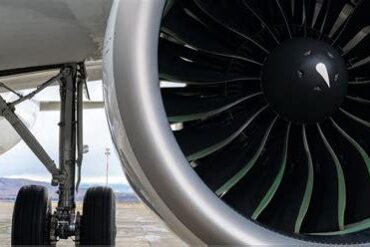
The Boeing 737 MAX stands as a symbol of evolutionary design restraint in commercial aviation—a jetliner modernized for 21st-century economics while shackled to its mid-20th-century architecture. At the heart of this story lies a strategic and engineering decision that shaped the propulsion path of the MAX: Pratt & Whitney did not develop a geared turbofan (GTF) engine for the aircraft. This article explores the reasons behind that decision, dissecting engineering constraints, business relationships, and the diverging philosophies of engine manufacturers.
A Legacy Airframe With Modern Aspirations
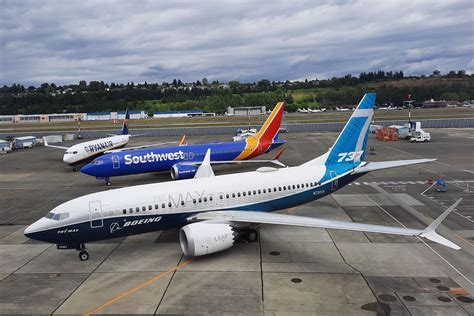
When Boeing reimagined the 737 as the MAX, it faced an architectural paradox. The original 737, which first flew in 1967, was a short-haul jet designed to operate out of modest airports, hence its low-slung fuselage and minimal ground clearance. Fast forward over five decades, and this constraint proved to be a formidable engineering hurdle.
Despite significant upgrades through the ‘Classic’ and ‘Next Generation’ variants, the 737’s basic fuselage, wing-body integration, and landing gear configuration remained largely unchanged. This meant any modern engine installed on the aircraft had to conform to tight ground clearance limits.
Why Size Matters: The Geared Turbofan Dilemma
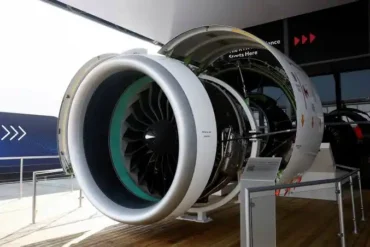
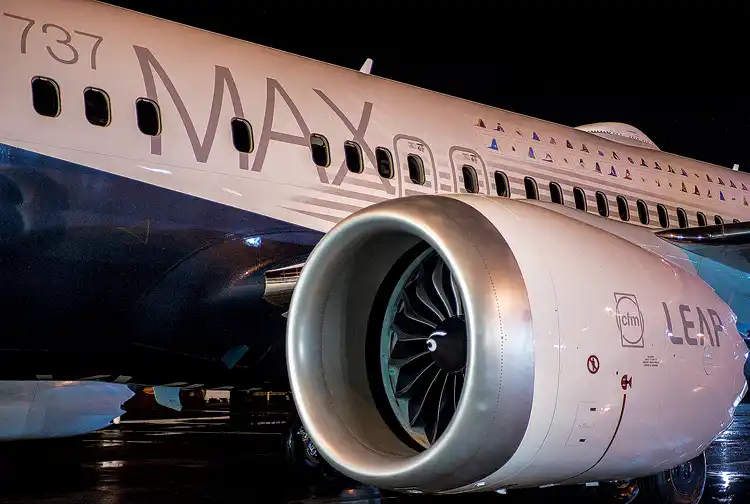
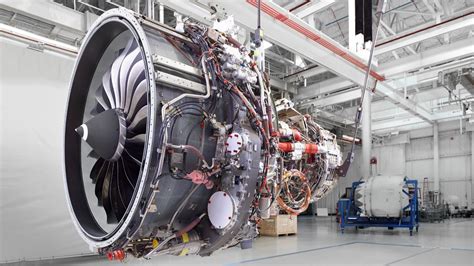
The Pratt & Whitney Geared Turbofan PW1100G was never in serious contention for the 737 MAX for one key reason: physical incompatibility. The GTF, while revolutionary in design, is also massive. With an 81-inch fan diameter, it simply could not be accommodated beneath the low-wing configuration of the 737 without major structural redesign.
By contrast, CFM International’s LEAP-1B—the sole engine for the 737 MAX—has a 69.4-inch fan and was specifically engineered to squeeze into the aircraft’s constrained geometry. Even with the LEAP, Boeing had to extend the MAX’s nose landing gear by eight inches and shift the engine position forward and upward to avoid ground strikes.
The physical dimensions of the GTF, coupled with its fan-drive gearbox, also translate to a heavier engine. This weight penalty, if imposed on the already range-constrained 737 MAX, would compromise its economics and performance envelope.
An Evolution in Aerodynamics and Software
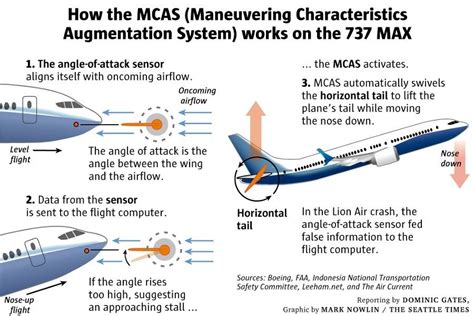
The repositioning of the LEAP-1B engines on the MAX introduced new aerodynamic dynamics, notably a greater pitch-up moment during high thrust. This, in turn, led to the development of the Maneuvering Characteristics Augmentation System (MCAS)—software designed to preserve flight characteristics similar to earlier 737 generations and reduce pilot training costs.
Installing a larger, heavier GTF engine would have exacerbated these pitch tendencies, likely requiring even more complex aerodynamic and control law interventions. Such redesigns would break cockpit commonality with older 737 models—something Boeing sought to avoid at all costs.
Contrasting Engineering Philosophies
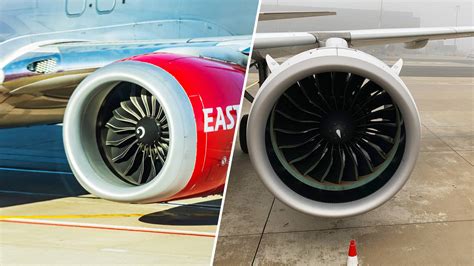
CFM and Pratt & Whitney approached next-gen engine design from opposite corners of the innovation ring. CFM’s LEAP-1B is a direct-drive engine optimized through thermal efficiency, relying on exotic materials like Ceramic Matrix Composites and 3D-woven carbon fiber blades to endure higher operating temperatures and pressures.
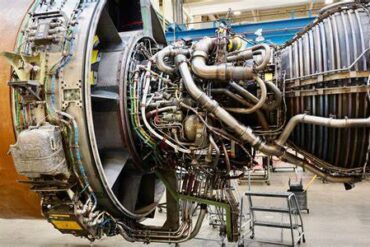
Meanwhile, the GTF PW1100G decouples the low-pressure fan and high-pressure turbine through a planetary gear system, allowing each to operate at its most efficient speed. This setup enables greater propulsive efficiency by pushing more air at slower speeds, a technique that enhances fuel burn rates, especially over long distances.
However, the GTF’s advanced gearbox system adds complexity, volume, and maintenance considerations that Boeing deemed incompatible with the 737 MAX’s physical and operational profile.
Ground Clearance: The Final Bottleneck
What may seem like a mundane engineering detail—ground clearance—is in fact the cornerstone of this entire divergence. The 737, unlike newer airframes such as the Airbus A320 or A220, was never intended to carry such massive, high-bypass engines.
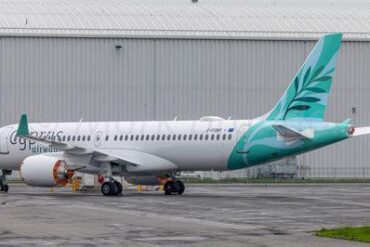
While the A320neo could easily adopt the GTF thanks to its higher-mounted wings and taller landing gear, the 737 MAX had to make do with flattened nacelles and tightly packaged components. There was no practical way to mount the GTF on a 737 without an extensive redesign that would turn the MAX into an entirely new aircraft category.
Durability vs. Efficiency: The Reliability Factor
Even if the GTF could physically fit, operational reliability would remain a significant concern. As of late 2025, the GTF has faced widespread durability issues, grounding over 600 aircraft worldwide. A rare defect in powdered metal used in turbine components introduced the risk of premature cracking, and the subsequent inspection backlog stretches maintenance timelines up to 300 days.
Other challenges include short time-on-wing performance in high-dust or high-heat regions, where engines like the PW1500G (used on Airbus A220) are averaging just 7,000 flight hours between shop visits. These are stark numbers in an industry where reliability is paramount.
In contrast, CFM’s LEAP-1B, while not free from its own early-stage teething issues, boasts a 99.95% dispatch reliability and a rapidly improving time-on-wing thanks to continuous hardware upgrades.
Market Dynamics and Strategic Partnerships
Beyond engineering, there’s a decades-old business alliance at play. Since the 1980s, Boeing has partnered with CFM International (a joint venture between GE and Safran) to power its narrowbody aircraft. The 737 Classic, NG, and MAX have all relied exclusively on CFM powerplants.
This symbiotic relationship means Boeing enjoys customized engine development, tailored precisely to the 737 platform. For example, the LEAP-1B is not a derivative of the LEAP-1A used on the A320neo—it was purpose-built for the MAX.
P&W, by contrast, would have to develop a bespoke GTF variant, likely at significant cost, without a guaranteed return on investment. Boeing’s established loyalty to CFM made that prospect even more commercially unattractive.
The GTF Gamble: A Cautionary Tale
P&W’s GTF engine family is not without promise. Its innovative geared architecture allows for up to 20% better fuel burn over legacy engines, edging out LEAP’s 15% improvement. Airlines that value long-term operational savings, like Lufthansa, JetBlue, and IndiGo, have embraced it despite its current challenges.
However, in its present form, the GTF remains embroiled in a credibility crisis due to recurring durability issues, particularly in high-utilization fleets. Until P&W stabilizes its maintenance reliability and parts manufacturing pipeline, the GTF will remain a riskier proposition for high-volume platforms like the 737.
Looking Forward: Will the 737 Ever See a GTF?
The short answer is no. The 737 MAX marks the final frontier for Boeing’s decades-old narrowbody platform. The next logical step—a clean-sheet design—would likely incorporate taller landing gear, higher wings, and increased cabin space. Only then could a GTF-sized engine be considered.
Pratt & Whitney is actively working on upgrades under the banner of GTF Advantage, with better materials, cooling systems, and predictive diagnostics. These enhancements aim to extend time-on-wing to over 5 years in mild climates and re-establish the GTF as a technology leader by the late 2020s. But those benefits will largely serve Airbus A320neo and A220 operators.
Boeing, for now, is too deeply entrenched in its CFM-Boeing ecosystem to consider a shift. In many ways, the 737 MAX represents a culmination of legacy design compromises, where physics, engineering pragmatism, and commercial strategy converged—and excluded Pratt & Whitney from the conversation.
Conclusion: An Incompatibility Written in Design
Pratt & Whitney didn’t lose a competition to power the 737 MAX—it was never a viable competitor in the first place. The GTF’s size, weight, and design complexity clashed with the 737’s constrained design envelope and Boeing’s strategic direction.
In the end, it wasn’t just about fuel burn, thrust, or bypass ratios. It was about fitting an advanced engine into a legacy platform that had already reached the edge of its adaptability. As Boeing eyes the future, a clean-sheet design will likely be required to usher in the next era of propulsion partnerships—potentially rekindling opportunities for P&W down the line.