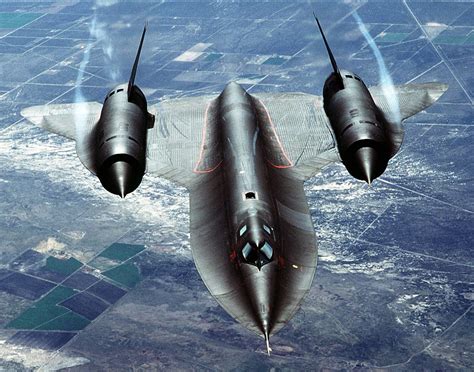
The Lockheed SR-71 Blackbird remains one of the most extraordinary aircraft ever built, not merely because it could cruise above Mach 3 at more than 80,000 feet, but because virtually every component of the aircraft was designed around a problem few airplanes ever experience—extreme aerodynamic heating. At those incredible speeds, the aircraft became so hot that its structure physically changed dimensions during flight. Among the most remarkable examples was the Pratt & Whitney J58 turbojet, an engine capable of growing approximately six inches (15 centimeters) from takeoff to cruise.
Unlike most aviation engineering stories that focus on thrust or speed, the J58’s expansion reveals something far more fascinating. It demonstrates how engineers of the Cold War solved impossible challenges using mechanical ingenuity instead of advanced computational modeling. Even today’s most sophisticated fighter engines, despite being more efficient and technologically advanced, are not designed to undergo such dramatic thermal transformation because modern military doctrine no longer demands the unique operating environment that created the J58.
The engine’s dramatic expansion was not an unintended side effect. It was an expected, carefully engineered characteristic built directly into the Blackbird’s design philosophy. Every mounting point, every material choice, and even the aircraft’s notorious fuel leaks were consequences of designing an airplane that would spend hours flying faster than a rifle bullet.
The Cold War Requirement That Changed Aircraft Engineering Forever
The origins of the J58 engine cannot be separated from the geopolitical tensions of the late 1950s. As reconnaissance missions over hostile territory became increasingly dangerous, the United States sought an aircraft capable of gathering intelligence while simply outrunning enemy defenses.
Rather than relying on stealth—a technology still decades away—the Blackbird embraced an entirely different philosophy. If enemy radars detected it, interception would still be nearly impossible because the aircraft would already be disappearing beyond the horizon at speeds exceeding Mach 3.2.
Achieving sustained flight under these conditions required engineers to confront a problem unlike anything experienced by conventional aircraft. Flying through the atmosphere at over three times the speed of sound creates tremendous friction between the air and the aircraft. This aerodynamic compression converts kinetic energy directly into heat, raising temperatures across the airframe to levels normally associated with industrial furnaces.
Instead of merely surviving this environment for a few minutes, the SR-71 needed to operate continuously within it for hours.
That requirement fundamentally reshaped every engineering decision made during development.
Why High-Speed Flight Turns an Aircraft Into a Giant Heater
Many people assume jet engines generate most of an aircraft’s heat. In reality, the Blackbird’s greatest thermal challenge came from moving through the atmosphere at extraordinary velocity.
At cruise altitude, air striking the engine inlets slowed dramatically before entering the compressor. This deceleration compressed the incoming airflow, causing temperatures at the compressor inlet to exceed 400°C (750°F). Various portions of the nacelles and surrounding structure routinely experienced temperatures above 300°C (570°F).
These temperatures would permanently weaken conventional aluminum aircraft structures.
Instead, Lockheed selected titanium alloys for most of the airframe, while heat-resistant nickel-based materials such as Hastelloy-X protected critical engine components. Even these advanced materials, however, obey one unavoidable law of physics: metals expand when heated.
The only question was how engineers would accommodate that expansion without destroying the airplane.
The Pratt & Whitney J58 Was Built to Transform During Flight
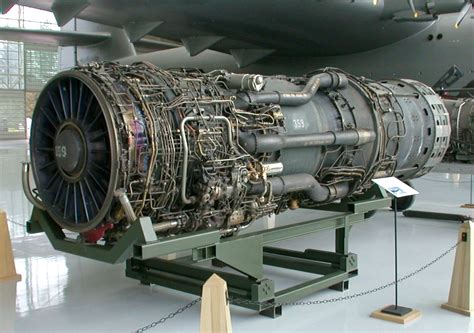
The Pratt & Whitney J58 was unlike any production turbojet before it.
Originally developed for the Lockheed A-12, the engine later powered both the YF-12 interceptor and the legendary SR-71 Blackbird. It became the first American engine specifically qualified for prolonged operation at Mach 3, while simultaneously becoming the first turbojet designed to use its afterburner continuously throughout cruise.
Under ordinary operating conditions, air flowed through the engine much like a traditional turbojet. However, as speed increased, an ingenious bypass system fundamentally altered its operating characteristics.
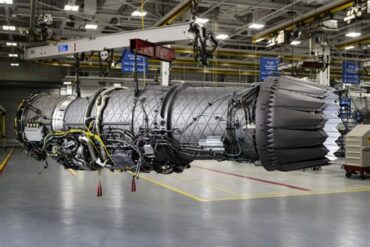
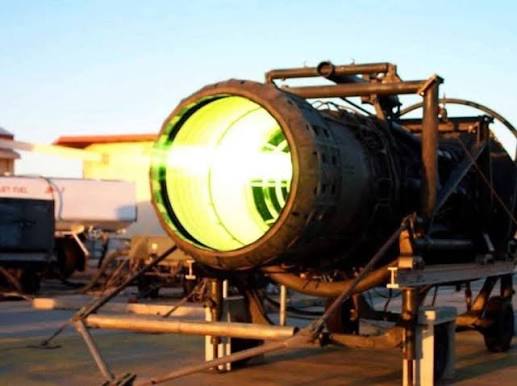
Special bleed valves diverted compressed air from the fourth compressor stage through six external ducts. Instead of continuing through the remainder of the compressor, combustor, and turbine, this air bypassed the engine core before re-entering near the afterburner.
The result was a remarkable hybrid propulsion system.
The diverted airflow simultaneously cooled critical engine components while generating additional thrust in the afterburner. As speed increased, more of the engine’s overall propulsion came from this bypassed airflow, allowing the J58 to behave increasingly like a ramjet without ever abandoning its turbojet architecture.
This innovative solution remains one of the most elegant propulsion concepts ever placed into operational service.
How the J58 Physically Grew Six Inches
Thermal expansion is familiar in everyday engineering. Bridges contain expansion joints. Railroad tracks include carefully calculated gaps. Industrial pipelines flex as temperatures fluctuate.
The J58 simply operated on an entirely different scale.
During sustained Mach 3 cruise, the enormous thermal load caused the engine casing, shafts, ducts, and surrounding structures to lengthen by roughly six inches compared with their dimensions on the ground.
This expansion occurred gradually as operating temperatures stabilized throughout the flight.
If engineers had bolted the engine rigidly into the aircraft, thermal stresses would have accumulated until structural failure became inevitable. Instead, Lockheed developed an ingenious floating mounting arrangement.
The engine’s forward section remained firmly anchored to preserve alignment with the inlet system. Behind that point, however, the engine rested on rollers and articulated swing links that permitted controlled rearward movement as temperatures increased.
Rather than resisting thermal expansion, the mounting system embraced it.
The engine was effectively allowed to slide into its operating configuration while maintaining proper alignment with the surrounding ejector assembly.
Even today, few aerospace designs incorporate such large, intentional dimensional changes during routine operation.
Thermal Expansion Changed the Entire Airframe
The engines were only one part of the equation.
Virtually every structural component aboard the SR-71 experienced measurable thermal growth during cruise.
The titanium fuselage expanded enough to alter the aircraft’s overall length significantly. Panel gaps intentionally left between structural sections gradually closed as temperatures increased. Control surfaces, fasteners, engine nacelles, and internal support structures all relied on carefully calculated thermal movement to achieve proper alignment during high-speed flight.
Perhaps the aircraft’s most famous engineering characteristic perfectly illustrates this philosophy.
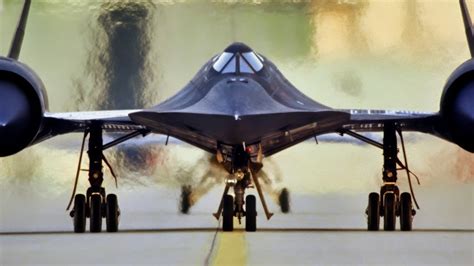
The Blackbird leaked fuel while parked.
Because the titanium airframe contracted dramatically after cooling, engineers intentionally designed the fuel tank seals with gaps that would only close once the aircraft reached operating temperature.
As a result, freshly fueled SR-71s routinely dripped specialized JP-7 fuel onto the ramp before takeoff.
To observers unfamiliar with the aircraft, the leaks appeared to indicate poor construction.
In reality, they demonstrated exceptionally precise engineering.
The airplane was designed to fit together correctly only after reaching Mach 3.
Why Modern Fighter Engines Never Needed to Repeat the J58
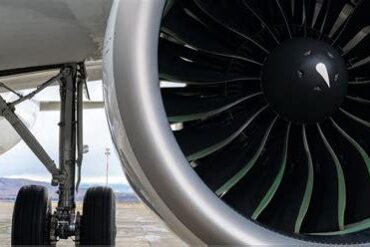
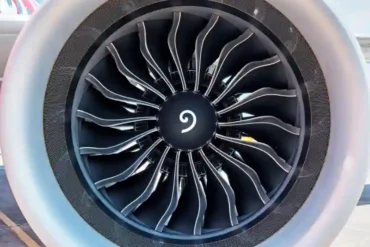
At first glance, it may seem surprising that modern engines such as the Pratt & Whitney F119 powering the F-22 Raptor or the F135 used by the F-35 Lightning II never experience such dramatic expansion.
The explanation lies not in technological limitations but in entirely different operational priorities.
Today’s combat aircraft emphasize stealth, fuel efficiency, maneuverability, sensor integration, and multirole flexibility.
Although these engines generate enormous thrust, they rarely sustain afterburning flight above Mach 2 for extended periods. Instead, modern fighters spend most of their missions operating at subsonic or modest supersonic speeds, where aerodynamic heating remains far more manageable.
Consequently, thermal expansion still occurs but within considerably smaller tolerances.
Advances in computational fluid dynamics, finite element structural analysis, advanced manufacturing, ceramic coatings, and high-temperature superalloys also allow engineers to control thermal behavior much more precisely than designers could during the 1960s.
Ironically, modern engines are technologically superior in almost every measurable category while never facing the extraordinary operating conditions that defined the J58.
The SR-71 Represented an Entirely Different Philosophy
The Blackbird belonged to a unique period of military aviation when speed itself was considered the ultimate defense.
Stealth technology had not yet matured. Space-based reconnaissance remained limited. Long-endurance unmanned aircraft did not exist.
The solution was straightforward.
Build an airplane so fast that enemy missiles could never catch it.
That philosophy produced an aircraft capable of outrunning thousands of missile launches during its operational career. While many missiles were fired toward SR-71 missions, none successfully intercepted the aircraft during operational reconnaissance flights.
Achieving that level of performance required accepting extraordinary engineering compromises.
Maintenance costs soared.
Manufacturing complexity increased dramatically.
Every flight consumed specialized fuel.
Every mission subjected the aircraft to intense thermal cycling.
Every structural joint required careful consideration of expansion and contraction.
The J58 engine embodied all these compromises simultaneously.
Why Satellites Ultimately Replaced the Blackbird
Despite its breathtaking performance, the SR-71 eventually became a victim of changing technology rather than declining capability.
As reconnaissance satellites multiplied throughout the Cold War and beyond, many intelligence missions could be performed without risking pilots or maintaining one of the world’s most expensive aircraft fleets.
Modern satellites orbit hundreds or even thousands of kilometers above Earth while traveling roughly 28,000 km/h in low Earth orbit.
Unlike aircraft, they experience no aerodynamic heating because they operate in space rather than within Earth’s atmosphere.
Meanwhile, stealth drones, signals intelligence platforms, cyber capabilities, and persistent surveillance systems gradually assumed many missions once reserved exclusively for the Blackbird.
The result was a fundamental shift in reconnaissance strategy.
Instead of relying on one spectacular aircraft capable of extreme speed, military planners increasingly distributed intelligence collection across multiple complementary systems.
Although none individually replicated the SR-71’s performance, together they provided broader, cheaper, and more persistent coverage.
A Mechanical Masterpiece That Modern Engineering Never Needed to Repeat
The extraordinary six-inch growth of the Pratt & Whitney J58 remains one of aerospace engineering’s most remarkable achievements because it represents a solution to a problem that no longer exists.
Modern engines have surpassed the J58 in fuel efficiency, digital control, materials science, reliability, emissions, maintainability, and overall performance. Yet none have been required to spend hours flying above Mach 3 while enduring temperatures capable of reshaping their own structure.
Rather than viewing the J58 as outdated technology, it should be recognized as the pinnacle of a very specific engineering era. Its designers confronted impossible thermal environments using physics, metallurgy, and ingenious mechanical design instead of supercomputers and advanced simulations.
The engine did not merely power the world’s fastest operational aircraft. It became an active participant in the aircraft’s transformation, expanding by six inches as temperatures climbed and seamlessly integrating with a floating mounting system built specifically to accommodate that growth.
Few machines in aviation history have demonstrated such a dramatic physical evolution during normal operation. The Pratt & Whitney J58 remains a powerful reminder that engineering excellence is not always measured by complexity or modernity, but by how perfectly a machine fulfills the mission for which it was created.