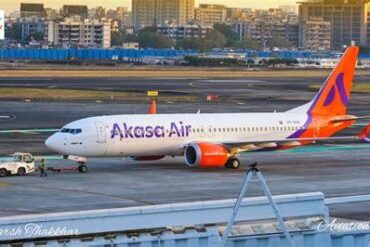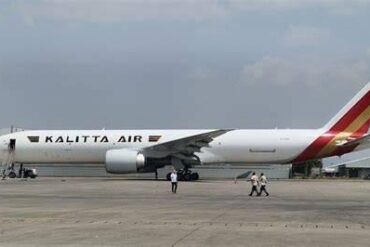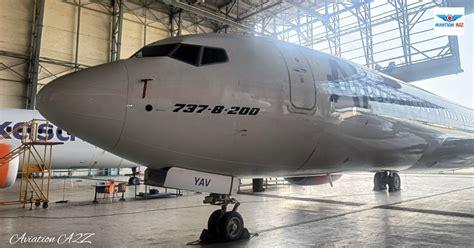
Akasa Air has formalized a three-year partnership with GMR Aero Technic, marking a pivotal development in its operational blueprint. The agreement designates GMR Aero Technic as the official base maintenance provider for Akasa’s Boeing 737 MAX fleet, anchoring a new standard in domestic airline-MRO collaboration within India’s fast-evolving aviation landscape. The services will be executed at GMR’s advanced Maintenance, Repair, and Overhaul (MRO) facility located at the GMR Aerospace & Industrial Park in Hyderabad, underscoring a strategic alignment between homegrown aviation operators and localized technical support infrastructures.
GMR Aero Technic: Strengthening India’s MRO Ecosystem
This alliance reflects a broader shift in India’s aviation ecosystem, where airlines are increasingly choosing domestic MRO facilities to reduce costs and improve turnaround time. GMR Aero Technic, already recognized for its world-class maintenance services, brings robust technical capabilities and a proven track record to the table. Its Hyderabad facility, certified by multiple global aviation regulatory bodies, is designed to handle narrow-body aircraft such as the Boeing 737 MAX with maximum efficiency.
By opting for GMR, Akasa Air not only reinforces its commitment to high safety and performance standards, but also plays a role in catalyzing the Indian MRO sector—an industry long overshadowed by offshore competitors in Southeast Asia and the Middle East.
Akasa Air’s Rapid Expansion and Fleet Ambitions
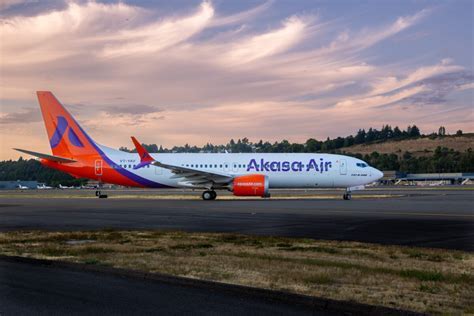
Since its inception in August 2022, Akasa Air has demonstrated a meteoric rise in the Indian aviation sector. With a current operational fleet of 29 Boeing 737 MAX aircraft, the airline quickly secured nearly 5% of domestic market share—a remarkable feat for a newcomer in a hyper-competitive space dominated by legacy players like IndiGo and Air India.
The airline’s ambitions, however, stretch far beyond current numbers. Akasa has placed a massive order of 226 Boeing 737 MAX jets, intending to position itself as a long-term player with a vast network both in India and internationally. These expansion goals, however, have been partially hindered by ongoing issues within Boeing’s 737 program, including regulatory delays and production disruptions. A mid-air cabin panel blowout incident and a seven-week workers’ strike have notably impacted the aircraft delivery timeline.
Growing Amid Industry Headwinds
Despite delays and a tightening competitive landscape, Akasa’s metrics reflect bullish momentum. In its first operational year, the airline made history by becoming the fastest carrier to reach 20 aircraft, enabling it to operate international flights under Indian aviation norms. Moreover, the airline has increased its passenger load from 7.75 million in March 2024 to a projected 16 million by March 2025, evidencing strong demand and growing brand resonance among Indian travelers.
The financials mirror this operational expansion. Akasa Air’s revenue surged to $356 million in the last fiscal year, a quadrupling of earnings. However, its losses also widened from $86 million to $194 million, reflecting the steep costs associated with aggressive scaling and infrastructural investments.
Safety Reassurance Amid Boeing’s Troubles
Akasa’s maintenance agreement with GMR Aero Technic arrives at a critical juncture. Following a tragic Air India crash involving a Boeing aircraft and subsequent global scrutiny, regulators have heightened safety evaluations across fleets utilizing the Boeing 737 MAX and 787 models. The Directorate General of Civil Aviation (DGCA) recently conducted detailed checks on Air India’s 787 fleet, discovering no significant flaws. This result provides a degree of reassurance to other Indian carriers like Akasa, which remain committed to Boeing platforms.
By partnering with a reputed Indian MRO like GMR, Akasa ensures that airworthiness compliance, safety audits, and component reliability remain well within industry standards. This move will likely serve as a benchmark for future public-private collaborations in India’s aviation maintenance space.
Strategic Base Expansion and Hub Localization
Akasa’s future trajectory is not limited to fleet size. The airline is preparing to base 5–7 aircraft at Navi Mumbai and Jewar airports by the end of this year. These emerging aviation hubs are expected to become pivotal points in Akasa’s domestic and regional network expansion strategy. By decentralizing fleet basing, Akasa can achieve faster turnarounds, better aircraft utilization, and improved operational flexibility.
These locations also offer strategic advantages. Navi Mumbai is anticipated to reduce pressure on Mumbai’s congested Chhatrapati Shivaji Maharaj International Airport, while Jewar (Noida International Airport) is envisioned as a major gateway to North India.
International Aspirations Take Flight
Currently, 18% of Akasa’s operations are international, but the airline has made it clear that this is only the beginning. With an incoming fleet of next-generation aircraft, the airline is planning to significantly boost its global presence, targeting underserved direct routes in Asia, the Middle East, and potentially Europe. Leveraging the fuel-efficient 737 MAX’s range capabilities, Akasa aims to offer high-frequency, cost-effective international services to second-tier cities that are often ignored by legacy carriers.
The airline’s international ambitions also reflect broader trends in Indian civil aviation, where carriers like IndiGo, Vistara, and Air India are battling for long-haul dominance. Akasa, with its young fleet and nimble business model, could play the role of a disruptor in short- and medium-haul international markets.
MRO Industry Implications: Localized Efficiency, Global Standards
GMR Aero Technic’s growing prominence reflects India’s strategic intent to become a global MRO hub. Until recently, Indian airlines frequently sent aircraft abroad for maintenance, incurring massive costs and lengthy aircraft downtimes. But with advanced facilities in Hyderabad and other upcoming centers, India is aiming to localize high-value aviation engineering services.
For Akasa, working with GMR doesn’t just improve maintenance efficiency—it reinforces a vision where Indian aviation is self-reliant and globally competitive. The successful execution of this partnership will likely encourage other airlines to follow suit, accelerating the growth of India’s domestic MRO sector and reducing dependency on foreign vendors.
Moreover, GMR’s integration of digital technologies, predictive maintenance analytics, and lean processes aligns well with Akasa’s emphasis on data-driven operational efficiency.
A Model for Future Airline-MRO Collaborations
The Akasa-GMR agreement may be a harbinger of a new era in Indian aviation partnerships. It combines the strengths of an agile, growth-focused airline with the proven capabilities of a world-class MRO provider, delivering mutual value in the form of reduced costs, improved safety assurance, and scalable operations.
Such integrated models are particularly crucial as the aviation industry enters a post-pandemic, capacity-driven growth phase, where agility, reliability, and scalability define success. The deal also sends a clear signal to investors and regulators alike that India’s aviation stakeholders are ready to play on the global stage with confidence, competence, and strategic foresight.
As Akasa continues its ascent, its collaboration with GMR Aero Technic not only safeguards the technical integrity of its fleet but also exemplifies how infrastructure partnerships can shape the next chapter in Indian civil aviation. If executed flawlessly, this model could become a template for airline-MRO partnerships across emerging markets worldwide.