The modern premium traveler is no longer satisfied with incremental upgrades. Flat beds, aisle access, and premium dining have become baseline expectations. What truly differentiates the elite tier of business class in 2026 is something far more personal: complete privacy. The shift from semi-open cabins to fully enclosed suites reflects a deeper change in passenger psychology—one that values control, solitude, and a personalized environment above all else.
This evolution did not happen overnight. A decade ago, business class cabins were defined by angled seating and partial dividers. Today, the benchmark is a fully enclosed suite with a sliding door, intelligent cabin design, and high-end digital integration. Airlines are no longer just competing on comfort—they are competing on how effectively they can create a private world within a shared aircraft cabin.
Across the globe, five airlines stand at the forefront of this transformation. Each brings a unique interpretation of privacy, blending engineering precision, cultural design philosophies, and cutting-edge technology to answer one central question: what does true seclusion look like at cruising altitude?
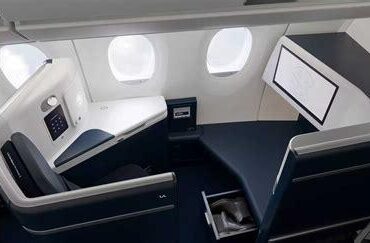
Air France Business Class Suites: A Refined Approach to Privacy
Air France approaches privacy with the same philosophy it applies to cuisine and fashion—refinement over excess. Its Airbus A350-900 business class cabin is not designed to overwhelm, but to deliver understated elegance with functional privacy.
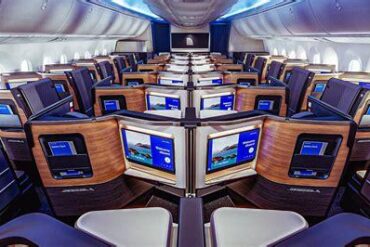
The cabin features 48 suites in a one-two-one configuration, ensuring direct aisle access for every passenger. Each seat transforms into a fully flat bed stretching two meters, while a sliding door adds a layer of personal space. However, unlike some competitors, the door does not extend to the floor, creating a semi-enclosed environment rather than total isolation.
What truly distinguishes Air France is its attention to detail. Developed in partnership with Stelia Aerospace, the suite is built around three core principles: full flat comfort, full access, and full privacy. The 13.3-inch 4K screen, while modest in size, integrates seamlessly into a workspace designed for productivity and relaxation.
The most compelling experience lies in the bulkhead rows. These front-row suites eliminate the restrictive footwell found in standard seats, replacing it with a full-width ottoman that allows unrestricted sleeping positions. Storage is also significantly improved, with expanded consoles and even a personal wardrobe in select seats.
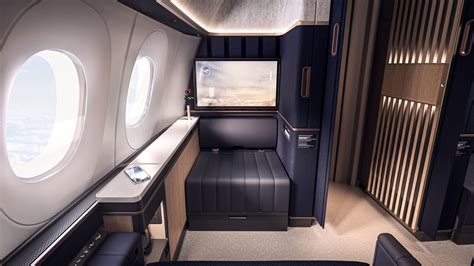
Yet, the design invites debate. While the door enhances privacy, it stops short of delivering a fully enclosed suite experience. Passengers often describe it as a sophisticated partition rather than a sealed cocoon. The result is a cabin that feels open yet exclusive, elegant yet slightly conservative in its execution.
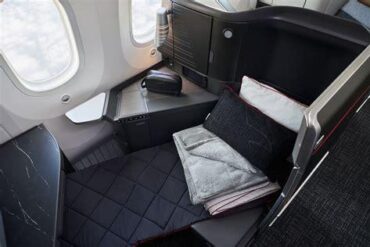
Cathay Pacific Aria Suite: Precision Engineering Meets Smart Privacy
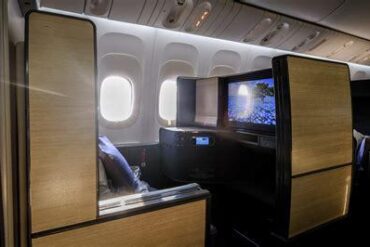
Cathay Pacific has taken a different route—one defined by precision, technology, and purposeful design. Its Aria Suite, installed on retrofitted Boeing 777-300ER aircraft, represents a meticulous evolution of the airline’s signature reverse-herringbone layout.
With 45 suites arranged across two cabins, each enclosed by a functional sliding door, Cathay Pacific delivers a product where privacy is engineered, not implied. The door is solid, secure, and designed to fully separate the passenger from the aisle—no gaps, no compromises.
Where the Aria Suite truly excels is in its digital ecosystem. A massive 24-inch 4K ultra-definition screen dominates the space, offering one of the largest displays in business class today. Bluetooth audio, wireless charging, and a seamless interface transform the suite into a self-contained entertainment and productivity hub.
One of the most subtle yet impactful innovations is the lavatory availability map. Passengers can check restroom occupancy directly from their seat, eliminating unnecessary movement and preserving privacy. It is a small detail, but one that reflects deep operational thinking about passenger behavior.
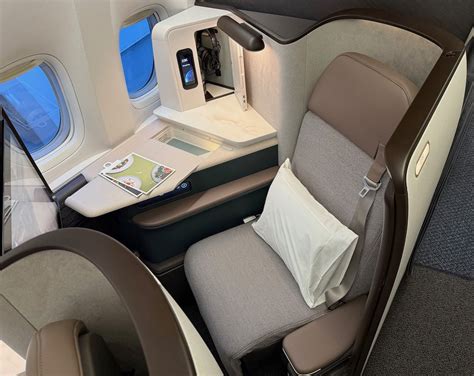
There are trade-offs. The integration of the door system results in a slightly tighter footwell compared to previous designs. However, this compromise feels intentional. Cathay Pacific prioritizes enclosure and functionality over marginal increases in sleeping space, and for many travelers, that is the right decision.
The Aria Suite is not flashy. It does not rely on dramatic aesthetics or gimmicks. Instead, it delivers precision, reliability, and intelligent design, making it one of the most balanced and thoughtfully executed private suites in the sky.
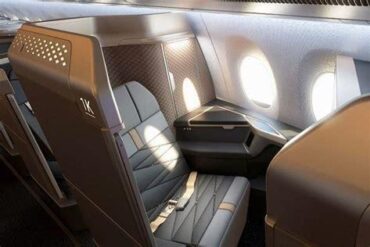
Singapore Airlines’ Next-Generation Suites: Redefining Sleep Geometry
Singapore Airlines is known for setting industry standards, and its upcoming A350-900 business class suite aims to do exactly that—by correcting one of the most overlooked flaws in premium travel: sleep positioning.
For years, its business class required passengers to sleep at a slight angle, a compromise driven by cabin geometry. The new design eliminates this entirely, introducing forward-facing suites with fully horizontal sleeping surfaces.
The scale of investment is staggering. A multi-billion-dollar retrofit program spans over 40 aircraft, signaling a long-term commitment to redefining the passenger experience. Each suite will feature sliding doors, expansive personal space, and advanced digital integration, including 4K displays, USB-C ports, and wireless charging.
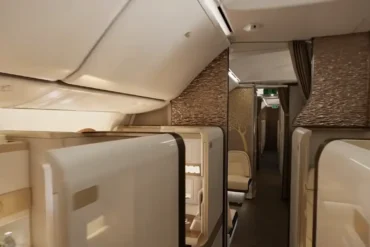
Visually, the cabin embraces warm copper tones and soft lighting, creating an environment that feels both modern and calming. Large windows with electronic blinds enhance the sense of openness, while the enclosed suite ensures privacy when needed.
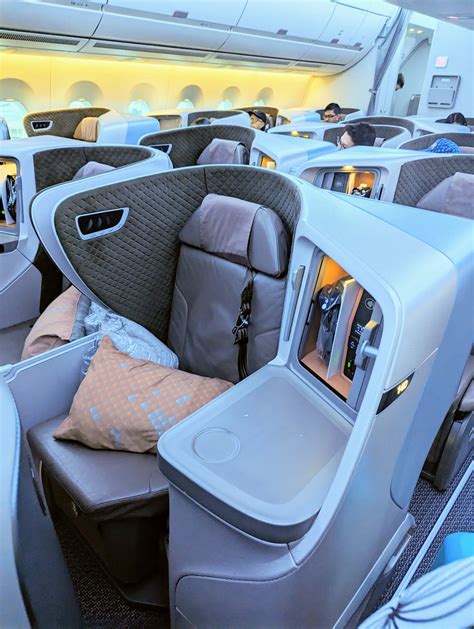
However, this product exists in a unique space—it is anticipated rather than proven. While previews are promising, the full experience remains to be validated in real-world operations. That said, Singapore Airlines has a track record of delivering excellence, and expectations are justifiably high.
If the execution matches the vision, this suite could become the gold standard for long-haul sleep comfort, combining privacy with ergonomic precision in a way few competitors have achieved.
All Nippon Airways “The Room FX”: Space as the Ultimate Luxury
All Nippon Airways takes a bold stance: privacy is not just about walls—it is about space. Its “The Room FX” suite, debuting on the Boeing 787-9, is designed to challenge conventional assumptions about what is possible on a mid-sized aircraft.
The numbers alone are striking. Each suite measures 41.5 inches in width, making it the widest business class seat in its category. The bed extends to over 76 inches, providing ample room for taller passengers. But it is the layout philosophy that truly sets ANA apart.
Instead of a traditional reclining seat, the suite adopts a sofa-style configuration. Passengers begin in a lounging position, with the bed forming as the leg rest extends. This creates multiple usable positions, enhancing comfort throughout the flight rather than just during sleep.
The cabin density is intentionally reduced. Only 24 suites occupy the space where competitors typically install 30, resulting in a more open and less congested environment. Every suite includes a full-height sliding door, ensuring complete visual isolation.
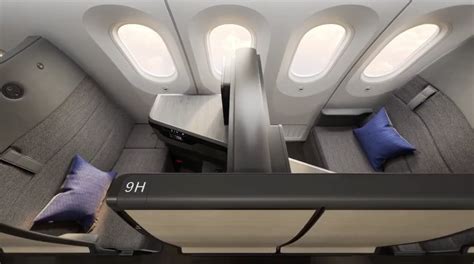
Technology complements the physical design. A 24-inch 4K monitor, wireless charging, and Bluetooth connectivity provide a modern digital experience without overwhelming the space.
ANA’s approach is unapologetically bold. It sacrifices capacity for comfort, prioritizing volume, flexibility, and personal space. The result is a suite that feels less like a seat and more like a private living area in the sky.
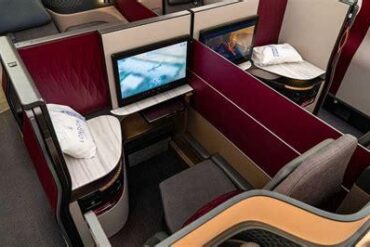
Qatar Airways Qsuite Next Gen: The Benchmark for Private Travel
Qatar Airways did not just join the privacy revolution—it started it. The original Qsuite redefined business class nearly a decade ago, and the Next Generation version pushes the concept even further.
Installed on the Airbus A350-1000, the new Qsuite introduces enhanced dimensions, improved privacy, and groundbreaking technology. The seat is wider, the bed longer, and the doors taller, creating a more immersive and enclosed environment.
But the defining feature remains the Quad Suite configuration. By combining four adjacent suites, passengers can create a fully private group space, ideal for families or business teams. No other airline offers this level of modular flexibility.
The technological leap is equally impressive. 4K OLED Panasonic Astrova screens can be repositioned, allowing passengers to customize their viewing and workspace. Ambient lighting adjusts automatically based on time zones, subtly helping to combat jet lag.
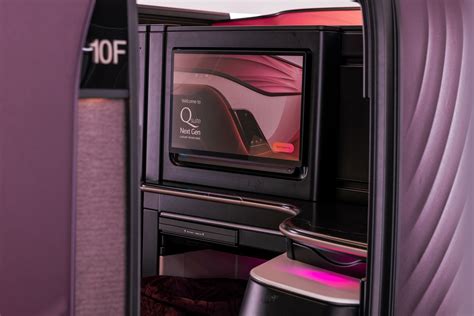
The Companion Suite adds another layer of versatility, enabling pairs of passengers to dine face-to-face while maintaining full privacy. This blend of social interaction and personal space is unmatched in the industry.
Qatar Airways’ dominance is no accident. With multiple global awards for business class excellence, the airline treats its cabin as a dynamic, evolving product. The Qsuite Next Gen is not just an upgrade—it is a statement that the future of premium travel is modular, intelligent, and deeply personal.
The Future of Private Flying in Business Class
The competition for privacy at 35,000 feet is far from over. If anything, it is accelerating. Airlines are no longer asking whether to install doors—they are asking how far they can push the concept of personal space without crossing into first-class territory.
What emerges from these five airlines is a clear pattern. Privacy is no longer a single feature; it is a multidimensional experience shaped by physical design, digital integration, and psychological comfort. Some carriers prioritize refinement, others focus on technology, while a few push the boundaries of space and modularity.
For passengers, the implications are profound. Long-haul travel is transforming from a shared experience into a personalized journey, where the cabin fades away and the individual takes center stage.
And at the highest level of business class, one truth is now undeniable: the most valuable luxury is not space, service, or even technology—it is the ability to close a door and disappear.