When Boeing engineers sat down to define the flight deck of the 787 Dreamliner, they were not simply designing a new aircraft. They were designing a new relationship between the crew and the aircraft’s information. The Dreamliner’s flight deck was built around large-format digital displays that consolidate flight data, navigation information, engine parameters, system indications, and alerting into a small number of screens, replacing the array of dedicated instruments and printed documents that had defined cockpits for generations. The electronic checklist was the natural conclusion of that philosophy: if the aircraft’s systems were already talking to the crew through glass, there was no reason critical procedures should live on paper in a binder.
That shift is frequently described as a modernization, but the more accurate framing is that it is an integration. An electronic checklist is not a PDF of a laminated card rendered on a screen. On the 787, the checklist system is woven into the aircraft’s flight deck information environment, connected to the alerting architecture, and capable of using aircraft signals to confirm that certain actions have actually been completed. It changes how a crew locates a procedure, how it tracks its place, and how it recovers after an interruption, which are precisely the points where paper procedures have historically been most vulnerable.
The 787 also did not arrive at this idea in a vacuum. Boeing’s work on electronic checklists stretches back decades, evolved through the 1990s, and reached production maturity in the Boeing 777, an aircraft that introduced a generation of pilots to the concept of checklist procedures displayed on a flight deck screen rather than on a card. The Dreamliner refines that inheritance. It is best understood as the point where integrated checklist logic, consolidated displays, and modern alerting became the default rather than the exception.
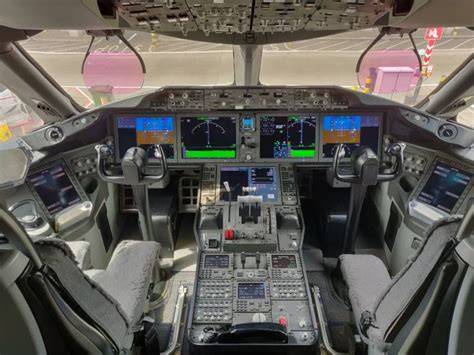
How the 787 Electronic Checklist System Replaces Paper Procedures
The 787’s checklist function lives inside the aircraft’s multifunction display architecture. Pilots can call up normal checklists, the routine sequences associated with phases of flight such as preflight, taxi, takeoff, approach, and landing, as well as non-normal checklists, the procedures that address failures and abnormal configurations requiring a specific, ordered response. Instead of flipping through a bound manual to find the right page, the crew selects the relevant procedure from the display and works through its instructions in sequence, with the current item presented clearly and the surrounding steps visible for context.
What separates this from a scanned document is the relationship between the checklist and the aircraft’s alerting system. When the 787 detects a condition that generates an applicable alert, the crew can move directly from that indication to the associated checklist using the flight deck controls. Selecting the checklist function brings the relevant procedure onto a multifunction display. If multiple alerts each carry an associated checklist, the system can present those procedures for the crew to choose among, which transforms a potentially confusing cascade of messages into an organized, selectable list of actions. The path from “the aircraft is telling me something” to “here is the procedure designed for exactly this condition” becomes short and direct.
The second layer of sophistication is the system’s awareness of whether actions have been completed. Some checklist items are designed as closed-loop steps, meaning the checklist system receives a signal from the aircraft that lets it confirm the required configuration or action has been achieved. Other items are open-loop steps, which depend on the pilot to perform the action and verify it manually. This distinction is the heart of how electronic checklists actually work, and it explains why the display can sometimes show a step as complete without a pilot’s acknowledgment, while at other times that acknowledgment is the only confirmation available.
Closed-Loop and Open-Loop Items: What the Checklist System Can and Cannot Know
A closed-loop item is one where the aircraft itself can close the circuit. If a checklist step calls for a particular switch position, system configuration, or equipment state, and the aircraft’s sensors or system logic can observe that condition, the checklist system can recognize that the step has been satisfied and update the indication to show completion. From the crew’s perspective, the checklist effectively ticks itself for that item, reducing the administrative burden and lowering the chance that a completed action is mistakenly left marked as outstanding.
An open-loop item works in the opposite way. The system has no reliable signal to independently confirm that the required action has been carried out, so the pilot must perform the task and then verify it and mark it complete. This is not a weakness in the design; it is an honest acknowledgment of the limits of what aircraft data can observe. Many actions depend on human observation, judgment, or confirmation rather than on any sensor the checklist computer can read. A crew member confirming that a visual inspection is complete, that a condition has been manually assessed, or that a coordination step between pilots has occurred falls into this category.
| Feature | Closed-Loop Item | Open-Loop Item |
|---|---|---|
| Completion confirmation | Receives confirmation from aircraft data or a system signal | Requires pilot verification |
| Checklist indication | Can update automatically when the required condition is detected | Depends on the crew’s confirmation |
| Human responsibility | Pilot still monitors the action and the system response | Pilot performs and verifies the action |
| Main limitation | Only works where suitable aircraft feedback exists | Cannot independently confirm completion |
The practical consequence is that an electronic checklist is not an autopilot for procedures. It organizes, tracks, and where possible verifies, but the crew retains responsibility for every step. Pilots must understand which items are being confirmed by the aircraft and which are being confirmed by a human being, because treating a closed-loop display indication as a guarantee that the entire aircraft is in a satisfactory state would be a misunderstanding of what the technology actually does.
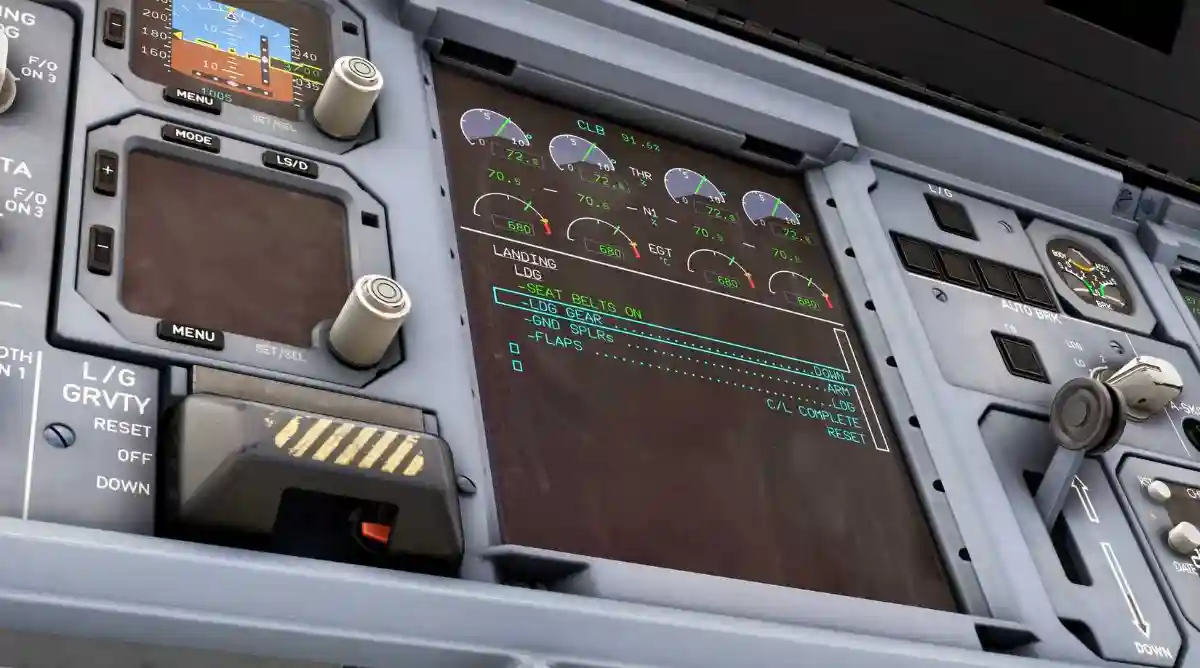
Why Paper Checklists Created Problems the 787 Could Finally Solve
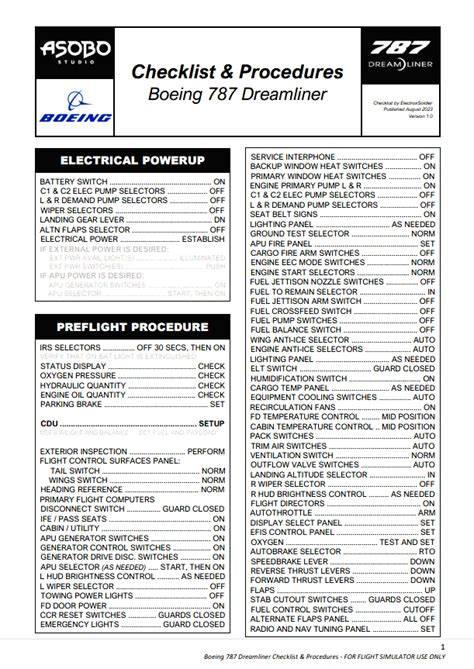
Paper checklists possess genuine virtues. They are simple, familiar, and completely independent of the aircraft’s display systems, meaning they work when the electrons do not. They have served flight crews for decades and remain part of the operational framework today. But they also carry a set of practical frictions that become more consequential as aircraft and procedures grow more complex. A pilot must locate the correct page, hold a physical place while reading and acting, and rebuild that place after any interruption. In a busy phase of flight, a single distraction can mean the crew must retrace steps to establish which actions have already been accomplished and which remain.
These are not hypothetical concerns. Lost place in a checklist is one of the classic human-factors traps in aviation, and it is most dangerous precisely when it matters most: during abnormal situations, when the crew is managing an unexpected condition, communicating, and working through a procedure under time pressure and elevated workload. An electronic checklist addresses these difficulties by keeping the procedure inside the same display environment the crew is already using. There is no separate document to handle, no page to keep a thumb on, and the system can present progress visually so the crew can see which items are done and which remain outstanding even after the sequence has been interrupted.
The larger context is the maturation of flight deck automation. As aircraft systems became more deeply integrated, manufacturers gained the ability to connect operating procedures with alerts, system states, and configuration data in ways that paper could never achieve. Boeing’s electronic checklist work predates the Dreamliner by decades, evolved through the 1990s, and became part of the 777 flight deck. When the 787 program began, integrated checklist technology was no longer experimental. The Dreamliner represented the point at which it became the baseline for a clean-sheet design rather than a feature layered onto an existing cockpit.

How Digital Checklists Organize Crew Response to Abnormal Situations
The clearest illustration of the electronic checklist’s value is a non-normal event. When an aircraft generates an alert, the crew must identify the condition, locate the applicable procedure, assess the aircraft’s status, and execute a series of actions, often while other flight deck tasks continue. The checklist system simplifies the search problem by linking the alert to its procedure. On the 787, when an alert has an associated checklist, the crew uses the checklist control to access that procedure on a multifunction display, and when several alerts require checklists, the system presents the available options for selection. The crew is not hunting through a binder to match a message to a page; the matching has already been done by the aircraft.
Progress tracking is the second benefit. During a complex procedure with many steps, interruptions are common, and an interrupted checklist is where human error tends to enter. A persistent display of checklist status lets the crew re-establish its position quickly. Pilots can see what has been completed and what remains, which is far more robust than a mental note or a hand on a page that has since been closed. This matters especially when multiple alerts are active and the crew is effectively managing several procedures at once.
None of this makes operational decisions on the crew’s behalf. The checklist is a tool for organizing procedural information and supporting the crew’s judgment, not a substitute for it. Pilots must still monitor the aircraft, communicate effectively, apply the procedure in the context of the actual situation, and exercise command judgment about how to sequence the response. The technology reduces the cognitive overhead of tracking a procedure so that the crew’s attention can go where it belongs: to the aircraft, the flight path, and the decision in front of them.
Why Paper Checklists and Alternative Procedures Are Still Required
Electronic checklists depend on the availability and correct operation of electronic systems. A display failure, a checklist system fault, or a loss of the feedback that closed-loop items rely on can affect how the crew accesses or completes a procedure. That is why approved paper procedures and alternative methods remain part of the wider operational framework, and why the presence of an electronic system does not render printed documentation obsolete.
The 787’s minimum equipment procedures recognize explicitly that the electronic checklist system can be unavailable under specified conditions. When it is inoperative, maintenance and operational provisions require it to be deactivated and suitable checklist procedures to be used instead. There are also provisions covering situations in which closed-loop indications are unavailable, in which case crews may need to use the prescribed line-item override procedures to work through the checklist in a different way. These provisions are not an admission that the electronic system is untrustworthy; they are the normal discipline of designing an aircraft that can be dispatched and operated safely with specified equipment degraded.
The comparison between the two approaches is often framed as a competition, but the more useful framing is complementary strengths. Electronic checklists integrate with displays, connect to alerts, show progress, and can confirm supported aircraft configurations, but they depend on functioning equipment. Paper checklists work independently of the display system, but they require the crew to locate the procedure and track progress manually. Neither is automatically safer in every circumstance. A printed checklist can be misplaced, awkward to manage on a busy flight deck, and harder to track after an interruption; an electronic system can fail or lose the feedback its closed-loop logic depends on. The aircraft’s approved operating documentation, not preference, determines which method applies in a given situation.
What Electronic Checklists Change and What They Never Can
The most important thing the 787’s electronic checklist system changes is not the presence or absence of paper. It is the proximity between a procedure and the aircraft information that procedure depends on. A checklist that can be reached directly from an alert, that displays its own progress, and that can confirm certain actions through aircraft data reduces the friction of procedure management in exactly the moments where friction is most costly. For any crew that has lost its place in a long abnormal checklist, the difference between a digital sequence with a visible cursor and a page you can no longer find is the difference between recovering quickly and losing valuable time.
What it does not change is human responsibility. Electronic systems introduce their own considerations. Pilots must understand how the interface works, recognize the distinction between automatically confirmed and manually verified items, and avoid treating a completed indication as proof that the entire aircraft is in the correct condition. A system can only confirm what its sensors and programmed logic were designed to monitor, and many essential steps fall outside that boundary by nature.
The Dreamliner’s electronic checklist is therefore an evolution in how crews manage procedures rather than an attempt to remove the human from them. It brings checklists alongside the aircraft data they depend on, provides structured visibility into progress, and supports rapid access to non-normal procedures when alerts occur. Paper procedures remain in the operational backup framework, and pilots remain responsible for every action and every verification. The presentation has changed, but the purpose has not: ensuring that critical actions are completed, checked, and understood before the flight moves on.