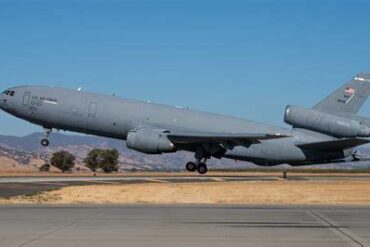
The retirement of the McDonnell Douglas KC-10 Extender marked the end of one of the most capable tanker aircraft ever built for military service. For more than four decades, the tri-engine giant served as a strategic backbone for the United States Air Force, combining enormous fuel capacity, intercontinental airlift capability, and exceptional operational flexibility into a single platform. Yet by 2024, the Air Force officially retired the fleet and shifted its future toward the Boeing KC-46 Pegasus, an aircraft envisioned as the next-generation tanker for modern warfare.
What should have been a seamless transition instead evolved into one of the most controversial modernization efforts in recent Air Force history. While the KC-46 introduced advanced networking systems, digital refueling technologies, and improved survivability for contested environments, the aircraft also arrived burdened with severe technical deficiencies, operational restrictions, and costly design flaws. Critics inside and outside military aviation circles increasingly began asking a difficult question: did the Air Force retire one of its finest aircraft only to replace it with a downgrade?
The debate surrounding the KC-10 and KC-46 is not simply about nostalgia for older aircraft. It reflects a deeper clash between proven Cold War engineering and ambitious modern aerospace technology that has not yet fully matured. The KC-10 represented brute-force capability and reliability. The KC-46 represents a digital future that remains unfinished.
By 2026, that contrast has become impossible to ignore.
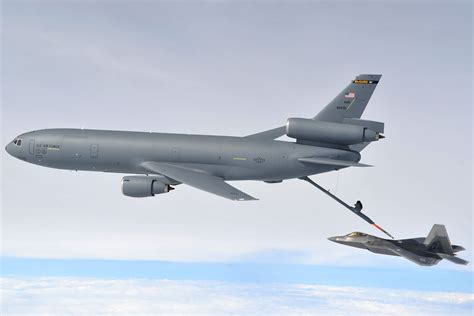
The KC-10 Extender Was Built For Global War
When the KC-10 entered service in 1981, the United States Air Force was preparing for the possibility of a massive global conflict with the Soviet Union. Military planners required an aircraft capable of supporting long-range nuclear operations, rapid force deployment, and sustained fighter missions across entire oceans without depending heavily on overseas bases.
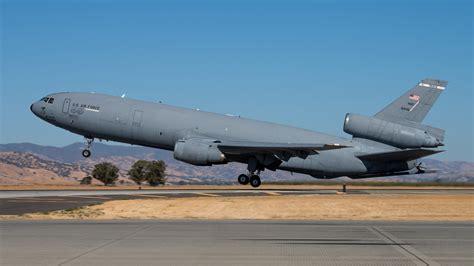
The result was the KC-10 Extender, derived from the legendary McDonnell Douglas DC-10 widebody airliner. Unlike the aging KC-135 Stratotanker, which originated from the smaller Boeing 707 platform, the KC-10 was designed to function as both a tanker and a strategic transport aircraft simultaneously.
That distinction changed everything.
The aircraft carried an enormous 356,000 pounds of fuel, dramatically exceeding the KC-135 and even modern tankers today. But fuel capacity alone did not define the aircraft’s value. The KC-10 could also haul approximately 170,000 pounds of cargo while refueling combat aircraft during the same mission. It could transport maintenance crews, spare engines, equipment pallets, and entire fighter support packages across continents without requiring separate transport aircraft.
The Air Force essentially combined two strategic missions into one airframe.
That capability earned the KC-10 a reputation as a true force multiplier. Rather than requiring fleets of support aircraft coordinating complex logistics chains, the Extender could independently move and sustain combat squadrons almost anywhere in the world.
Pilots frequently described the aircraft as a “mothership” because of how much operational support it could provide in a single sortie.
A Tanker Designed To Handle Every Mission
One of the KC-10’s most important strengths was its versatility in aerial refueling operations. Unlike older tankers that required conversion kits or mission-specific configurations, the KC-10 could conduct boom and drogue refueling on the same flight without modification.
That capability made the aircraft indispensable during joint-service operations involving both Air Force and Navy aircraft. Fighters such as the F-15 Eagle and F-16 Fighting Falcon could receive fuel through the flying boom system, while Navy and Marine Corps aircraft using probe-and-drogue methods could refuel from hose systems mounted on the same aircraft.
This flexibility dramatically simplified operational planning during coalition warfare.
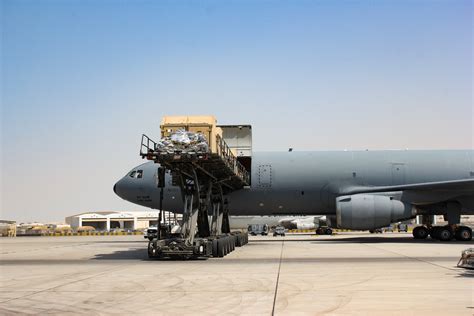
The aircraft’s reinforced cargo floor further expanded its usefulness. Heavy cargo, armored vehicles, and aeromedical evacuation missions could all be integrated into the tanker’s primary mission profile. During major military campaigns, the KC-10 often acted as both a flying gas station and a strategic airlift platform.
That level of redundancy and adaptability reflected Cold War-era military thinking, where survivability and mission continuity mattered more than efficiency spreadsheets.
The KC-10 Became Essential During American Military Operations
Throughout its career, the KC-10 proved its value repeatedly during major military conflicts and humanitarian operations.
During Operation Desert Shield and Operation Desert Storm, the aircraft played a central role in transporting personnel and equipment into Saudi Arabia while simultaneously supporting nonstop combat air patrols over Iraq. The ability to rapidly deploy large fighter packages across the Atlantic without excessive support infrastructure gave the United States enormous strategic flexibility.
In the Balkans during Operation Allied Force, KC-10 crews sustained NATO air operations over Yugoslavia by enabling extended-duration strike missions deep into contested airspace.
Following the September 11 attacks, the aircraft became a constant presence during Operations Enduring Freedom and Iraqi Freedom. American bombers, fighters, reconnaissance aircraft, and cargo planes depended heavily on tanker support to maintain around-the-clock operations over Afghanistan and Iraq.
The Extender also contributed to homeland defense missions during Operation Noble Eagle, supporting combat air patrols protecting American airspace.
Even near retirement, the aircraft remained indispensable. During the chaotic 2021 withdrawal from Afghanistan under Operation Allies Refuge, KC-10 crews participated in one of the largest noncombatant evacuations in American history. Thousands of refugees and military personnel were transported during the operation, highlighting how the aircraft’s cargo capacity remained invaluable decades after entering service.
By the time the final KC-10 retired on September 26, 2024, the fleet had accumulated a reputation for rugged reliability that few aircraft achieve.
Why The Air Force Wanted The KC-46 Pegasus
Despite the KC-10’s remarkable performance, the Air Force still faced pressure to modernize its tanker fleet. Operating costs for aging aircraft continued to rise, maintenance requirements became increasingly demanding, and the Pentagon sought platforms better suited for modern digital warfare environments.
The Boeing KC-46 Pegasus emerged as the chosen replacement.
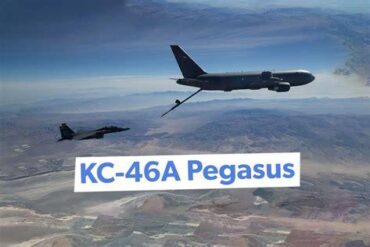
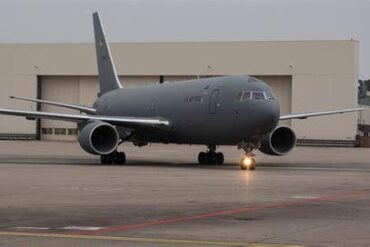
Based on the Boeing 767 airframe, the KC-46 was envisioned as far more than a traditional tanker. Military planners wanted a networked battlefield aircraft capable of data sharing, communications relay, medical evacuation, cargo transport, and defensive operations inside contested airspace.
The Pegasus incorporated infrared missile warning systems, defensive countermeasures, encrypted communications architecture, and advanced networking capabilities absent from older tankers.
Unlike the KC-10, which relied heavily on analog-era systems upgraded over time, the KC-46 was built from the beginning as a digitally integrated combat platform.
The aircraft could transmit and receive real-time battlefield information while supporting air operations. Advanced sensors, night vision integration, and secure communications transformed the tanker into a flying node within the broader combat network.
On paper, the concept appeared revolutionary.
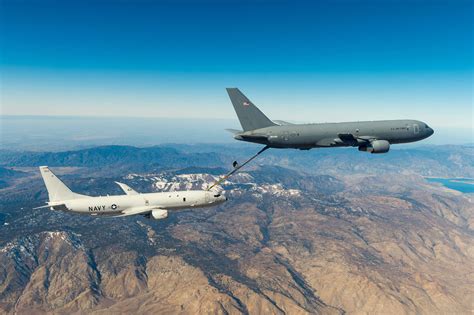
The Pegasus Promised A Technological Revolution
One of the KC-46’s most ambitious innovations was its Remote Vision System, commonly known as RVS.
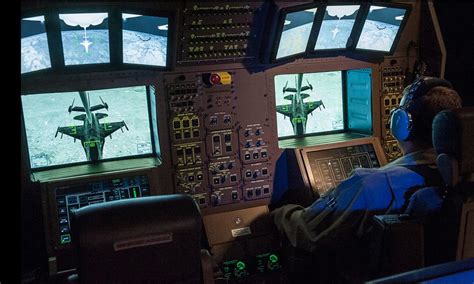
Legacy tankers traditionally placed boom operators in the rear of the aircraft, where they physically observed receiving aircraft through windows while controlling the refueling boom. The KC-46 eliminated this station entirely.
Instead, operators controlled the boom remotely using high-definition cameras and 3D displays inside the aircraft cabin. The system provided a panoramic 185-degree field of view and theoretically improved operational awareness while reducing crew fatigue.
The aircraft also introduced advanced multi-role refueling capability. Like the KC-10, the KC-46 could support both boom and drogue refueling during the same mission, allowing simultaneous support for multiple aircraft types.
The Pegasus additionally improved passenger accommodations, cargo pallet capacity, and aeromedical evacuation capability compared to the KC-135 fleet it was primarily intended to replace.
For Air Force leadership, the KC-46 represented the future of aerial refueling operations.
Unfortunately, reality proved significantly more complicated.
Severe Technical Problems Quickly Emerged
Almost immediately after entering service, the KC-46 began suffering from serious deficiencies.
The Remote Vision System became one of the program’s most notorious failures. Under certain lighting conditions, operators struggled with distorted images, inaccurate depth perception, and visual inconsistencies that made precision refueling operations dangerous.
Bright sunlight, shadows, glare, and low-light environments could all interfere with the system’s effectiveness.
This created major operational hazards during aerial refueling rendezvous.
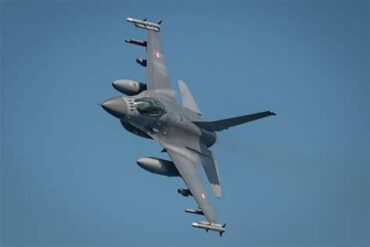
At least three serious incidents reportedly resulted in damage to receiving aircraft during boom operations. Fighter aircraft including the General Dynamics F-16 Fighting Falcon and the Fairchild Republic A-10 Thunderbolt II experienced difficulties maintaining safe connections with the KC-46’s boom system.
The aircraft’s boom actuator mechanism proved excessively rigid compared to older tankers. Legacy systems on aircraft like the KC-135 allowed more flexibility during contact, reducing stress on receiving aircraft during turbulent maneuvers.
The KC-46’s stiffer system increased the likelihood of nozzle binding incidents, where the refueling boom could become lodged inside the receiving aircraft’s receptacle.
Several incidents reportedly caused millions of dollars in damage.
Boeing’s Redesign Efforts Highlight The Depth Of The Problems
The severity of the KC-46’s deficiencies forced Boeing and the Air Force into prolonged redesign efforts.
The company began developing the upgraded RVS 2.0 system featuring improved 4K video feeds, enhanced depth perception software, and LiDAR-assisted distance calculations intended to solve the original system’s visual shortcomings.
Boeing also initiated redesigns for the boom telescope actuator to reduce stiffness and improve safe contact dynamics during refueling operations.
These modifications were not minor software patches. They represented major engineering corrections to core mission systems.
Additional problems continued emerging throughout production.
Structural flaws involving fuselage and wing support components triggered delivery pauses in 2025. Fuel leaks, auxiliary power unit failures, and manufacturing quality concerns added further pressure to the program.
Congress eventually intervened by limiting funding until critical Category 1 deficiencies could be corrected.
The controversy intensified because the KC-46 program operates under a fixed-price contract structure. While this arrangement protected taxpayers from runaway procurement costs, Boeing absorbed enormous financial losses attempting to correct the aircraft’s problems.
By late 2025, Boeing had reportedly accumulated more than $7 billion in losses associated with the program.
The tanker intended to symbolize aerospace modernization instead became a case study in the risks of overly ambitious defense procurement.
The KC-46 Is Advanced — But Still Inferior In Key Areas
Supporters of the KC-46 correctly point out that the Pegasus possesses capabilities the KC-10 never had. Its digital communications architecture, defensive systems, and network integration reflect the realities of modern warfare.
But the criticism surrounding the aircraft persists because the KC-46 still falls short in several core tanker metrics that matter enormously during real-world military operations.
The numbers reveal the problem clearly.
The KC-10 carried substantially more fuel than the KC-46. Its cargo payload exceeded the Pegasus by over 100,000 pounds. Its operational range was dramatically longer. The aircraft also delivered superior raw transport capability and strategic endurance.
In practical terms, the KC-10 could deploy larger fighter packages farther distances with fewer supporting aircraft.
The Pegasus, despite its advanced electronics, remains less capable as a pure strategic tanker.
That reality has become especially concerning because the Air Force simultaneously continues extending the service life of the KC-135 fleet. Rather than fully replacing older tankers, the KC-46 currently supplements them while still undergoing critical redesign work.
This means the Air Force retired its most capable tanker before its replacement fully matured.
The Air Force Chose Future Potential Over Proven Capability
The KC-10 represented the peak of Cold War strategic tanker philosophy: massive capacity, operational flexibility, and rugged reliability. It excelled during long-range force projection missions and proved itself repeatedly in combat and humanitarian operations alike.
The KC-46 represents a different philosophy entirely.
Instead of maximizing raw fuel and cargo capacity, the Pegasus prioritizes survivability, digital connectivity, and integration within future network-centric warfare concepts. In theory, this approach aligns with the Pentagon’s evolving vision for high-end conflicts against technologically sophisticated adversaries.
But the transition exposed a dangerous gap between concept and execution.
The Air Force effectively traded a proven aircraft for one still struggling to achieve full operational reliability. While the Pegasus may eventually fulfill its intended promise, the aircraft’s troubled introduction has already damaged confidence across the defense community.
For many military aviation observers, the situation reflects a broader trend affecting modern defense procurement programs. Advanced digital systems increasingly promise revolutionary capabilities, yet complexity often introduces vulnerabilities older aircraft simply never faced.
The KC-10 was not glamorous by modern standards. It did not rely on panoramic 3D displays, LiDAR-assisted refueling systems, or advanced battlefield networking. It simply worked — consistently, globally, and under immense operational pressure.
That reliability is precisely why many veterans, pilots, and defense analysts continue arguing that the Air Force retired one of the greatest tankers ever built before its successor was truly ready to take its place.