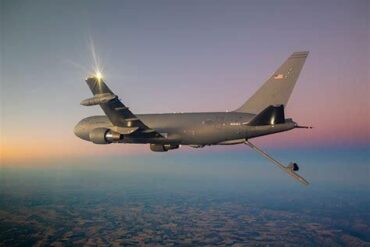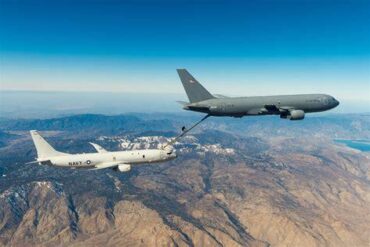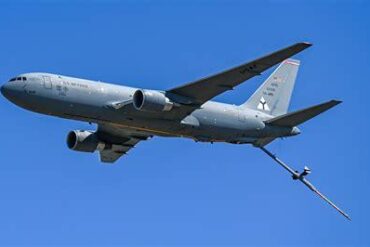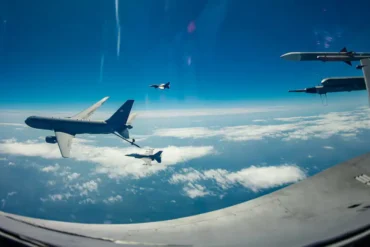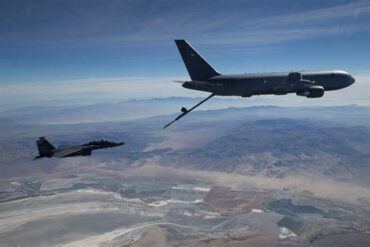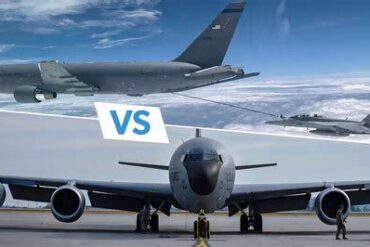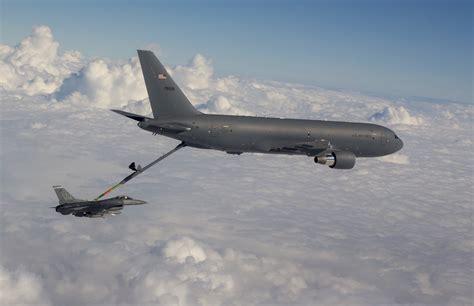
The United States Air Force is dramatically increasing its planned fleet of Boeing KC-46 Pegasus aerial refueling tankers, signaling a major shift in how the Pentagon views the future of global airpower. What originally began as a replacement program for portions of the aging KC-135 Stratotanker fleet has evolved into one of the most important aviation modernization efforts in the American military.
The Air Force now intends to field 263 KC-46 aircraft, a substantial increase from the originally planned 179 jets. The proposed expansion includes a request for billions in additional procurement funding, reflecting mounting concern over the survivability, readiness, and long-term sustainability of America’s current tanker force.
Behind the numbers lies a far broader strategic reality. The United States is preparing for an era defined by long-range conflict, contested airspace, and simultaneous operational demands across Europe, the Middle East, and the Indo-Pacific. In that environment, aerial refueling is no longer a supporting capability sitting quietly in the background. It has become one of the central pillars of modern warfare.
The KC-46 is now expected to carry far more responsibility than planners envisioned a decade ago. The aircraft is being pushed into service not only because of growing global tensions, but because the Air Force is running out of time with its aging legacy tankers.
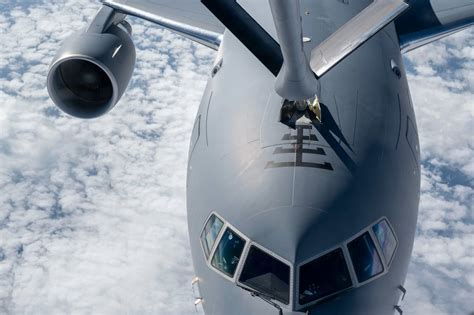
The KC-46 Pegasus Evolved From A Troubled Program Into A Strategic Necessity
The road to the KC-46 program was long, politically contentious, and filled with technical setbacks. Boeing’s efforts to market a tanker variant of the 767 airliner stretch back to the early 2000s, when the company attempted to promote the aircraft internationally under the KC-767 designation. While Japan and Italy eventually purchased small fleets, the US Air Force remained unconvinced for years.
At the time, military planners were wrestling with how to replace the enormous KC-135 fleet, which had been serving since the Eisenhower administration. Several procurement efforts collapsed amid controversy, budget disputes, and protests from competing manufacturers. The eventual KC-X competition became one of the most closely watched defense acquisitions of its era.
When Boeing finally secured the contract in 2011, the KC-46 was presented as a technologically advanced yet cost-effective tanker capable of serving multiple mission types. Based on the 767-2C platform, the aircraft combined aerial refueling capability with cargo transport, passenger movement, and aeromedical evacuation functions.
The Pegasus introduced modern systems that significantly differentiated it from older tankers. Among the most important innovations were:
- A fly-by-wire refueling boom
- Advanced communications systems
- Enhanced defensive systems
- Digital cockpit architecture
- Multi-role mission capability
Yet almost immediately after development accelerated, major technical problems surfaced.
The most serious issue centered on the Remote Vision System (RVS), which allows boom operators to conduct refueling operations remotely using high-definition cameras and sensors instead of direct visual observation. Glare, depth perception issues, and inconsistent imagery created operational limitations that delayed full mission capability for years.
Those deficiencies generated heavy criticism from the Pentagon, Congress, and oversight agencies such as the Government Accountability Office. For a time, the KC-46 program appeared at risk of becoming another expensive modernization headache.
But the global strategic picture changed faster than expected.
As tensions with China intensified and operational demands expanded worldwide, the Air Force increasingly realized it could not wait for a perfect tanker platform. The KC-46, despite its flaws, represented the only scalable replacement available for an aging fleet approaching retirement.
That reality transformed the aircraft from a controversial acquisition into a strategic necessity.
The Aging KC-135 Fleet Has Become A Serious Operational Liability
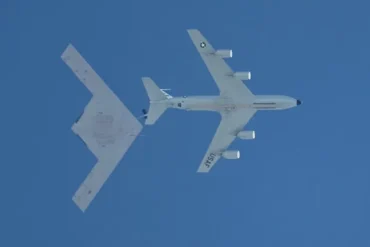
The biggest driver behind the KC-46 expansion is the worsening condition of the KC-135 Stratotanker fleet. These aircraft first entered service in the late 1950s, making many of them older than the pilots and maintainers operating them today.
The situation has become increasingly unsustainable.
The KC-135 still represents roughly 80% of the Air Force tanker inventory, despite an average fleet age exceeding 60 years. Maintaining aircraft from that era requires enormous maintenance effort, extensive structural inspections, and continuous upgrades simply to keep them operational.
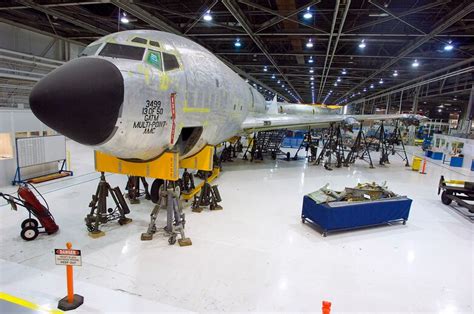
Corrosion, wiring fatigue, obsolete systems, and structural wear have become routine challenges. Sustainment costs continue rising as spare parts become harder to source and maintenance workloads grow more intensive.
More importantly, these aircraft were never designed for the threat environment emerging today.
Modern warfare increasingly involves:
- Long-range precision weapons
- Sophisticated surface-to-air missile systems
- Cyber warfare integration
- Anti-access and area denial strategies
- Electronic warfare operations
The KC-135 lacks many survivability features required for high-threat environments. While tankers traditionally operate away from direct combat zones, modern missile systems dramatically extend the reach of hostile forces, shrinking safe operating areas.
Recent incidents highlighted those vulnerabilities. During deployments connected to heightened tensions involving Iran, multiple KC-135 aircraft experienced serious operational mishaps. One aircraft sustained heavy damage, while another was lost after a midair collision.
Although these incidents were not caused by enemy fire, they reinforced concerns about the age and fragility of the fleet.
The retirement of the KC-10 Extender has intensified the problem further. The KC-10 previously served as a larger-capacity tanker that helped offset KC-135 limitations. With those aircraft now retired, the burden increasingly falls on the KC-46.
What was once envisioned as a gradual replacement strategy has rapidly evolved into an urgent recapitalization effort.
The Air Force is no longer replacing a single aging aircraft type. It is effectively trying to replace two legacy fleets simultaneously while maintaining worldwide operational readiness.
The Pentagon Faces A Dangerous Tanker Production Gap
Another major factor behind expanded KC-46 procurement is the looming gap before the next generation of tankers enters service.
The Air Force is already developing concepts for the Next-Generation Air Refueling System (NGAS), a future tanker platform expected to feature advanced survivability, improved networking capability, and potentially stealth-oriented design elements.
But NGAS remains years away from operational deployment.
Current estimates suggest the next-generation tanker may not arrive until the mid-2030s or later. Meanwhile, KC-46 production under existing plans would conclude around 2030.
That timeline creates a dangerous production gap.
Historically, shutting down military aircraft production lines has often produced costly long-term consequences. Once industrial expertise disperses and supplier networks collapse, restarting production becomes extraordinarily difficult and expensive.
The Air Force wants to avoid repeating that mistake.
By extending KC-46 procurement, military planners can preserve tanker manufacturing infrastructure while maintaining fleet growth during a period of intensifying geopolitical uncertainty.
This approach serves several strategic purposes simultaneously.
First, it prevents tanker inventory numbers from shrinking as older KC-135 aircraft retire faster than anticipated.
Second, it preserves Boeing’s production capacity and skilled workforce, which remain critical for future tanker development.
Third, it creates operational stability during the transition toward NGAS.
Most importantly, it ensures the Air Force does not face a period where no new tanker aircraft are entering service while global demand continues rising.
That concern has become increasingly urgent as military planners evaluate potential conflict scenarios involving China in the Indo-Pacific.
Indo-Pacific Strategy Has Made Tankers More Important Than Ever
The modern American military depends heavily on aerial refueling. Fighters, bombers, surveillance aircraft, transports, and intelligence platforms all rely on tankers to sustain operations across vast distances.
Nowhere is this more evident than in the Indo-Pacific region.
Potential military operations involving Taiwan, the South China Sea, or broader Pacific contingencies would require aircraft to operate across enormous stretches of ocean with limited access to forward bases.
In such scenarios, tanker aircraft become the connective tissue holding the entire air campaign together.
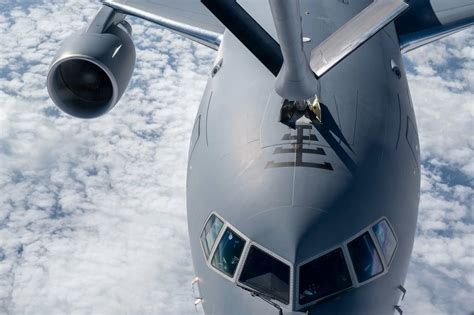
Without aerial refueling, even advanced aircraft like the F-35 Lightning II or future B-21 Raider stealth bomber would face severe operational restrictions.
Range, endurance, loiter time, and mission flexibility all depend on tanker availability.
This has forced the Air Force to rethink earlier assumptions regarding tanker fleet size. Previous estimates were largely based on counterinsurgency operations and lower-intensity conflicts where nearby bases were available.
Future wars may look entirely different.
A conflict against a near-peer adversary would likely involve:
- Massive fuel consumption
- Extended flight distances
- Continuous airborne operations
- Rapid force dispersal
- Multiple simultaneous theaters
Under those conditions, even a modest tanker shortage could cripple combat effectiveness.
Air Mobility Command leaders have repeatedly emphasized that aerial refueling is indispensable for sustained air dominance. Tankers enable fighters to remain on station longer, allow bombers to reach distant targets, and support reconnaissance aircraft conducting extended surveillance missions.
The growing importance of tanker operations has elevated aerial refueling from a logistical support function into a frontline strategic capability.
This shift explains why tanker procurement is accelerating despite ongoing budget pressures across the broader defense sector.
Congress Is Pressuring The Air Force To Expand The Tanker Fleet Faster
Political pressure from Congress has also become a powerful force behind the KC-46 expansion.
Lawmakers increasingly view tanker capacity as essential to national security, particularly as military competition with China and Russia intensifies.
The House version of the FY2026 National Defense Authorization Act proposed increasing the minimum tanker fleet requirement from 466 aircraft to 504 by 2027. That represents a major increase over previous Air Force planning assumptions.
The proposal demonstrates growing bipartisan concern regarding the future readiness of America’s aerial refueling force.
Congressional support for tanker expansion reflects several overlapping concerns:
- Aging KC-135 aircraft
- Delays in next-generation tanker development
- Rising operational demand
- Indo-Pacific force projection requirements
- Industrial base preservation
Lawmakers understand that tanker shortages could undermine virtually every other aspect of US airpower.
Advanced fighters and bombers cannot operate effectively without fuel support. Long-range strike concepts collapse without aerial refueling. Even humanitarian and rapid-response missions depend heavily on tanker availability.
Congress also recognizes the strategic importance of maintaining domestic aerospace production capability.
Extending KC-46 procurement keeps Boeing’s tanker line active while preserving thousands of jobs throughout the defense industrial base. That economic dimension adds additional political momentum behind continued purchases.
For the Air Force, congressional involvement creates a complicated balancing act.
Military leaders must simultaneously address technical concerns surrounding the KC-46 while meeting growing demands for rapid fleet expansion. The service also needs to invest in NGAS development without sacrificing current readiness.
Nevertheless, Congress has made clear that tanker modernization is no longer optional.
The KC-46 Still Faces Serious Technical Challenges
Despite its growing importance, the KC-46 program remains technically imperfect.
The aircraft continues to struggle with lingering deficiencies tied primarily to the Remote Vision System. Although upgrades are underway, the Air Force has repeatedly stressed that Boeing must fully resolve these problems before additional procurement commitments move forward at maximum pace.
The RVS remains critical because it directly affects safe refueling operations. Boom operators depend on accurate visual information to guide the refueling boom into receiving aircraft during flight.
Even small visual distortions can create operational risk.
Boeing and the Air Force have spent years redesigning the system through software improvements, hardware modifications, and sensor refinements. Progress has been made, but the issue remains one of the program’s defining controversies.
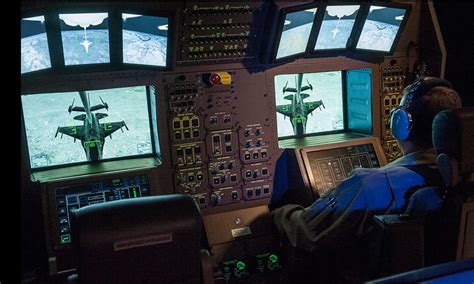
Additional concerns involve certification timelines, mission readiness rates, and maintenance reliability as the fleet grows larger.
Yet despite these challenges, the Air Force has few realistic alternatives.
No other tanker platform is currently positioned to enter service at scale within the required timeframe. The KC-46 may not be perfect, but it is operational, in production, and increasingly integrated into frontline missions.
That reality has shifted the Pentagon’s approach.
Instead of viewing the Pegasus as a temporary replacement, planners now see it as the long-term backbone of American aerial refueling capability for decades to come.
The Future Of Airpower Depends On Tanker Availability
The expanding KC-46 fleet reveals something much larger about the future of warfare.
Modern airpower is no longer defined solely by stealth fighters, hypersonic weapons, or next-generation bombers. It is increasingly shaped by the ability to sustain operations across global distances for extended periods under contested conditions.
Aerial refueling sits at the center of that equation.
Without tankers, combat aircraft lose flexibility, endurance, and strategic reach. Long-range strike operations become dramatically harder to sustain. Rapid global response becomes constrained by geography.
The Air Force now understands that its earlier tanker assumptions were built for a different strategic era.
The world facing the Pentagon today is defined by simultaneous crises, enormous operational distances, and near-peer military competition. That environment requires more fuel capacity, more tanker availability, and greater operational resilience than previously expected.
The KC-46 Pegasus has emerged as the bridge between America’s aging Cold War tanker fleet and the uncertain future of next-generation aerial refueling systems.
Its expansion is not merely about replacing old aircraft.
It reflects a broader realization that in modern warfare, the ability to move fuel through the sky may ultimately determine how effectively the United States can project power around the globe.
The Air Force once believed fewer than 180 KC-46 aircraft would be enough.
Now it is preparing for a future where far more may still not be sufficient.