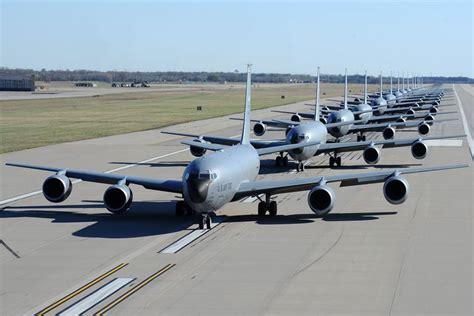
Rising tensions across the Middle East have placed unprecedented operational pressure on American aerial refueling assets. A recent missile strike attributed to Iran has damaged five U.S. Air Force Boeing KC-135 Stratotanker aircraft stationed at Prince Sultan Air Base (PSAB) in Saudi Arabia, highlighting the vulnerability of critical logistics infrastructure that supports coalition air operations in the region.
The incident occurred at the sprawling air base near Al Kharj, a strategic installation that has hosted U.S. military operations since the aftermath of the 1990 Gulf War. According to early reporting, the aircraft were parked on the ground when Iranian missiles struck portions of the airfield infrastructure. Although the tankers sustained damage, officials indicate that all five aircraft are repairable and expected to eventually return to operational service.
Despite the severity of the attack, no personnel casualties were reported in connection with the damaged aircraft. Nevertheless, the strike represents a significant moment in the escalating confrontation involving the United States, Iran, and regional partners, particularly as tanker aircraft serve as a lifeline for sustained air operations across vast combat zones.
Strategic Importance of Prince Sultan Air Base
Prince Sultan Air Base has become one of the most critical American military hubs in the Middle East. Located roughly 372 miles (600 kilometers) from Iran’s coastline, the installation allows rapid deployment of airpower across the Persian Gulf and neighboring conflict zones. Its proximity to potential flashpoints also makes it an attractive target for Iranian long-range missiles and drones.
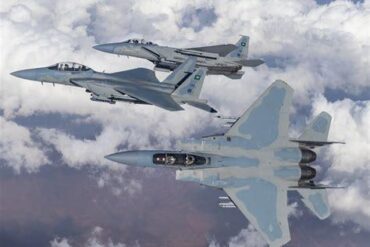
The base regained strategic prominence in 2019 when the 378th Expeditionary Wing was established to oversee renewed U.S. air operations there. Since then, PSAB has hosted a rotating mix of fighter aircraft, intelligence platforms, and aerial refueling tankers tasked with supporting coalition missions throughout the region.
In recent months, the base has repeatedly faced threats from the Islamic Revolutionary Guard Corps (IRGC). Earlier attacks in the area included drone incursions and missile launches that Saudi air defenses intercepted. One previous strike reportedly killed a U.S. service member and injured another, underscoring the persistent security challenges surrounding the installation.
Missile Strike Damages Tankers on the Ground
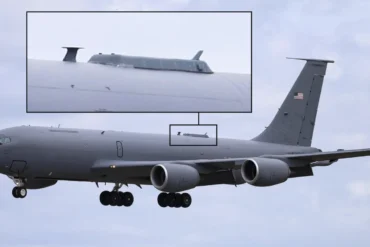
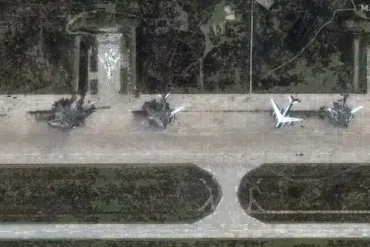
The latest strike appears to have targeted aircraft parked on the airfield apron. Imagery circulated online by defense observers suggests at least one tanker sustained visible structural damage near its tail section. The aircraft identified in these images carried markings associated with the Air Force Reserve Command, suggesting that reserve components were participating in ongoing refueling missions.
While U.S. Central Command has not publicly released a detailed damage assessment, officials confirmed that the affected aircraft can be repaired. Maintenance teams are already evaluating structural integrity, fuel systems, and avionics components before returning the tankers to service.
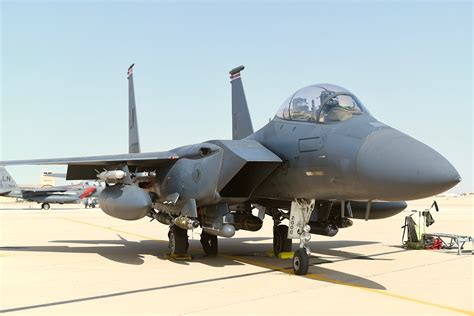
The incident follows another recent loss within the tanker fleet. A separate KC-135 crash during operations in Iraq—reportedly unrelated to enemy action—destroyed an aircraft and killed six crew members. Combined with the newly damaged aircraft, the operational strain on tanker forces has intensified.
Air Force Disperses Tanker Fleet Across the Region
To mitigate the risk of concentrated losses, the U.S. Air Force has begun dispersing aerial refueling aircraft across multiple bases in the region. This strategy, often referred to as “aircraft scattering,” reduces the probability that a single missile barrage could disable a significant portion of the fleet.
Such repositioning has become increasingly necessary due to the short missile flight times from Iran to Saudi Arabia. Ballistic missiles launched across the Persian Gulf can reach targets in as little as six to eight minutes, leaving limited reaction time for aircraft parked in exposed areas.
Despite the strike, PSAB continues operating as an active tanker hub. Aircraft from the base are still conducting refueling sorties that support reconnaissance missions, bomber patrols, and combat aircraft flying throughout the Middle East theater.
The KC-135 Stratotanker: Backbone of U.S. Aerial Refueling
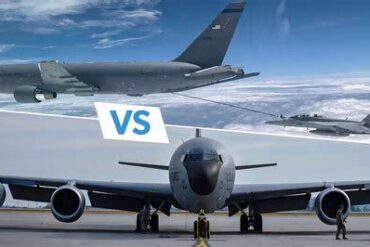
For more than six decades, the Boeing KC-135 Stratotanker has served as the backbone of the United States’ global aerial refueling capability. Derived from the commercial Boeing 707 airframe, the aircraft effectively functions as a flying fuel depot capable of extending the operational reach of fighters, bombers, and surveillance aircraft.
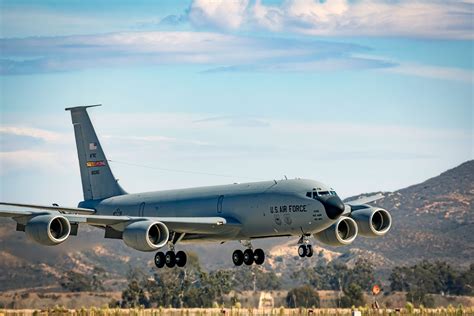
Each tanker carries more than 200,000 pounds of fuel, allowing it to sustain multiple aircraft during extended missions. A typical crew includes a pilot, co-pilot, and boom operator who manages the refueling boom connecting to receiving aircraft during flight.
Beyond fuel delivery, the aircraft can transport up to 37 passengers or cargo loads, making it a versatile logistical platform during military operations. Modernized KC-135 variants are powered by four CFM-56 turbofan engines, providing improved efficiency and range compared with earlier models.
Fleet Capacity Remains Strong Despite Damage
Although the recent attack has temporarily removed several aircraft from operational duty, the broader tanker fleet remains substantial. The U.S. Air Force currently operates approximately 376 KC-135 aircraft, supplemented by a growing fleet of KC-46A Pegasus tankers and specialized MC-130J refueling aircraft used by special operations forces.
This large inventory ensures that even multiple damaged aircraft will not dramatically reduce overall refueling capacity. Instead, commanders are expected to adjust deployment patterns and distribute tanker assets across more secure locations.
Still, the strike at Prince Sultan Air Base underscores a growing reality of modern warfare: logistics aircraft, once considered relatively safe behind the front lines, have become increasingly exposed to precision missile attacks. As tensions across the Middle East continue to escalate, protecting these airborne fuel lifelines will remain a top priority for American military planners.