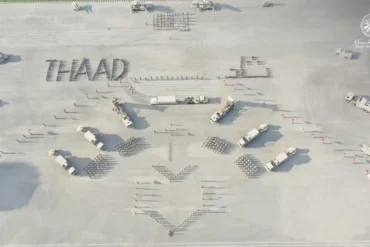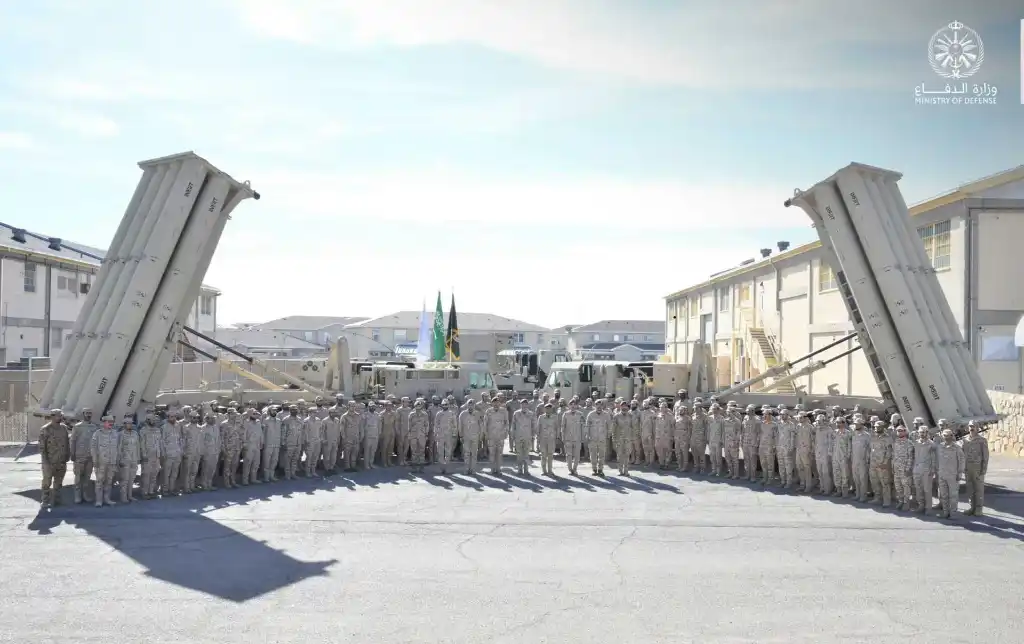
Saudi Arabia has marked another milestone in its long-term missile defense modernization by completing training for a fourth Terminal High Altitude Area Defense (THAAD) battery in the United States. The achievement reflects a steady progression in personnel readiness and signals Riyadh’s intent to field a layered, resilient air and missile defense architecture capable of countering increasingly sophisticated ballistic missile threats across the region.
The training was conducted at Fort Bliss, Texas, the U.S. Army’s primary qualification and certification hub for THAAD units. According to Saudi defense authorities, the newly graduated battery completed a full cycle of individual and specialized instruction, followed by integrated battery-level exercises designed to simulate real-world ballistic missile defense scenarios. While no deployment timeline or operational location has been disclosed, the completion of training represents a critical prerequisite before the system can be activated and integrated into national defense networks.
This fourth battery graduation also highlights the methodical pace of Saudi Arabia’s force generation strategy. Rather than rushing deployment, the Kingdom has prioritized crew proficiency, sustainment planning, and interoperability with allied forces, particularly the United States, ensuring that each THAAD unit reaches a consistent readiness standard before becoming operational.
Saudi personnel assigned to the THAAD program begin with intensive individual training that covers system fundamentals and operational doctrine. Soldiers then advance into specialized roles associated with launch operations, radar management, fire control, and command-and-control coordination. This phased approach ensures that each operator not only understands their specific function but also how their role integrates into the broader engagement sequence during a missile intercept mission.
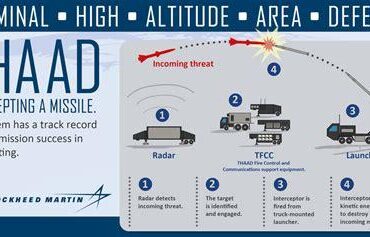
Battery-level training represents the most demanding phase of the pipeline. Crews must synchronize radar detection, target tracking, interceptor launch decisions, and communications under strict time constraints that mirror the compressed timelines of ballistic missile engagements. These exercises are conducted using the same standards applied to U.S. Army THAAD units and other international operators, underscoring the emphasis on interoperability and shared operational doctrine.
Completion of this training cycle significantly expands Saudi Arabia’s pool of qualified THAAD personnel. Beyond immediate operational needs, the growing cadre of trained operators enables rotation schedules, long-term sustainment, and the gradual activation of additional fire units as equipment deliveries and infrastructure preparations continue.
Strategic Context of Saudi Arabia’s THAAD Acquisition
Saudi Arabia’s THAAD program stems from a 2017 defense agreement with the United States valued at approximately $15 billion. The package includes seven THAAD fire units, associated AN/TPY-2 radars, tactical fire control stations, launch vehicles, and an estimated 360 interceptor missiles, along with comprehensive training and sustainment support. The first Saudi THAAD battery achieved activation status in July 2025, establishing the foundation for subsequent units now moving through the training pipeline.
The graduation of a fourth battery in January 2026 aligns with this phased approach. It does not signify final force completion but rather another step in a multi-year process that balances personnel readiness, interceptor availability, and integration with existing air defense assets. Saudi defense planners have consistently emphasized that operational effectiveness depends as much on trained crews and command integration as on the hardware itself.
THAAD’s Role in a Layered Missile Defense Architecture
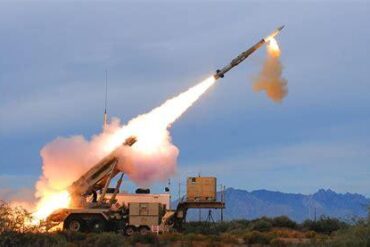
The Terminal High Altitude Area Defense system is designed to intercept short-range, medium-range, and limited intermediate-range ballistic missiles during their terminal phase of flight. Unlike traditional systems that rely on explosive warheads, THAAD interceptors employ hit-to-kill technology, destroying incoming threats through direct kinetic impact at extremely high velocities.
Each interceptor measures approximately 6.17 meters in length, weighs around 900 kilograms, and can reach speeds of up to 2,800 meters per second. Engagement altitudes can extend to roughly 150 kilometers, with interception ranges commonly cited between 150 and 200 kilometers. These characteristics allow THAAD to engage threats both inside and outside the atmosphere, providing a critical upper-tier defense layer.
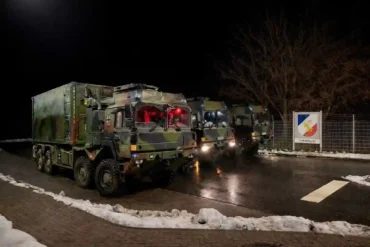
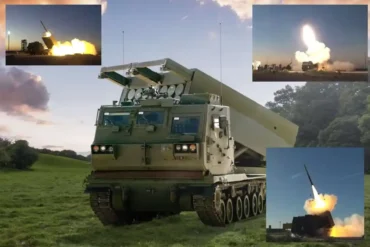
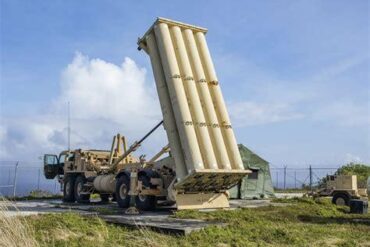
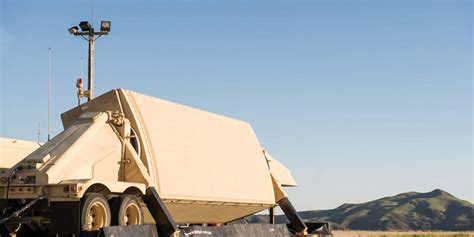
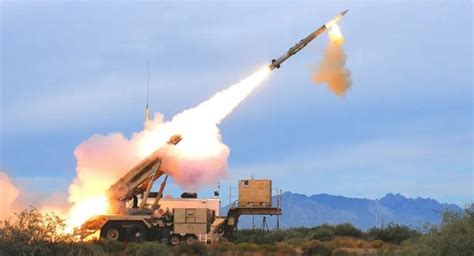
A standard THAAD battery consists of six truck-mounted launchers, each carrying eight interceptors, an AN/TPY-2 X-band radar, and a tactical fire control and communications element. The full battery typically requires around 90 personnel to operate effectively. Within a layered defense framework, THAAD complements lower-tier systems such as the Patriot, extending the defended battlespace and increasing overall interception opportunities.
From Development Challenges to Operational Maturity
The THAAD program traces its origins to the late 1980s, with Lockheed Martin selected as prime contractor in 1992. Early development was marked by technical challenges, including multiple failed intercept tests during the mid-1990s. These setbacks prompted extensive redesigns and refinements, ultimately leading to successful intercepts by 1999 and the start of engineering and manufacturing development in 2000.
Initial operational deployment occurred in 2008, and the system has since evolved into a mobile, rapidly deployable asset. Lockheed Martin Missiles and Fire Control leads system integration, supported by a broad industrial base responsible for radar systems, propulsion, electronics, and launch vehicles. Decades of testing and operational use have transformed THAAD from an experimental concept into a proven missile defense capability.
Operational Experience and Global Demand
The United States currently operates eight THAAD batteries, with long-term deployments in Guam and South Korea, as well as rotational missions in the Middle East and Israel. The system has demonstrated real-world effectiveness, including an operational intercept conducted in the United Arab Emirates in January 2022.
During heightened regional tensions in June 2025, THAAD systems were employed alongside allied missile defenses to counter large-scale ballistic missile attacks attributed to Iran. Open-source estimates indicate that THAAD interceptors accounted for a significant portion of the missiles used during these engagements, reinforcing the system’s value while also highlighting the strain such conflicts place on interceptor inventories.
Readiness, Sustainment, and the Road Ahead
High interceptor expenditure in recent conflicts has exposed challenges in production capacity and replenishment timelines. Some interceptors funded earlier in the decade are not scheduled for delivery until the latter half of the 2020s, creating gaps between procurement decisions and available stockpiles. For Saudi Arabia, this reality underscores the importance of synchronizing trained crews with interceptor deliveries and long-term sustainment planning.
The completion of training for a fourth THAAD battery demonstrates tangible progress in human capital development, even as hardware delivery schedules continue to shape operational rollout. As additional Saudi batteries move toward activation, the integration of THAAD into national command-and-control structures will be decisive in translating training achievements into credible, ready missile defense capability.