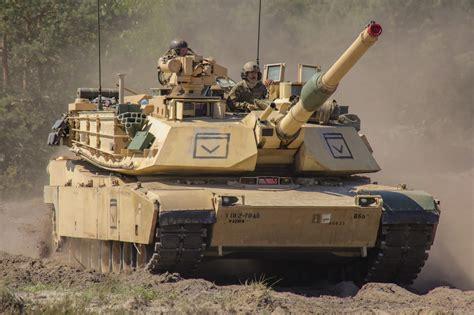
In a landmark development poised to reshape the military landscape of the Middle East, Saudi Arabia has confirmed the acquisition of nearly 300 new M1 Abrams main battle tanks under a far-reaching Strategic Defense Agreement (SDA) finalized with the United States. This multi-layered accord, sealed between President Donald J. Trump and Crown Prince Mohammed bin Salman, not only symbolizes a deeper military alliance but also represents one of the most significant foreign arms and investment packages ever extended between Washington and Riyadh.
At its core, the SDA strengthens Riyadh’s military foundation while reinforcing its political alignment with American geopolitical interests. It links modern armored capability with broader industrial and strategic frameworks, creating long-term dependencies that extend beyond firepower.
Technical Superiority of the M1A2 SEPv3 Abrams
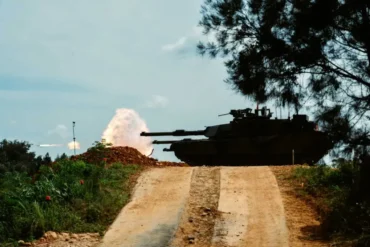
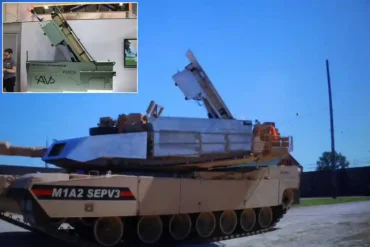
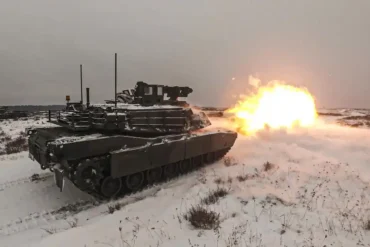
The centerpiece of the agreement, the M1A2 Abrams main battle tank, particularly in its export-standard SEPv3 configuration, represents the zenith of modern armored warfare. This tank is equipped with a 120 mm M256 smoothbore cannon, capable of deploying advanced kinetic and programmable airburst rounds.
Its combat value lies in a fusion of:
- Advanced thermal imaging for true 24-hour hunter-killer targeting.
- Digital fire-control systems that stabilize and align the main gun while moving.
- Composite armor with compartmentalized ammunition storage, dramatically increasing crew survivability.
- 1,500 horsepower AGT1500 turbine engine, allowing for exceptional desert mobility and speeds exceeding 65 km/h.
Saudi Arabia’s selection of this platform aligns with battlefield requirements shaped by its Yemeni interventions and border security priorities. The high-performance thermal sensors and digital targeting are especially critical in combating dispersed anti-tank guided missile (ATGM) teams operating in rugged environments.
Replacing Aging Armor with Unified Lethality
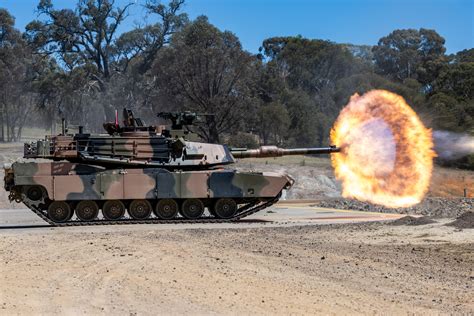
The delivery of 300 new Abrams tanks not only expands but transforms Saudi Arabia’s armored warfare capacity. The kingdom already operates approximately 575 M1A2S tanks, a localized variant optimized for harsh desert conditions and upgraded electronics. With the new order, Saudi Arabia is poised to:
- Stand up at least one full heavy division or multiple armored brigades.
- Phase out over 650 M60A3 Patton tanks, aging relics from the Cold War.
- Standardize training, maintenance, and digital systems across its heavy armor force.
This consolidation into a singular platform enhances interoperability with U.S. forces and C4ISR (Command, Control, Communications, Computers, Intelligence, Surveillance and Reconnaissance) systems. The move also allows Riyadh to integrate seamlessly into larger U.S.-led regional defense exercises.
Strengthening Strategic Deterrence Across Borders
With tensions simmering across the Arabian Peninsula and Iran continuing to leverage proxy warfare, the increased armored capabilities provide Saudi Arabia with new operational flexibility and deterrent credibility. The heavy armor expansion:
- Secures oil infrastructure and critical pipelines across the Eastern Province.
- Enhances sustained combat capability along the Yemeni border, particularly near volatile zones such as Jizan and Najran.
- Reinforces deterrence against regional adversaries like Iran, especially given Tehran’s reliance on drone and ATGM tactics.
The ability of SEPv3 tanks to execute high-speed, precision engagements using networked sensors and hunter-killer optics positions Saudi forces at a qualitative advantage over conventional and irregular threats.
A Wider Strategic Framework: Investment, Arms, and Technology
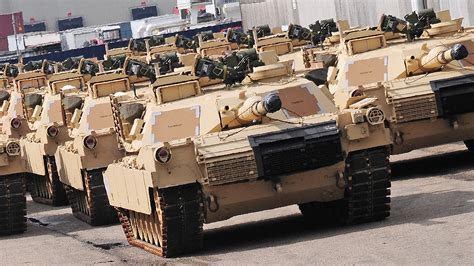
Beyond tanks, the SDA is a geostrategic recalibration that broadens American access and influence in Saudi defense and industrial sectors. The agreement includes:
- Streamlined U.S. arms sales processes to Saudi Arabia.
- Expanded access for American defense contractors to local programs.
- Formalization of Saudi reliance on U.S. systems, including F-35 aircraft.
- Parallel accords in civil nuclear energy, critical minerals, and artificial intelligence.
These integrated elements signal a clear intent to bind Saudi technological and security development to U.S. standards. Importantly, Saudi Arabia’s designation as a Major Non-NATO Ally (MNNA) adds a diplomatic layer, cementing a preferred defense partnership.
Learning From Battlefield Experience: Yemen, Gaza, Ukraine
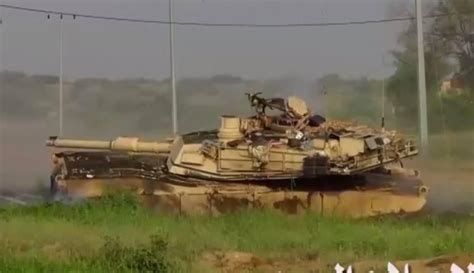
Saudi Arabia’s experience in Yemen has not been without cost. M1A2S tanks have suffered battlefield losses, particularly to Iranian-supplied ATGMs and loitering munitions. This operational history is influencing procurement strategy.
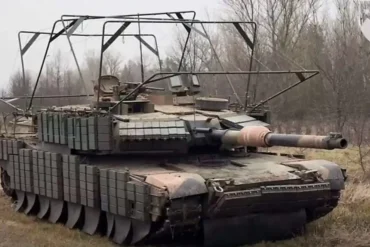
Military analysts stress that future survivability is now linked as much to electronic warfare and active defense as to passive armor. Modern conflict theaters such as Ukraine and Gaza have shown that even top-tier tanks are vulnerable without:
- Hard-kill Active Protection Systems (APS).
- Integrated air defense coverage.
- Counter-drone electronic warfare capabilities.
While current Saudi Abrams lack APS, it is inconceivable that Riyadh would proceed with such a substantial acquisition without evaluating modern systems like Trophy or Iron Fist, potentially in partnership with Israeli or U.S. suppliers.
Comparisons With Global Tank Leaders
In acquiring the M1A2 SEPv3, Saudi Arabia positions itself alongside the world’s most elite tank operators. These include:
- Germany’s Leopard 2A7, featuring a 120 mm L55 gun, enhanced mine protection, and superior fuel efficiency.
- France’s Leclerc, notable for its autoloader, reduced crew size, and mobility-focused 57-ton chassis.
- Russia’s T-90M, equipped with a 125 mm cannon, Relikt ERA, and Kalina fire-control—but prone to autoloader vulnerability under direct hits.
While the Abrams lacks missile-launching capability, it compensates with unrivaled crew protection, superior targeting systems, and generous upgrade potential. These include sensor fusion, network integration, and future AI-assisted battlefield analytics.
Industrial and Economic Impact
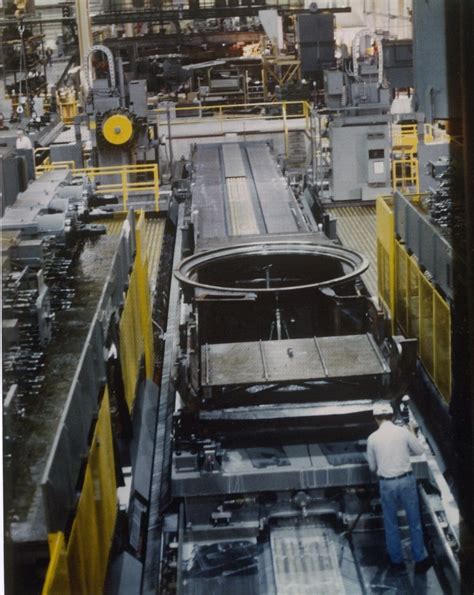
From the U.S. side, the Abrams order revives production and modernization lines at the Lima Army Tank Plant in Ohio, representing a multi-billion-dollar boost to the American defense industrial base. Each SEPv3 tank costs approximately $24 million, translating to a total program value nearing $7.2 billion, excluding logistics, training, and sustainment contracts.
In return, Saudi Arabia has pledged to ramp up total U.S. investments to nearly $1 trillion, spanning energy, technology, and defense sectors. This flow of capital forms part of Crown Prince Mohammed bin Salman’s Vision 2030 strategy, which seeks to diversify the kingdom’s economy while embedding it within a U.S.-anchored security matrix.
Conclusion: Steel for Stability in a Volatile Region
The acquisition of 300 new M1 Abrams tanks marks a strategic inflection point for both Saudi Arabia and the United States. It strengthens Riyadh’s ground forces with world-class armored capabilities and aligns the kingdom’s military future even more deeply with American technology and doctrine.
Simultaneously, it revitalizes the U.S. defense manufacturing base and sends a message to regional adversaries: Washington remains the premier security partner in the Gulf. As Saudi Arabia faces down complex threats—ranging from Iran’s proxy network to Red Sea maritime volatility—these tanks may prove not only to be instruments of war, but pillars of deterrence and stability in one of the world’s most combustible regions.