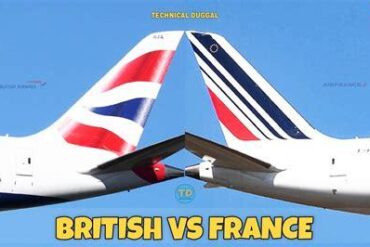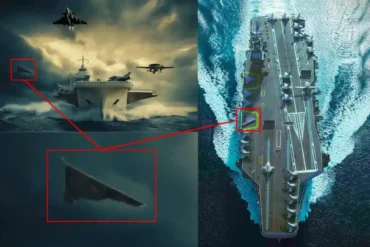
The enduring UK-France defense partnership has entered a transformative phase, driven by shared geopolitical concerns, technological evolution, and strategic necessity. On July 10, 2025, this historic alliance took a decisive leap forward with a renewed agreement encompassing advanced missile programs, reinforced nuclear collaboration, and joint industrial innovations. Spearheaded under the Lancaster House 2.0 framework, this pact solidifies the two nations’ mutual defense capabilities while reflecting an evolved posture in response to new threats from Russia, China, and a shifting NATO dynamic.
A New Era of Anglo-French Missile Collaboration
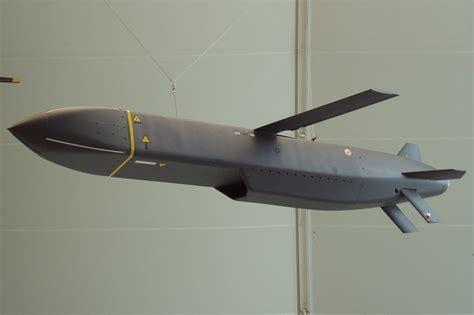
At the heart of the agreement lies the expansion of the Storm Shadow/SCALP missile program—an Anglo-French air-launched cruise missile that has seen real-world effectiveness in the Ukraine conflict. With a range exceeding 500 kilometers and designed for stealth and precision, this missile has delivered devastating blows to fortified Russian infrastructure, especially in Crimea and beyond.
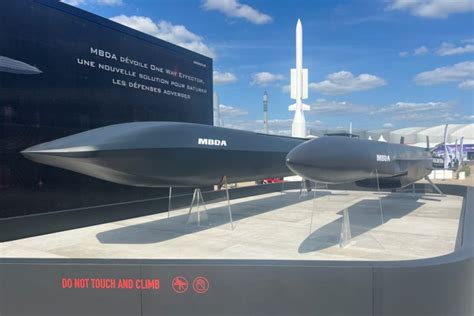
Its relevance on the modern battlefield prompted both London and Paris to commit to acquiring new batches of these deep-strike weapons and to accelerate their successor’s development under the Future Cruise/Anti-Ship Weapon (FC/ASW) program, also known as FMAN/FMC. This next-generation missile will incorporate advanced AI guidance, improved stealth characteristics, and dual capabilities for both land and maritime targets.
The UK Ministry of Defense emphasized that this step marks the “next phase” in designing a missile that goes beyond Storm Shadow’s capabilities, enhancing both deep-strike lethality and maritime interdiction roles. Integration with unmanned systems and AI-assisted target selection will mark a technological leap aligned with future warfighting doctrines.
Nuclear Cooperation: Beyond Deterrence
One of the most significant aspects of the renewed partnership lies in the realm of nuclear collaboration. While both the UK and France maintain independent nuclear deterrents, they have reiterated a commitment to align these capabilities strategically in response to growing global instability. The statement underlined that the nuclear forces could be “coordinated to deter security threats from adversaries,” thereby enhancing strategic cohesion within Europe.
At the Valduc (France) and Aldermaston (UK) research facilities, the two nations continue joint work on nuclear warhead safety, reliability, and simulation, avoiding the need for live testing. Notably, the EPURE hydrodynamic testing facility in France and the Technology Development Centre in the UK have become focal points for collaborative modeling of future nuclear payloads.
Macron’s Strategic Overture: The End of Brexit Tensions
French President Emmanuel Macron’s three-day visit to the UK marks not only diplomatic warmth but strategic alignment. In a speech to both Houses of Parliament, Macron invoked the spirit of Winston Churchill, asserting that France and Britain share a “special responsibility” to uphold the European security architecture. He positioned this cooperation as a counterbalance to emerging global uncertainties, including the perceived drift of American commitment and the assertiveness of China.
British Prime Minister Keir Starmer mirrored this sentiment, declaring that the two nations “stand ready to use our shared might to advance joint capabilities,” signaling that domestic political shifts have opened a new chapter in cross-Channel defense relations. This marks the closure of post-Brexit tensions, replacing divergence with aligned interests on defense, sovereignty, and industrial co-production.
Storm Shadow’s Ukrainian Validation
The Storm Shadow/SCALP missile—used effectively by Ukraine—has drawn global attention to its precision strike capability. With GPS-guided midcourse navigation and terrain-hugging profiles, it has neutralized command centers, airfields, and hardened bunkers, often deep behind Russian lines. This combat-proven success has catalyzed the joint decision to bolster existing stocks and elevate the Future Missile platform.
Ukraine’s deployment of these missiles has not only inflicted material damage but also disrupted Russian logistics and shattered morale, validating NATO’s decision to support precision-strike capabilities over massed armor approaches. London and Paris see these operational lessons as foundational for the future FC/ASW platform.
From Jaguars to Hypersonics: A Legacy of Collaboration
The foundation of UK-France military cooperation goes back decades. One of the earliest large-scale co-developments was the SEPECAT Jaguar fighter jet, born in the 1960s to serve both air forces in low-level strike and reconnaissance roles. Built through a joint venture between British Aircraft Corporation (BAC) and Breguet Aviation (later Dassault), the Jaguar became an international export product and served in numerous combat scenarios.
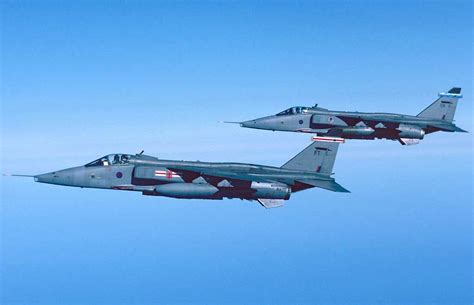
While the UK and France eventually diverged with the Eurofighter Typhoon and Dassault Rafale respectively, the Jaguar marked a high point in bilateral aerospace synergy. Today, a similar path is unfolding with next-generation missile platforms and, potentially, sixth-generation combat aircraft.
Concorde: The Civilian Symbol of Supersonic Synergy
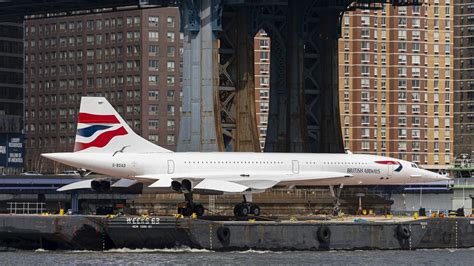
While military cooperation has often taken center stage, perhaps the most culturally resonant symbol of UK-France collaboration remains the Concorde. Developed jointly by BAC and Aerospatiale, this supersonic passenger jet pushed the boundaries of aviation. With a cruising speed of Mach 2, it connected New York to London or Paris in under 3.5 hours.
Despite its technological brilliance, the Concorde was eventually retired in 2003 due to rising costs, environmental concerns, and the impact of a deadly crash in 2000. Yet, its legacy underscores the capability of Anglo-French ventures to achieve what no other nations could replicate at the time: supersonic commercial air travel.
Naval Autonomy and Mine Warfare
The UK and France also remain leaders in maritime autonomous warfare. Under the Maritime Mine Counter Measures (MMCM) program, the two countries have developed autonomous systems capable of neutralizing naval mines with minimal human risk. Developed by Thales and BAE Systems, these platforms include autonomous underwater vehicles (AUVs) and unmanned surface vessels (USVs).
Deployed on current vessels like the UK’s Hunt-class and France’s Éridan-class minehunters, these systems are designed for modular integration with future naval platforms, including the UK’s Type 26 frigate. This places UK-France collaboration at the forefront of uncrewed maritime operations, anticipating the future battlefield’s need for remote lethality.
Lancaster House 2.0: Institutionalizing Integration
Signed originally in 2010, the Lancaster House Treaty laid the groundwork for long-term defense cooperation. It encompassed:
- The formation of a Combined Joint Expeditionary Force (CJEF)
- Defense equipment collaboration
- Joint nuclear stewardship
With Lancaster 2.0, this cooperation now extends into AI-driven missile systems, cybersecurity, and space-based capabilities. It paves the way for joint research initiatives, co-funded R&D, and industrial cross-pollination between BAE Systems, MBDA, Thales, and Dassault.
Crucially, it also ensures job creation and technological sovereignty, addressing both domestic political expectations and geopolitical resilience.
Strategic Implications: A Unified European Deterrent
The expansion of UK-France defense integration arrives at a moment when European self-defense is no longer theoretical. The perceived strategic ambiguity of American engagement in Europe, coupled with Russian aggression and Chinese expansionism, has forced traditional powers to revisit their military independence.
The integration of missile platforms, nuclear posturing, and unmanned systems signals not only a revival of bilateral strength but also a new model of European defense—centered on capability-driven partnerships rather than slow-moving EU frameworks.
Conclusion: From Concorde to Combat Clouds
From the skies of Mach 2 Concorde flights to the deep strike shadows of Ukrainian battlefields, the UK-France alliance has matured into a full-spectrum partnership. As the world confronts new forms of warfare—cyber, space, autonomous, and nuclear—the rekindled Anglo-French bond signals not just a political agreement, but a strategic doctrine built on trust, capability, and shared ambition.
The road ahead leads toward the Future Cruise/Anti-Ship Weapon, toward AI-integrated battlespaces, and toward joint nuclear readiness. Whether it’s in the form of unmanned naval assets or hypersonic missile programs, one thing is certain: the legacy of Concorde and the Jaguar lives on—not in the past, but in the weapons and doctrines shaping Europe’s future security.