For half a century, Concorde has occupied a rarefied space in aviation history—part engineering triumph, part geopolitical chess piece, part airborne myth. When it entered service in 1976, it did not merely shrink the Atlantic; it compressed the psychological distance between continents. The aircraft that could cruise at Mach 2—twice the speed of sound—was a defiant statement that Europe still possessed technological audacity in a world increasingly dominated by American aerospace giants.
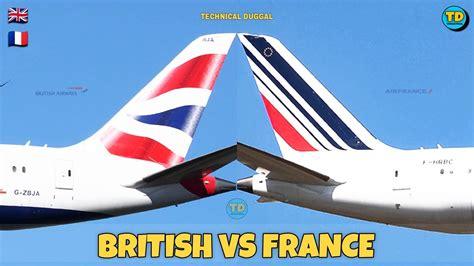
Yet behind the romance lies a surprisingly precise question: British Airways vs. Air France—who operated more Concorde aircraft? The short answer is disarmingly symmetrical. Both carriers operated seven Concordes each. Not six. Not eight. Seven.
That neat numerical tie, however, masks a far more complex story involving national pride, state subsidies, canceled global orders, political revolutions, and a strategic industrial gamble that reshaped Europe’s aerospace future.
Seven Concordes Each: The Numerical Reality
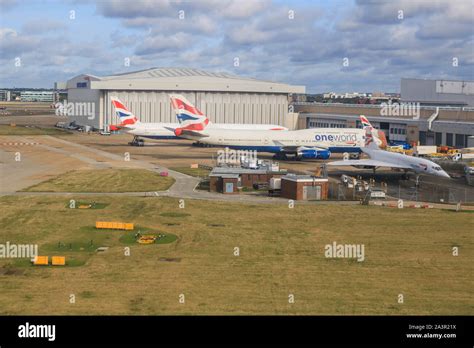
At first glance, one might assume one airline edged out the other. British Airways became almost synonymous with Concorde in the public imagination, particularly after the aircraft’s 2003 retirement. Air France, meanwhile, withdrew its fleet slightly earlier. But in operational terms, both airlines ultimately flew seven production Concordes each.
The origins of that number begin in the early 1960s. In 1963, BOAC (British Overseas Airways Corporation), later absorbed into British Airways, placed an order for six Concordes. France’s national carrier did the same. These were firm commitments to a radical supersonic future.
By 1972, those commitments were reconfirmed, albeit reduced in scale as economic realities began to intrude. But production continued. In total, 20 Concorde airframes were built:
- 2 prototypes
- 2 pre-production aircraft
- 16 production aircraft
Of those 16 production jets, only 12 were contractually accounted for—six for Britain and six for France. That left four additional production aircraft without buyers. These became known as “white tails”, aircraft completed without confirmed customers.
Two of those surplus aircraft were eventually delivered—one each to British Airways and Air France—bringing their operational totals to seven apiece. The remaining two aircraft were largely relegated to development work, limited flying, and spare parts support.
So, who operated more? Neither. It was a dead heat.
But the more interesting question is why neither airline operated eight.
Why Not Eight? The Economics of Supersonic Reality
From a purely commercial standpoint, Concorde was an outlier bordering on the irrational. The aircraft burned extraordinary amounts of fuel, required meticulous maintenance, and demanded highly specialized crews. Its slender delta wing and afterburning Rolls-Royce/Snecma Olympus engines made it a technological marvel—and an accountant’s migraine.
Operationally, seven aircraft was the sweet spot. It allowed each airline to maintain roughly five active aircraft, with one or two undergoing heavy maintenance cycles. Running eight would have strained route economics beyond practicality.
Concorde’s core revenue lifeline was narrow and predictable:
- London–New York for British Airways
- Paris–New York for Air France
Secondary routes—Washington Dulles, Barbados, charter operations—existed but never matched the consistency of transatlantic premium demand.
The aircraft could generate sufficient revenue to cover operational expenses. What it could not realistically cover were its colossal development and capital costs. That burden fell squarely on the British and French governments.
In that sense, Concorde behaved less like a commercial airliner and more like a strategic defense asset that happened to carry paying passengers.
Essentially Gifted Aircraft: The £1 and 1 Franc Transfer
The financial arrangement surrounding Concorde borders on the surreal.
In 1984, during British Airways’ privatization restructuring, the Concordes were famously transferred to the airline for £1 each. France executed a similar symbolic transaction, transferring aircraft to Air France for 1 Franc.
These were not market transactions. They were acknowledgments of political reality: the development costs—running into billions—were unrecoverable in conventional commercial terms.
The British and French governments had already absorbed the financial shock. By transferring ownership at token prices, they allowed the airlines to operate Concorde profitably on a day-to-day basis, even if the program itself would never generate traditional return on investment.
This arrangement also explains why no other airline ultimately operated Concorde. Without comparable government backing, acquisition would have been financially untenable.
The Global Rush That Never Was: Airlines That Ordered Concorde
In the optimistic early years, market forecasts projected 350 Concordes worldwide. That projection now reads like speculative fiction.
In reality, numerous airlines placed nonbinding orders or options, including:
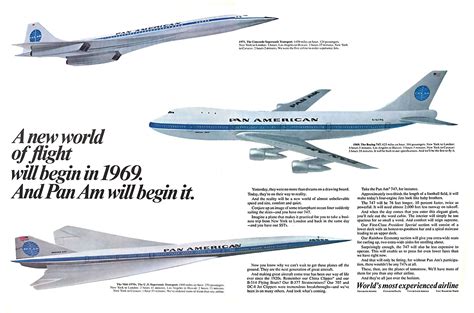
- Pan Am
- TWA
- American Airlines
- United Airlines
- Eastern Airlines
- Continental
- Braniff
- Lufthansa
- Sabena
- Qantas
- Air Canada
- Japan Airlines
- Air India
- CAAC
- Iran Air
- MEA/Air Liban
American carriers alone accounted for options totaling 38 aircraft. The vision was bold: supersonic service linking New York to London, Paris, Los Angeles, perhaps even Tokyo.
Then reality intervened.
The 1973 oil crisis dramatically increased fuel prices. Environmental concerns over sonic booms limited overland supersonic travel. The Soviet Tu-144 crash damaged public confidence in supersonic passenger aircraft. Regulatory barriers emerged in the United States.
Orders evaporated.
Concorde’s export market collapsed almost overnight, leaving Britain and France as its sole operators.
Iran Air: The Almost-Operator
Among all prospective buyers, Iran Air came closest to becoming a third Concorde operator.
In the mid-1970s, under the Shah of Iran, the country pursued ambitious modernization efforts. Concorde fit perfectly into that narrative—a supersonic emblem of national prestige. Plans were drawn up for routes such as Tehran–London and Tehran–New York.
One production aircraft, number 216 (later G-BOAF), was earmarked for Iran Air delivery in 1976. A second would follow in 1977, with an option for a third in 1978.
Then history intervened.
The 1979 Iranian Revolution overturned the monarchy. By 1980, the Concorde order was formally canceled. The aircraft intended for Iran instead joined British Airways’ fleet—for £1.
Had that revolution not occurred, aviation history might include a Persian Concorde streaking across Eurasia at Mach 2.
Concorde as Geopolitical Strategy, Not Commercial Gamble
To understand why both British Airways and Air France operated seven Concordes—and no more—one must shift perspective. Concorde was not fundamentally about ticket sales. It was about European technological sovereignty.
Post–World War II Europe faced a sobering reality. The United States dominated commercial aviation with Boeing, McDonnell Douglas, and Lockheed. Without cooperation, European aerospace risked fragmentation and decline.
The 1962 Anglo-French Concorde Treaty was a bold act of industrial diplomacy. Britain and France, historic rivals for centuries, committed to building the world’s first supersonic airliner together. The program forced them to integrate engineering teams, harmonize standards, and share political risk.
That collaborative infrastructure laid groundwork for what would later become Airbus.
Seen through that lens, Concorde was less an airline product and more a strategic rehearsal for multinational aerospace integration. It proved that Europe could execute high-risk mega-projects collectively.
Military aircraft are rarely evaluated on profitability. They are justified by strategic necessity. Concorde operated in a similar philosophical space.
Operational Legacy: British Airways vs. Air France Performance
Although both airlines operated seven aircraft, their operational narratives diverged slightly.
British Airways leaned aggressively into Concorde’s premium mystique, refining its marketing around exclusivity, speed, and prestige. The London–New York route became a corporate time machine. Wall Street executives could attend meetings in Manhattan and return to London the same day.
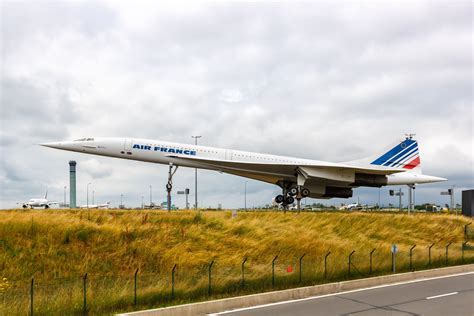
Air France maintained similar prestige routes, but its network and financial dynamics differed. After the tragic 2000 Air France Flight 4590 crash, the fleet was grounded. Service resumed in 2001 but demand never fully recovered, especially after the September 11 attacks.
Air France retired Concorde in May 2003. British Airways followed in October 2003.
Even in retirement, both airlines closed their supersonic chapters with identical fleet totals: seven each.
A Success Disguised as Failure
Judged by market metrics alone, Concorde was a commercial failure. Only 14 production aircraft entered airline service. Only two airlines operated them. The global supersonic revolution never materialized.
Yet by broader strategic measures, Concorde succeeded.
It accelerated European aerospace integration. It strengthened Anglo-French political cooperation. It demonstrated that Europe could design, certify, and operate a technologically extreme aircraft.
The program’s alumni companies evolved. Sud Aviation became part of Aérospatiale, later a founding Airbus partner. British Aircraft Corporation became British Aerospace, then BAE Systems. Airbus would go on to rival—and often surpass—Boeing in global market share.
Concorde was the tuition fee for Europe’s aerospace renaissance.
So Who Operated More Concorde Aircraft?
The scoreboard is definitive:
- British Airways: 7 Concordes operated
- Air France: 7 Concordes operated
Neither airline surpassed the other in fleet size. Both operated one more aircraft than originally ordered. Both operated one fewer than might theoretically have been possible. Both relied on state-backed financial arrangements. Both centered their operations on transatlantic prestige routes.
The symmetry is almost poetic.
Concorde’s name itself—derived from the French word for harmony—symbolized cooperation. Its operational distribution reflected that equilibrium.
The aircraft may have traveled at Mach 2, but its fleet balance remained perfectly still.
The Supersonic Question Today
Modern startups such as Boom Supersonic aim to revive commercial supersonic travel. Their ambitions echo Concorde’s early optimism, but with new materials, improved engines, and promises of better economics.
History suggests caution. Supersonic passenger travel is not merely an engineering problem; it is an economic and regulatory one. Sonic boom restrictions, fuel efficiency, environmental scrutiny, and capital cost remain formidable barriers.
Concorde demonstrated what is technically possible. It also demonstrated the fragility of prestige-driven aerospace programs when confronted by oil shocks, political upheaval, and market realities.
Still, the image endures: a slender white delta wing climbing steeply from Heathrow or Charles de Gaulle, afterburners glowing, nose drooped for landing, then tilting upward toward the stratosphere.
It flew higher than conventional jets—up to 60,000 feet—where passengers could glimpse the curvature of the Earth. At that altitude, the sky darkened toward indigo. The Atlantic crossing shrank to just over three hours.
British Airways and Air France shared that legacy equally.
Seven aircraft each. A supersonic partnership forged in rivalry, sustained by politics, and remembered with awe.
And in that numerical tie lies one of aviation’s most elegant balances.