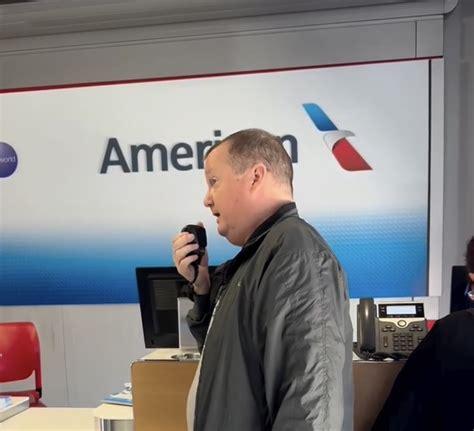
American Airlines is making a significant change to the way it handles oversold flights, instructing airport employees to avoid involuntarily denying boarding to passengers even when there are more travelers than available seats. Under a new companywide directive that took effect September 30, gate teams are expected to keep searching for volunteers until enough passengers agree to take another flight. If necessary, American would rather delay a departure than forcibly remove customers from a confirmed booking.
The policy applies to American’s mainline and regional operations on both domestic and international flights. It represents a notable change in the traditional airline approach to overbooking, where carriers deliberately sell more tickets than the number of seats available because some passengers are expected not to travel. When those forecasts are wrong, airlines have historically relied first on volunteers and, if necessary, involuntary denied boarding to resolve the imbalance.
The new instructions are particularly striking because American has historically accounted for a large share of the industry’s involuntary denied boardings. Department of Transportation data cited by View From The Wing showed that American and its regional carriers recorded 14,758 involuntary denied boardings in 2025, approximately 60% of the 24,596 involuntary bumps reported across the industry. During the first half of 2026, American recorded another 5,247 involuntary bumps, while Delta reported none over the same period.
American Airlines Tells Gate Agents to Find Volunteers or Delay Flights
Internally, American describes the new procedure as a “zero involuntary denied boarding mandate.” The instruction changes what happens at the gate when an oversold flight remains unresolved. Employees are told that the aircraft door should not be closed while a potential involuntary denied boarding remains outstanding. Instead, airport managers are expected to become directly involved in finding enough customers willing to give up their seats.
That can mean spending considerably more time at the gate before departure. Rather than allowing the scheduled departure time to dictate when the oversale must be resolved, employees are explicitly told to prioritize finding volunteers. The internal guidance is unusually direct: “Take a delay, when necessary, to resolve the oversale.” In practical terms, a flight’s on-time performance can now lose priority when the alternative is forcibly removing a passenger.
American is also giving station managers more flexibility over compensation. Gate employees previously operated within predetermined compensation limits and could require additional approval before exceeding them. Under the new system, airport leadership has greater authority to increase offers when passengers are unwilling to volunteer at the initial amount.
This could produce some very different scenes at busy airport gates. Employees are expected to begin making announcements earlier, explain the oversale situation to customers and gradually increase compensation if necessary. Each increase must be documented, creating a structured process for persuading passengers rather than simply selecting travelers for involuntary denial of boarding.
Volunteers Can Receive an Advantage on the Next American Airlines Flight
One of the most important parts of the policy concerns what happens after a passenger agrees to give up a seat. American is allowing employees to confirm a volunteer onto the very next departure, even when that flight technically appears to be full in the reservation system.
That does not mean American is creating an extra physical seat. Instead, employees can use rebooking tools and, when necessary, contact Day of Departure support to arrange the passenger’s onward travel. The approach recognizes one of the biggest reasons passengers hesitate to volunteer: uncertainty about when they will actually reach their destination.
A passenger might be willing to accept a substantial travel voucher and a short delay if the next flight provides a realistic path home. The proposition becomes far less attractive when volunteering means sitting at an airport for several additional departures while waiting for a confirmed seat. By offering the possibility of confirmed travel on the next departure, American is making the voluntary option significantly more competitive.
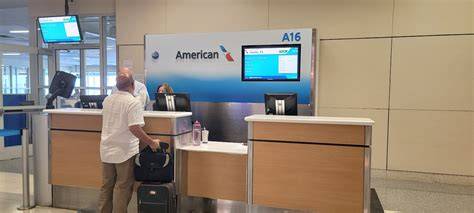
The next flight could still present an operational challenge if it is also full. American may have to repeat the same process, seeking volunteers on that departure or relying on cancellations, missed connections and other changes that create seats. The strategy therefore does not eliminate the underlying capacity problem. Instead, it shifts the airline’s response from forcing a passenger off the aircraft to negotiating a solution.
American Has Already Reduced Involuntary Denied Boardings
The new mandate builds on a reduction American had already achieved during 2026. The airline’s second-quarter network figures showed 1,953 involuntary bumps, down 54% from 4,257 during the same period the previous year.
The latest directive takes that reduction a step further. Rather than treating fewer involuntary denied boardings as simply an operational performance objective, American is making their elimination an explicit requirement. The distinction is important because oversales are deeply connected to airline revenue management. Selling additional tickets can improve aircraft utilization and protect against no-shows, but inaccurate forecasts can create a difficult situation at the gate.
American’s new policy effectively accepts that there will be occasions when resolving that situation costs more money or time. A larger voucher, a later departure or a delayed aircraft may all be preferable to telling a customer who purchased a confirmed ticket that there is no seat available.
The Legacy of Airline Overbooking Controversies
The change also comes amid years of growing scrutiny surrounding involuntary passenger removal. The issue received enormous public attention following the 2017 United Express passenger-removal incident, when a passenger was forcibly removed from an aircraft after boarding. The incident triggered widespread criticism and intensified debate over how airlines should handle oversold flights.
Since then, airlines have increasingly emphasized voluntary solutions and have sometimes authorized employees to offer substantial compensation to persuade travelers to give up their seats. American itself has reportedly offered unusually large incentives in individual situations, including a $4,000 voucher on a Philadelphia–Athens flight.
The new policy formalizes that philosophy. Instead of waiting until an oversold flight is ready to depart and then turning to involuntary selection, American wants the process to begin earlier and continue until enough volunteers agree to alternative arrangements.
What American Airlines’ New Overselling Policy Means for Travelers
For passengers, the biggest change is straightforward: a confirmed American Airlines ticket should no longer be treated as an automatic invitation to negotiate at the gate if a flight is oversold. The airline is now directing employees to exhaust voluntary options before considering involuntary denied boarding.
That could mean more generous compensation for flexible travelers, particularly when flights are heavily oversold and managers have discretion to increase offers. It could also mean longer delays, especially during peak travel periods when there are few alternative seats and many passengers are unwilling to give up their original itinerary.
The trade-off is ultimately a more passenger-focused approach to airline overbooking. American is still able to use revenue-management systems and sell beyond the aircraft’s physical capacity, but when those calculations fail, the company is now placing greater responsibility on itself to solve the problem.
For travelers, that is a meaningful shift. American Airlines is effectively saying that if an oversold flight cannot be resolved voluntarily, the airline may have to absorb the inconvenience rather than forcing a passenger to do so. And at the gate, that simple instruction—take a delay—could represent one of the industry’s clearest changes in how involuntary bumping is handled.