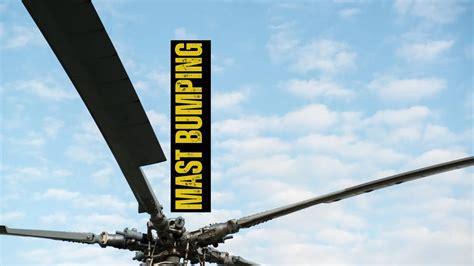
Helicopters are marvels of engineering—machines capable of vertical takeoff, precision hovering, and agile navigation through complex terrain. From civilian air ambulances and corporate transport to high-speed military assault, their role across industries is indispensable. But behind the flexibility and finesse of rotary-wing flight lies a rarely discussed but incredibly dangerous phenomenon: mast bumping.
This mechanical event, often fatal, has become a focal point of concern in helicopter safety, especially in aircraft equipped with semi-rigid rotor systems. Though infrequent, the catastrophic potential of mast bumping warrants a deep understanding of its causes, mechanics, and prevention.
What Is Mast Bumping and How It Happens
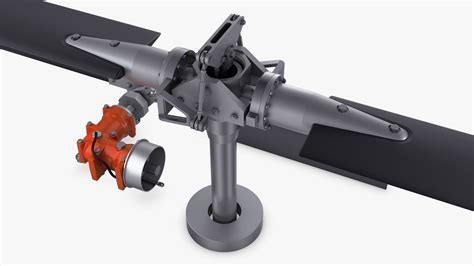
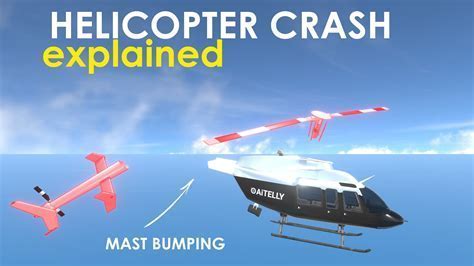
Mast bumping occurs when the rotor hub tilts excessively and strikes the main rotor mast, the vertical shaft connecting the rotor blades to the helicopter’s transmission and engine. In a properly functioning aircraft, the hub and mast maintain safe clearances even under dynamic flight conditions. But when that balance is upset—due to pilot error, environmental extremes, or system design—the hub can violently collide with the mast.
The result is often rotor separation, where the blades shear off midair. This typically leads to total loss of lift, control, and aerodynamic stability, making recovery almost impossible. Accidents involving mast bumping frequently result in fatal outcomes, especially since they occur suddenly and often without sufficient time for pilot correction.
Anatomy of the Rotor System: Heart of Helicopter Flight
At the core of every helicopter lies the rotor system, a complex mechanical assembly that replaces the wings of a conventional aircraft. Its primary components include:
- Mast: The hollow shaft projecting vertically from the transmission.
- Hub: The centerpiece connecting the blades to the mast.
- Rotor blades: Airfoil structures that generate lift by spinning rapidly.
Depending on how these elements are arranged and allowed to move, rotor systems fall into three broad categories:
- Semi-Rigid (Teetering) Rotor Systems – Typically featuring two blades that can flap as a single unit, pivoting like a seesaw.
- Fully Articulated Systems – Each blade operates independently, capable of flapping, feathering, and leading-lagging.
- Rigid Rotor Systems – Blades are affixed directly to the hub with flexible materials allowing minimal movement.
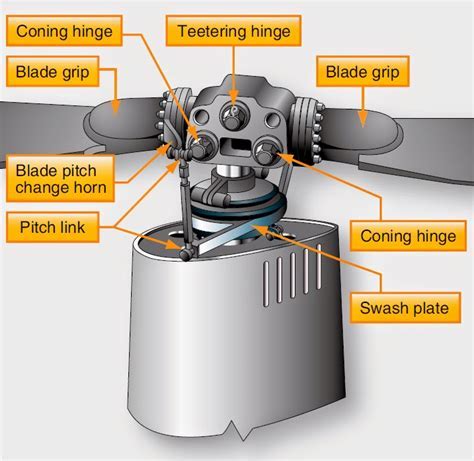
Mast bumping is most closely associated with semi-rigid systems, primarily due to the teetering motion of the rotor head. These designs are efficient and lightweight but inherently more sensitive to abrupt aerodynamic forces.
Why Semi-Rigid Rotor Systems Are More Vulnerable
Semi-rigid rotors depend on a teetering hinge that allows both blades to flap up and down in response to control inputs and aerodynamic loads. This motion is necessary to counter dissymmetry of lift—where advancing and retreating blades experience different airspeeds—but it also introduces vulnerability.
Under certain flight conditions, especially low-G maneuvers, the rotor system can become unbalanced. With the loss of positive load on the blades, they may flap excessively, increasing the tilt angle of the hub. If the limit is exceeded, the hub physically strikes the mast, initiating mast bumping. In extreme cases, the mast may fracture or detach, instantly dooming the aircraft.
Key Factors That Increase the Risk of Mast Bumping
Though mast bumping is rare, it is not random. A combination of mechanical design, environmental forces, and most crucially, pilot technique, determines the likelihood of its occurrence.
Several risk enhancers include:
- Low-G Conditions: These occur when the aircraft transitions from positive to near-zero gravitational force, such as during a pushover or rapid descent.
- Abrupt or Incorrect Control Inputs: Sudden cyclic inputs or rapid collective changes can destabilize the rotor system.
- Sideways or Nose-Down Flight at High Speed: Extreme angles increase the chance of rotor hub deviation.
- Turbulent Weather and Wind Shear: Unpredictable airflows can induce rapid, uncontrolled blade flapping.
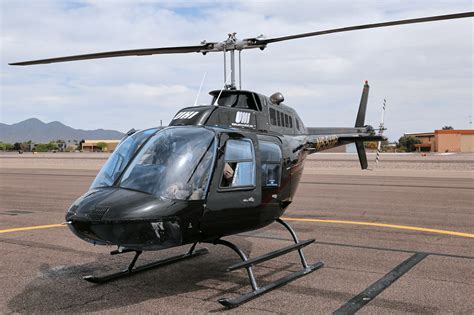
Human factors remain the largest contributor. Pilots unfamiliar with how semi-rigid rotors respond under low-G conditions may inadvertently induce mast bumping by executing aggressive maneuvers inappropriate for the aircraft’s design envelope.
Tragic Outcomes and Case Studies
Mast bumping has been responsible for several high-profile helicopter crashes over the decades. One of the most cited examples includes military training accidents involving the Bell UH-1 Huey, a helicopter with a semi-rigid rotor system that has historically shown vulnerability to mast bumping when mishandled.
In one incident, a trainee pilot conducted a sudden nose-down maneuver during a simulated engine-out procedure. The aircraft entered a low-G state, and before corrective input could be applied, the main rotor collided with the mast. The helicopter disintegrated midair, resulting in the immediate death of all onboard.
Such events underscore the lethality of mast bumping and the narrow margin for error when flying rotorcraft with specific design characteristics.
How to Prevent Mast Bumping
Despite its severity, mast bumping is preventable through proper training, operational discipline, and awareness of aircraft limitations. The following best practices are widely recommended in flight training and rotorcraft operation:
- Avoid Low-G Maneuvers: Pilots must refrain from pushing over into steep dives or rapid descents without maintaining positive G-load.
- Understand Aircraft-Specific Flight Limits: Not all helicopters handle alike. Those with semi-rigid rotors have stricter maneuvering envelopes.
- Use Smooth, Progressive Controls: Aggressive or abrupt control inputs amplify dynamic forces on the rotor system.
- Fly Within Manufacturer’s Operational Guidelines: Adherence to published limits for airspeed, pitch, and bank angle is critical.
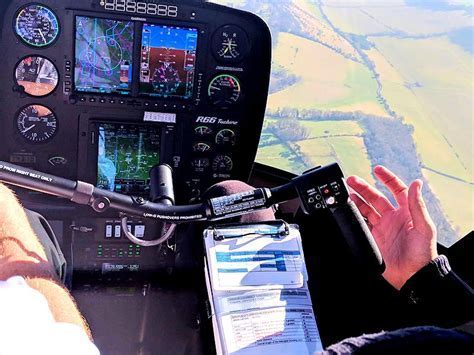
Training institutions and flight safety regulators consistently emphasize the importance of practicing recovery techniques in simulators and recognizing early signs of low-G onset.
Modern Engineering Efforts to Mitigate Mast Bumping
Advancements in rotorcraft engineering have led to improved rotor designs that inherently reduce mast bumping risk. Fully articulated and rigid rotor systems, for instance, allow each blade greater independence and minimize teetering motion.
Additionally, modern helicopters now integrate rotor dampers, flight control augmentation systems, and low-G warning sensors to either mechanically limit movement or alert pilots before a dangerous state develops. Fly-by-wire technology has also enabled automated control dampening that can override inputs likely to induce mast bumping.
Still, semi-rigid systems remain in widespread use due to their efficiency and simplicity. This makes training and awareness the most practical frontline defense.
Regulatory and Training Recommendations
Authorities such as the Federal Aviation Administration (FAA) and European Union Aviation Safety Agency (EASA) have incorporated mast bumping awareness into rotorcraft licensing and recurrent training protocols. Flight manuals for helicopters like the Robinson R22 and Bell 206 contain detailed sections on avoiding low-G flight and recognizing conditions that could lead to mast bumping.
Flight instructors are urged to simulate low-G recovery techniques, emphasizing:
- Immediate, gentle application of aft cyclic.
- Avoidance of lateral cyclic until positive G is restored.
- Understanding of how different flight attitudes and speeds can induce rotor flapping.
These measures have led to a reduction in mast bumping incidents, though the threat remains a constant concern in training and operations.
Conclusion: Mast Bumping Is Rare but Ruthlessly Unforgiving
Mast bumping is a lethal mechanical event that, while uncommon, can transform routine flight into irreversible disaster in seconds. Its occurrence is largely tied to specific rotor system designs and pilot handling errors under certain aerodynamic conditions. Although engineering improvements and modern safety protocols have helped, ultimate responsibility lies in flight discipline and situational awareness.
In every helicopter cockpit—whether military, civilian, or recreational—the best defense against mast bumping is proficiency, precaution, and respect for the limits of both machine and environment.
Helicopters may allow extraordinary freedom in the skies, but they also demand a higher level of knowledge and caution. Understanding the danger of mast bumping is not just important—it’s essential for every safe flight.