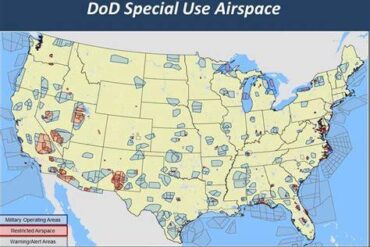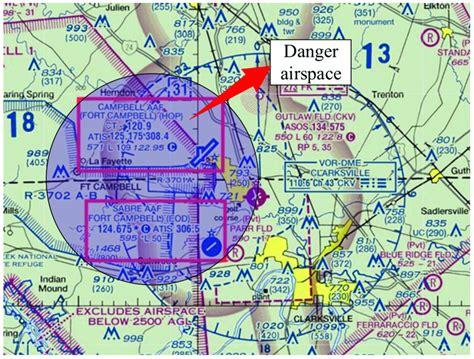
A danger area is a specific section of airspace where activities that could be risky for aircraft operations may occur at certain times. These areas are often controlled by military authorities. The dimensions of danger areas, both vertically and horizontally, are published in national Aeronautical Information Publications (AIPs), along with their operating hours when applicable.
Danger areas are created around locations where hazardous activities are likely to happen. For instance, this includes military exercises with live ammunition, parachute drops, unpredictable aircraft maneuvers, or the use of unmanned aerial systems (UAS). Typically, a buffer zone is included around the main activity area to enhance safety.
The responsible authorities usually monitor these danger areas. If unauthorized aircraft enter the space, operations may be halted. However, it is primarily the pilots’ duty to steer clear of these zones. Historically, many danger areas and restricted zones have remained inactive for much of the time they were designated as active.
This situation has led to the introduction of the Flexible Use of Airspace (FUA) Concept in Europe, which aims to optimize airspace utilization. Under this concept, airspace is not strictly classified as ‘civil’ or ‘military’; instead, it is viewed as a single entity allocated based on user needs. The FUA Concept promotes maximum shared use of airspace through improved coordination between civil and military operations. It ensures that any segregation of airspace is temporary and based on real-time requirements.